Brand
Sonus faber
The Italian voice of music, refined across four decades.
Authorized Dealer — Scottsdale & Tempe, Arizona
Trade-in credit toward new purchases · Full installation and calibration · Walk in during business hours or book ahead
See what's on demonstration now ↓Sonus faber — Latin for “the sound of the craftsman” — was founded by Franco Serblin in Vicenza, Italy in 1983. Serblin (born Vicenza 1939; died 31 March 2013) was a self-taught loudspeaker designer whose 1980 “Snail” project — an all-in-one satellite-subwoofer system built entirely in solid wood, of which only ten pairs were made — earned enough acclaim in the Italian audio community to build a company around. The first Sonus faber workshop opened on the hills of Vicenza in Monteviale in 1983, with the Parva two-way monitor in Kevlar and solid walnut as its first product. Serblin led the company for over two decades and left in 2006 to pursue independent boutique loudspeaker design under his own name.
Since 2003, Sonus faber has been based in Arcugnano just outside Vicenza, in a purpose-built violin-shaped facility designed by Studio Albanese and described by its architect as “a place for music.” Chief Designer Livio Cucuzza and Head of R&D Paolo Tezzon — who has been with the company for nearly two decades and holds explicit responsibility for maintaining the Sonus faber tonal signature — lead engineering today. Manufacturing is still hand-work by Italian craftsmen and craftswomen using natural materials — solid wood, leather, silk, paper, cork — as an active engineering principle rather than a marketing flourish.
The Sonus faber engineering premise
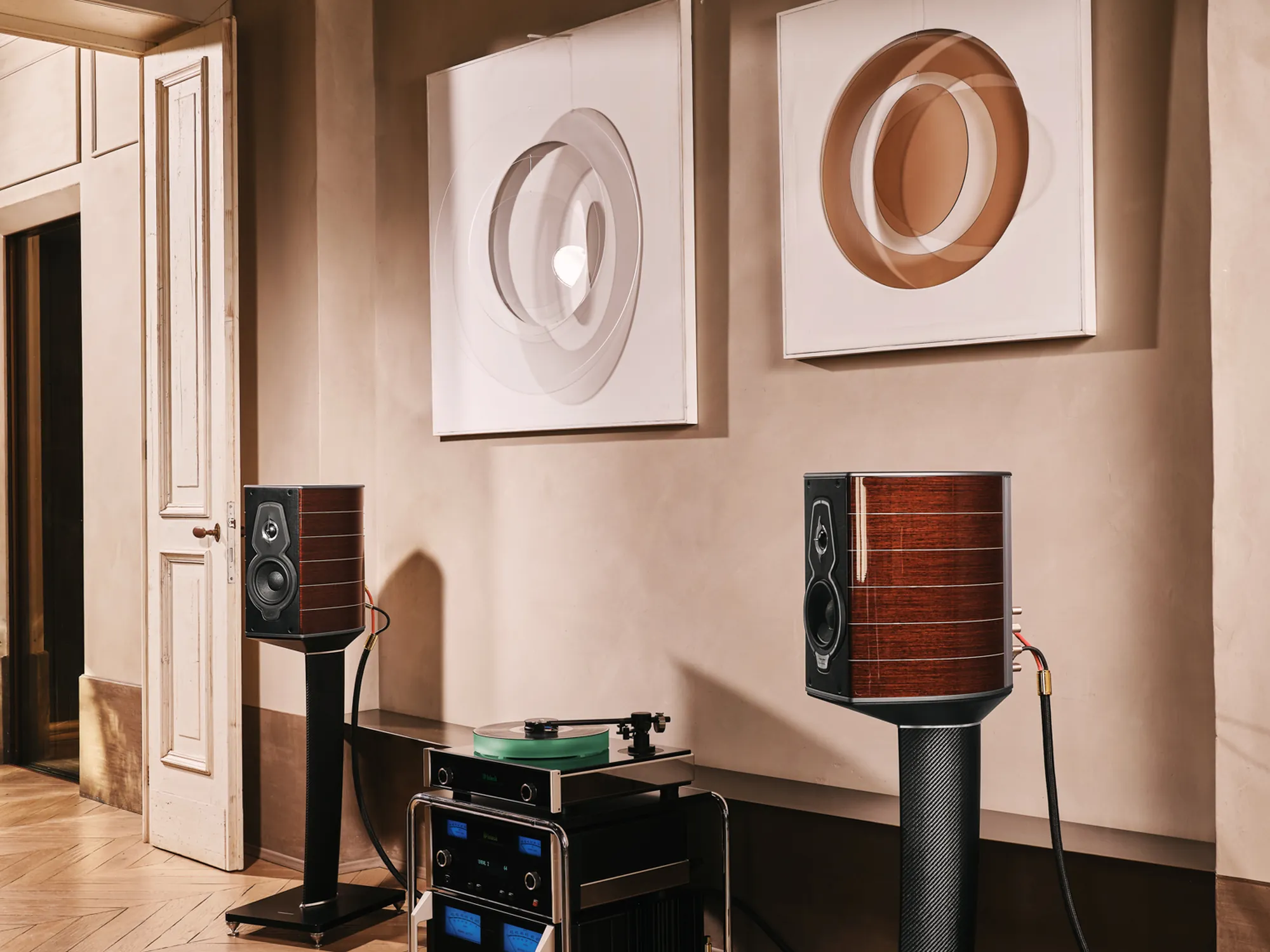
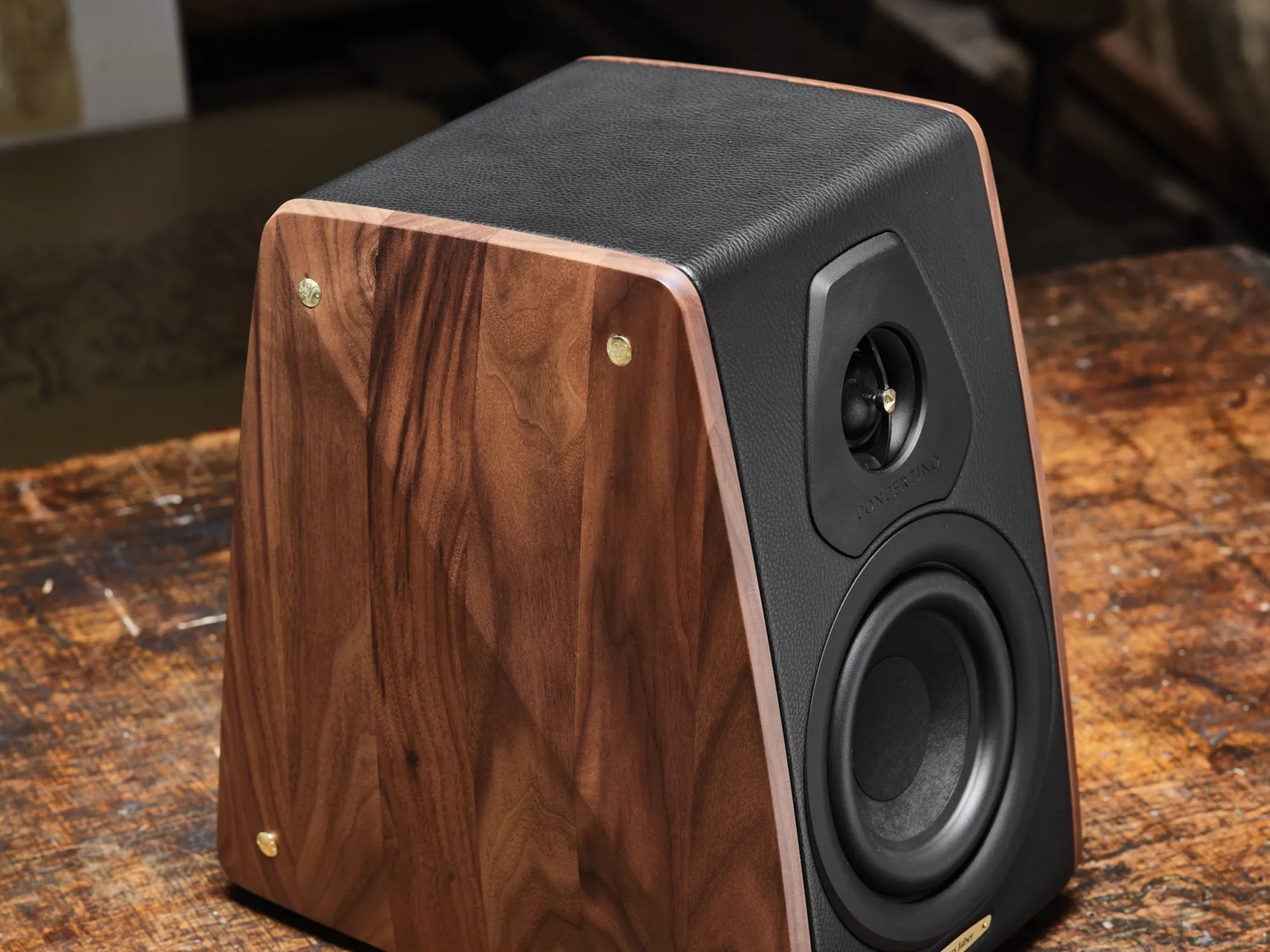
The Vicenza region has been the historical home of Italian violin-making since the sixteenth century, and Sonus faber has always taken the analogy between a violin and a loudspeaker seriously — not as metaphor but as design methodology. Cabinets are built from selected woods and hand-assembled with joinery from Italian furniture-making traditions. Driver diaphragms use paper, silk, and other natural materials wherever the acoustic goal permits. Cabinet damping and internal chambers use cork, natural fibres, and leather where they measurably do more than synthetic alternatives. Every current Sonus faber loudspeaker carries what the company calls the “Voice of Sonus faber” — a specific tonal signature and cabinet-radiation pattern verified on every product, so any two Sonus faber loudspeakers in the current range voice recognisably as the same house. Sonus faber develops flagship engineering first (Suprema is the current example) and works trickle-down technology into the collections beneath it. The Amati Supreme, for instance, is a refresh of the Amati Homage design that incorporates the Voice of Sonus faber transducer set and crossover topology developed for the Suprema.
The Sonus faber line at LMC
LMC carries the full current Sonus faber line across both showrooms.
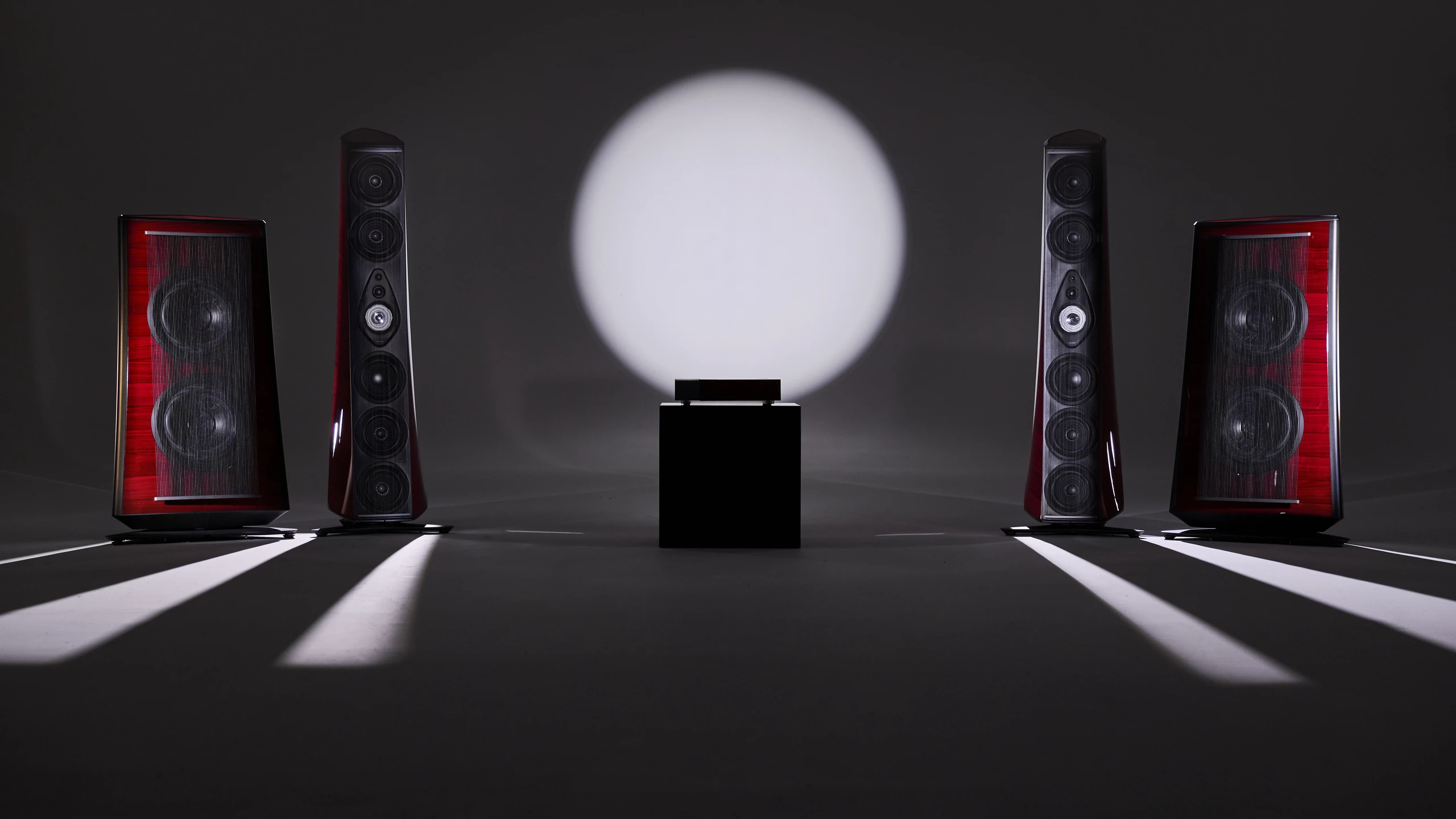
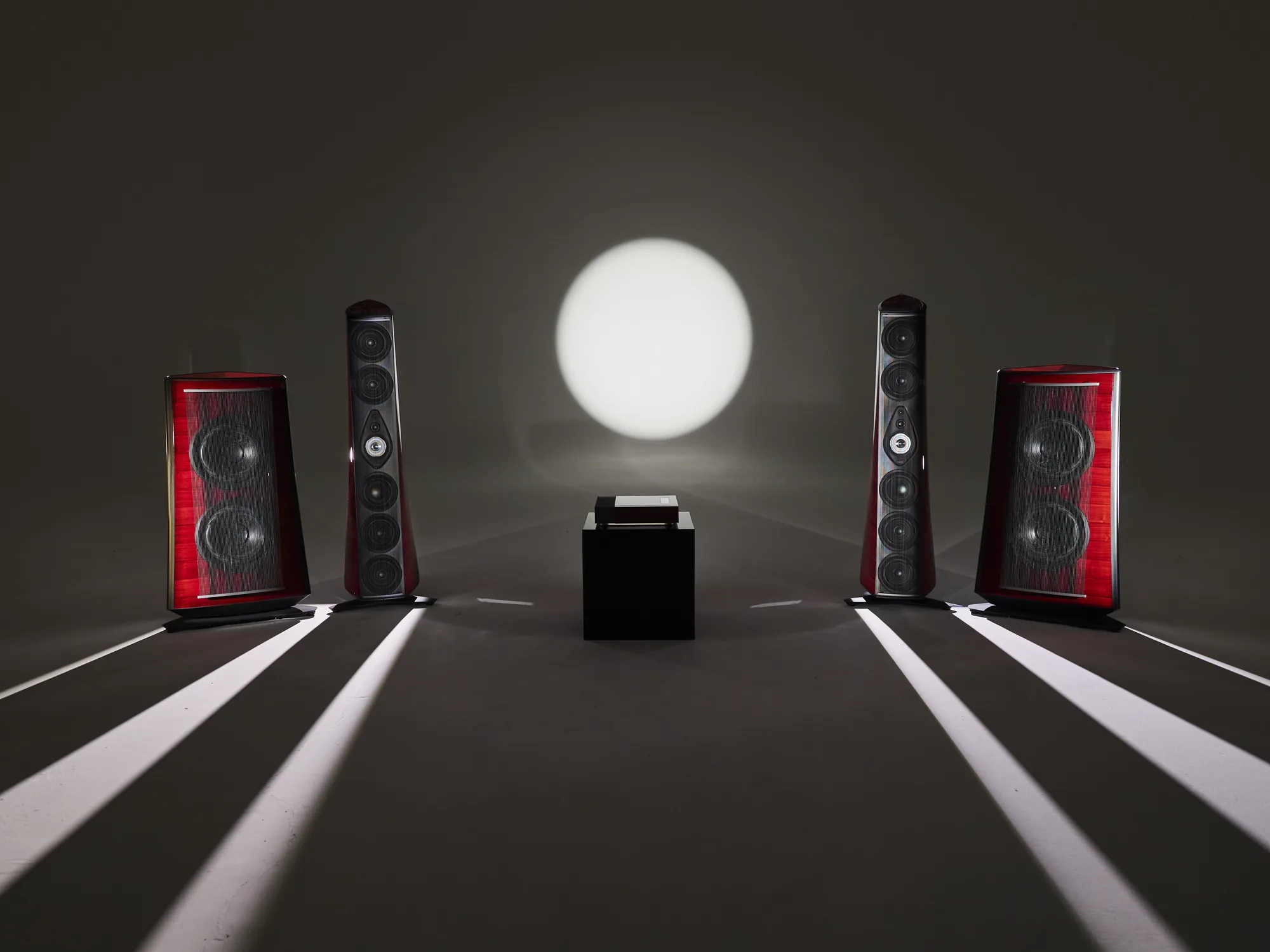
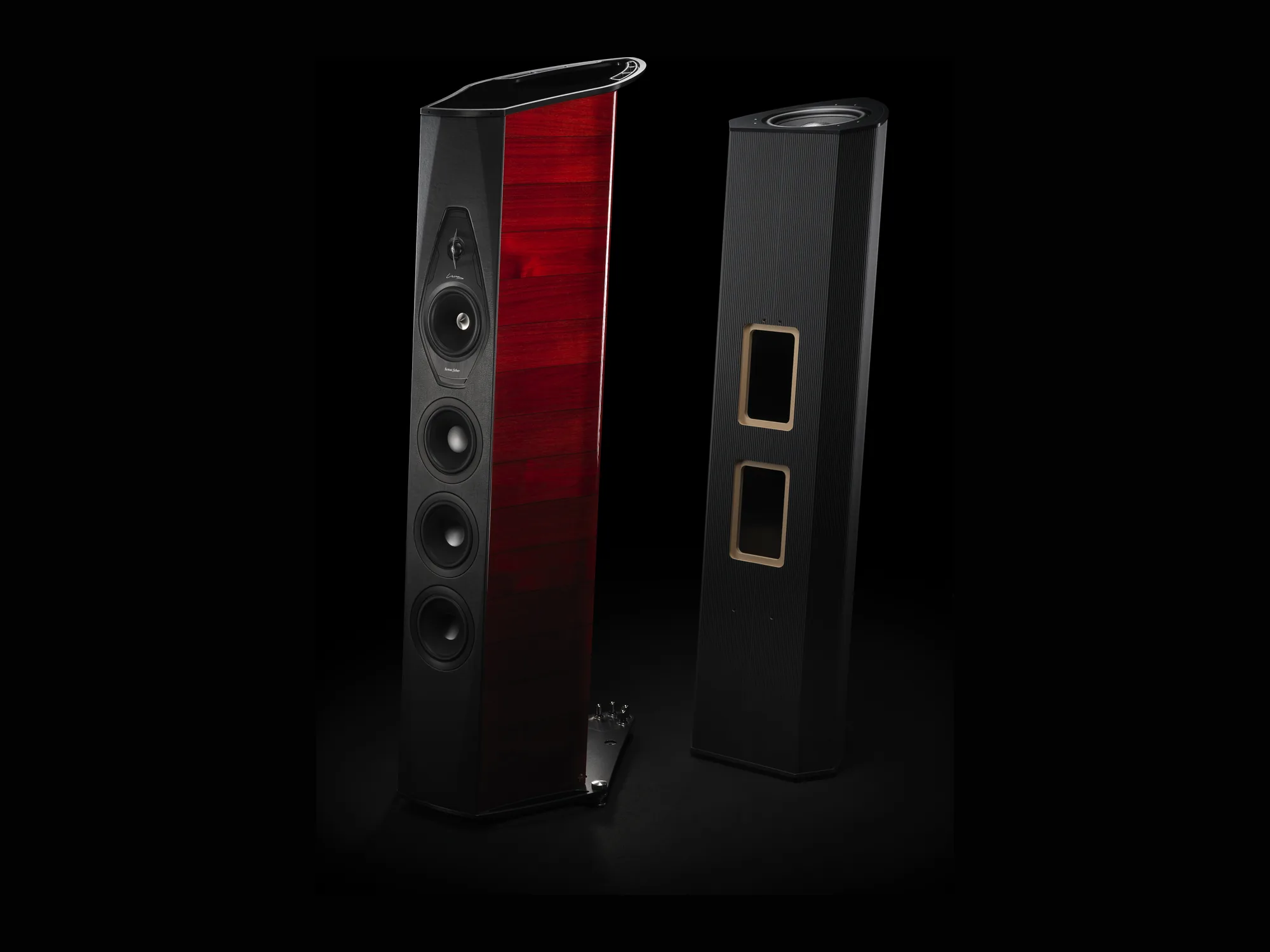
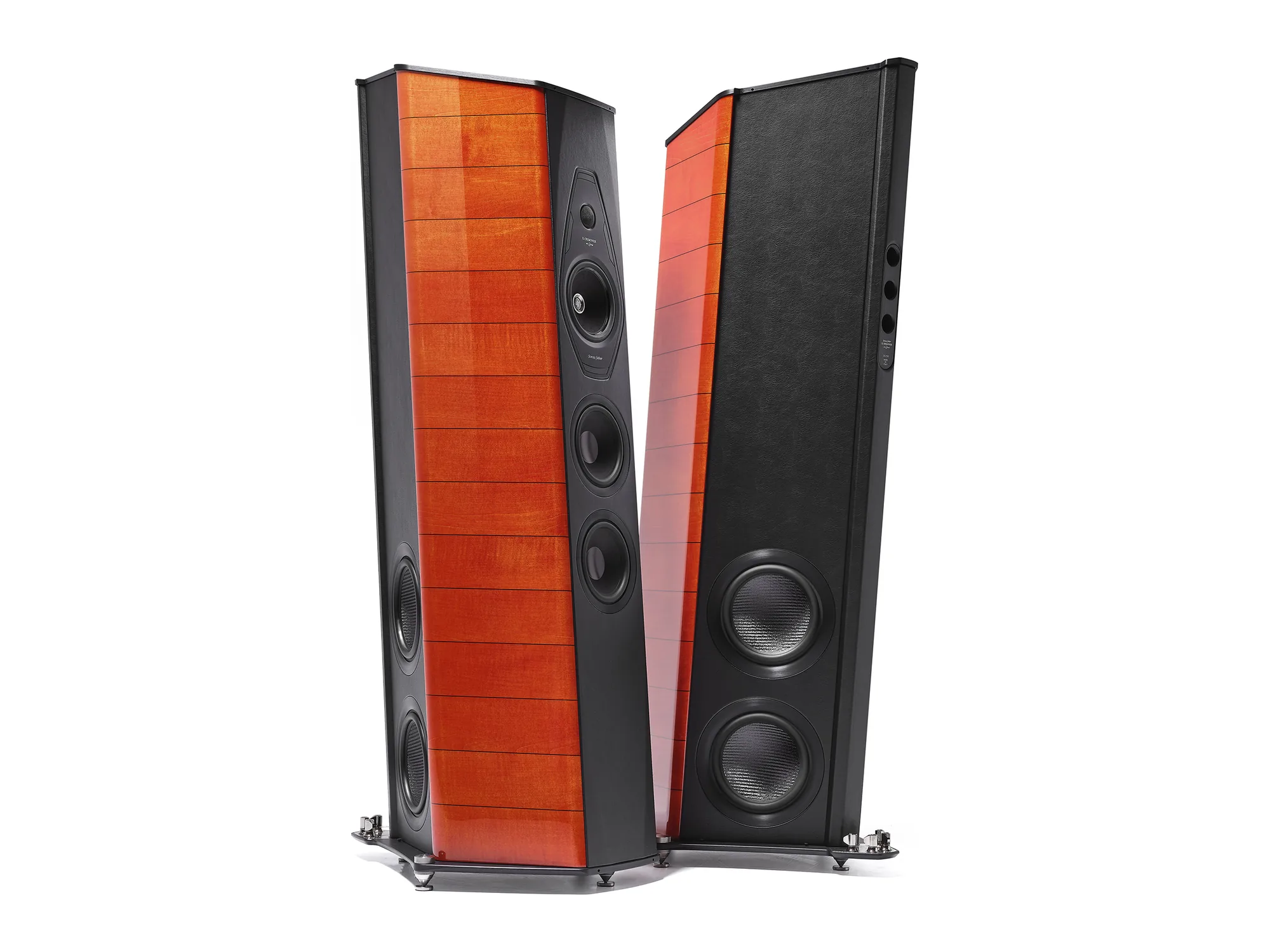
The Suprema is the current flagship — a four-column reference system (two main towers, two subwoofer towers, one external analogue crossover chassis) with the Voice of Sonus faber transducer set, IsoAcoustics decoupling, Poltrona Frau Pelle Frau Impact Less leather panels, and a recycled-cork mid-high internal chamber. The Reference collection (Aida, Lilium, Il Cremonese) covers three floorstanders descended from the Aida platform, each with its own cabinet geometry — Il Cremonese notably uses five non-parallel walls. The Homage collection (Amati, Serafino, Guarneri in their current G2 or G5 generations, plus the newer Amati Supreme) pays direct homage to the Cremonese violin-makers who gave the collection its names.
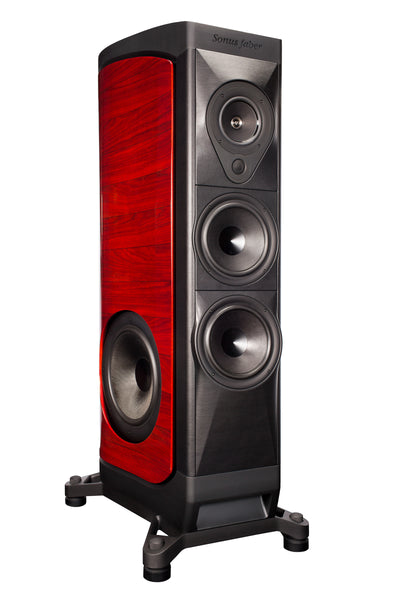
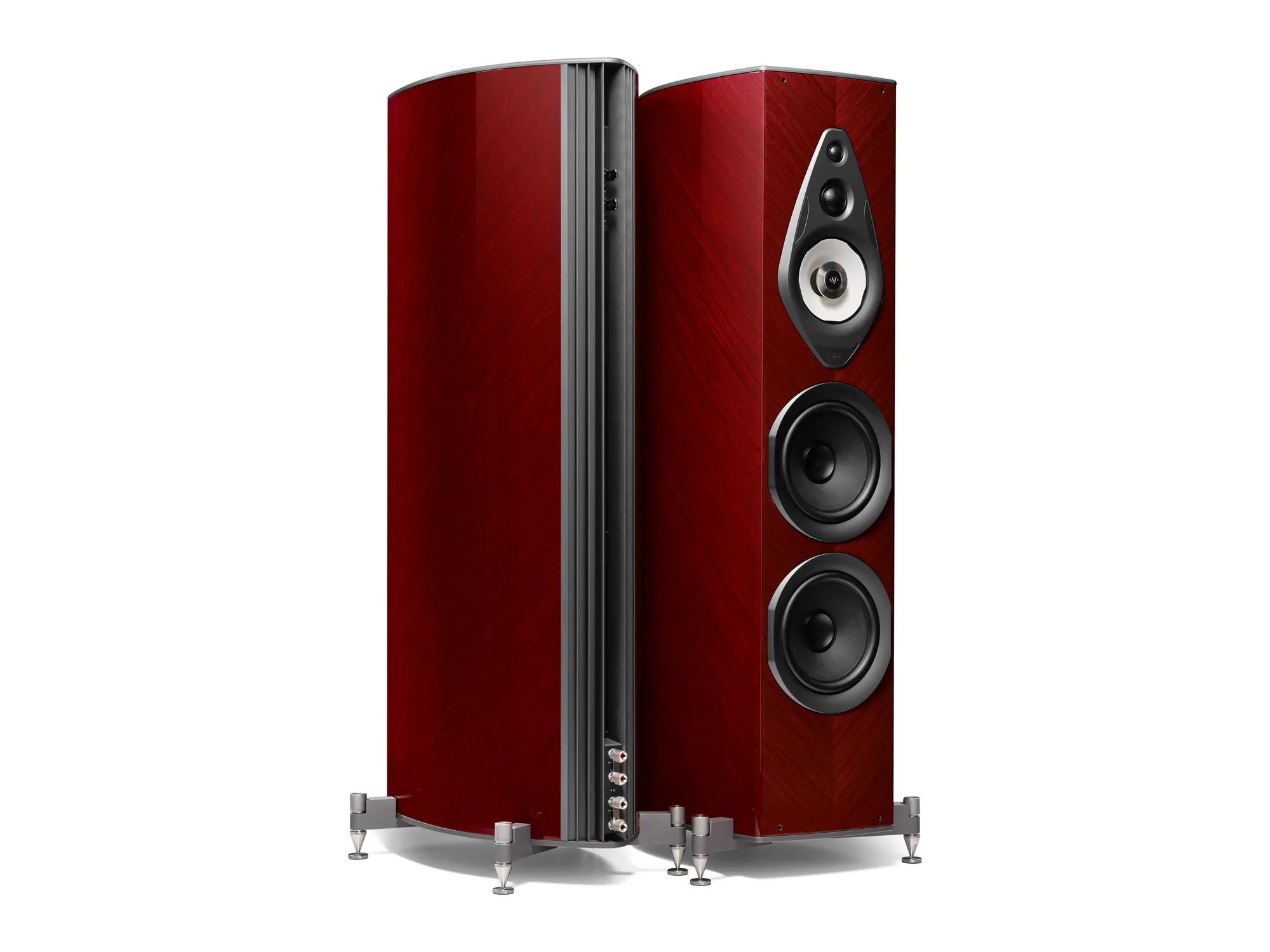
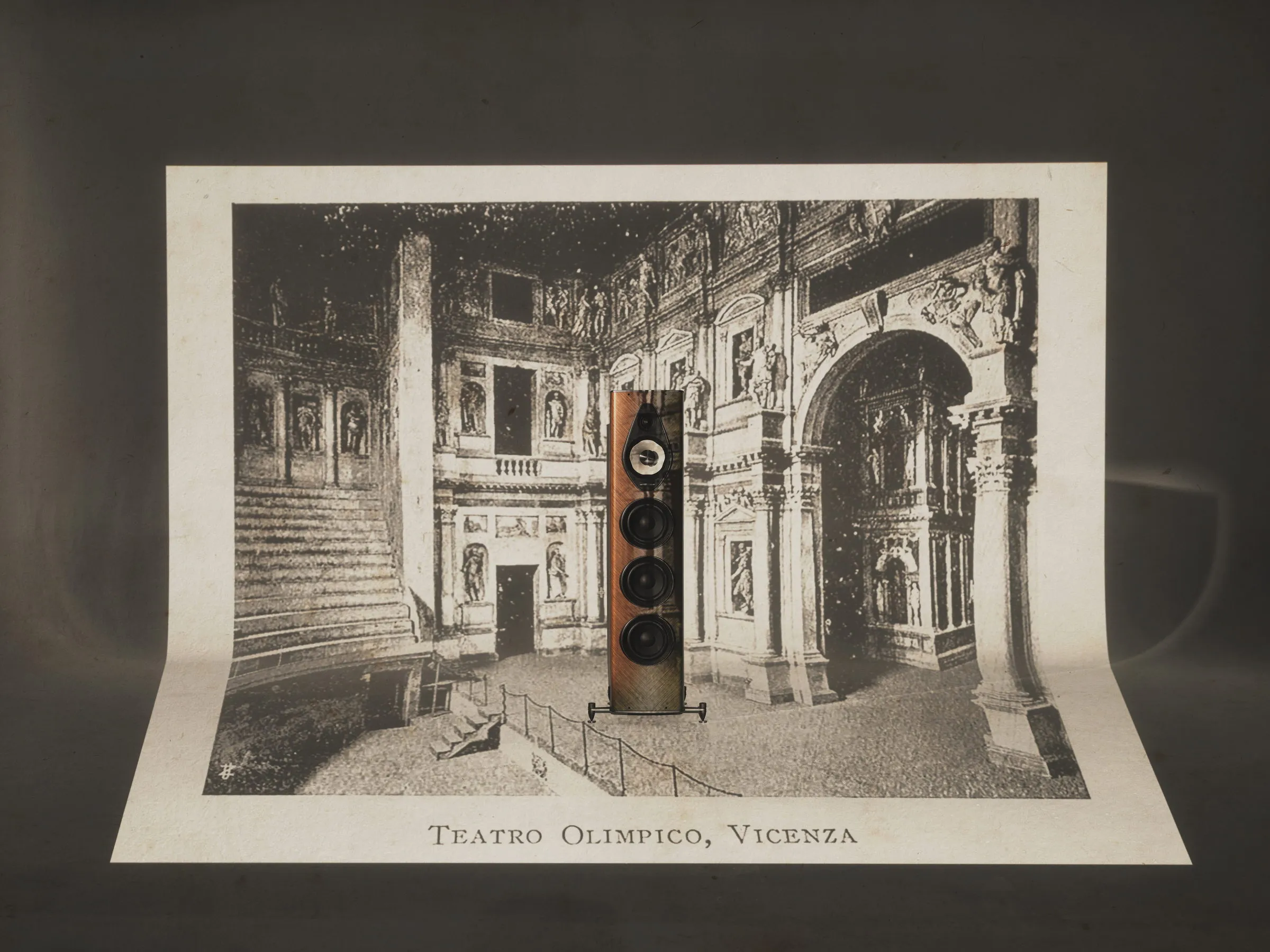
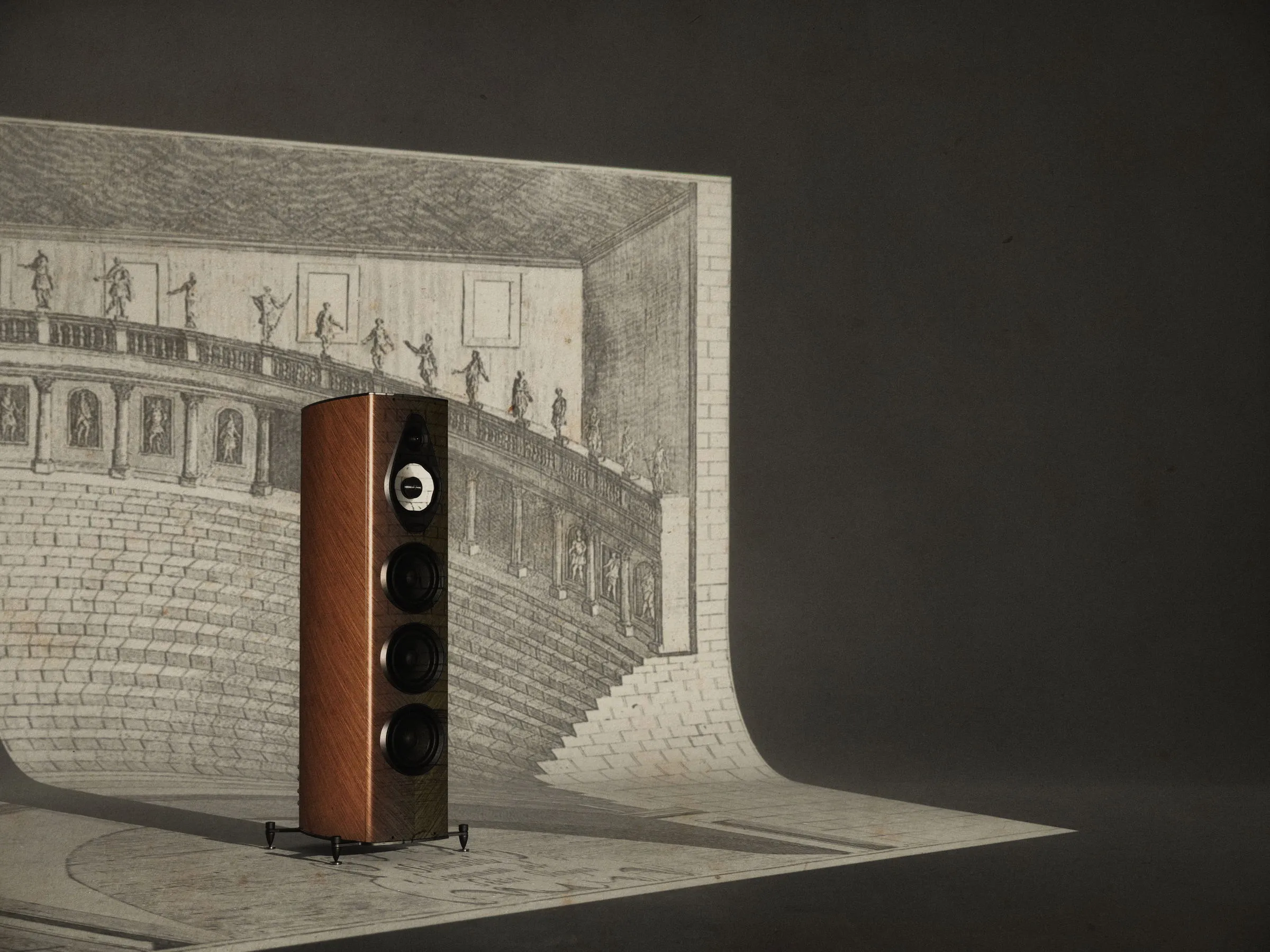
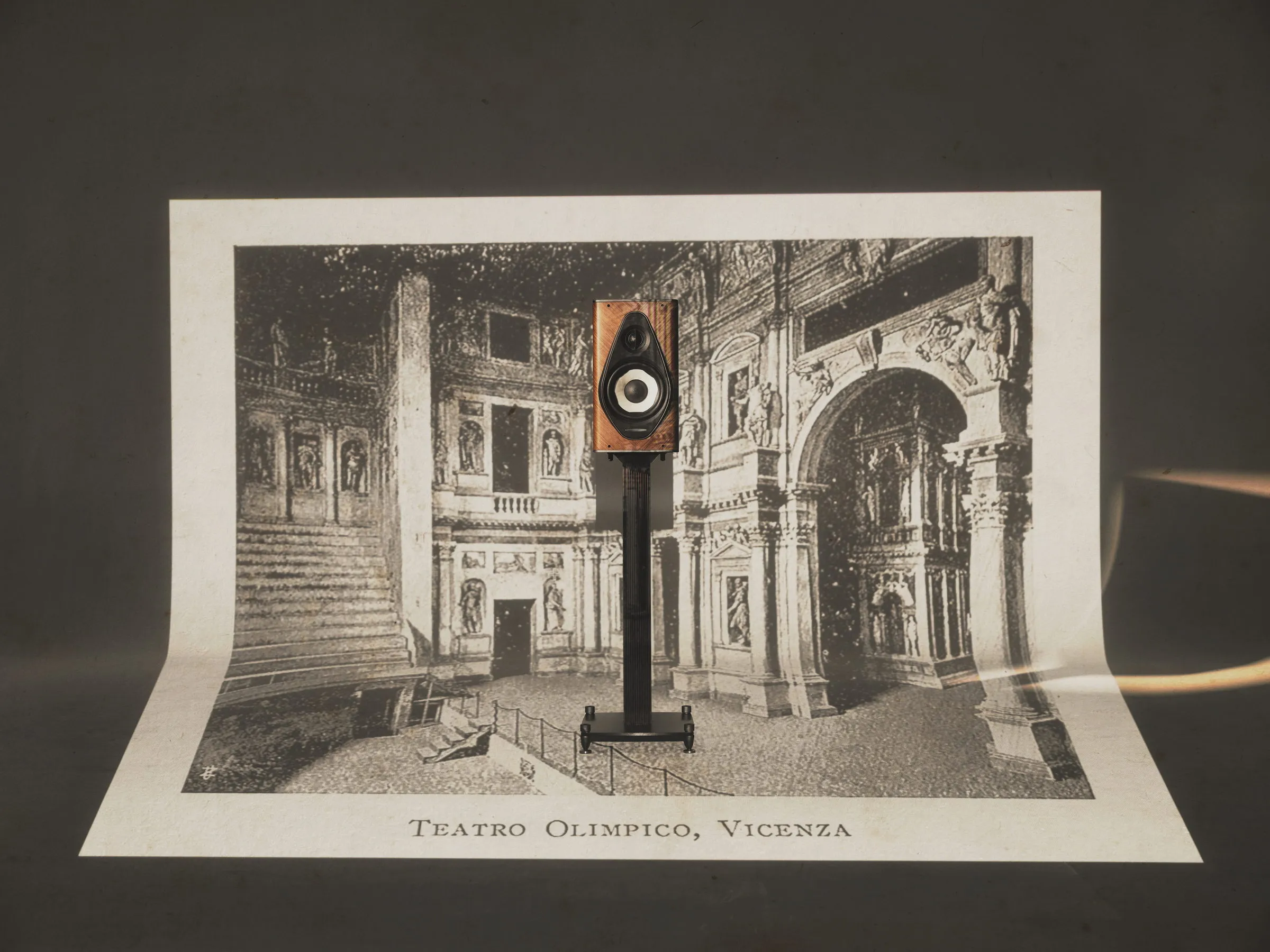
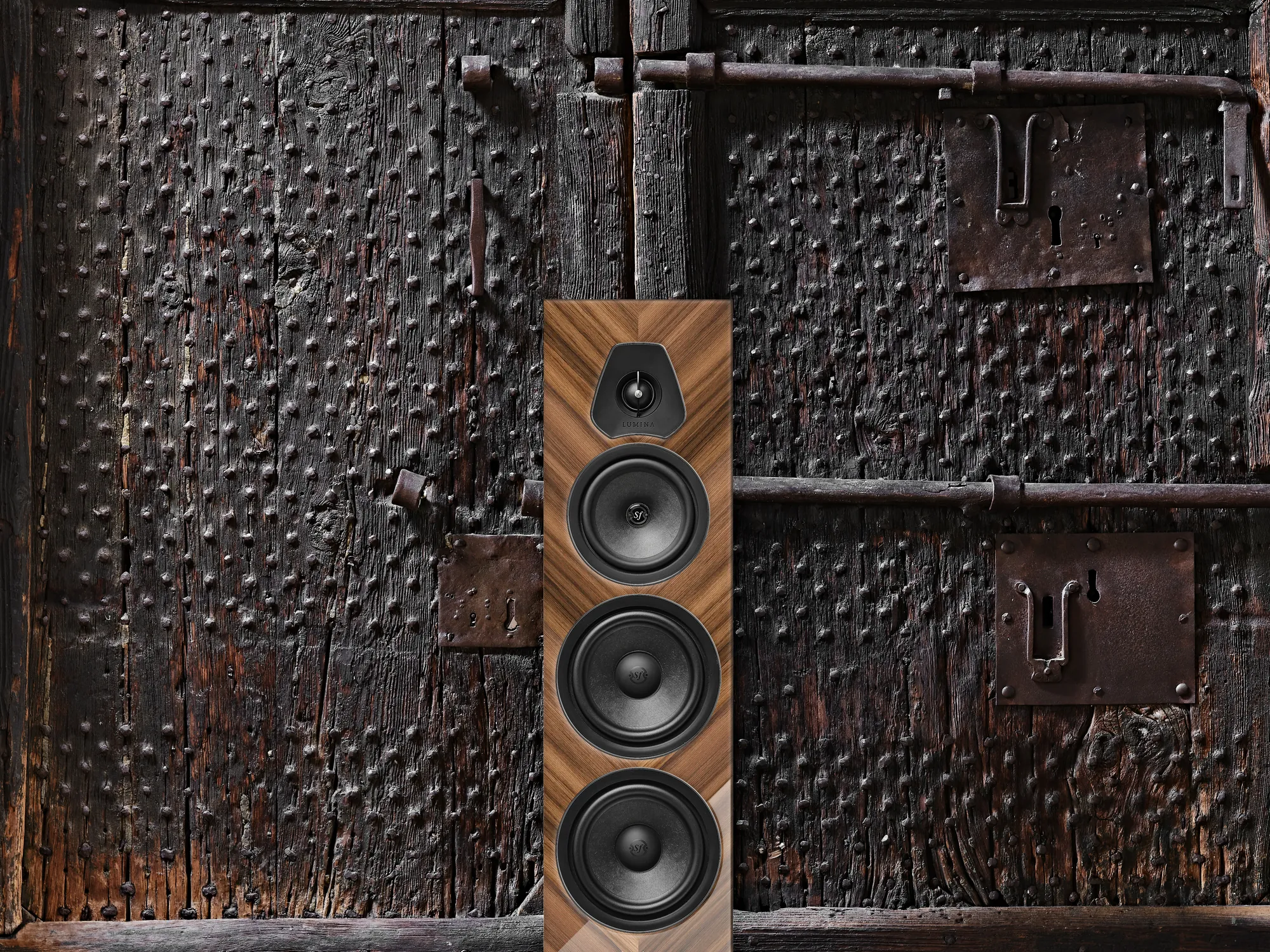
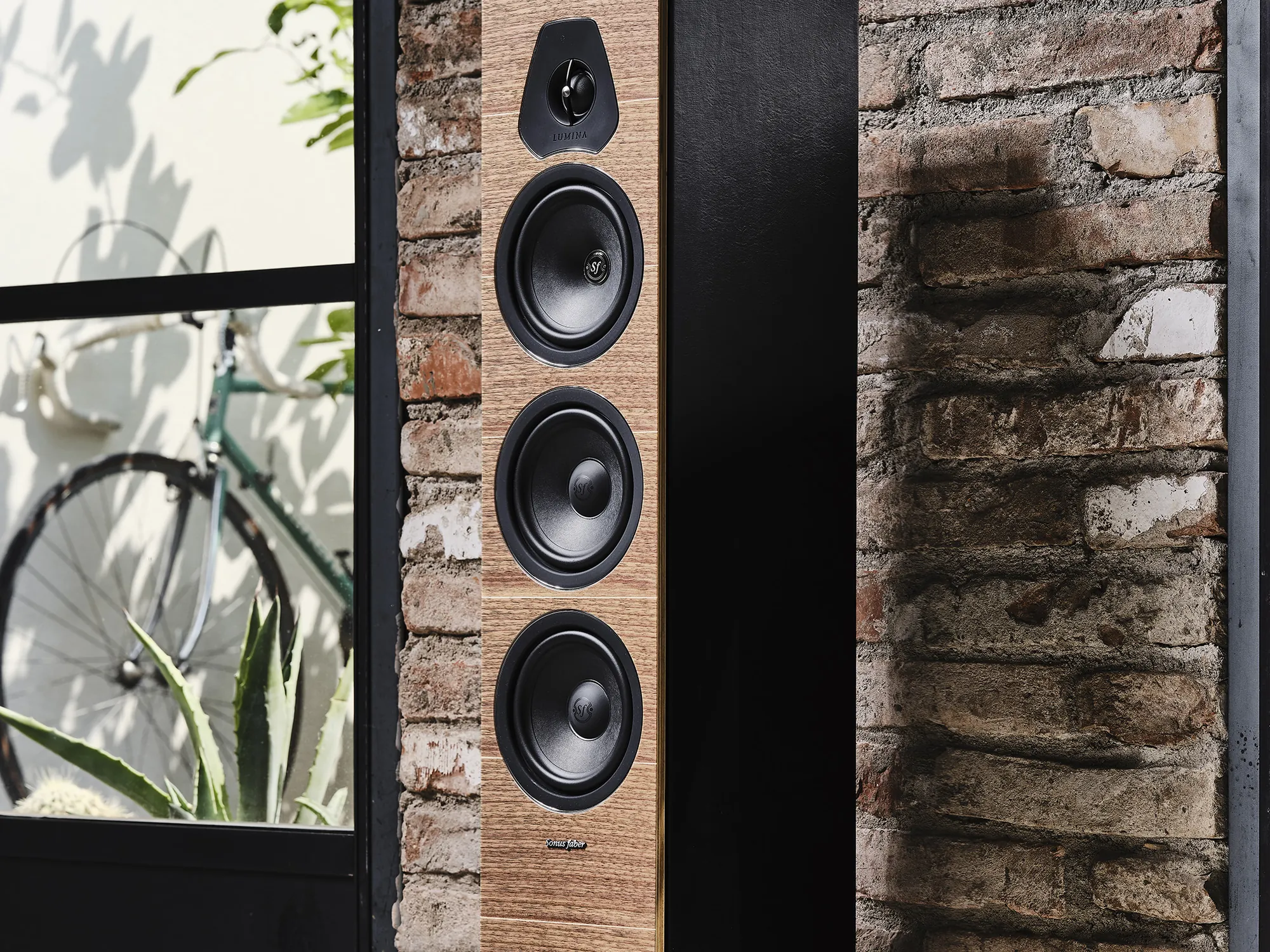
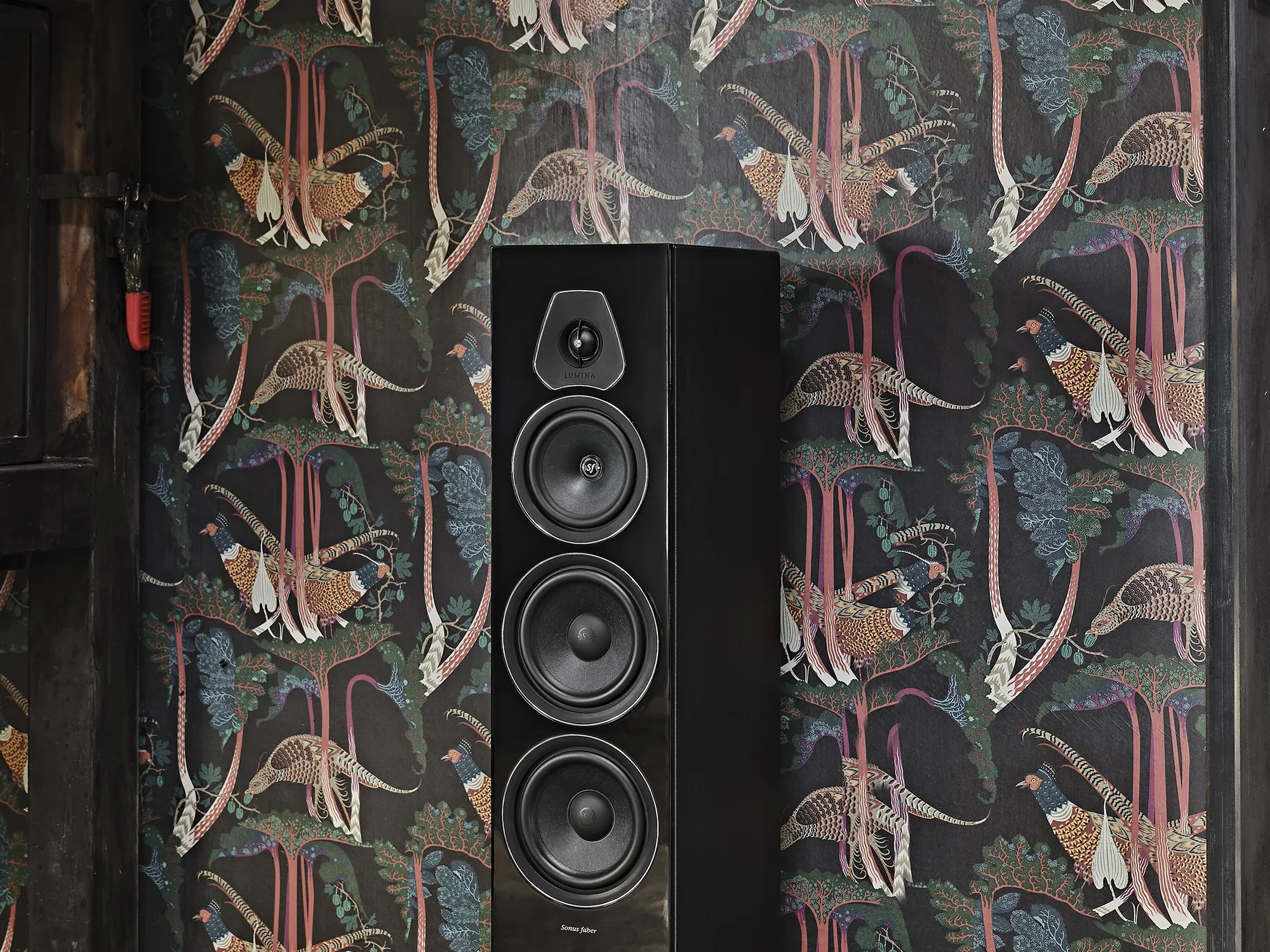
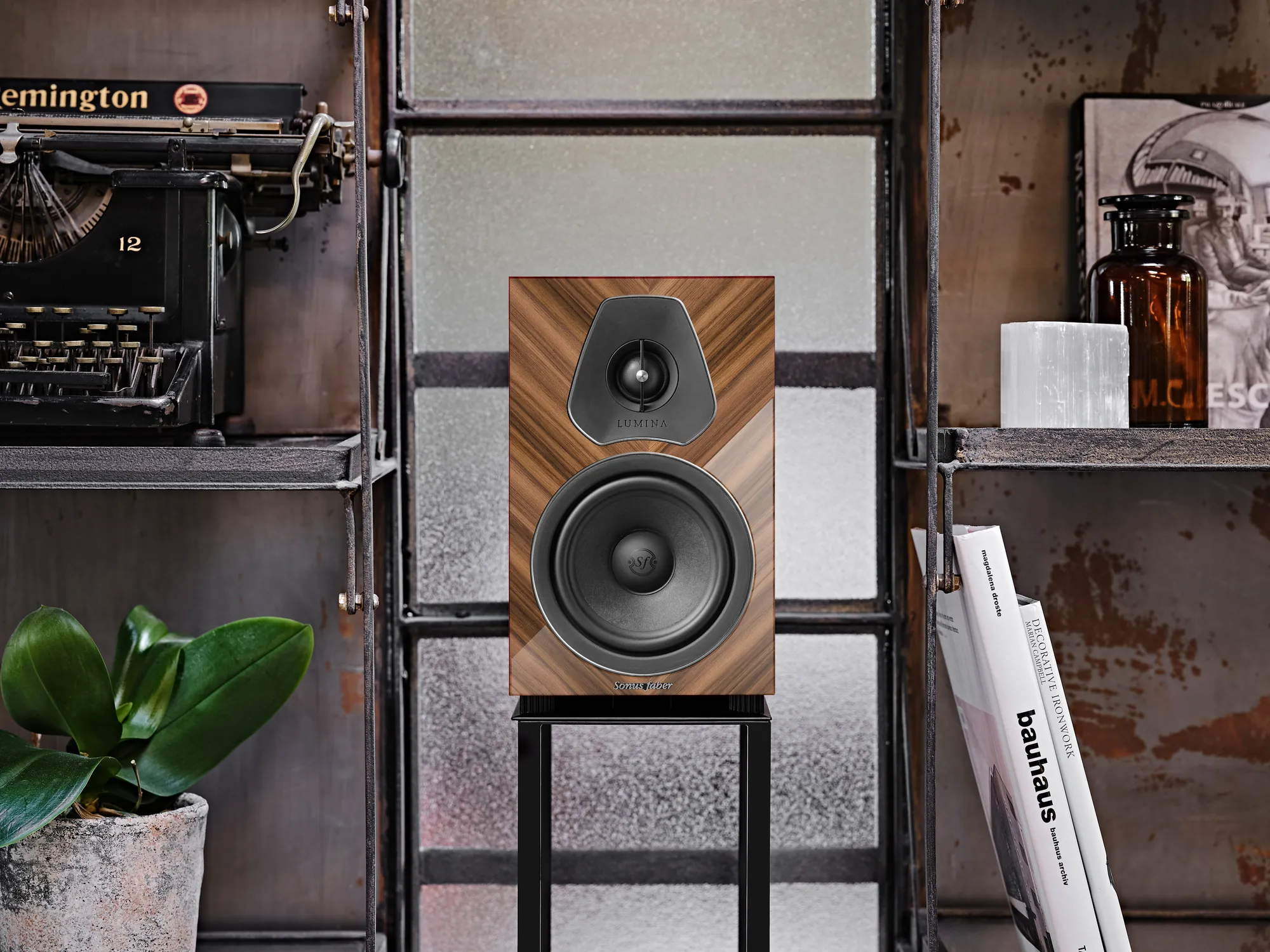
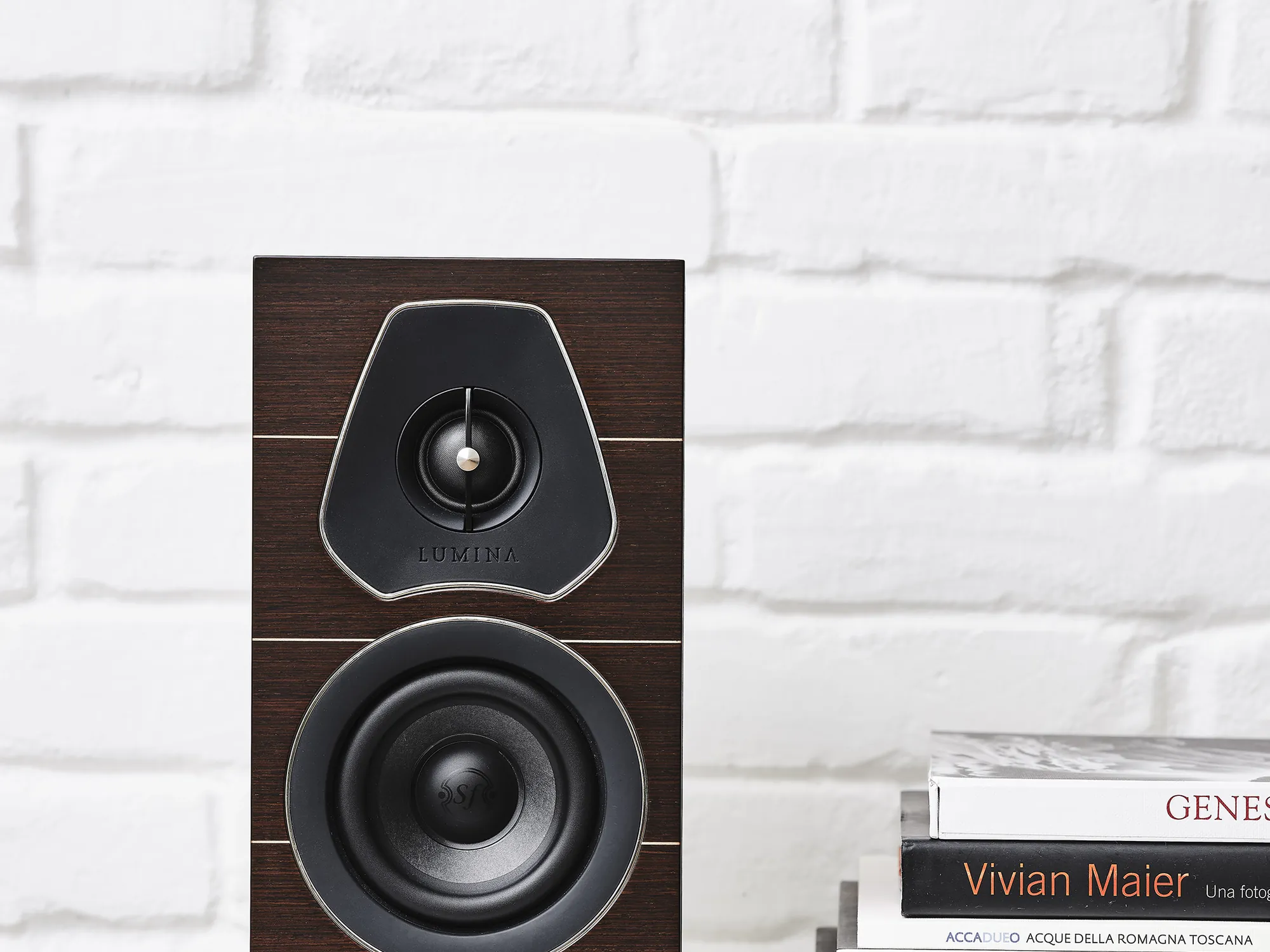
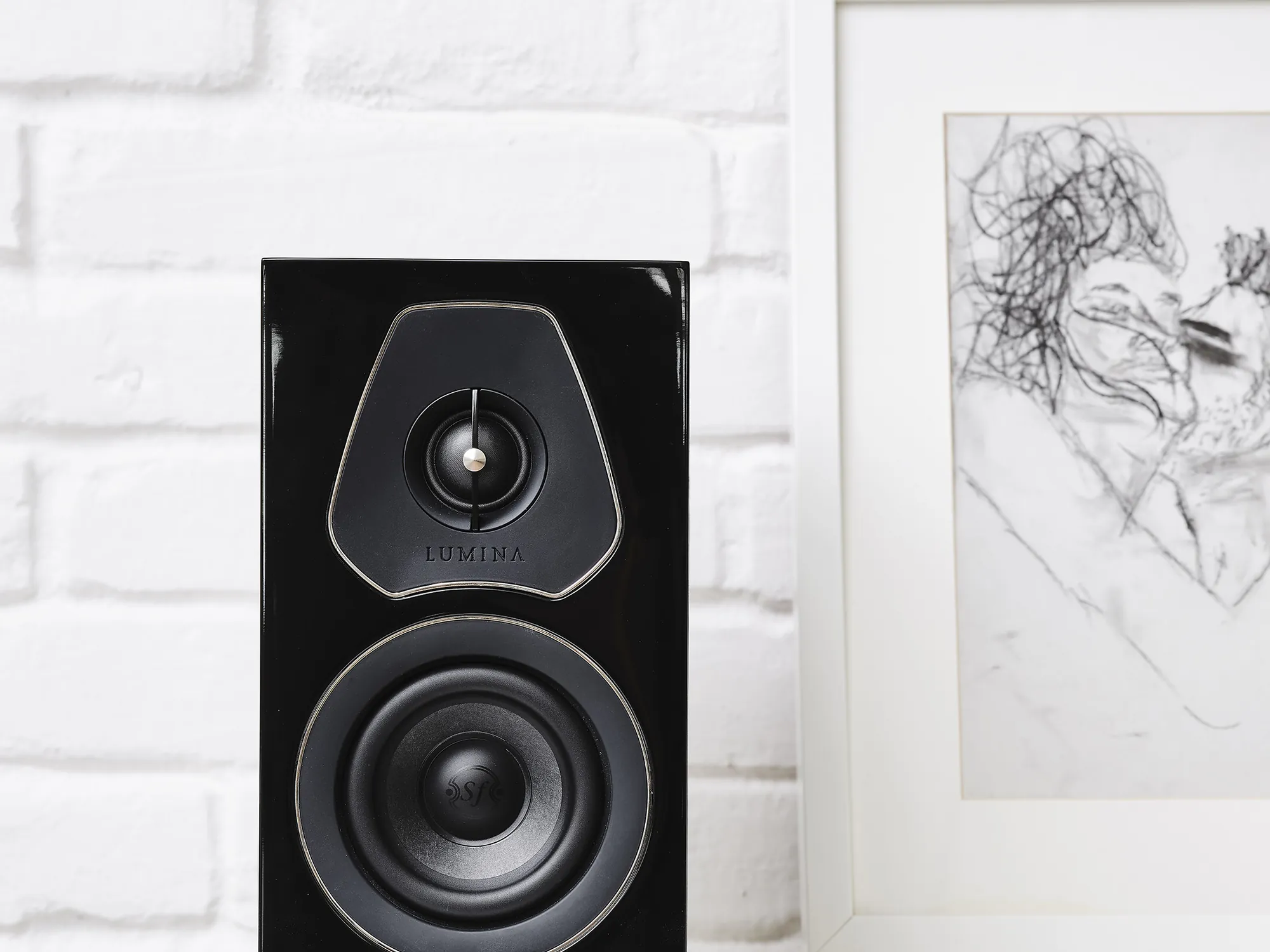
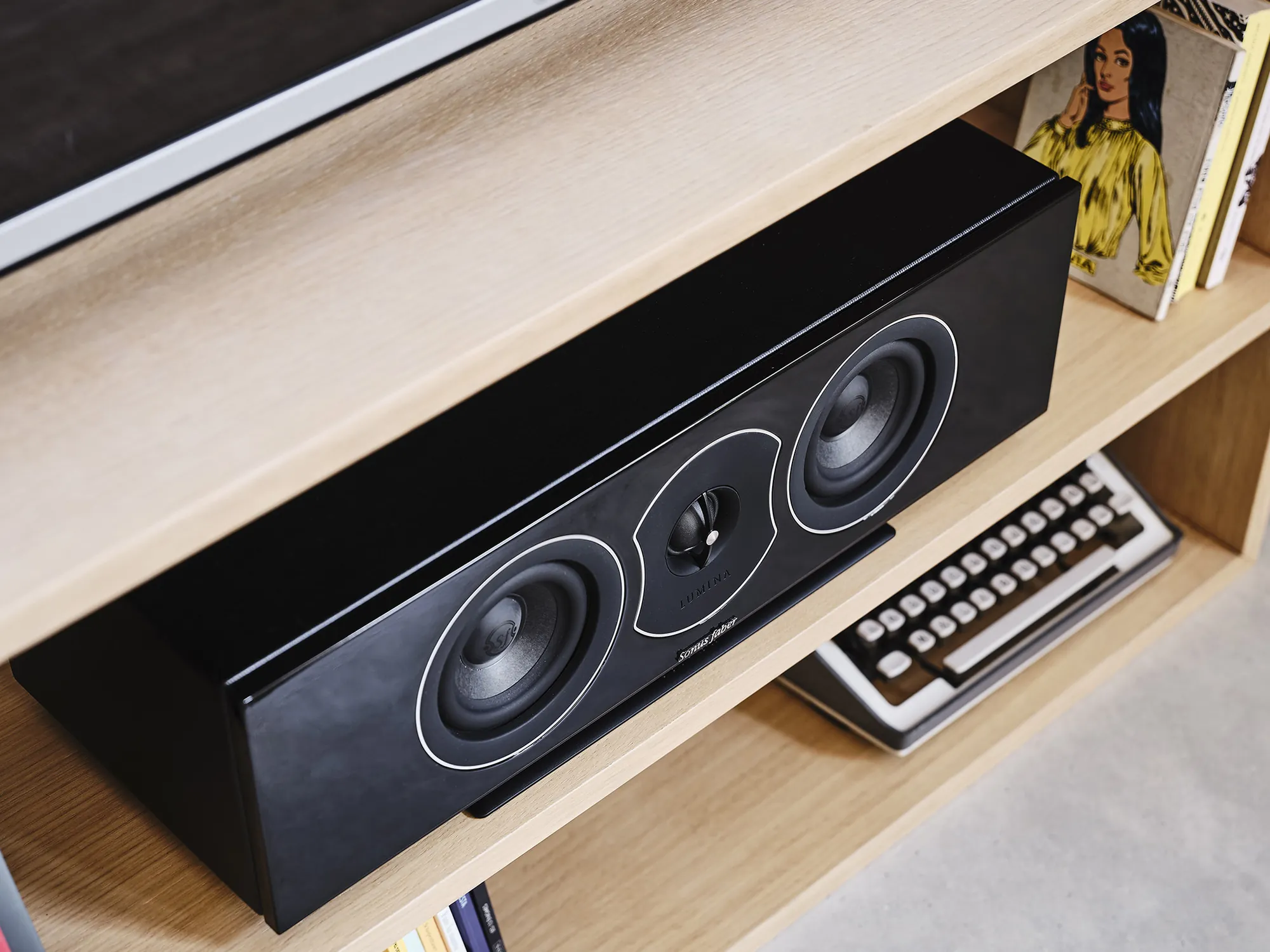
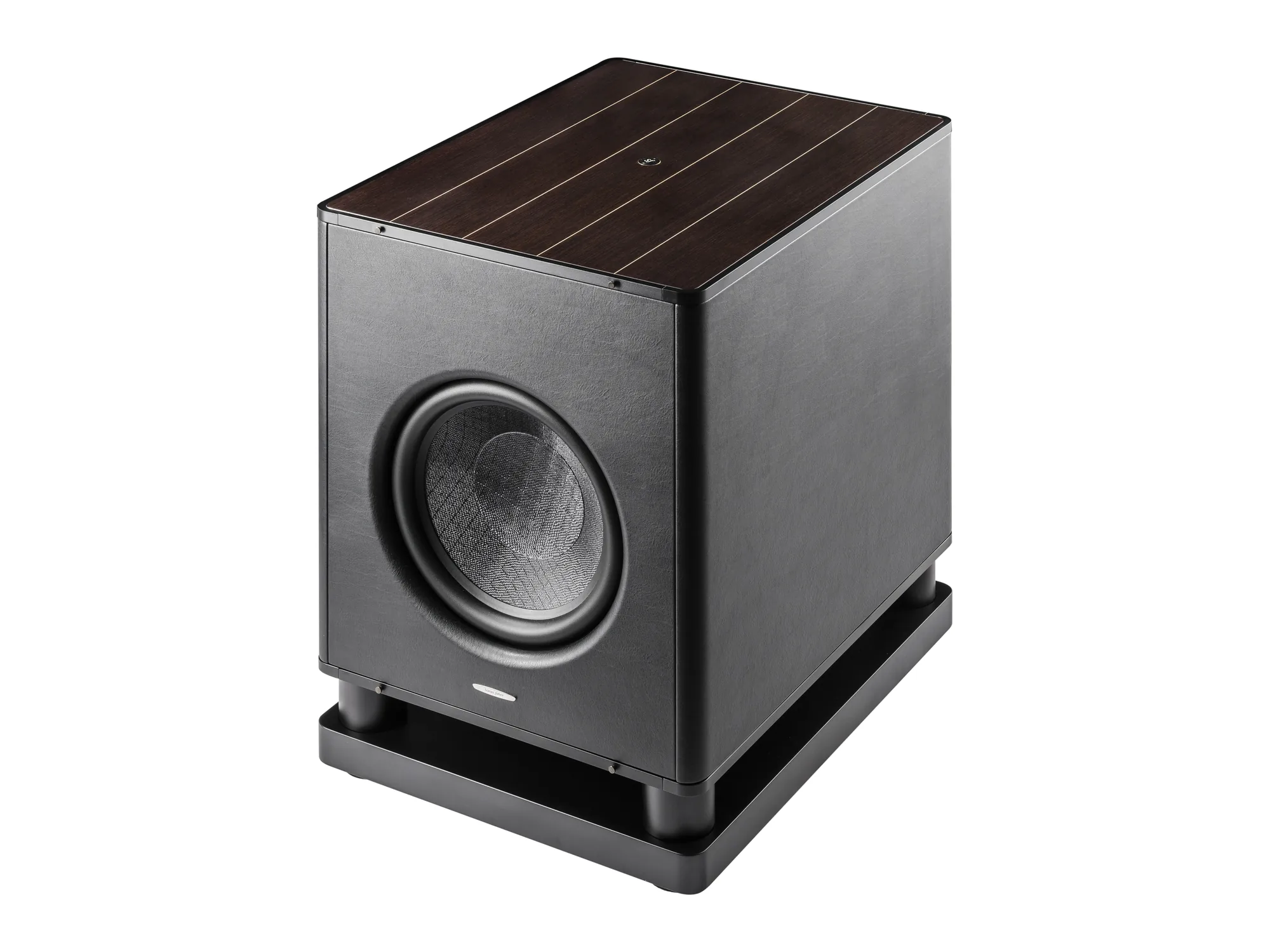
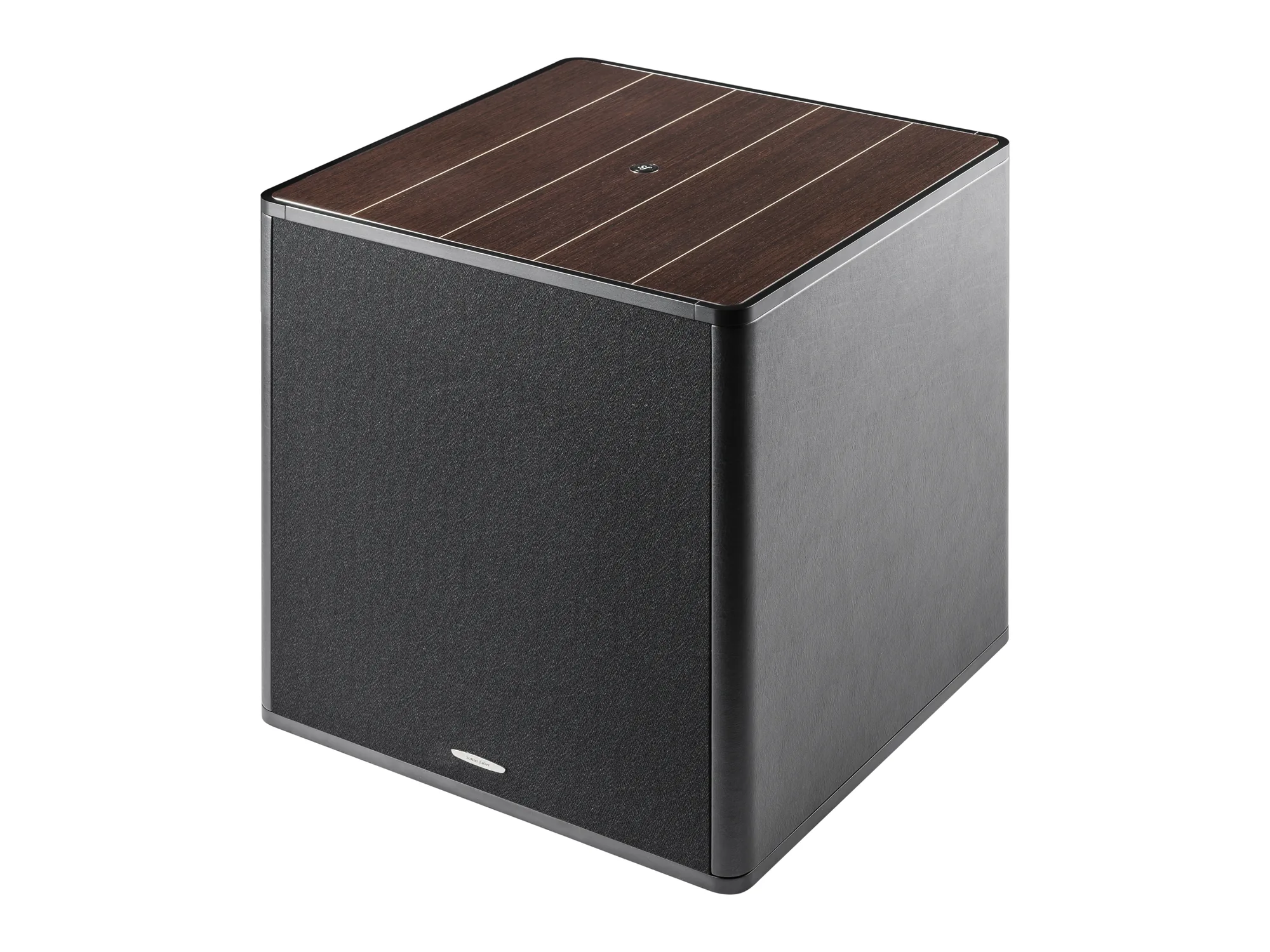
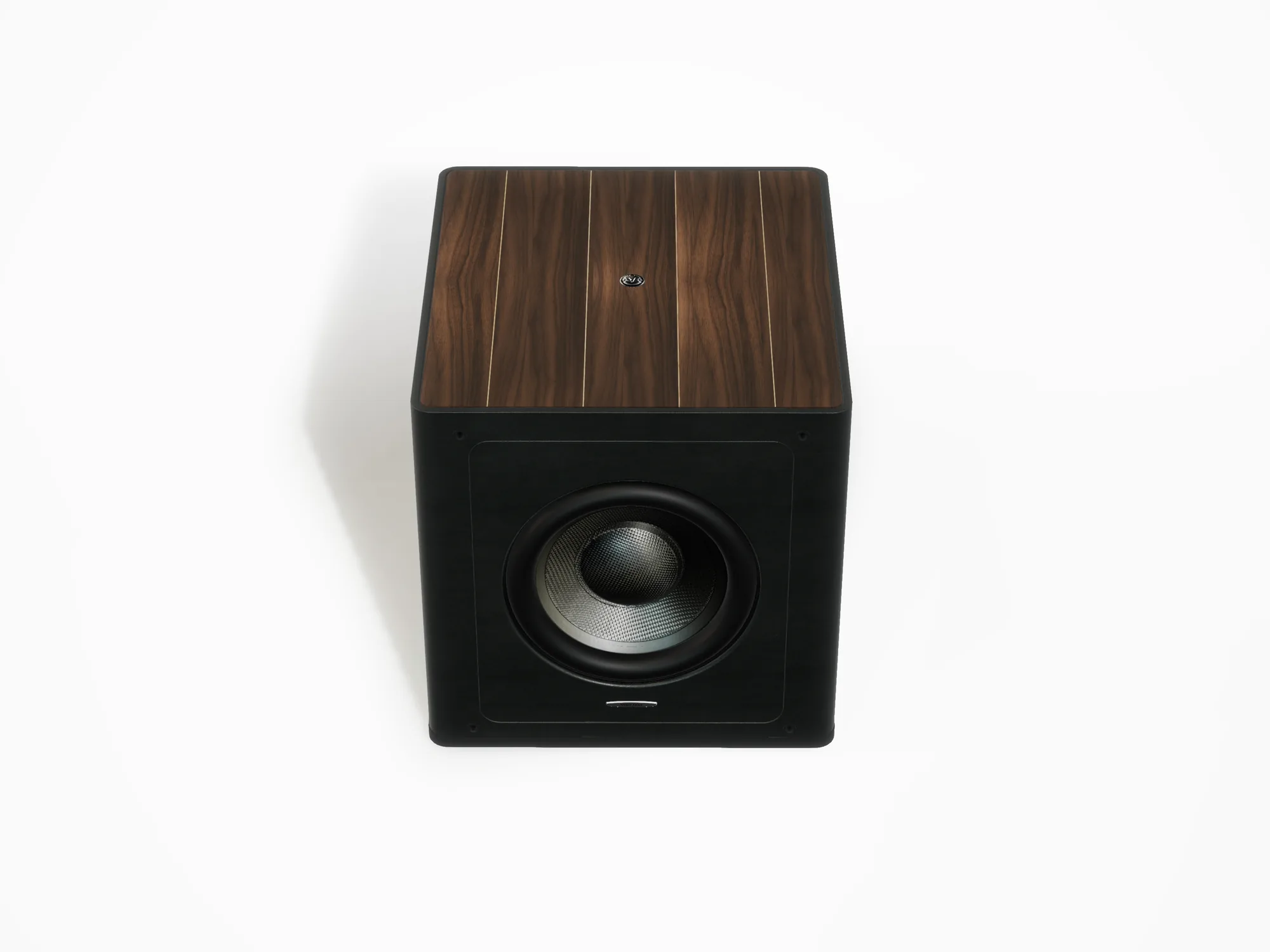
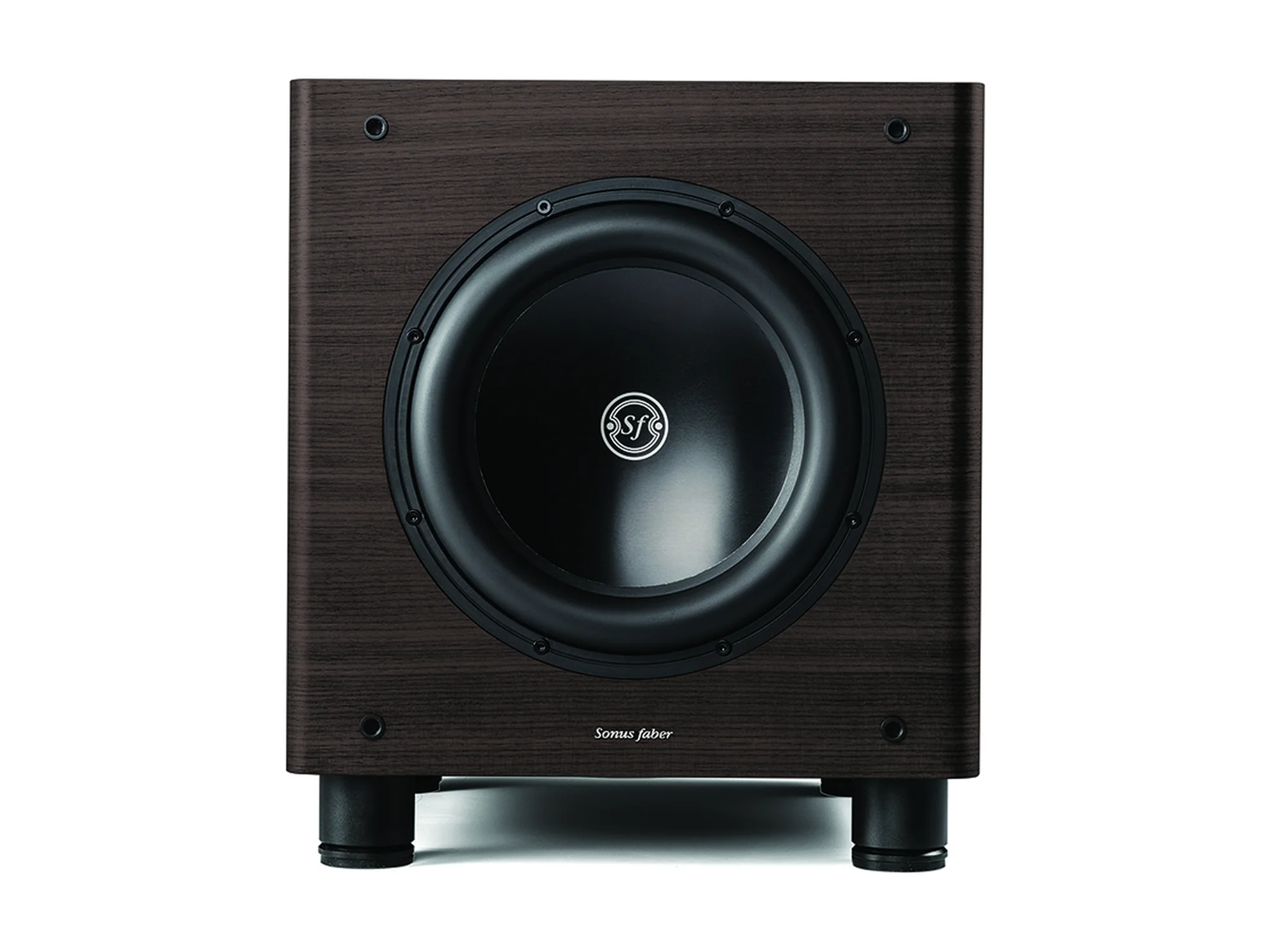
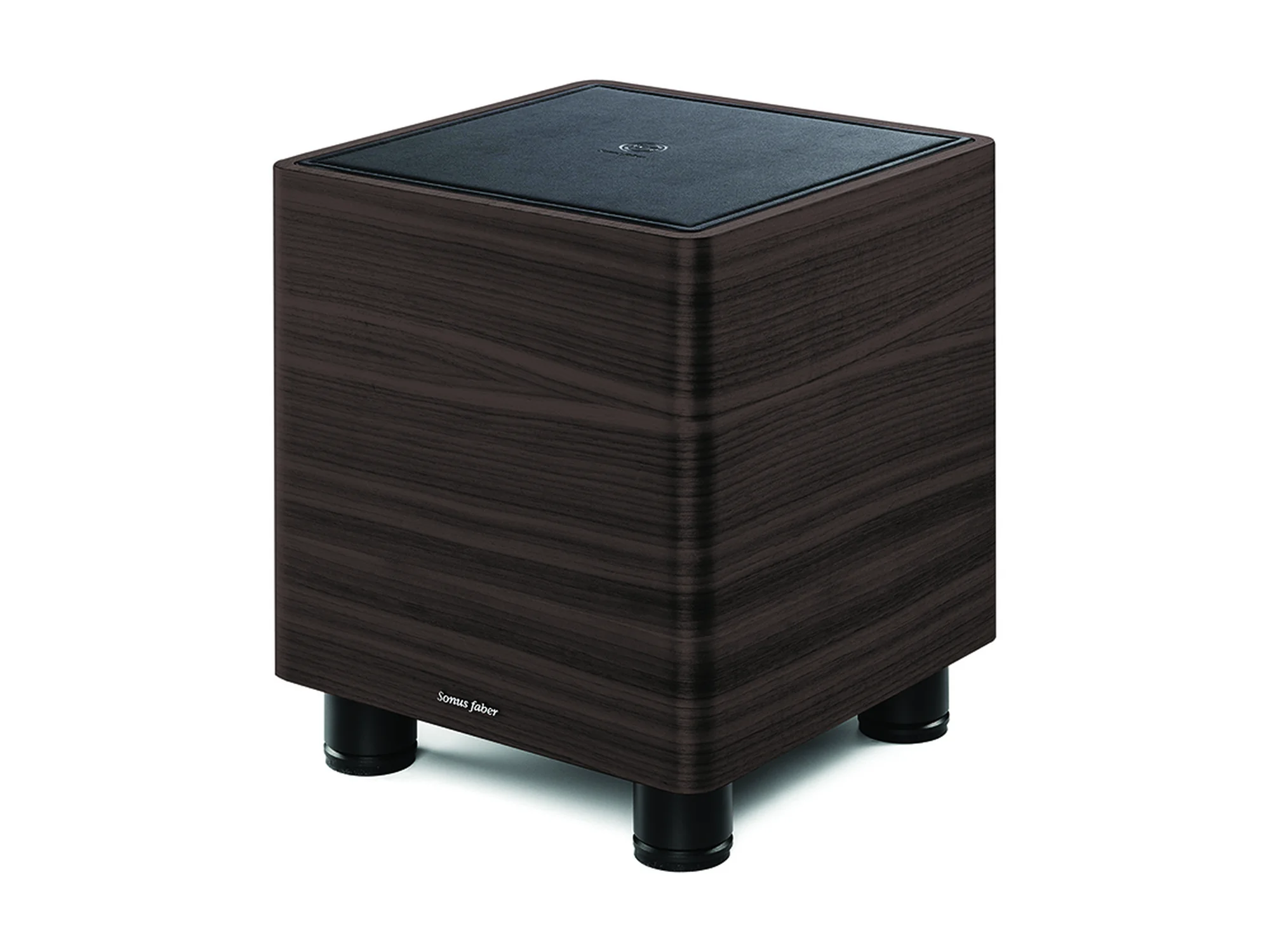
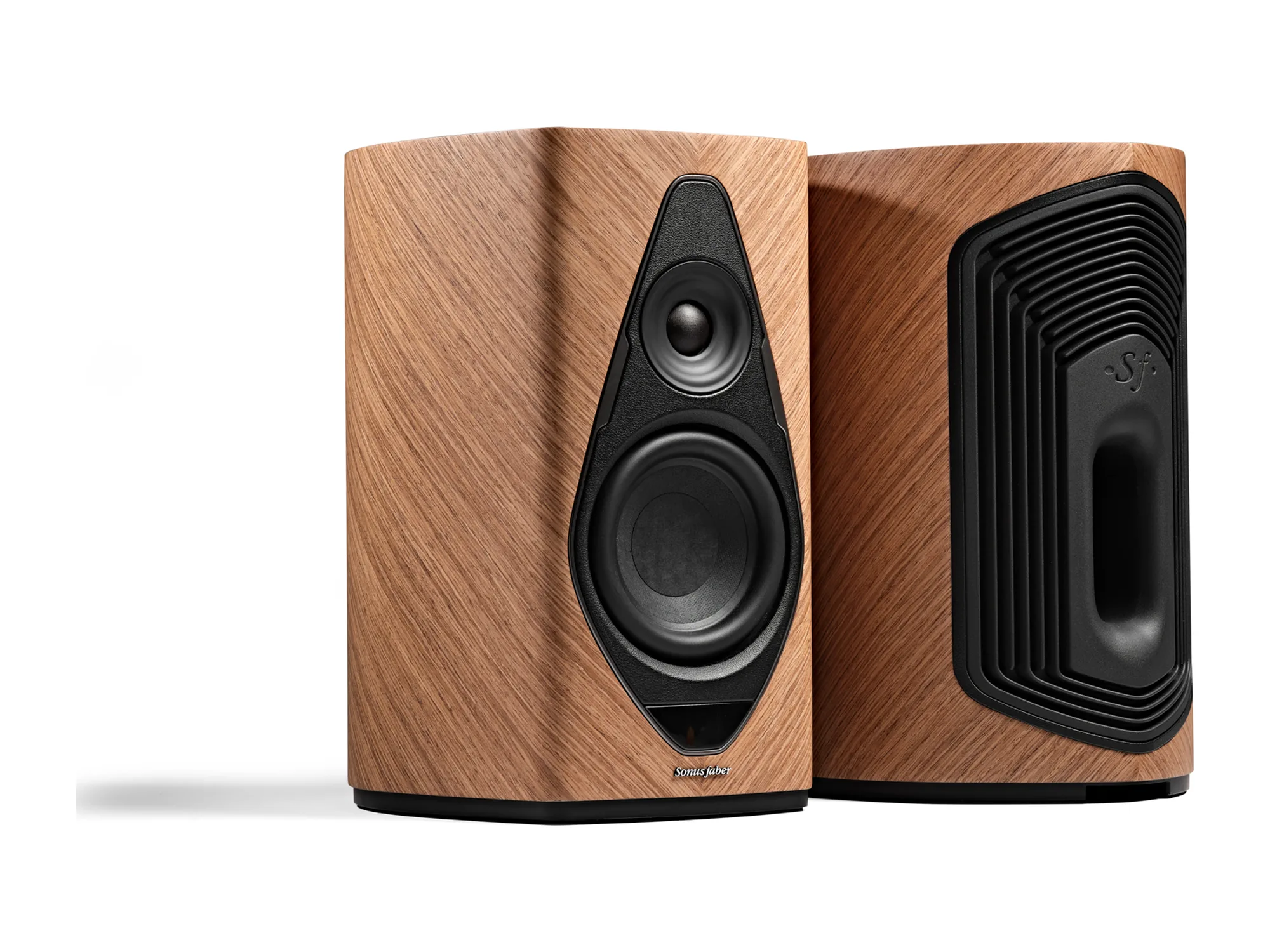
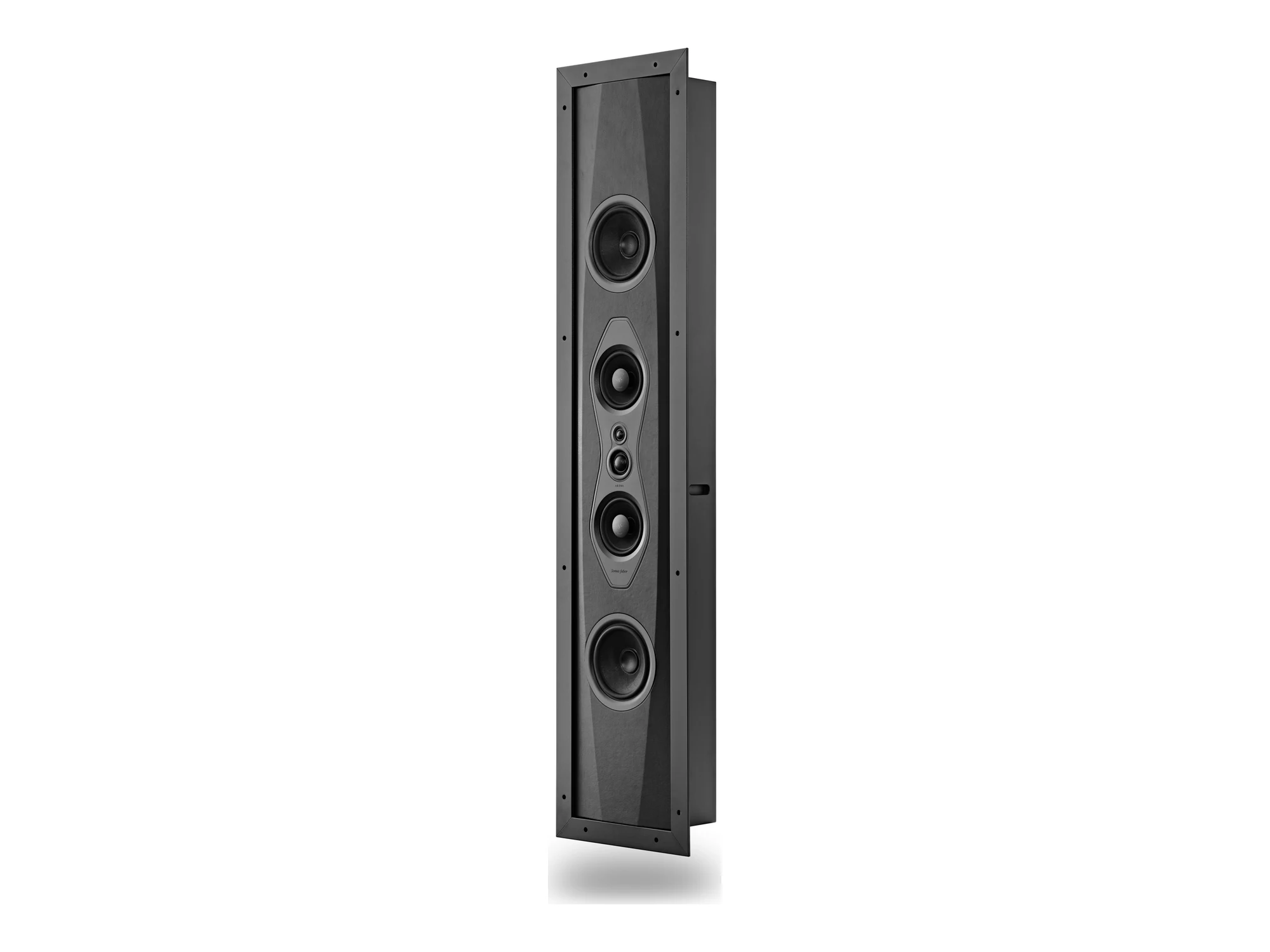
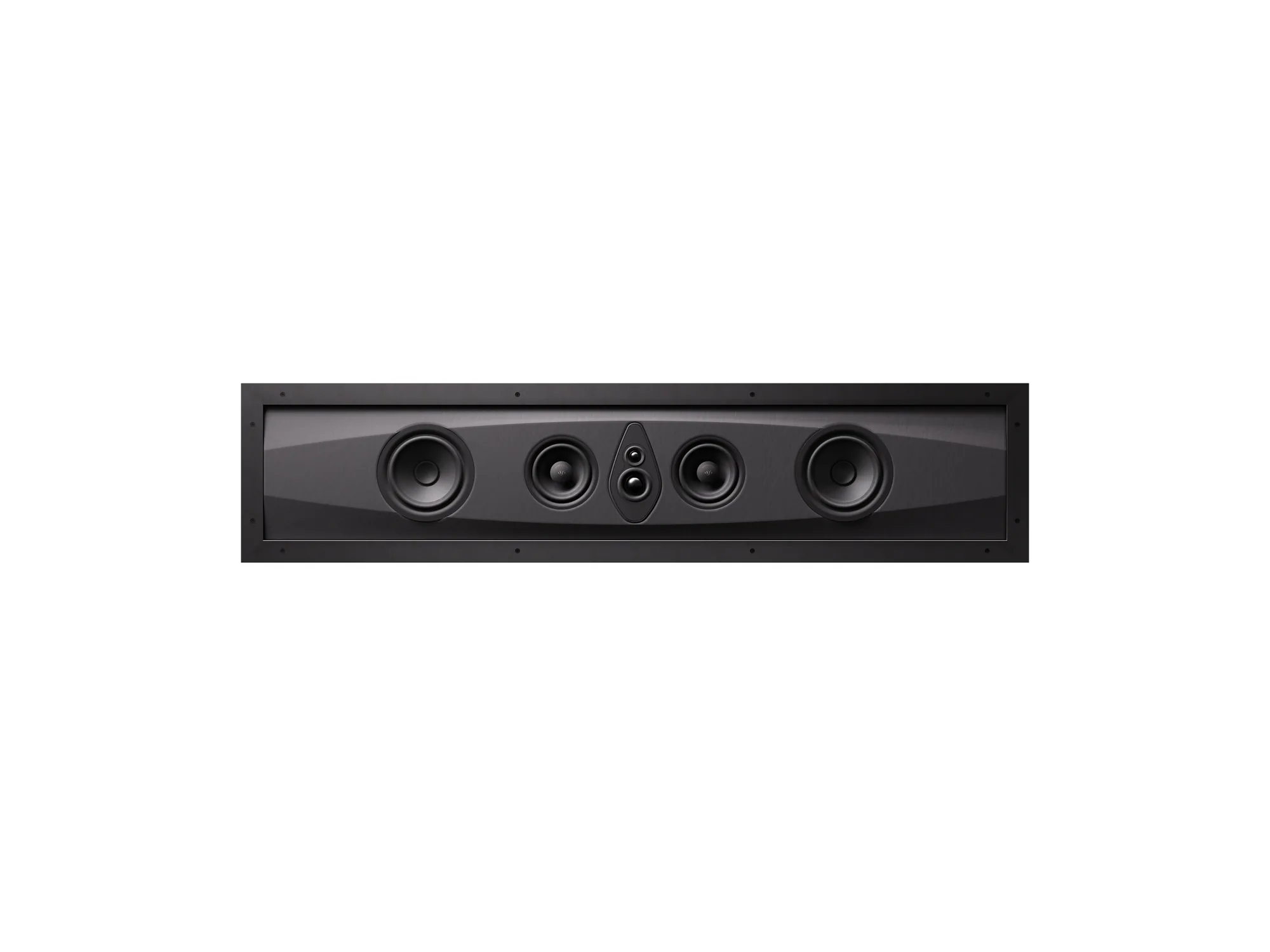
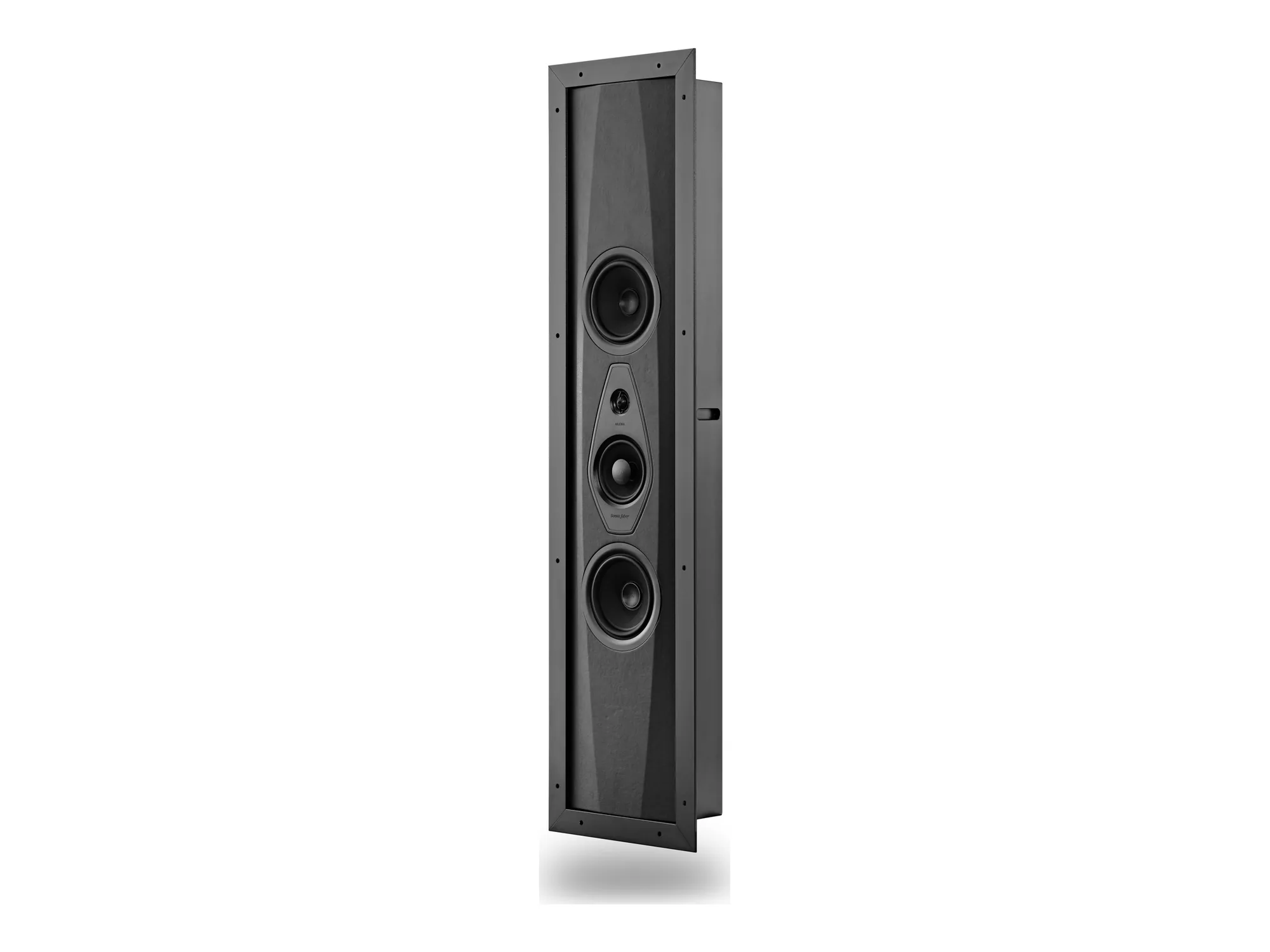
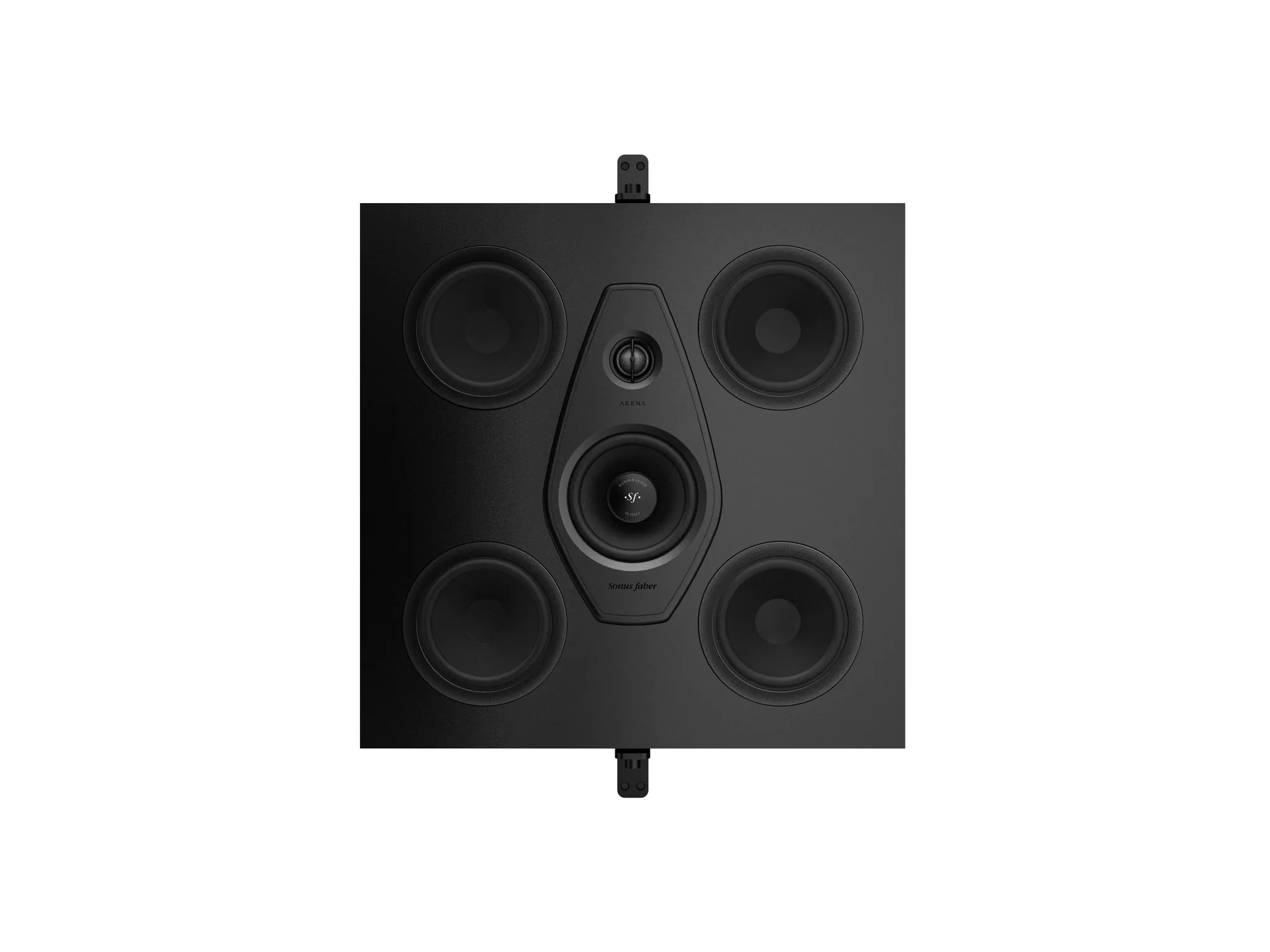
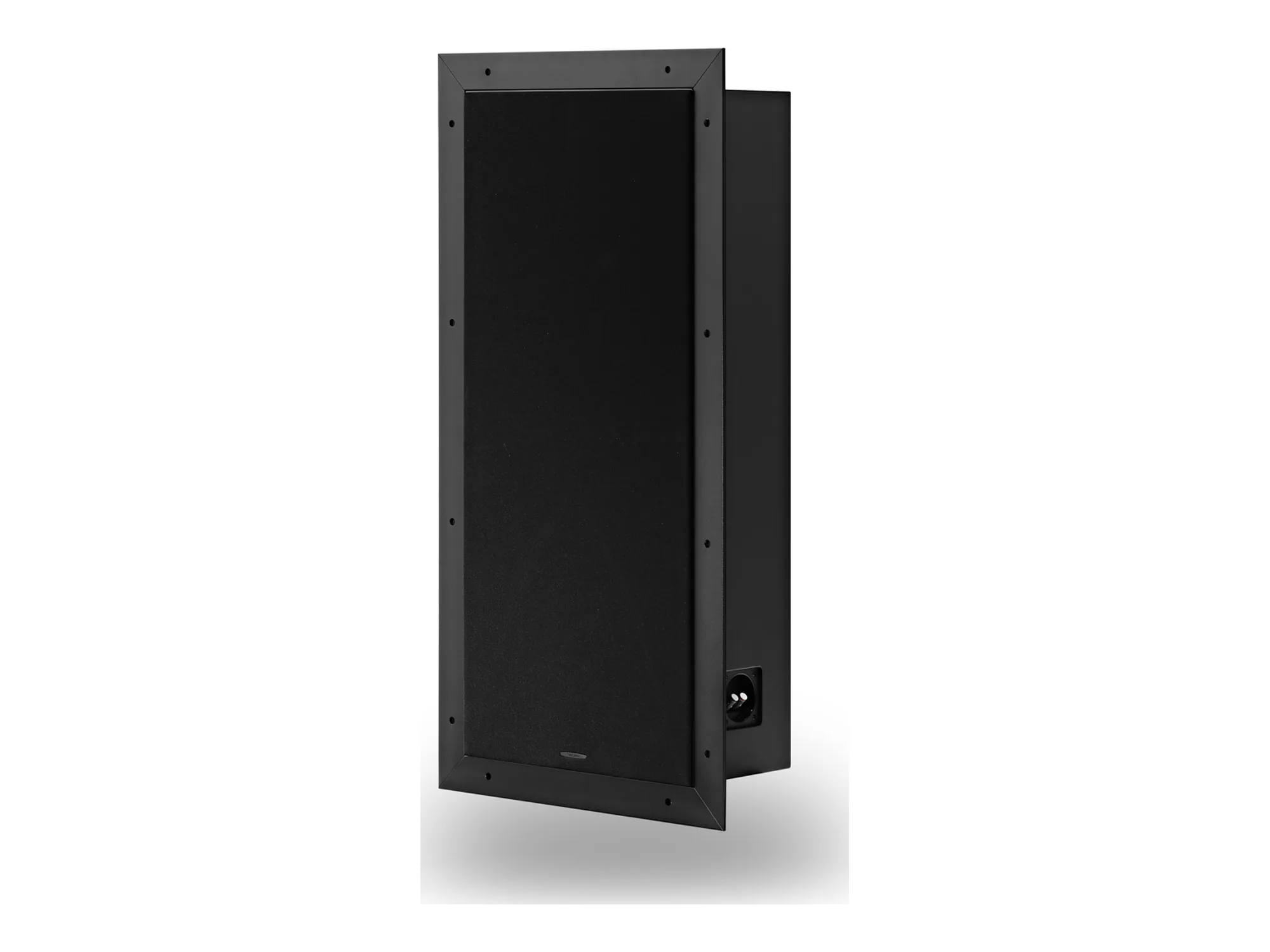
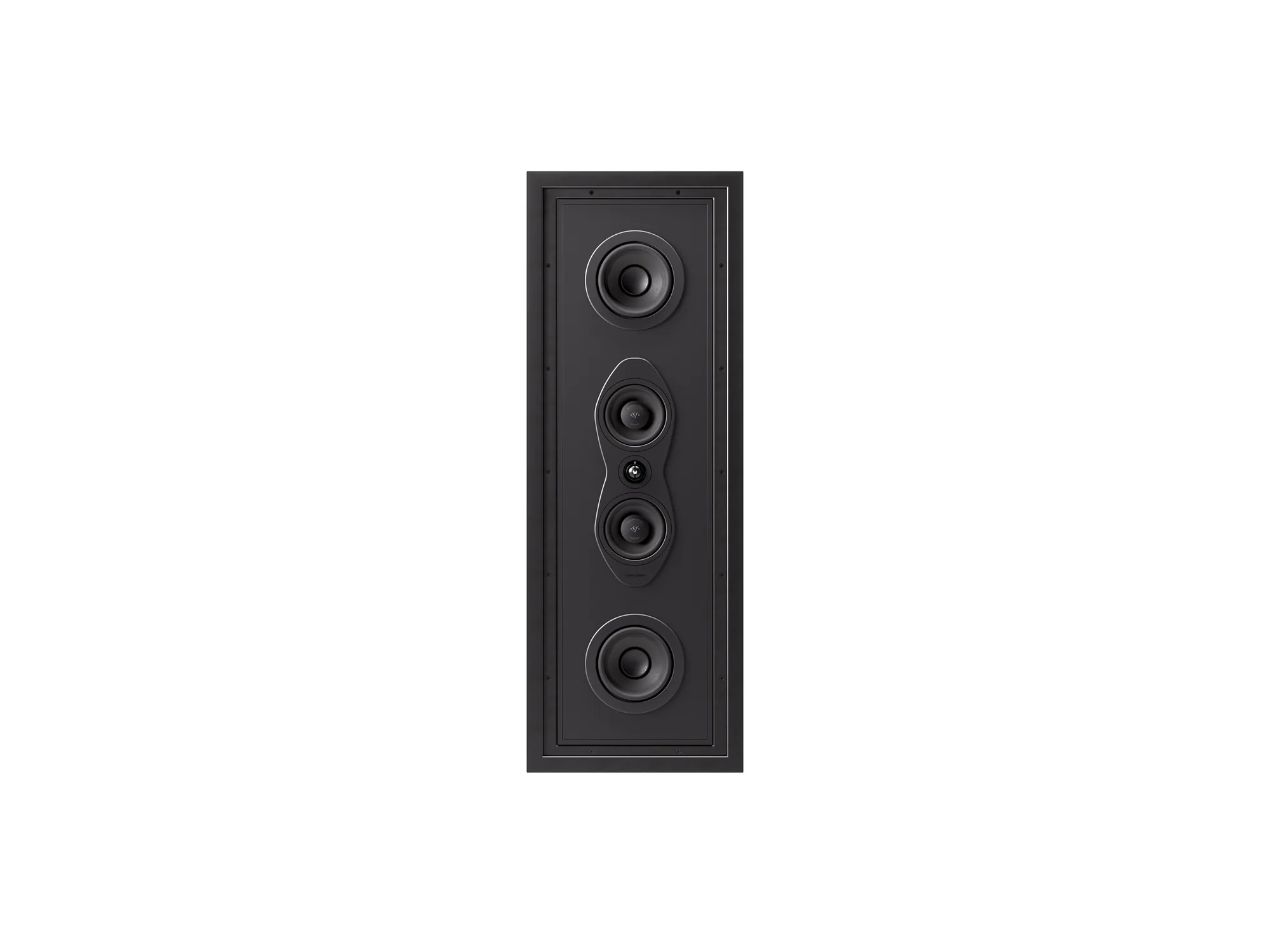
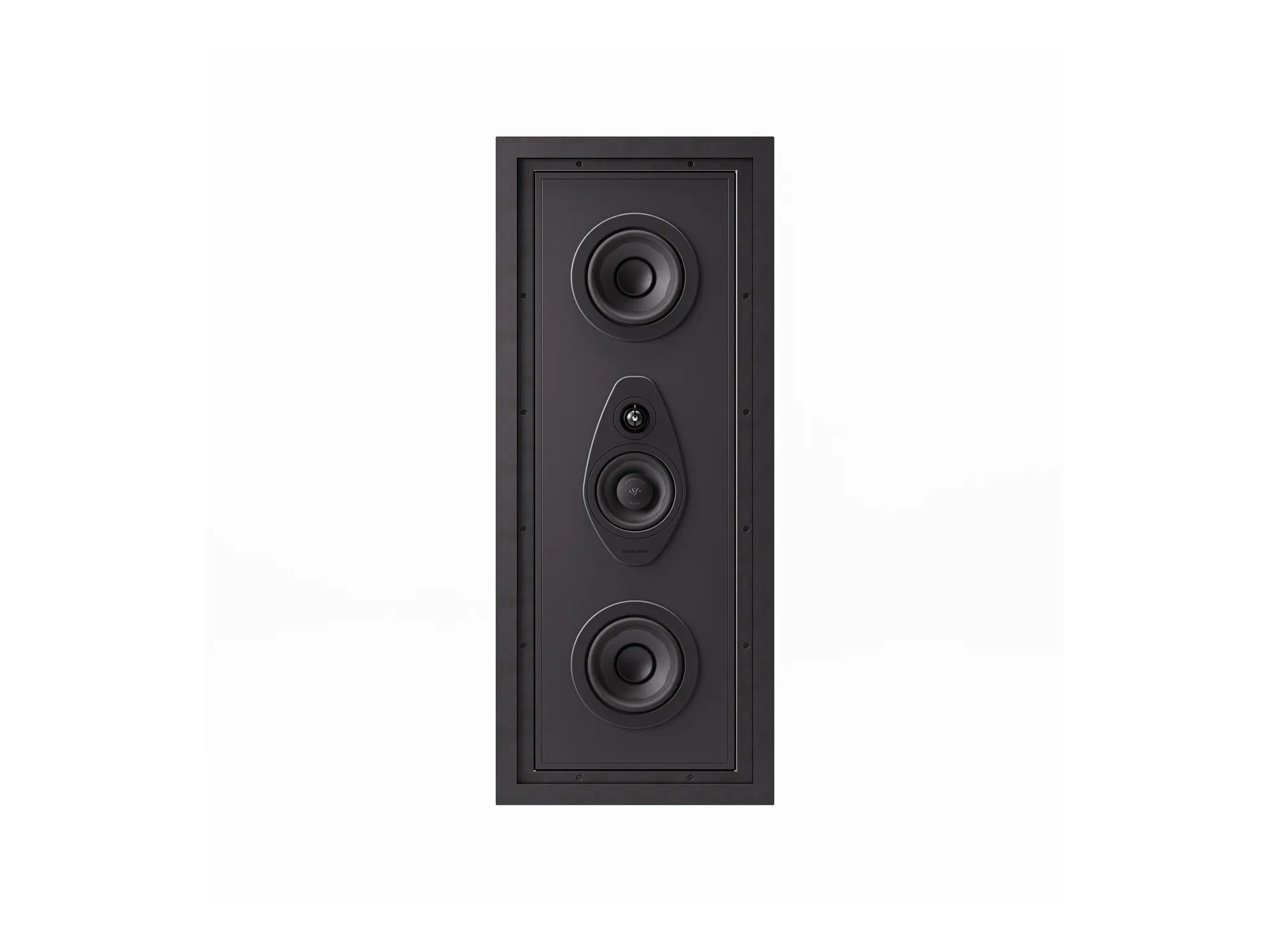
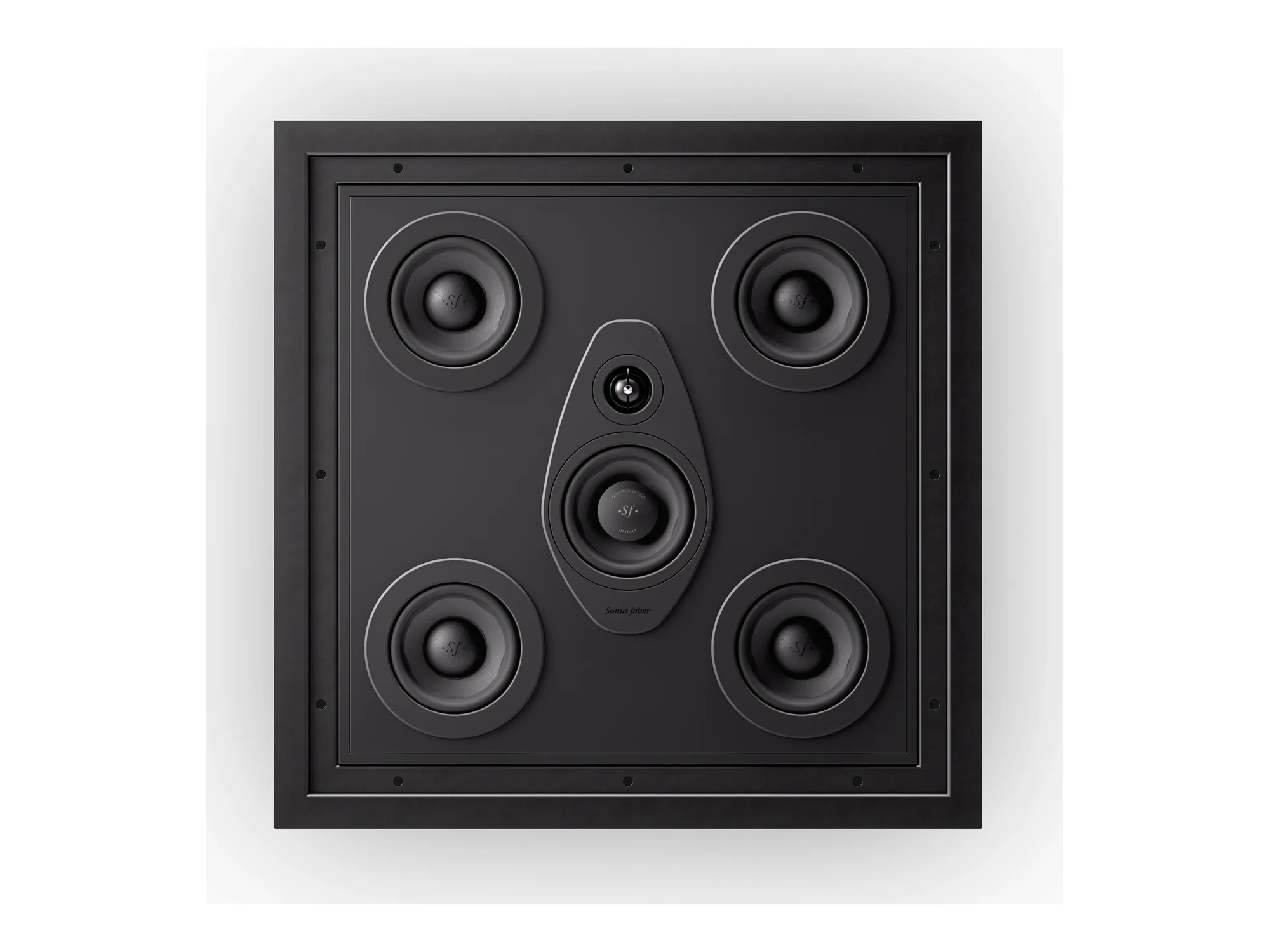
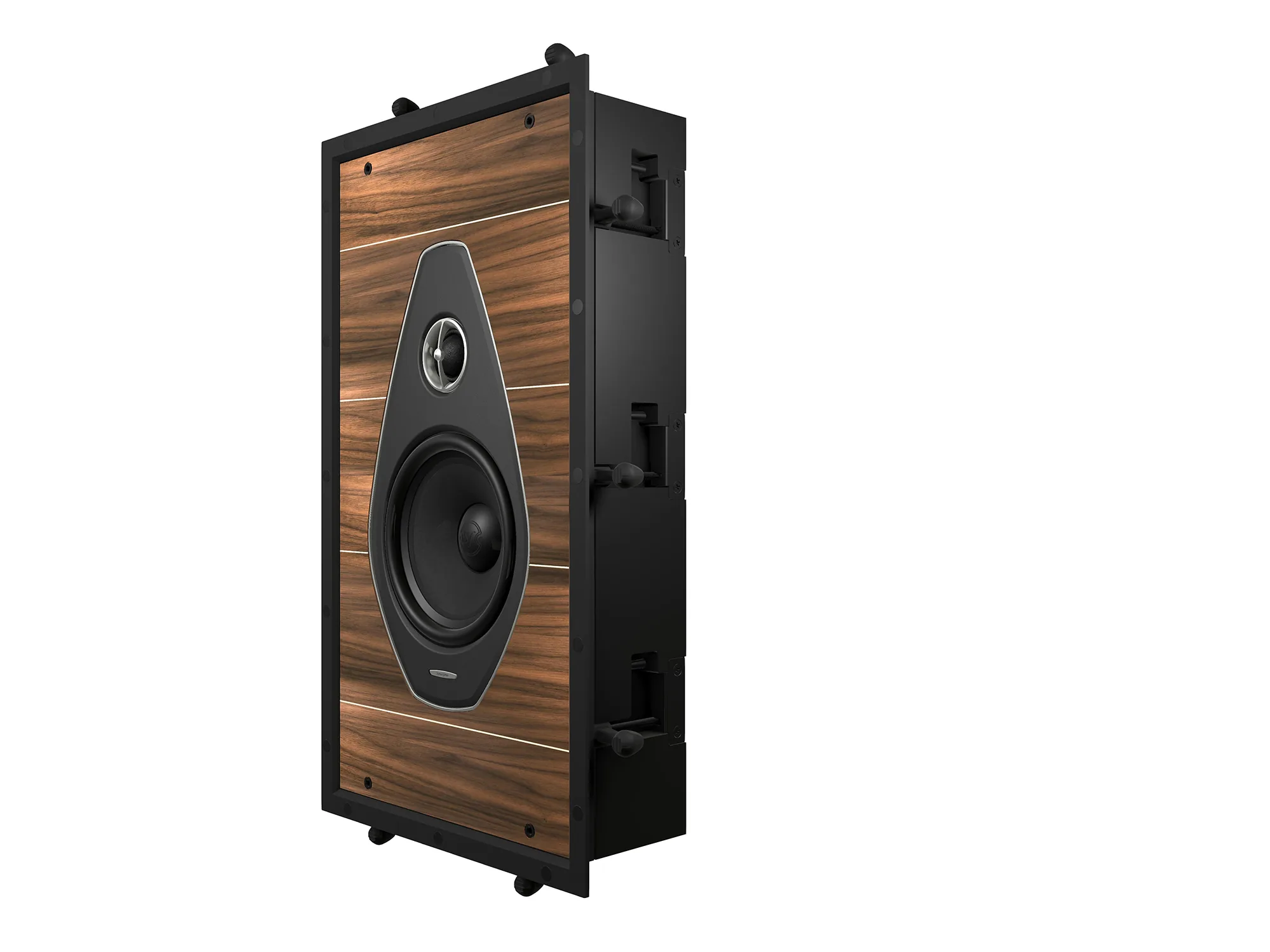
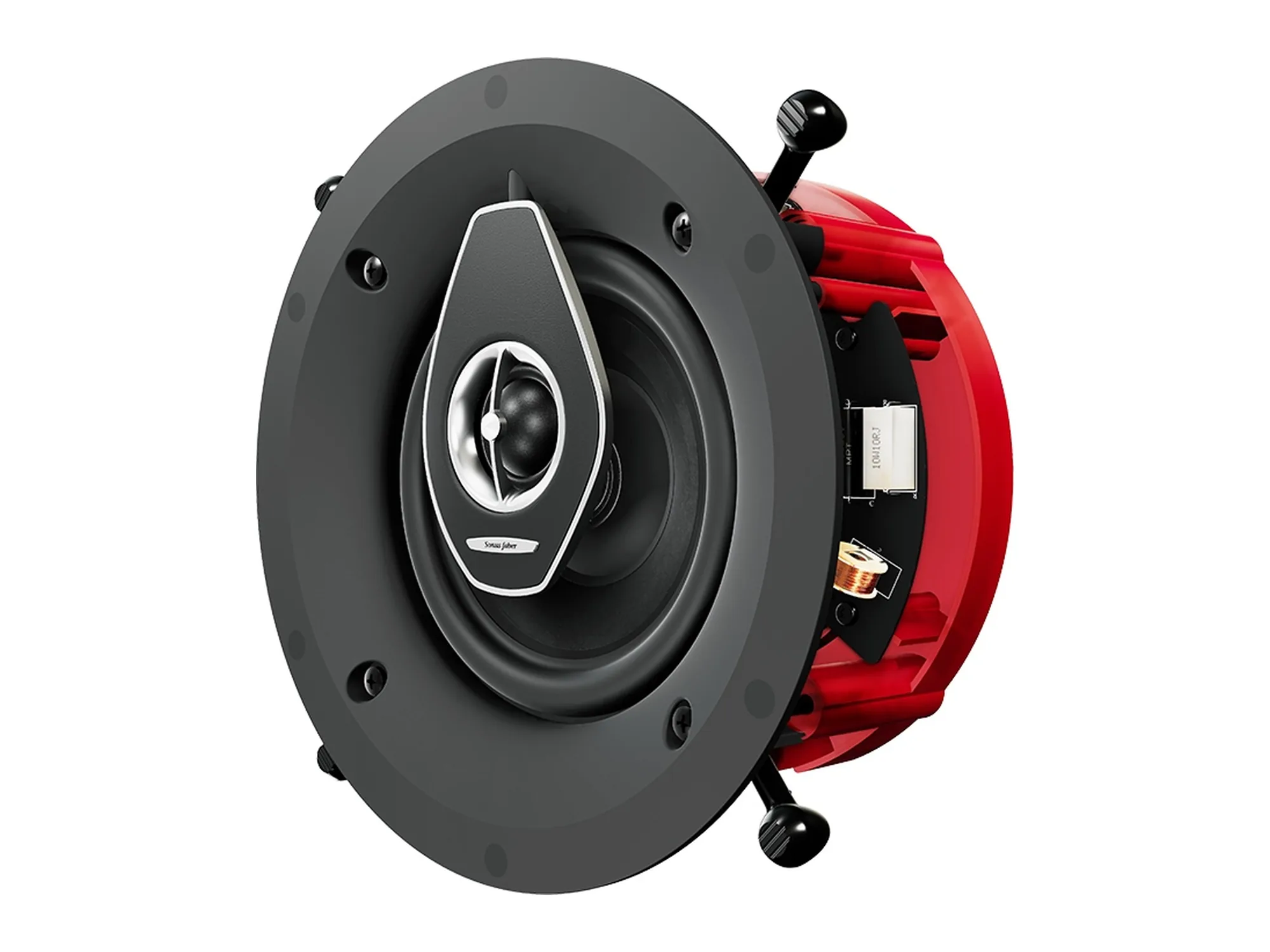
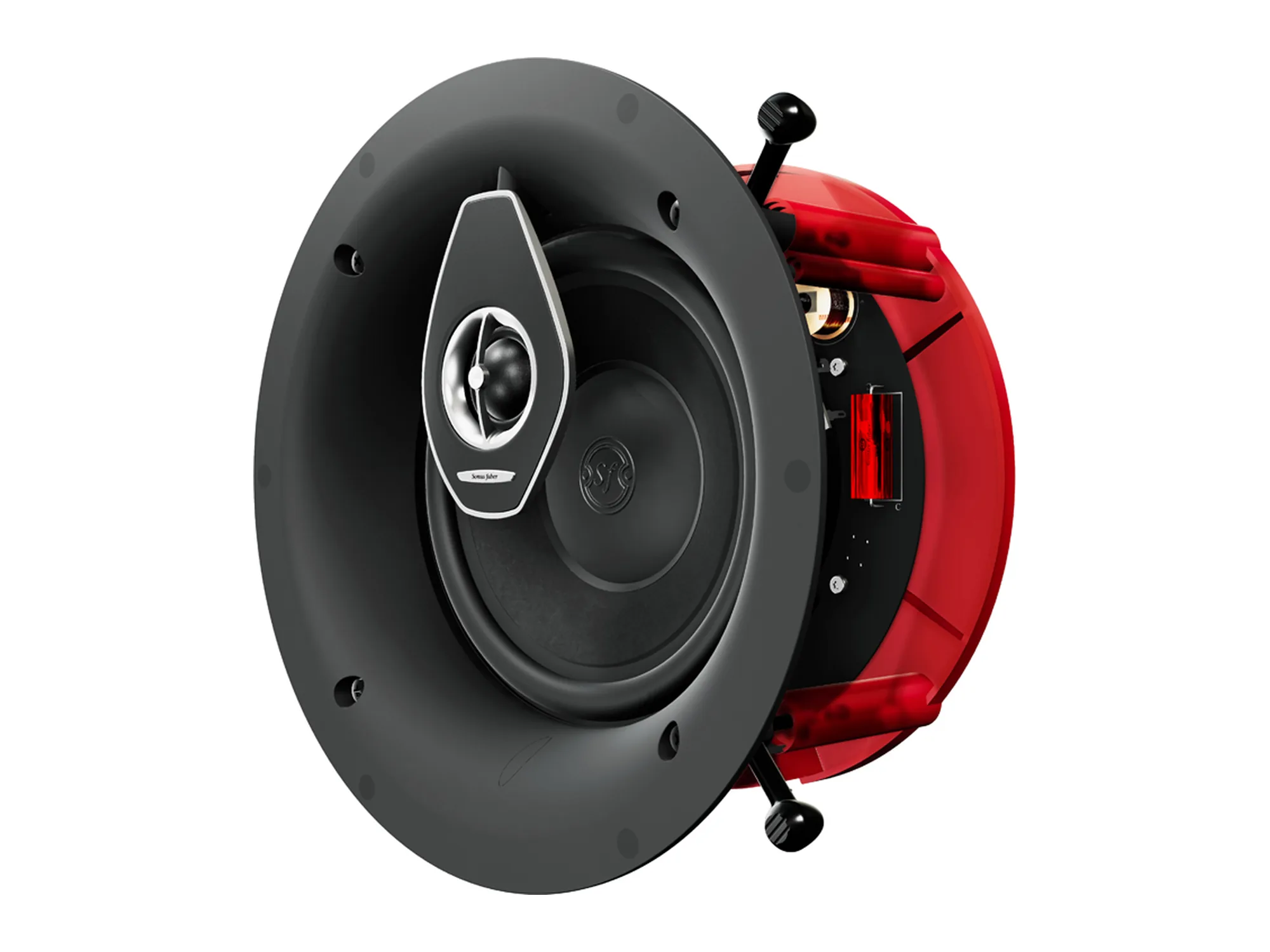
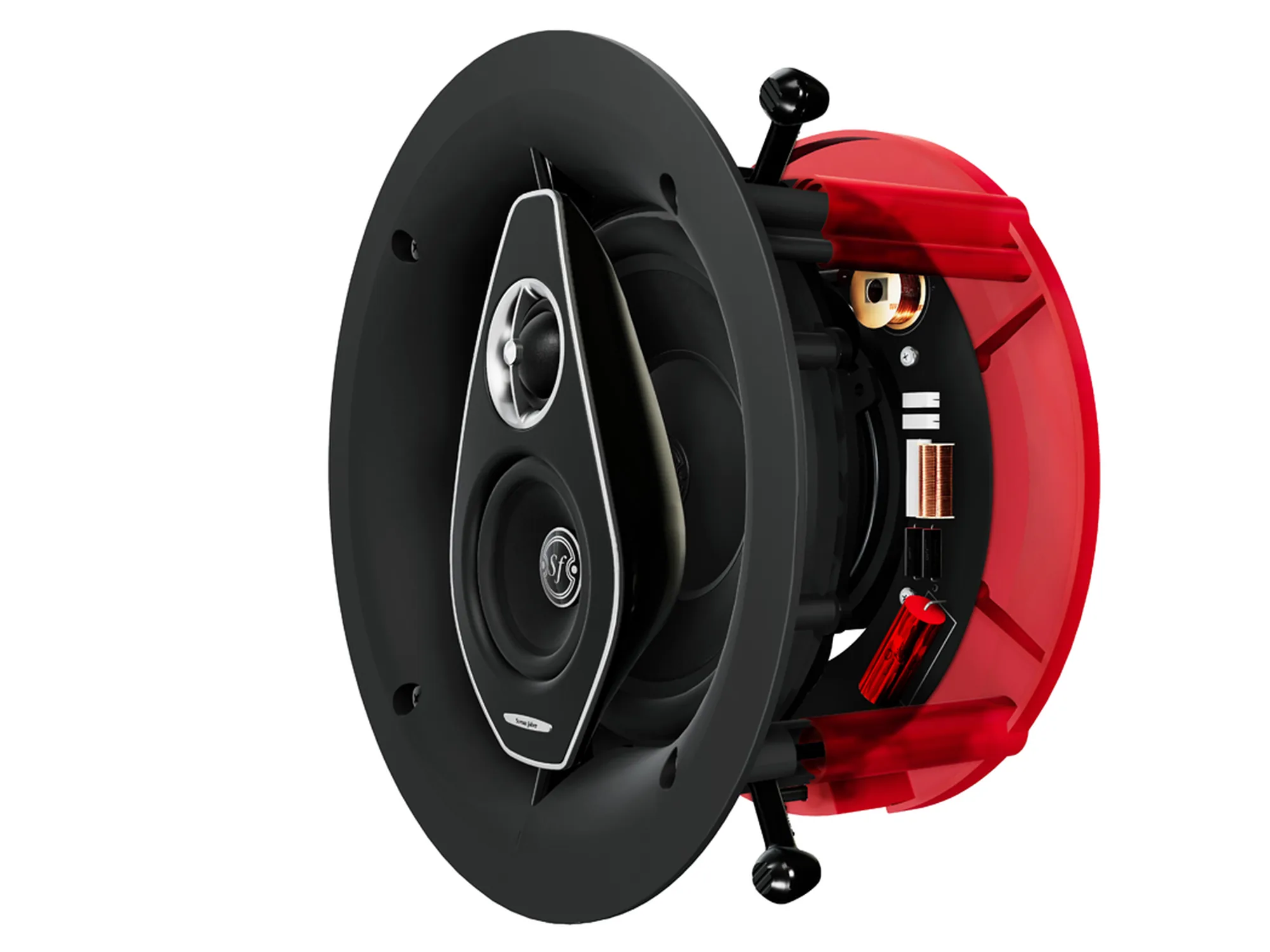
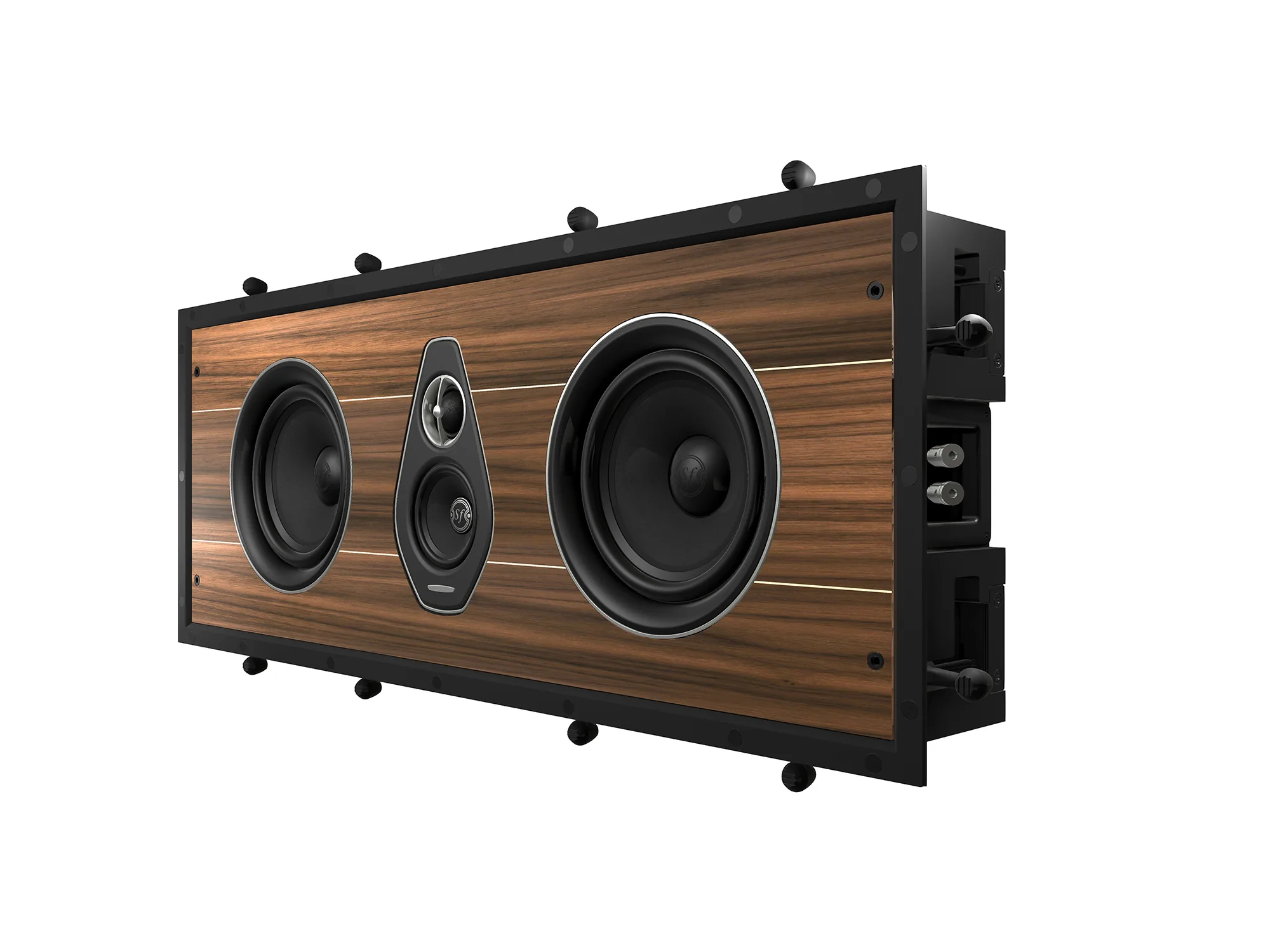
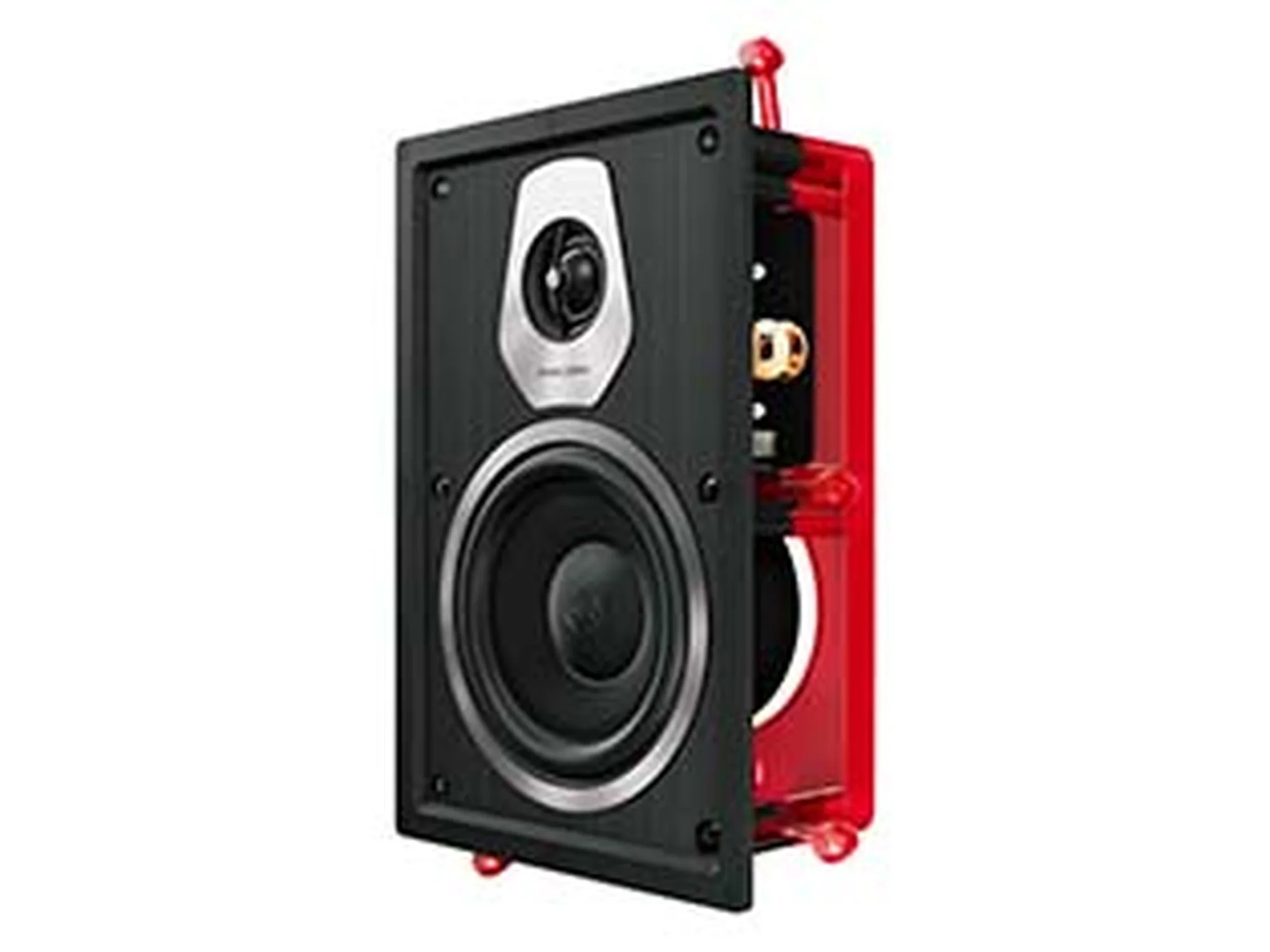
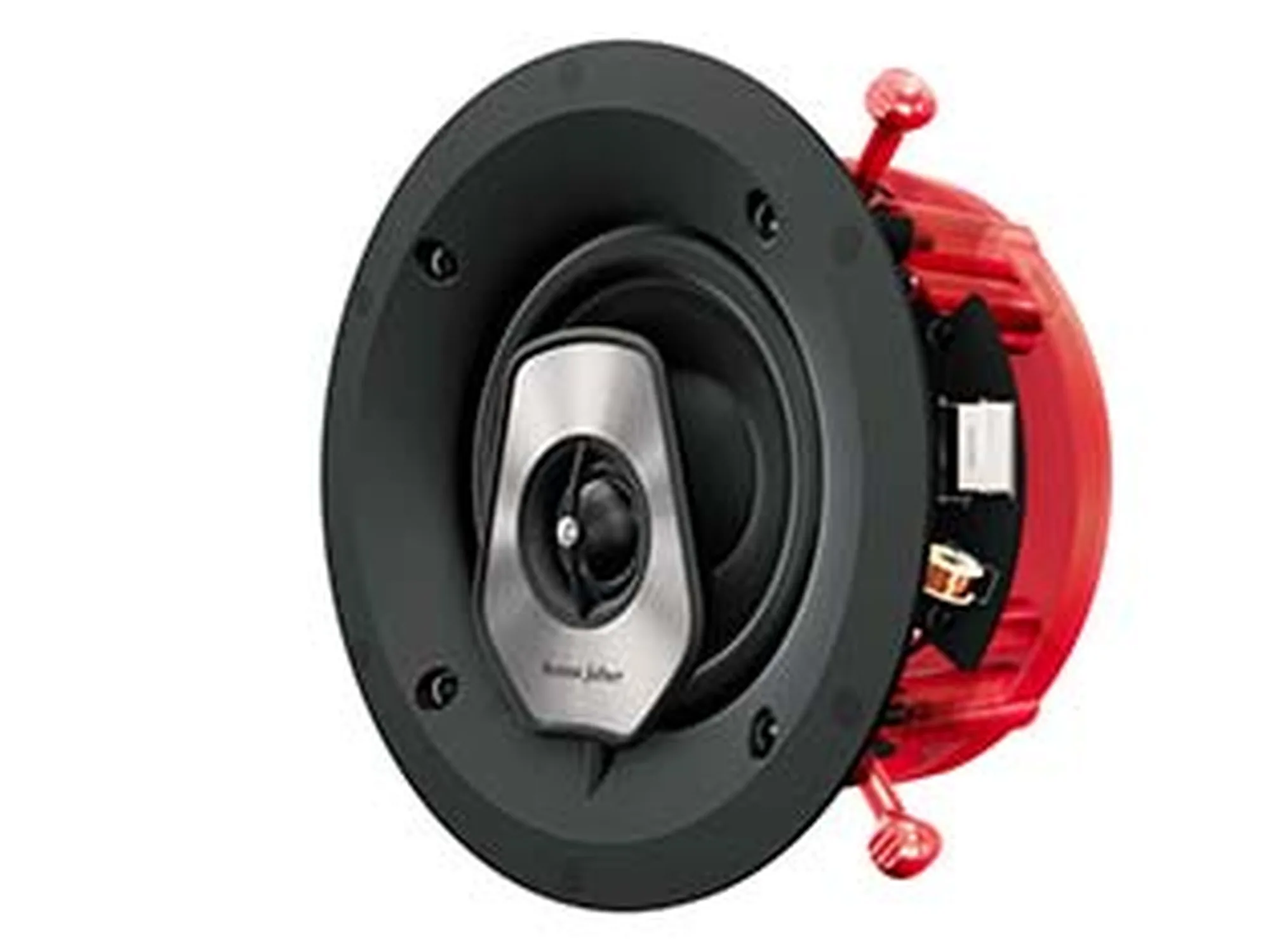
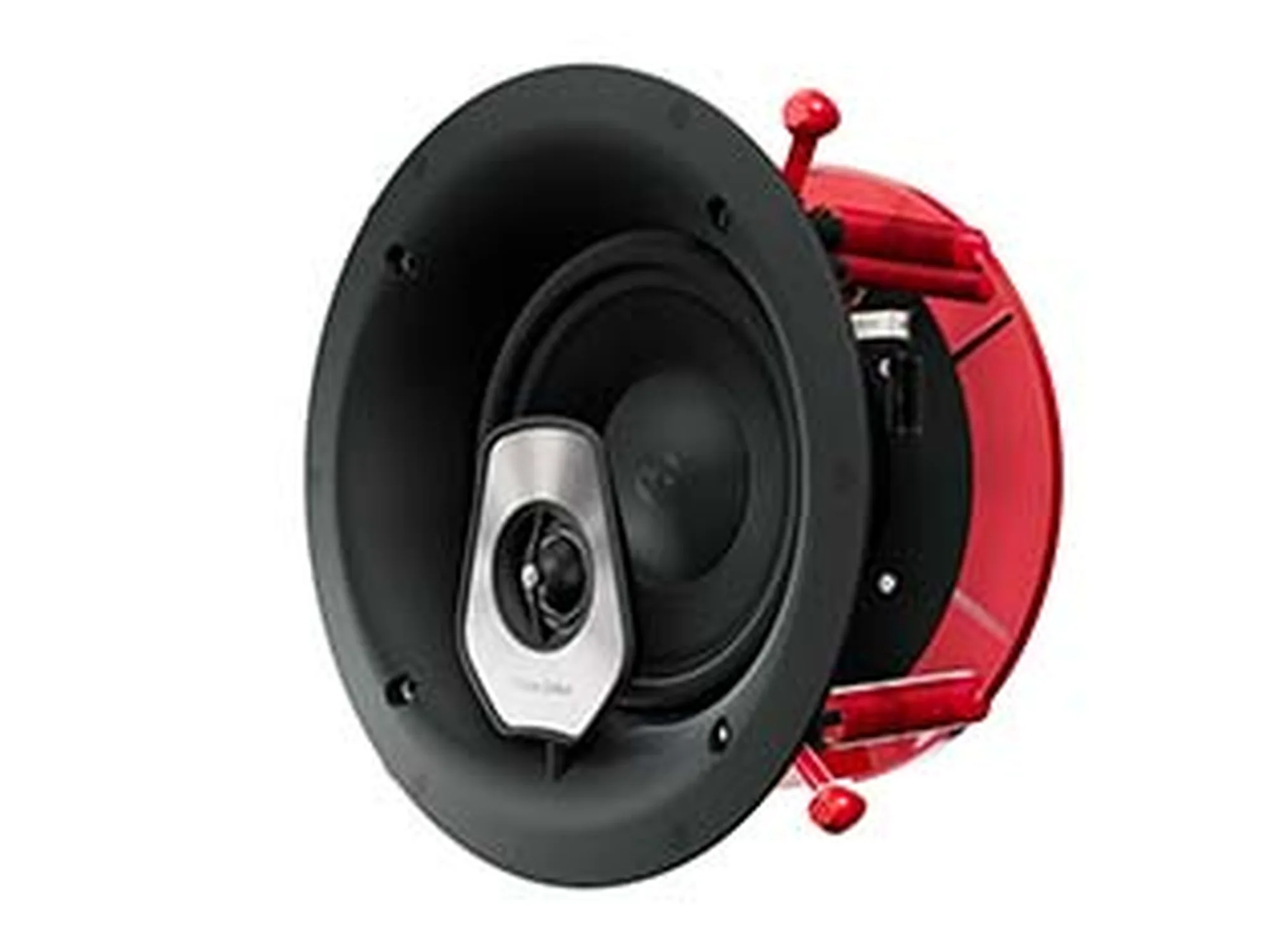
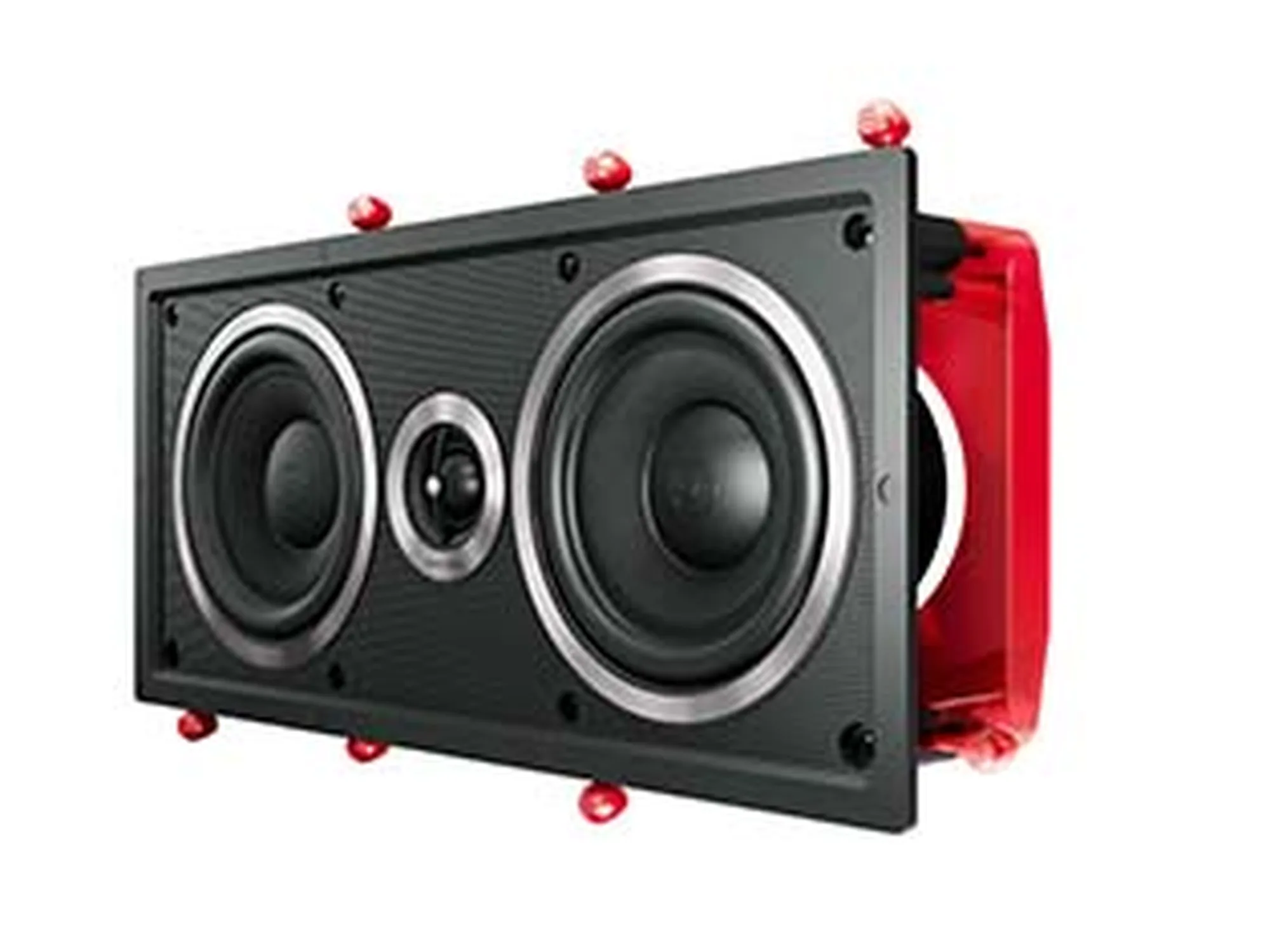
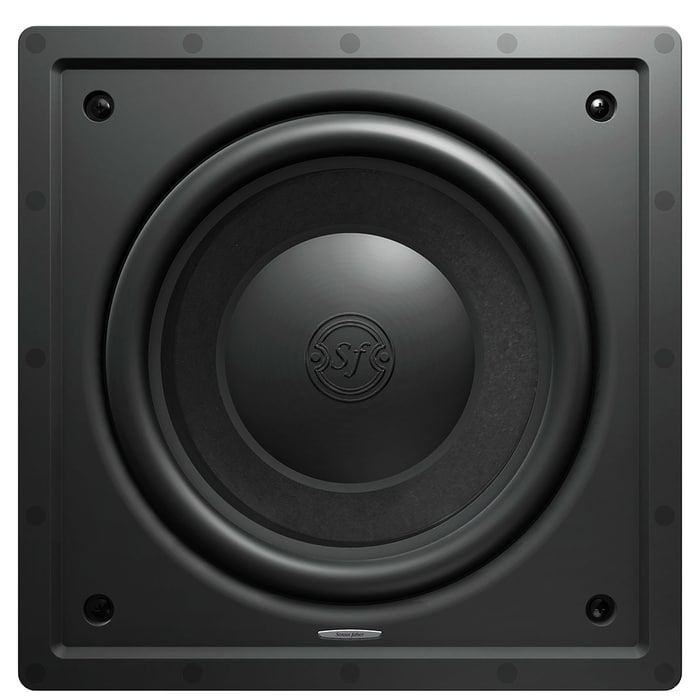
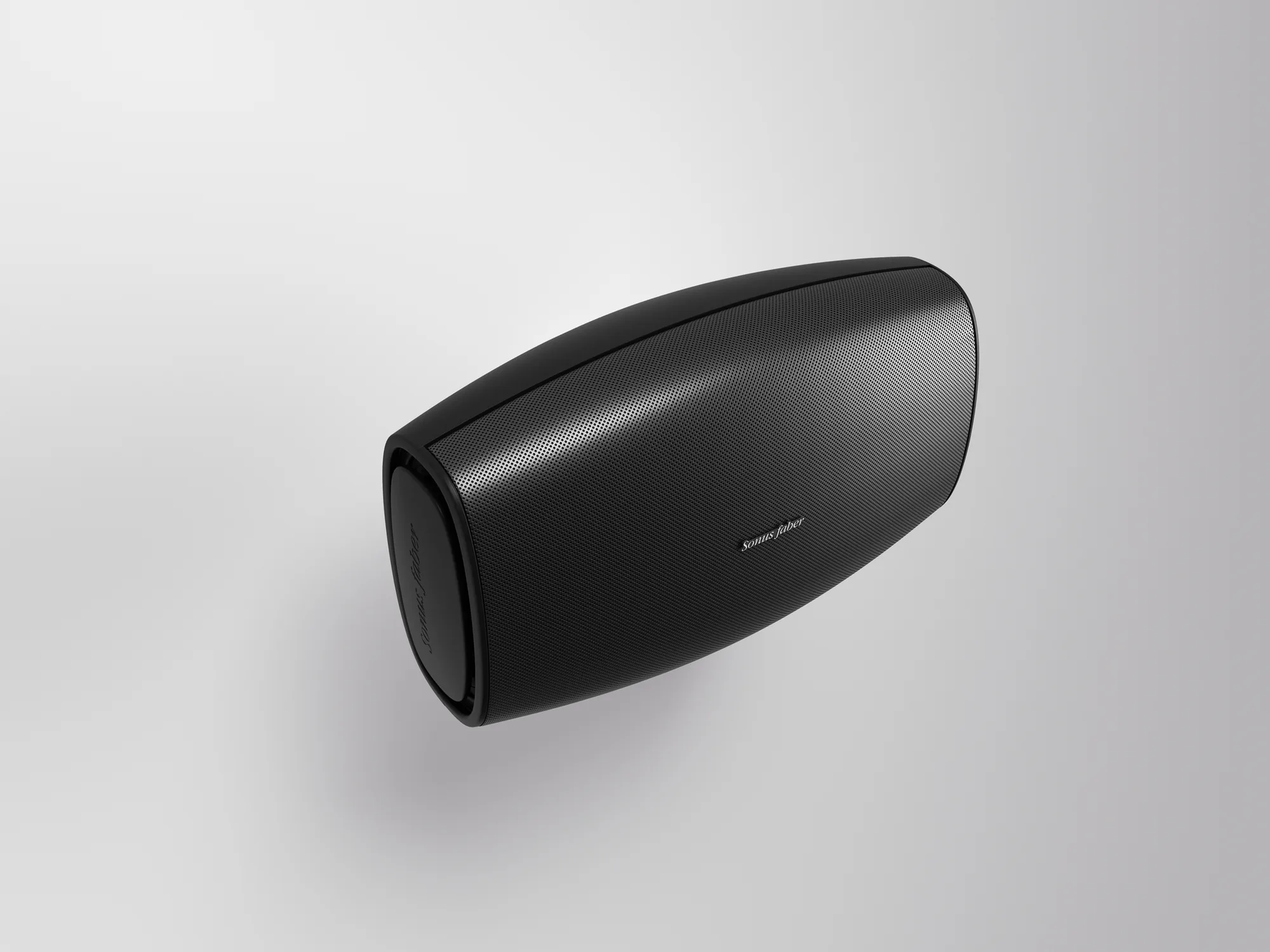
Below the flagship tier, the Olympica G3 collection — third generation, launched June 2026, named for Palladio's Teatro Olimpico in Vicenza and carrying the Suprema-derived Camelia midrange — covers most serious systems below the Homage tier; Sonetto G2 covers approachable floorstanders and stand-mounts; Lumina covers the entry point; and the Heritage collection (Electa Amator III, Minima Amator II, Stradivari G2) updates the historically significant compact designs with current driver and crossover technology. The Arena collection covers custom install with dedicated in-walls (Arena 20, 3.5-way, 92 dB, 117 dB@1m) and Atmos height/surround loudspeakers (Arena 10), and Gravis subwoofers (Gravis VI at the top) round out the ecosystem.
The Sonus faber SE — the off-the-menu masterpiece, at one US dealer
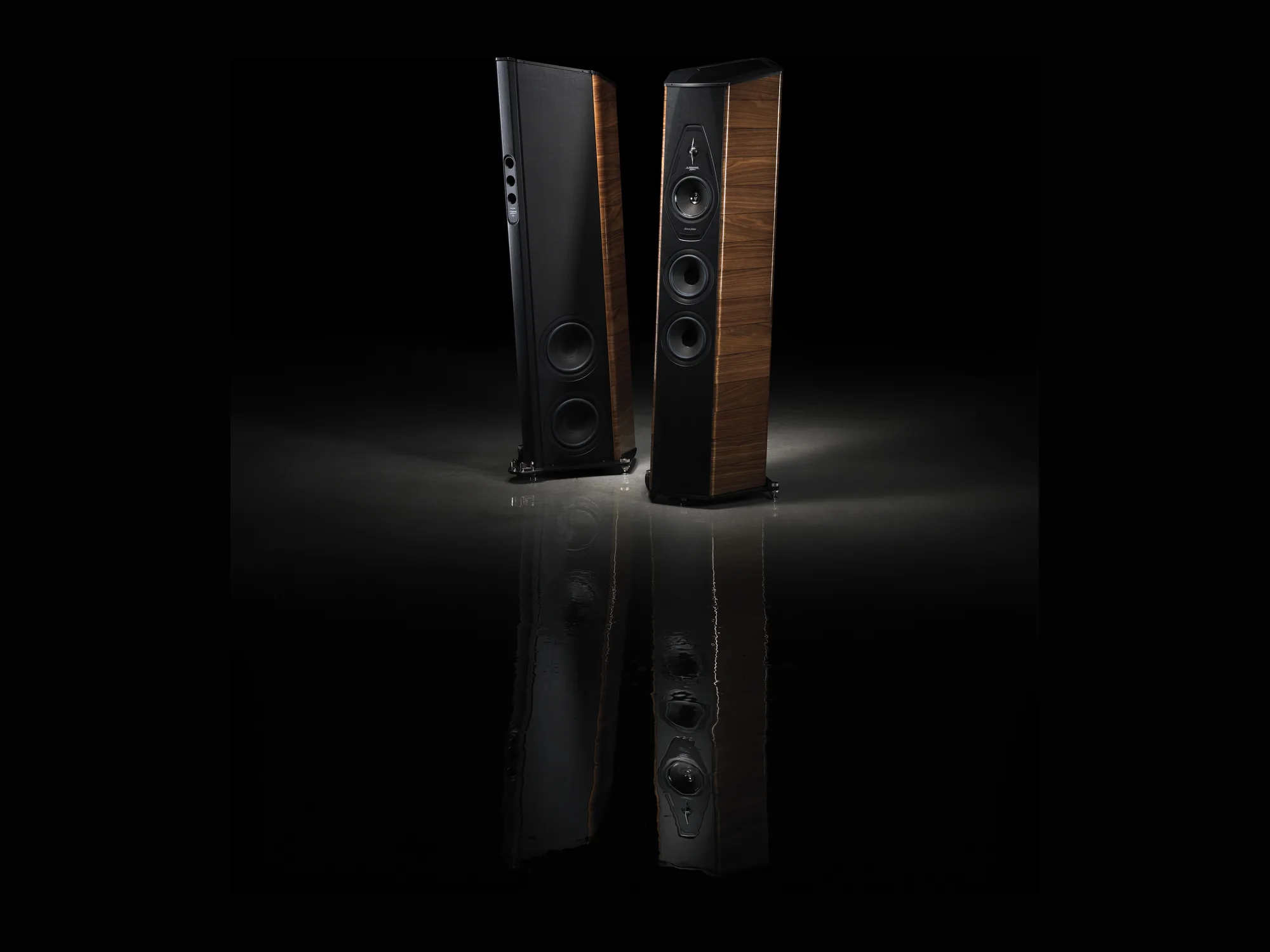
The Sonus faber SE does not appear on Sonus faber's public product page. Sonus faber's own materials describe it as “a limited edition rendition of this masterpiece [the Aida], available only by special request from premier clientele” — a full overhaul of the Aida design incorporating Sonus faber's latest driver and crossover technology, custom-built in Vicenza for buyers who commission one. In the United States, there is exactly one dealer authorised to sell and install the SE: LMC Home Entertainment.
This is not a marketing claim. When TONEAudio's Jeff Dorgay reviewed the SE in February 2019, he wrote plainly that if you want the SE, LMC Home Entertainment in Scottsdale is the only place to buy one. Mike Ware and his team install and set up the SEs anywhere in the United States, and each pair is custom-built to order in Vicenza in approximately four months in any finish the client specifies. In LMC's Scottsdale Suprema Room, the SE is set up on a full Burmester system with dual 909 MK5 Reference Line monoblocks bridged in mono per channel (delivering close to 2,000 watts per side), behind Burmester's 088 Top Line preamplifier and the 948 Top Line power conditioner, with Linn Klimax DSM digital and Transparent Reference Gen 6 cabling throughout. That is the setup Jeff Dorgay heard, and it remains the reference SE demonstration in the country.
Eleven Sonus faber models on the LMC floor
Across Scottsdale and Tempe, LMC has eleven distinct Sonus faber loudspeaker models on active demonstration — Suprema, SE, Amati Supreme, Il Cremonese, Amati G5, Serafino G2, Olympica G3 III, Olympica Nova V, Olympica Nova II, Arena 20 and Arena 10 — arranged across five dedicated Sonus faber–anchored systems in Scottsdale alone. The Suprema Room runs two systems: the Suprema fronted by the full dCS Vivaldi APEX stack and Burmester Signature Line 159 monoblocks, and the SE system described above. The Amati Supreme Room carries the Amati Supreme on Burmester Top Line 911 MK3 monoblocks bridged in mono, with the 218 in stereo alongside, sourced by the Burmester 111 Musiccenter and Linn Majik DSM. The McIntosh Room carries three Sonus faber loudspeakers — Il Cremonese, Amati G5, Serafino G2 — with a McIntosh C12000 preamplifier that will drive any of the full McIntosh amplifier range against any of them. The Grand Cinema Suite uses Sonus faber Arena 20 in-walls with Arena 10 heights and surrounds around a McIntosh XRT2.1K front stage. In Tempe, dedicated Sonus faber rooms cover the current Olympica G3 III on the McIntosh MA12000, the previous-generation Olympica Nova V + Nova II (side-by-side for direct cabinet-size comparison), Il Cremonese with McIntosh MC2301 tube monoblocks, and the Amati G5 with a McIntosh C49 feeding both an MC152 solid-state stereo amplifier and a pair of MC2301 tube monoblocks in the same room.
Where to start
The honest starting point for a first Sonus faber audition at the reference tier is the Amati Supreme in the dedicated Amati Supreme Room. It carries the Suprema-derived Voice of Sonus faber technology in its most accessible current form, in a cabinet size and price point that fit real listening rooms and real reference-tier systems. The Amati Supreme audition — driven by Burmester Top Line 911 MK3 monoblocks in a room voiced specifically for it — is the fastest way to answer whether the current Sonus faber house sound is the right direction for your system, before considering a step down to Amati G5 or Olympica G3 V, or a step up to Il Cremonese, Suprema, or SE. For a lifestyle-first system, Olympica G3 V or G3 III covers most rooms; for a stand-mount that carries the full signature, the Heritage collection's Electa Amator III or Minima Amator II are the honest choices; Sonetto and Lumina cover more approachable price points without abandoning the voicing.
What to listen for
Two tests are worth running deliberately in a Sonus faber audition. On acoustic recordings — string quartet, classical guitar, solo piano, unaccompanied vocal — the natural-materials driver set and internal cabinet damping tend to render the acoustic space of the recording with unusual physical presence. The way a Sonus faber loudspeaker resolves the natural decay of a violin note into the room the recording was made in is different from what most metallic-domed tweeter designs deliver, and it is the signature that has kept the company's tonal identity constant across four decades of engineering evolution. On dense orchestral or big-band material, the second test is coherence — whether the loudspeaker keeps complex mid-band information legible as the volume rises. That coherence is where the Voice of Sonus faber engineering pays off across the range.
Walk in during business hours to hear any of the Sonus faber systems on demonstration in either showroom. Book ahead if the audition needs a specific system warmed up and configured against your own recordings — the Suprema, Amati Supreme, and SE in particular reward extended pre-audition warm-up time.
Frequently asked questions
What makes Sonus faber different from other loudspeakers?
Sonus faber has taken the analogy between a violin and a loudspeaker seriously since Franco Serblin founded the company in Vicenza in 1983 — not as metaphor, but as design methodology. Cabinets are built from selected woods and hand-assembled with joinery from Italian furniture-making traditions. Driver diaphragms use paper, silk and other natural materials wherever the acoustic goal permits. Cabinet damping and internal chambers use cork, natural fibres and leather where they measurably do more than synthetic alternatives. Every current Sonus faber loudspeaker carries what the company calls the “Voice of Sonus faber” — a specific tonal signature and cabinet-radiation pattern verified on every product — and manufacturing is still hand-work by Italian craftsmen and craftswomen in the violin-shaped Arcugnano facility purpose-built for the company in 2003. LMC has been a Sonus faber dealer since 2003 and has eleven Sonus faber models on active demonstration across the Scottsdale and Tempe showrooms.
What is the Sonus faber SE, and is LMC really the sole US dealer?
The Sonus faber SE does not appear on Sonus faber's public product page. Sonus faber's own materials describe it as “a limited edition rendition of this masterpiece [the Aida], available only by special request from premier clientele” — a full overhaul of the Aida design incorporating Sonus faber's latest driver and crossover technology, custom-built in Vicenza for buyers who commission one. In the United States, there is exactly one dealer authorised to sell and install the SE: LMC Home Entertainment. When TONEAudio's Jeff Dorgay reviewed the SE in February 2019, he wrote plainly that if you want the SE, LMC in Scottsdale is the only place to buy one. Mike Ware and his team install and set up the SEs anywhere in the United States, and each pair is custom-built to order in Vicenza in approximately four months in any finish the client specifies. The SE is on active demonstration in LMC's Scottsdale Suprema Room on a full Burmester system — dual 909 MK5 Reference Line monoblocks bridged in mono per channel, delivering close to 2,000 watts per side, behind the Burmester 088 Top Line preamplifier and the 948 Top Line power conditioner, with Linn Klimax DSM digital and Transparent Reference Gen 6 cabling.
Which Sonus faber loudspeaker is right for my room?
The Sonus faber range spans from compact stand-mounts up to reference systems that need purpose-built listening spaces, and the right choice starts with the room. Lumina and Sonetto G2 cover the entry through mid-tier for smaller and medium rooms. Olympica G3 (G3 V and G3 III) and the Heritage collection (Electa Amator III, Minima Amator II) suit medium and medium-large rooms where cabinet size is a real constraint. The Homage collection (Serafino G2, Amati G5, Amati Supreme) covers reference-tier floorstanders for serious two-channel systems in most listening rooms. The Reference collection (Aida, Lilium, Il Cremonese) and Suprema sit at the top and want large rooms with reference-tier electronics. Share the room's dimensions with the LMC team and we'll shortlist the right models, then hear the finalists set up in a room of comparable proportions before you commit — the honest starting point at the reference tier is usually the Amati Supreme in the dedicated Amati Supreme Room.
What is the “Voice of Sonus faber”, and how is it maintained across the range?
The “Voice of Sonus faber” is a specific tonal signature and cabinet-radiation pattern that Head of Research and Development Paolo Tezzon — with the company for nearly two decades and explicit responsibility for maintaining it — verifies on every product across the current range. Practically, that means any two Sonus faber loudspeakers voice recognisably as the same house: the same relationship between the mid-band naturalness and the treble refinement, the same handling of acoustic space, the same behaviour on natural-materials drivers into wood cabinets. Sonus faber develops flagship engineering first (Suprema is the current example) and works trickle-down technology into the collections beneath it — the Amati Supreme, for instance, is a refresh of the Amati Homage design that incorporates the Voice of Sonus faber transducer set and crossover topology developed for Suprema. That trickle-down is what keeps the voicing consistent across four decades of engineering evolution.
What is the Homage collection — and how does the Amati Supreme differ from the Amati G5?
The Homage collection pays direct homage to the Cremonese violin-makers who gave its members their names — Amati, Serafino and Guarneri — and currently comprises the Amati Supreme, Amati G5, Serafino G2 and Guarneri G5, plus the Amati Supreme's Suprema-derived refresh. The Amati G5 is the current fifth generation of the Amati design, an unambiguously reference-tier floorstander in the classical Amati form. The Amati Supreme is the Amati refreshed with the Voice of Sonus faber transducer set and crossover topology developed for the Suprema flagship — essentially, the Amati chassis carrying trickle-down technology from Suprema. In practice this makes the Amati Supreme the natural entry point to Suprema-derived engineering at a materially different price point. LMC has both the Amati Supreme and the Amati G5 on active demonstration in Scottsdale, along with Il Cremonese and Serafino G2 in the McIntosh Room where the C12000 preamplifier will switch between them and any current McIntosh amplifier.
Can I hear the Suprema at LMC?
Yes. The Suprema is on active demonstration in the dedicated Suprema Room at LMC's Scottsdale showroom, fronted by the full dCS Vivaldi APEX stack (DAC, Upsampler and Master Clock) into Burmester Signature Line 159 monoblocks. The Suprema is a four-column reference system — two main towers, two subwoofer towers, and one external analogue crossover chassis — built with the Voice of Sonus faber transducer set, IsoAcoustics decoupling, Poltrona Frau Pelle Frau Impact Less leather panels, and a recycled-cork mid-high internal chamber. Very few dealers in the country have a Suprema in-room and fewer still have it on a reference-tier amplification chain of this level. Book ahead if the audition is for the Suprema specifically or for an extended reference-tier comparison against the SE, which is set up in the same room on a full Burmester system — those setups reward pre-audition warm-up time.
The Lineup
Explore the Range

Experience The Brand