Processing & Room Correction
Cinema Processors
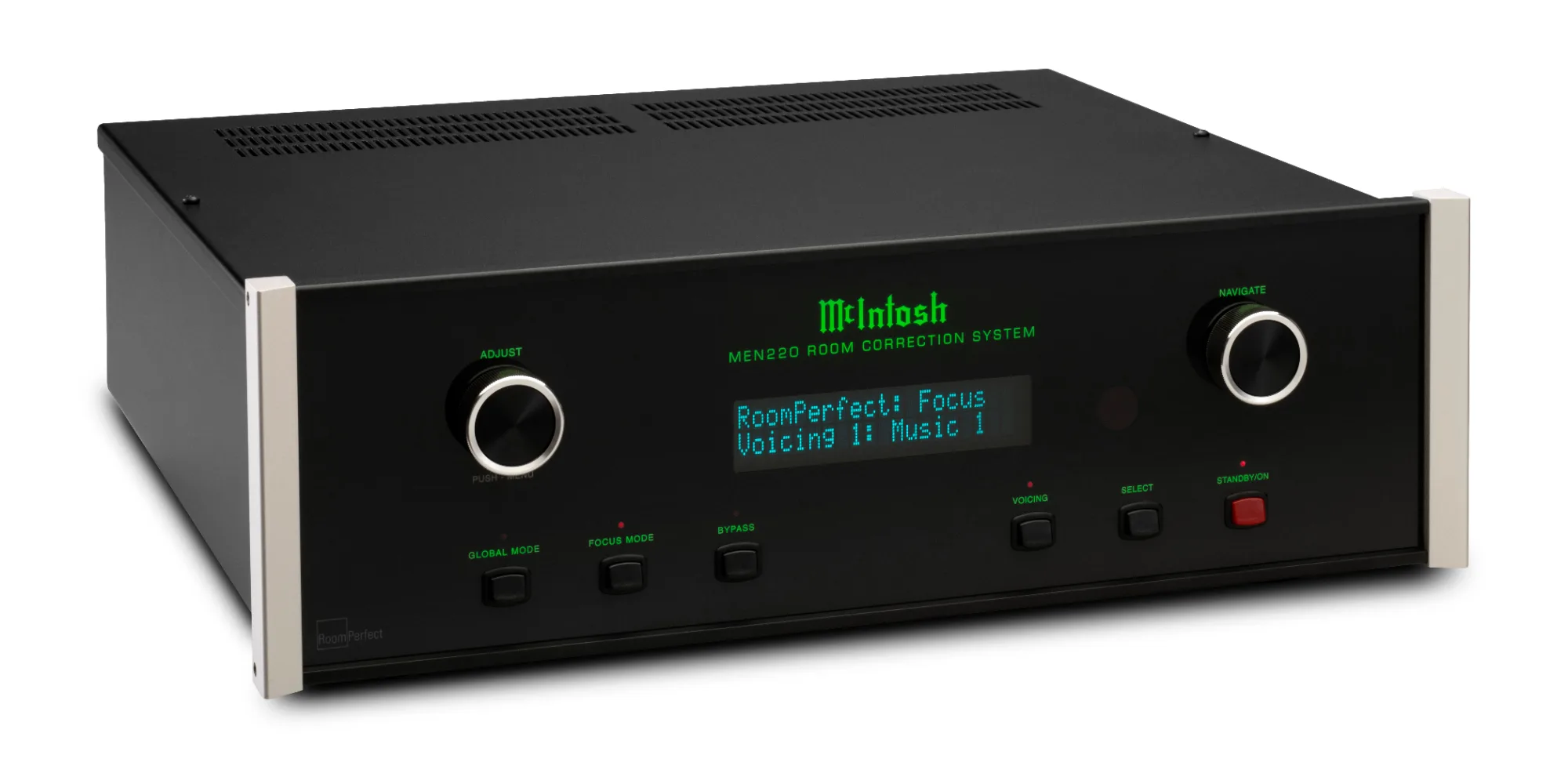
Trinnov and McIntosh — decoding, and the correction that makes a real room behave.
Dolby, DTS and Auro each specify different loudspeaker positions, and almost no real room permits any of them.
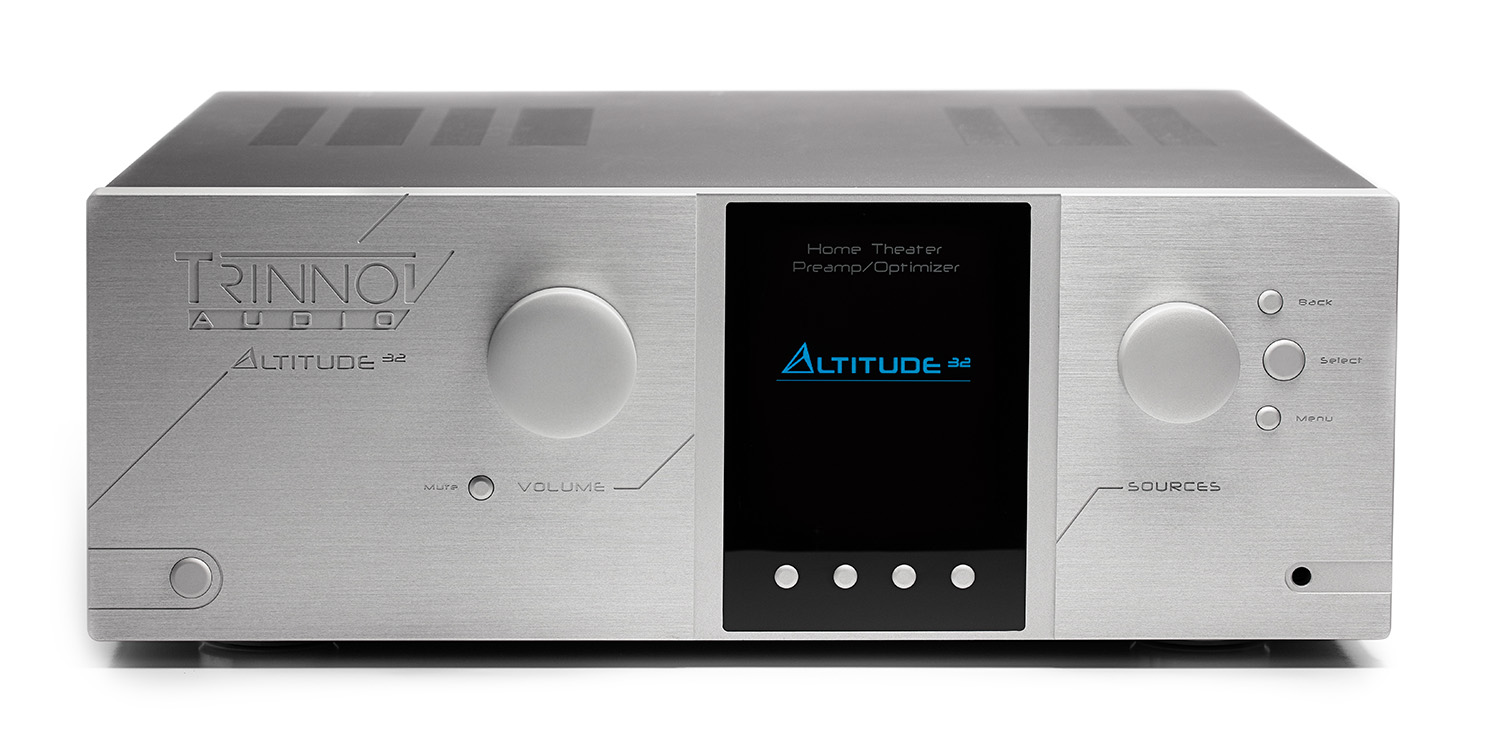
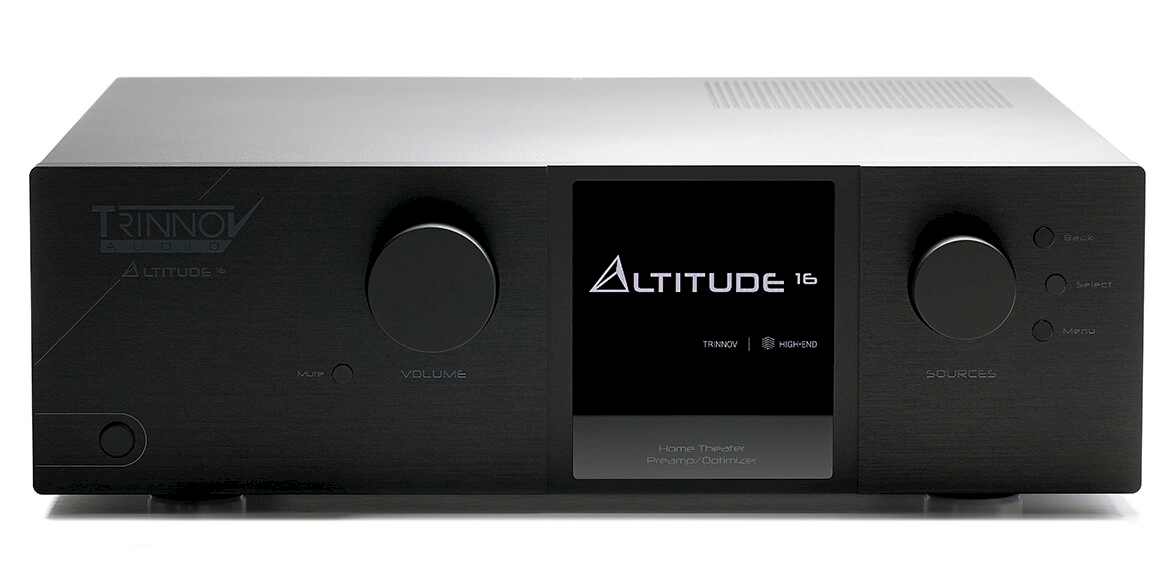
That is the problem Trinnov built the company around. Its four-capsule 3D microphone measures where each loudspeaker actually sits — distance, azimuth and elevation — and Remapping then relocates sound elements to their intended positions using the speakers that are there. It is a different operation from equalisation, which only adjusts level by frequency and cannot move anything.
The Optimizer, in roughly 2,000 studios and 10,000 installations worldwide, remains the benchmark other calibration systems are measured against. Trinnov also runs its processors on a multi-core Intel platform under its own operating system rather than fixed DSP chips, which is why new formats have historically arrived as free software rather than as a new box.
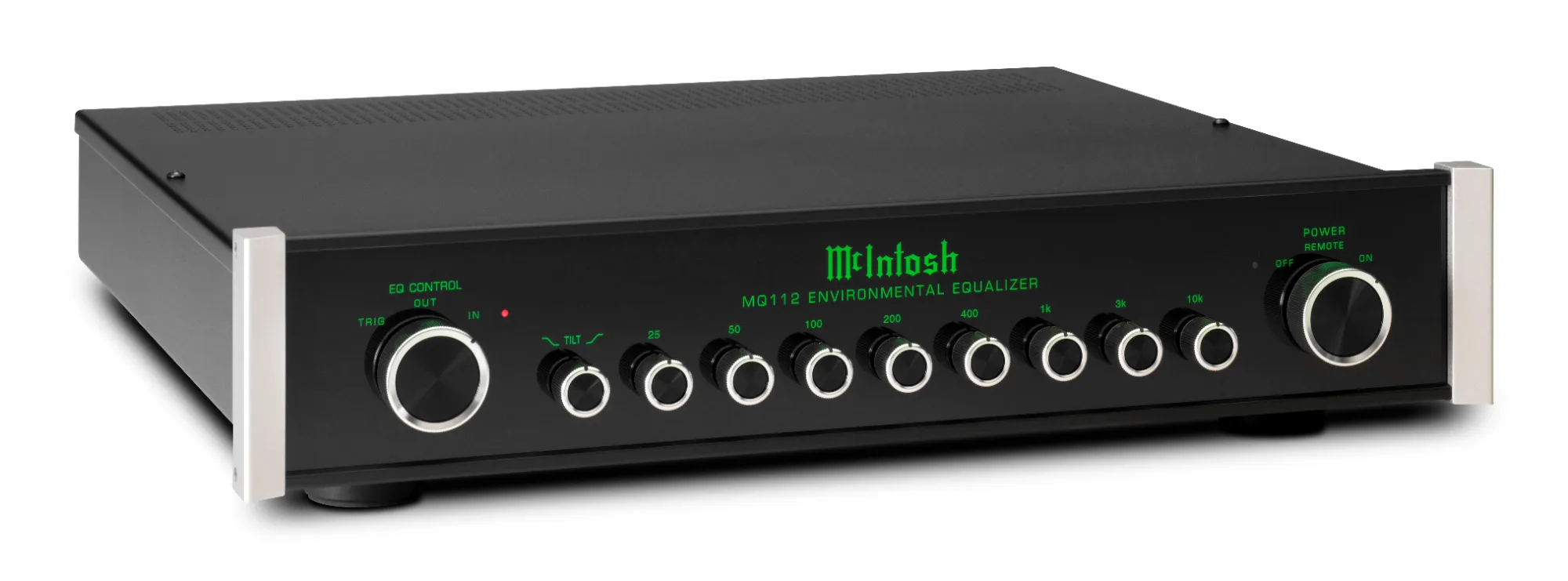
Correcting a room and equalizing one are not the same job.
How to choose a cinema processor
Room correction is the reason to buy at this level, not an add-on — a sealed cinema is the hardest acoustic space there is, and Trinnov's Optimizer is essential to what these systems do. On McIntosh processors, room correction and calibration are included with the purchase. Then count channels for the room you will want in five years, not the one you have.
More on choosing a cinema processor ↓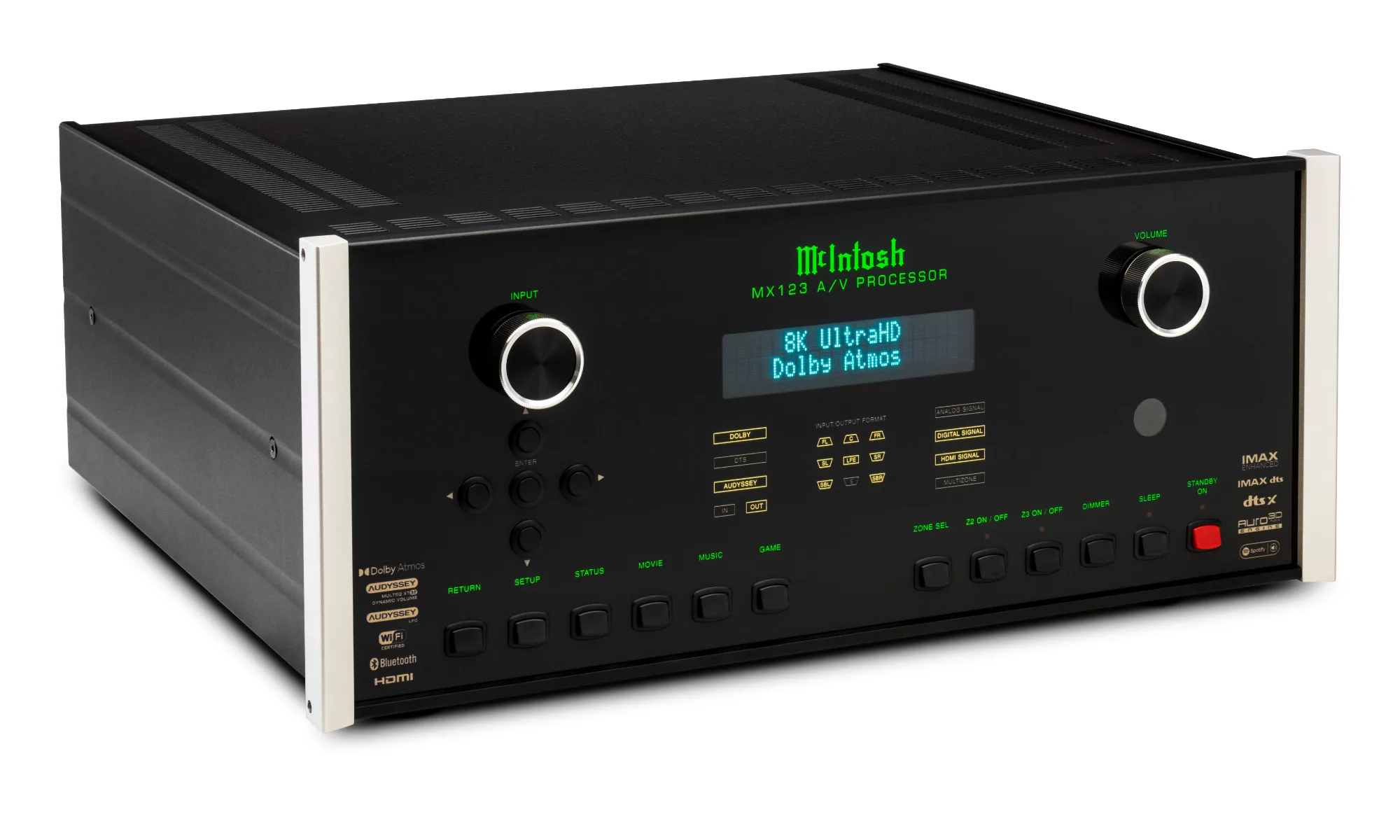
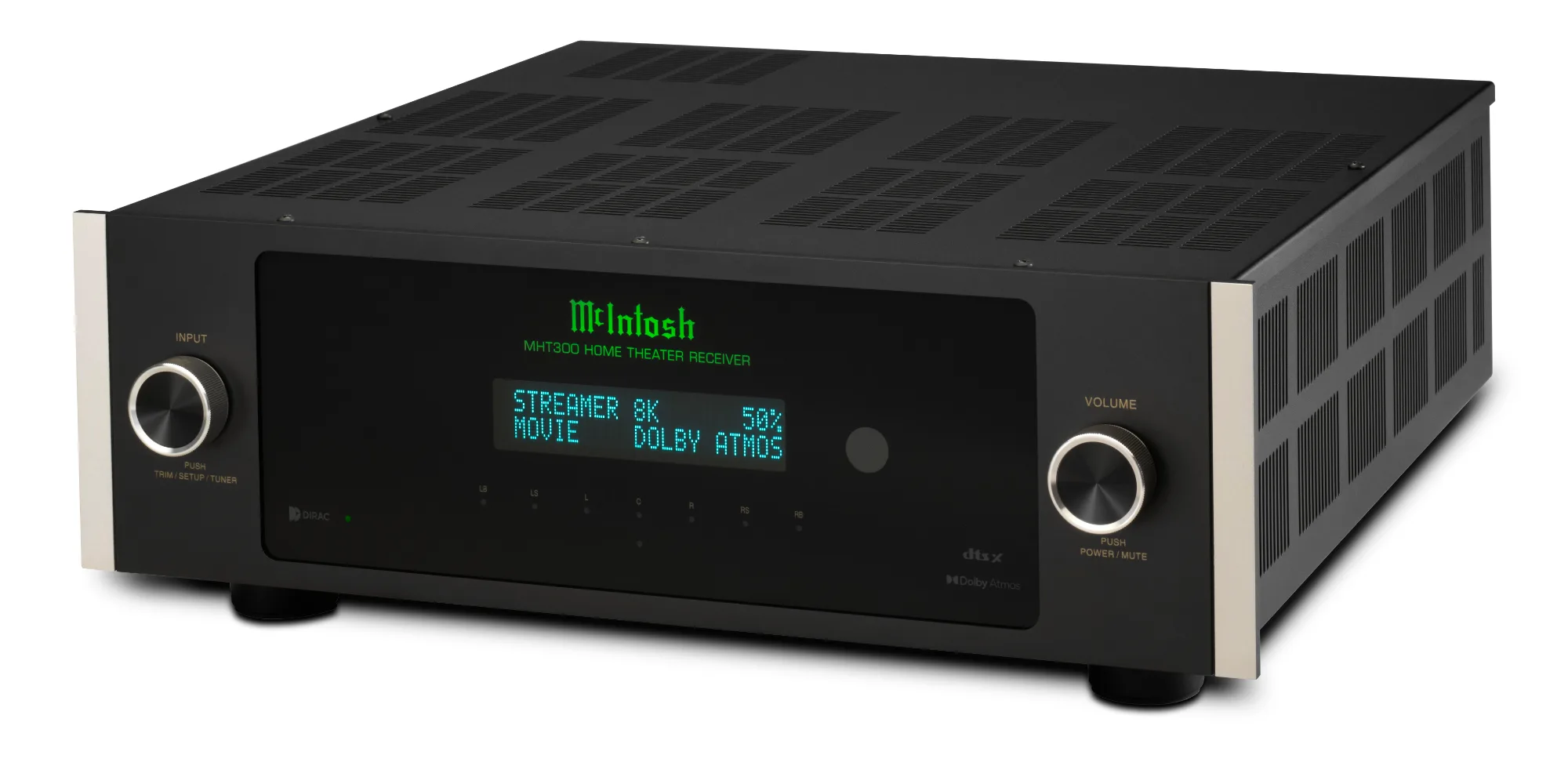
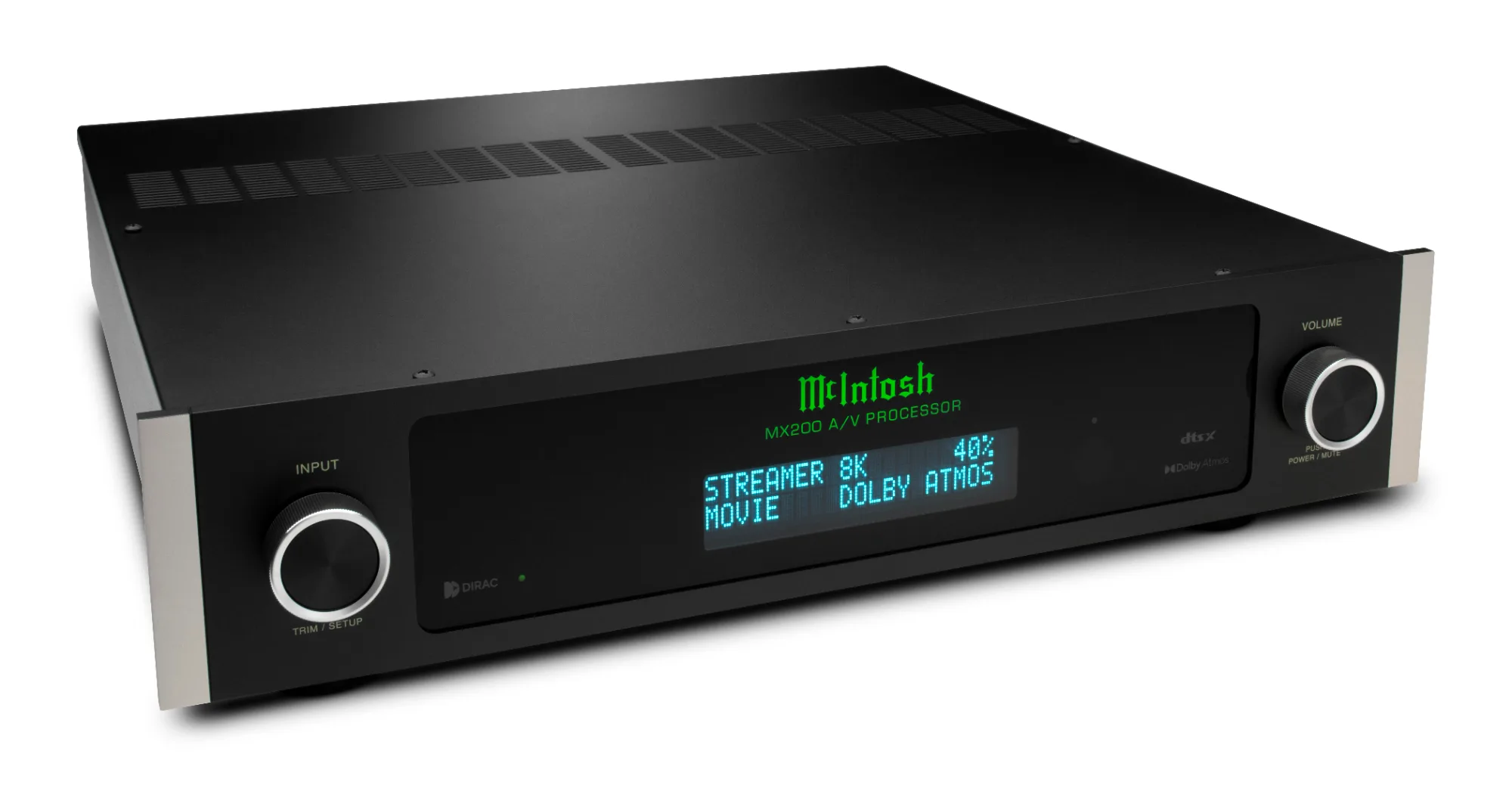
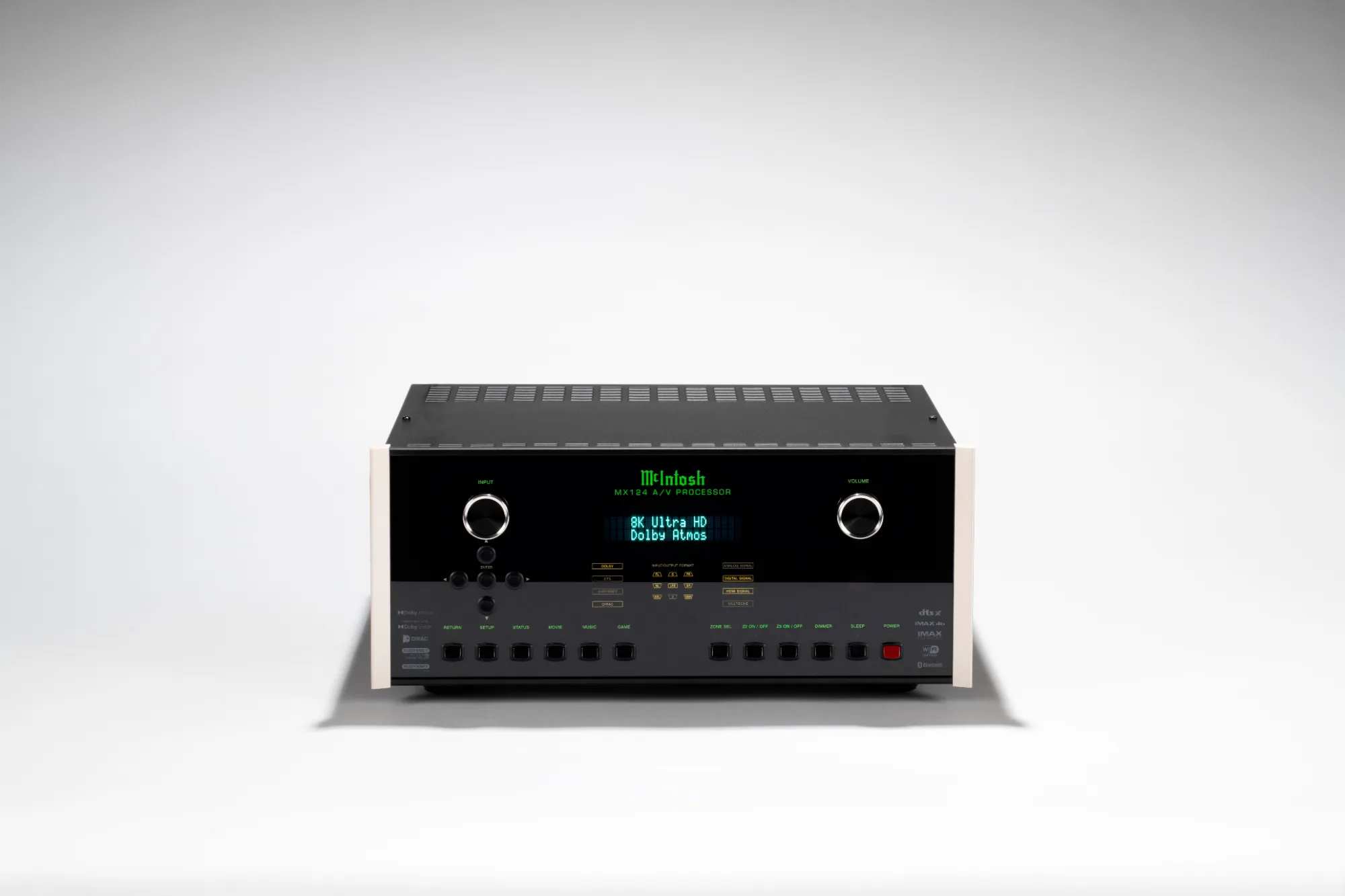

Choosing a cinema processor, in detail
Room correction is not an accessory on a processor at this level, it is the reason to buy one. A dedicated cinema is a small sealed room with hard boundaries, which is acoustically the most difficult space there is — modal problems below 200Hz, early reflections that smear dialogue, and seat-to-seat variation that no amount of speaker quality will overcome. Trinnov's Optimizer is essential to what these systems do, not an option on top of them.
What separates Optimizer from conventional correction is that it measures in three dimensions using a four-capsule microphone, so it knows where energy is arriving from and not merely that it arrived. It corrects amplitude, phase and time alignment together, and it can remap channels when a speaker cannot be placed where the format assumes. On McIntosh processors, room correction and calibration are included with the purchase as well.
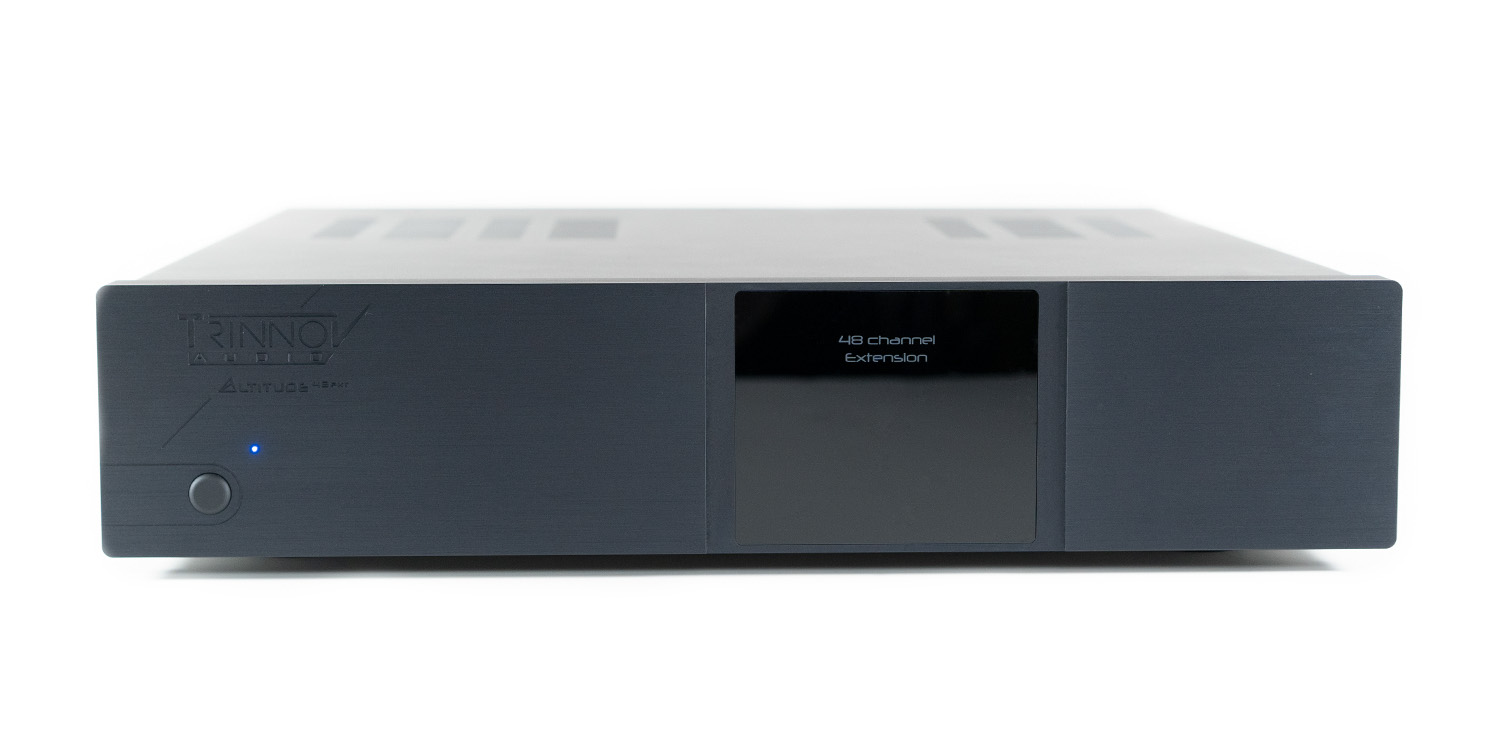
Beyond correction, count your channels honestly before choosing. Immersive formats need height layers, and the processor sets the ceiling on how far the room can grow. Buying for the layout you have today rather than the one you will want in five years is the most common regret in this category, because the processor is the hardest box in the chain to replace once everything is calibrated around it.
Hear these in Scottsdale and Tempe
Calibration is something we do in your room, not something you receive in a box. The demonstration worth asking for is the same room played uncorrected and then corrected — it is the most convincing thing in home cinema and it takes about ten minutes. Bring your room dimensions and seating layout and we can talk about channel count before anything is bought.