Reference Displays
Televisions
Sony's reference television line — True RGB and QD-OLED, for the rooms a projector cannot serve.
A projector needs a dark room. A television does not, and that is the entire reason to own one.
In a properly built cinema, projection wins — a larger image, softer light, a screen that fills the field of view. But most of a house is not a cinema. The great room has windows on two sides, the kitchen end has downlights that stay on, and nobody is going to black out the space to watch a match on a Saturday afternoon. That is the room a reference television is for.
What separates a display at this level is how it makes colour. Sony's True RGB backlight uses discrete red, green and blue LEDs rather than blue LEDs filtered down to everything else, and QD-OLED converts blue light through quantum dots rather than filtering white. Both are attempts at the same problem: holding colour saturated as brightness rises, instead of trading one against the other. Sony grades its own films on monitors built to that standard.
The question is not projector or television. It is which room you are standing in.
How to choose a television
Match the panel to the room: self-emissive for a room you can darken, backlit where daylight has to be fought. Size follows seating distance, and most people under-buy. Treat the sound as a separate purchase — no processing recovers what a thin cabinet firing away from you costs.
More on choosing a television ↓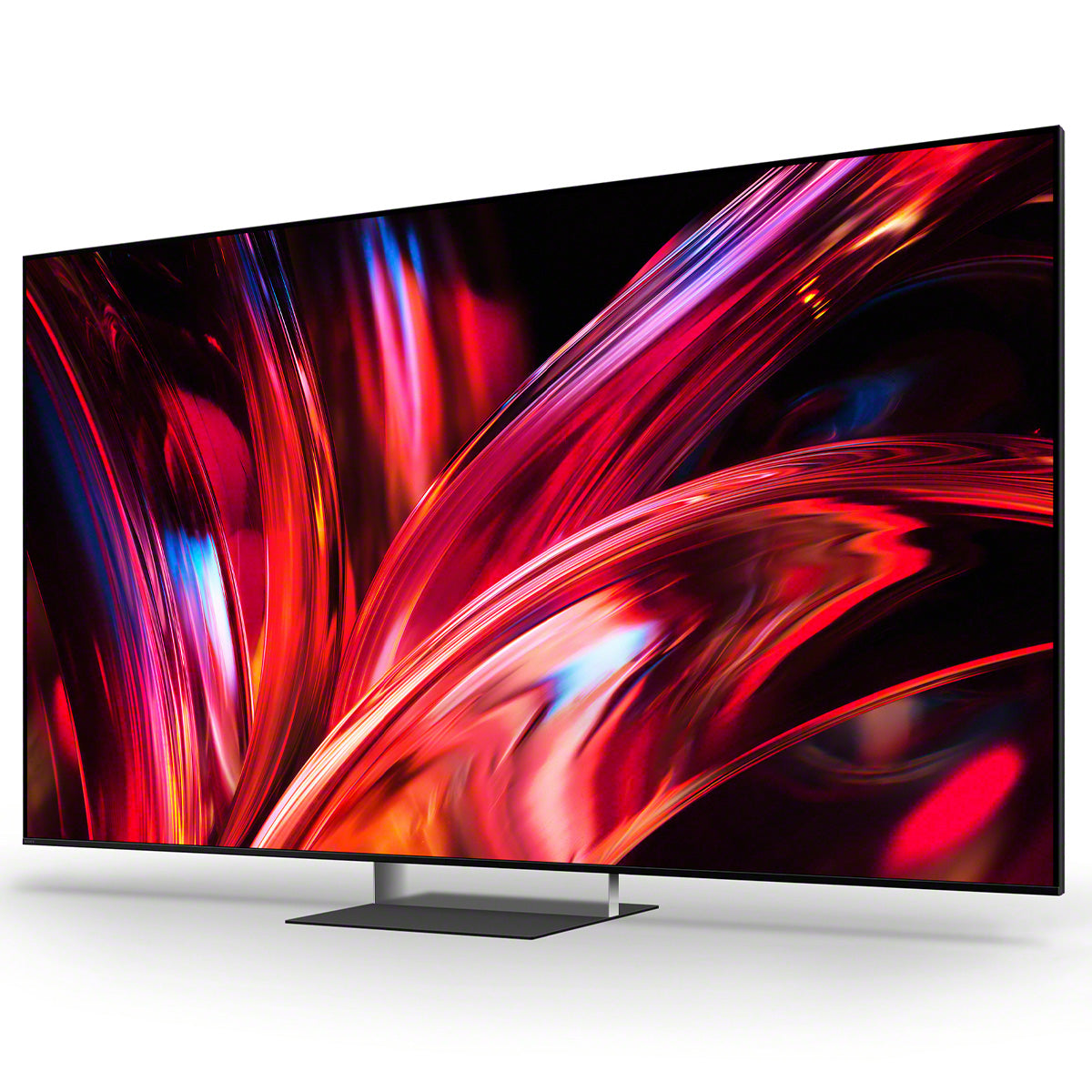
Choosing a television, in detail
Match the panel technology to the room rather than to the spec sheet. Self-emissive panels switch individual pixels off entirely, which gives absolute black and makes them the better choice in a room you can darken. Backlit panels go brighter, which matters in a room with windows and daylight. Neither wins in the abstract; the room decides.
Size is set by seating distance, and most people under-buy. From a normal viewing distance in a dedicated room, a larger panel is usually the right answer rather than an indulgence. Measure the distance from the seats to the wall before settling on a number, and be aware that a television and a projector are answers to different questions — above a certain size and with light control, the projector becomes the better one.
Then treat the sound as a separate purchase. Every flat panel puts its drivers in a thin cabinet firing away from you, and no processing recovers what that costs. If the television is going in a serious room, the audio should come from the system rather than the screen.
Hear these in Scottsdale and Tempe
Showroom lighting flatters televisions, which is why panels look different at home than they did in a store. We would rather talk about your room's light, seating distance and wall before recommending a size. Calibration after installation is worth doing here too — out of the box, most panels are set far brighter and cooler than they should be.