Tonearms
Tonearms
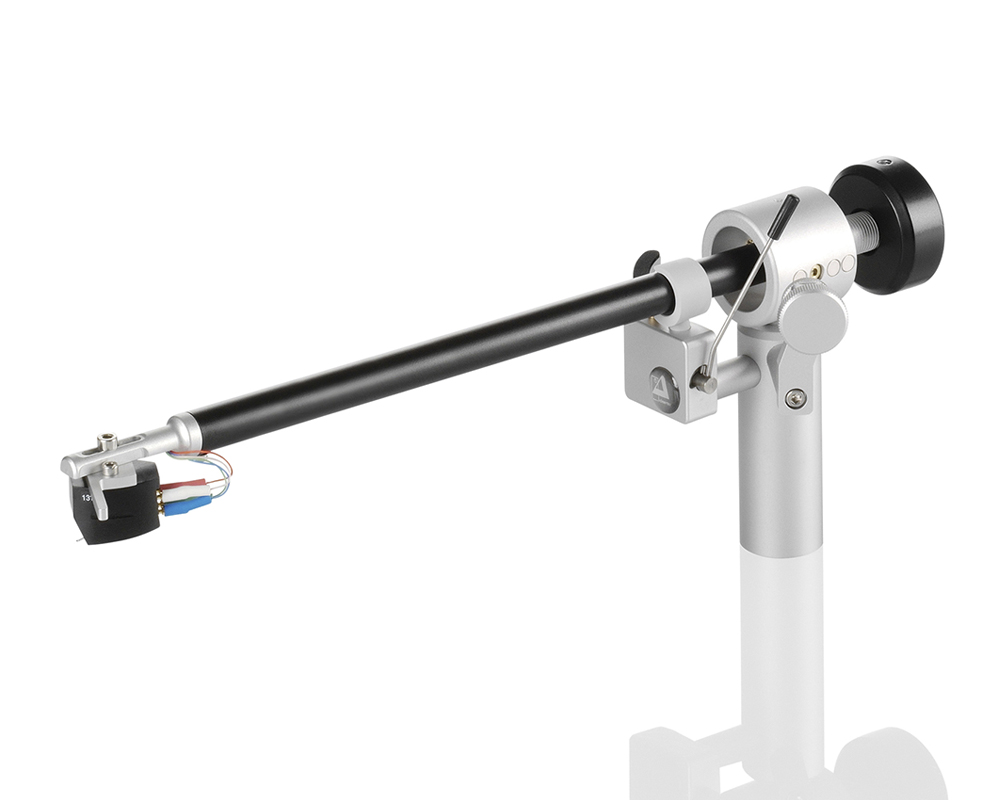
Clearaudio pivoted and tangential arms — the mechanism that holds the stylus at the right angle, at the right force, for the whole side.
The arm decides what the cartridge is allowed to do. Any tracking error it introduces is an error the cartridge then reproduces faithfully.
A tonearm has two jobs that pull against each other. It has to let the cartridge move freely enough to follow the groove, and it has to stay rigid and quiet enough that nothing else moves. That is a bearing problem and a resonance problem at the same time: the bearing has to be effectively frictionless in two axes while the armtube resists flexing and stores as little energy as possible. It is why Clearaudio builds arms from carbon fibre and sapphire rather than from convenience, and why the bearing is the first thing worth asking about.
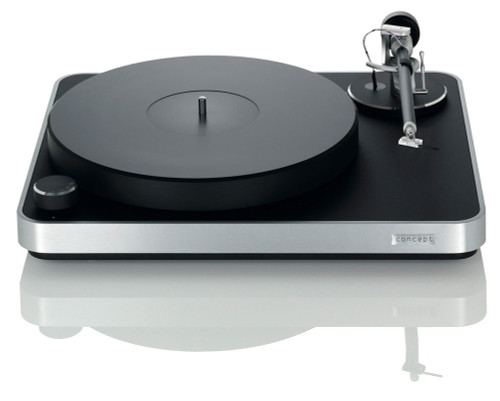
There is then a genuine fork in the road. A pivoted arm swings on an arc, so the stylus sits at a slight angle to the groove almost everywhere across the side, and a sideways skating force has to be corrected for. A tangential arm carries the stylus in a straight line — the same line the cutting head traced when the lacquer was cut — so replay angles match cutting angles and there is no skating force to correct in the first place. Clearaudio builds both, and the choice is a real one rather than a hierarchy.
A record is cut in a straight line. Every pivoted arm is an approximation of that line.
How to choose a tonearm
Start with what will physically fit: every arm here uses the Clearaudio/Linn standard mount, which makes them straightforward on Clearaudio decks and a common retrofit elsewhere, but a tangential arm needs mounting real estate that a pivoted arm does not. Then match effective mass to your cartridge's compliance, because that pairing sets the arm-and-cartridge resonance. Effective length is the last decision, and it is a trade rather than an upgrade.
More on choosing a tonearm ↓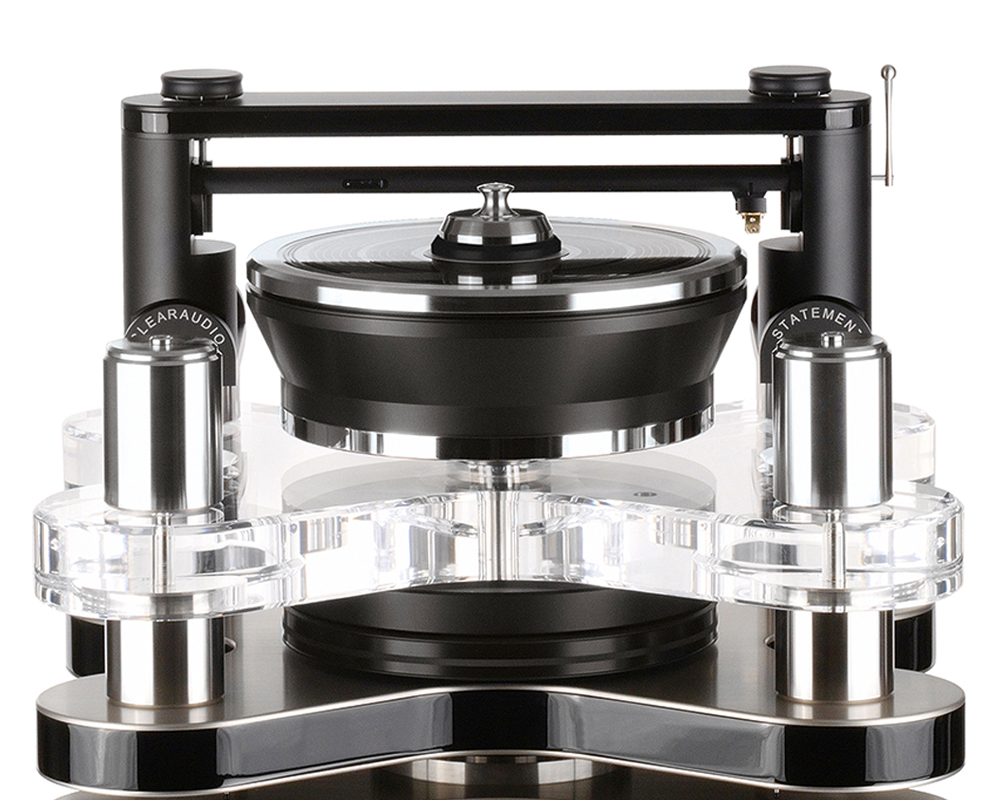
Choosing a tonearm, in detail
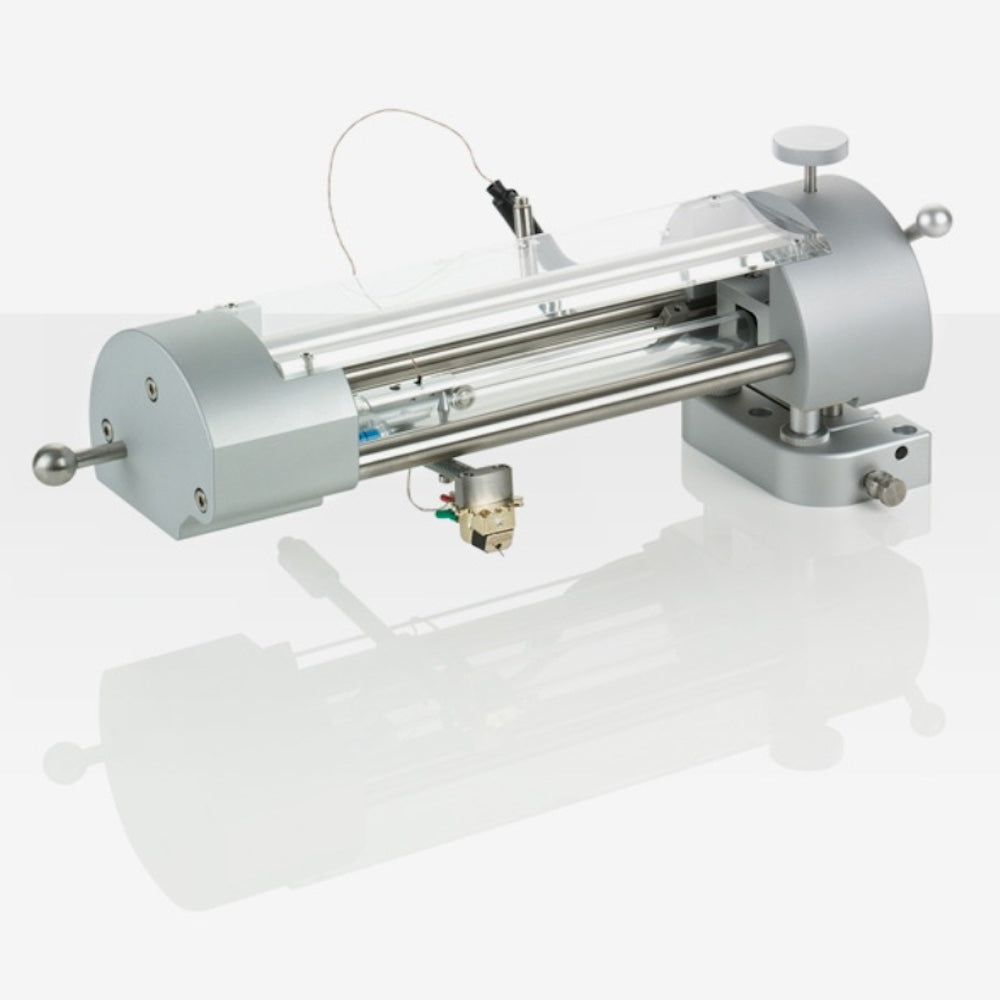
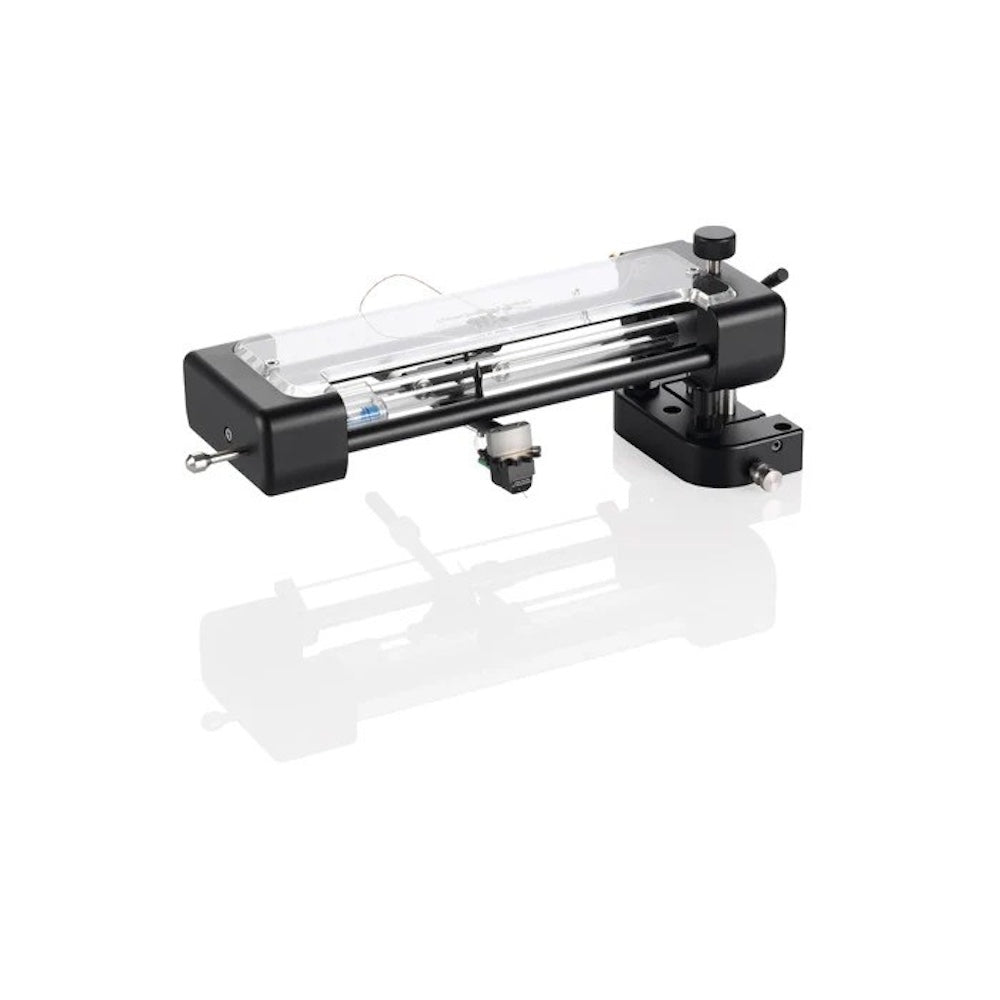
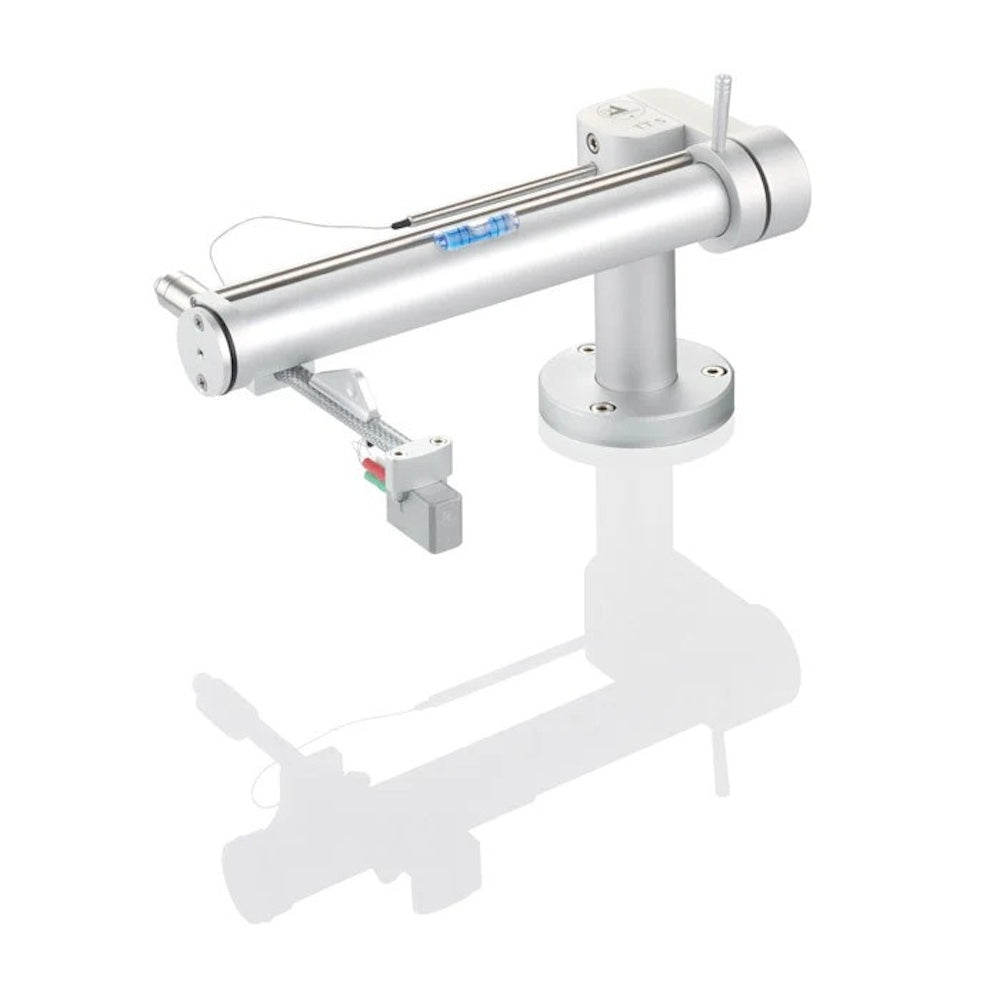
Pivoted or tangential is the first real decision. Clearaudio's tangential arms — the Statement TT1 flagship, the TT2, and the more compact TT3 and TT5 — descend from the Souther Tri-Quartz design Clearaudio acquired in the 1980s and spent roughly fifteen years refining into the patented Statement TT1. All of them are purely mechanical: precision ball bearings running in a polished glass tube, with no servos, no motors and no air pumps anywhere in the mechanism. Because the stylus tracks in a straight line, no anti-skating compensation is required at all. The trade is size, mass and setup precision — a Statement TT1 weighs about 8.6 kg and is factory-configured for the specific deck it will mount on.
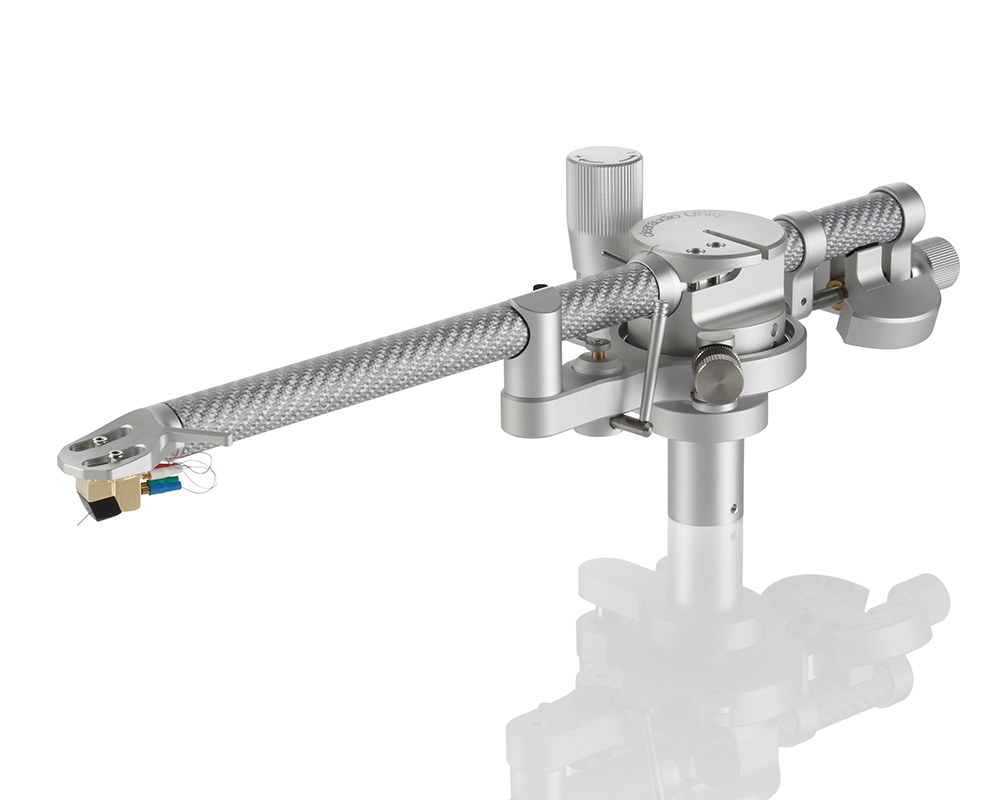
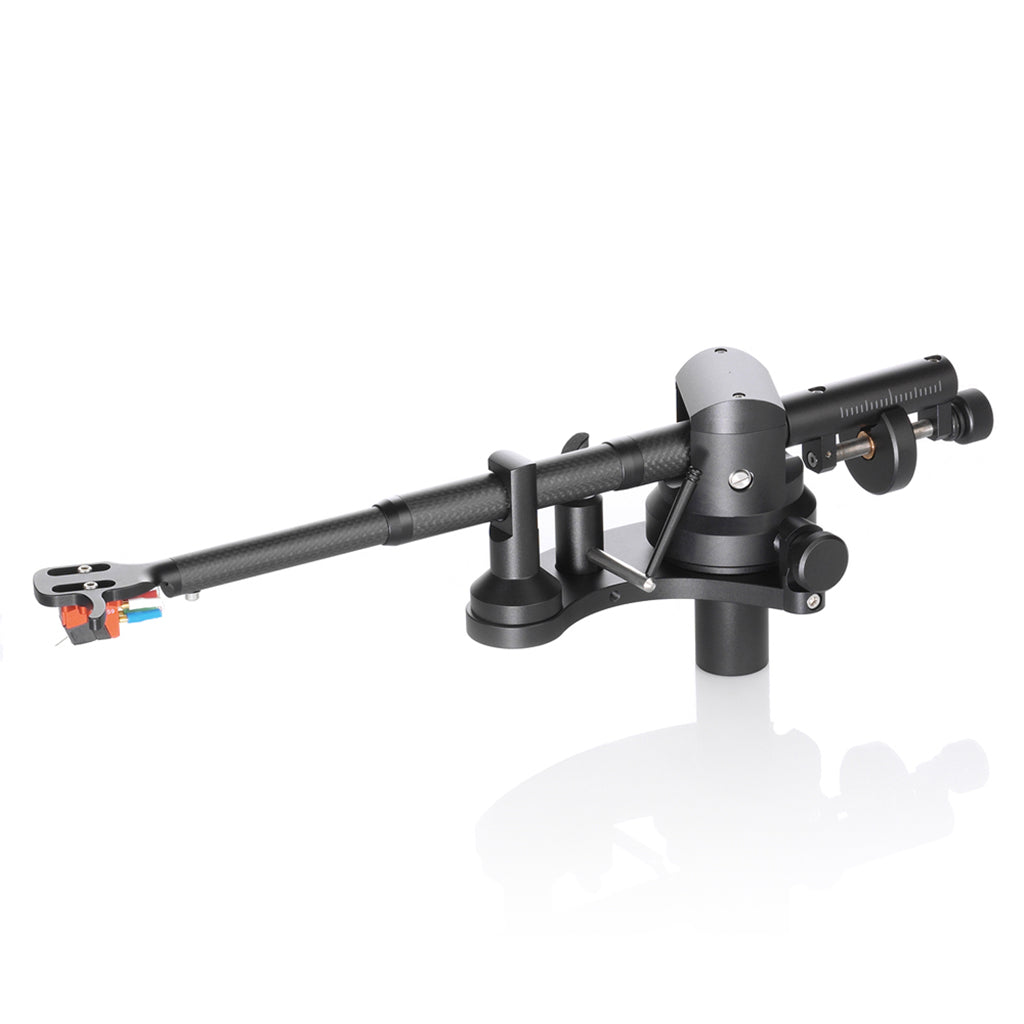
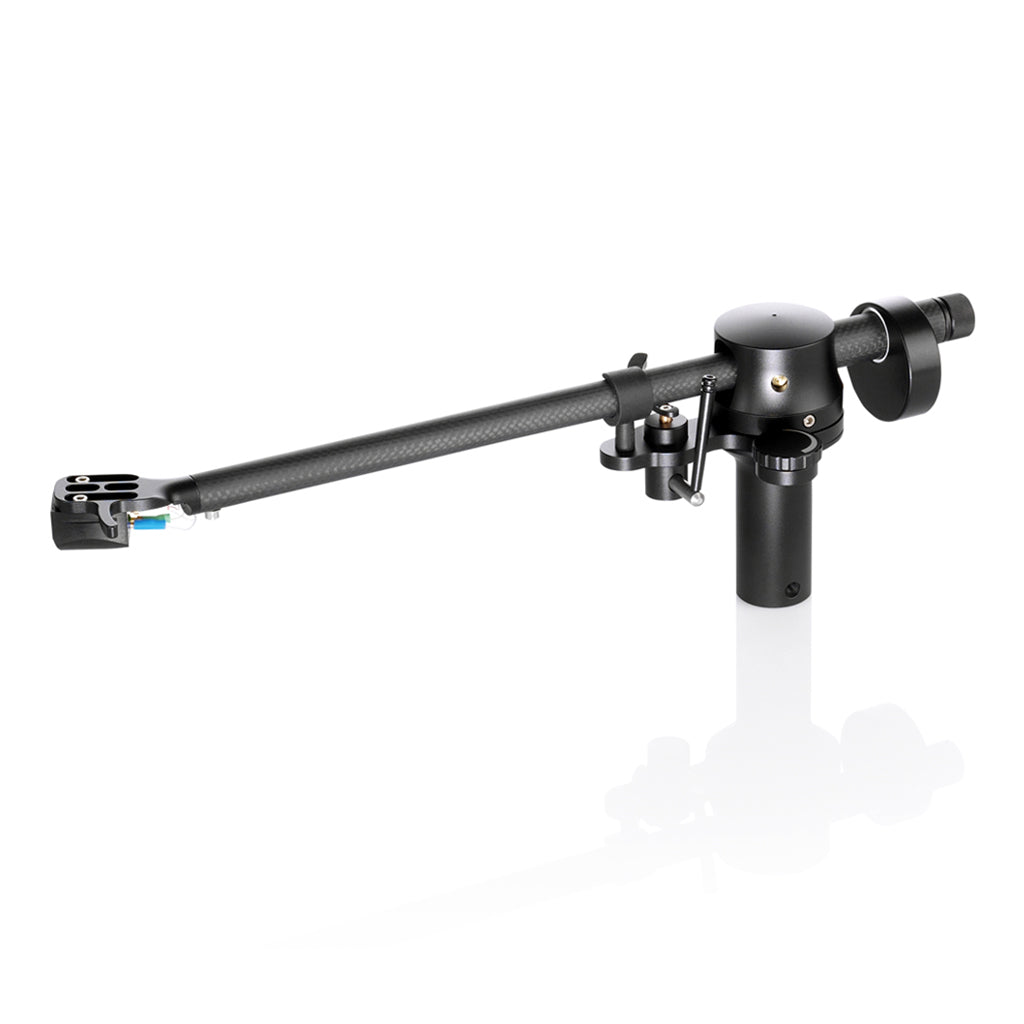
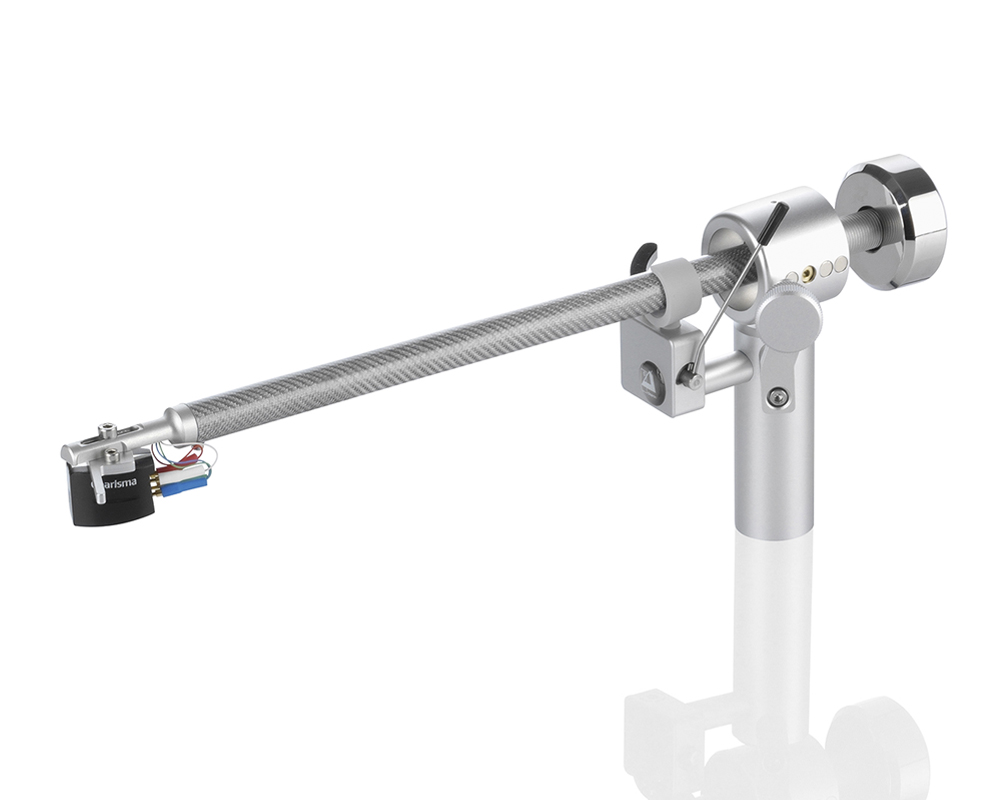
Among the pivoted arms the bearing is what separates the tiers, and Clearaudio uses four genuinely different designs rather than one design at four price points. The Satisfy family uses handmade Swiss vertical and lateral bearings — tungsten against polished sapphire, borrowed from watchmaking. The Tracer uses a jewelled tungsten-and-sapphire bearing set at 90° to the cartridge offset angle, which helps tracking accuracy and stereo separation. The Verify uses Clearaudio's patented friction-free magnetic bearing. The Universal uses a precision ball-bearing gimbal, and the Unity — the 2025 flagship, developed for the 45th-anniversary Master Jubilee — uses a magnetically stabilised single-point sapphire bearing evolved from the arm Clearaudio designed for the Naim Solstice.
Effective length is a trade, not a ranking. A longer arm reduces tracing error because its arc is shallower, but it adds effective mass and needs more space. Clearaudio offers the Tracer and Universal in both 9-inch and 12-inch versions for exactly this reason, and chose 10 inches for the Unity as the point where tracing error and effective mass balance best. What matters more in practice is that whichever length you choose can actually be set up: VTA, azimuth, tracking force and anti-skate all need to be adjustable in place, and on the better arms they lock once set.
Hear these in Scottsdale and Tempe
An arm is only as good as its installation, so we fit and align these by measurement rather than by eye — and we will check an existing arm's geometry for you whether or not it came from us. If you are weighing a pivoted arm against a tangential one, that is a comparison worth making in the room with your own cartridge and deck rather than on paper. Walk in during business hours, or book ahead so the arms you want to hear are mounted and set up before you arrive.