Brand
Dan D’Agostino
Nearly five decades of solid-state mastery, rendered in copper.
Authorized Dealer — Scottsdale & Tempe, Arizona
Trade-in credit toward new purchases · Full installation and calibration · Walk in during business hours or book ahead
See what's on demonstration now ↓LMC has been an authorized Dan D'Agostino dealer since 2019 — and Dan hand-delivers new equipment to the Scottsdale showroom himself, a courtesy very few electronics dealers receive. In the Scottsdale reference room, the Relentless preamplifier and monoblocks drive the Wilson WAMM Master Chronosonic from a full dCS Varèse digital chain — one of the few reference-tier Relentless setups on active demonstration anywhere in the United States. It is a rare place to hear the top of the D'Agostino range doing exactly what it was built to do.
Dan D'Agostino has spent nearly five decades designing solid-state amplifiers, and the current work is the culmination of that career. In 1980 he co-founded Krell Industries with his wife Rondi, and served as its CEO and chief engineer until 2009. When new investors forced the D'Agostino family out of Krell that September, Dan started over. Dan D'Agostino Master Audio Systems was founded in 2011 in Cave Creek, Arizona, and every current product carries the design lineage that made Krell one of the defining American amplifier houses of the 1980s and 1990s — refined for another fifteen years, and freed from the constraints of the earlier company.
The engineering premise
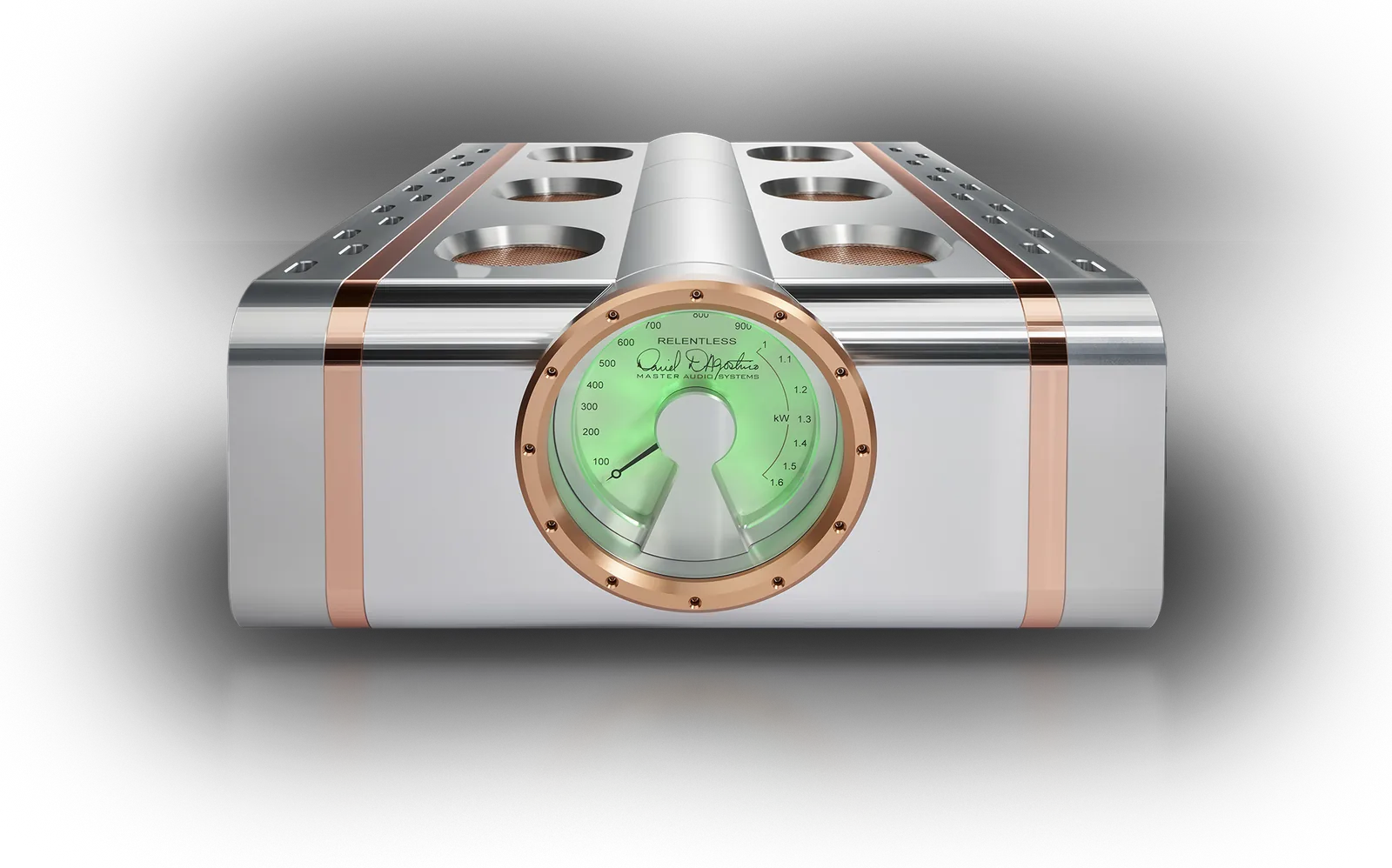
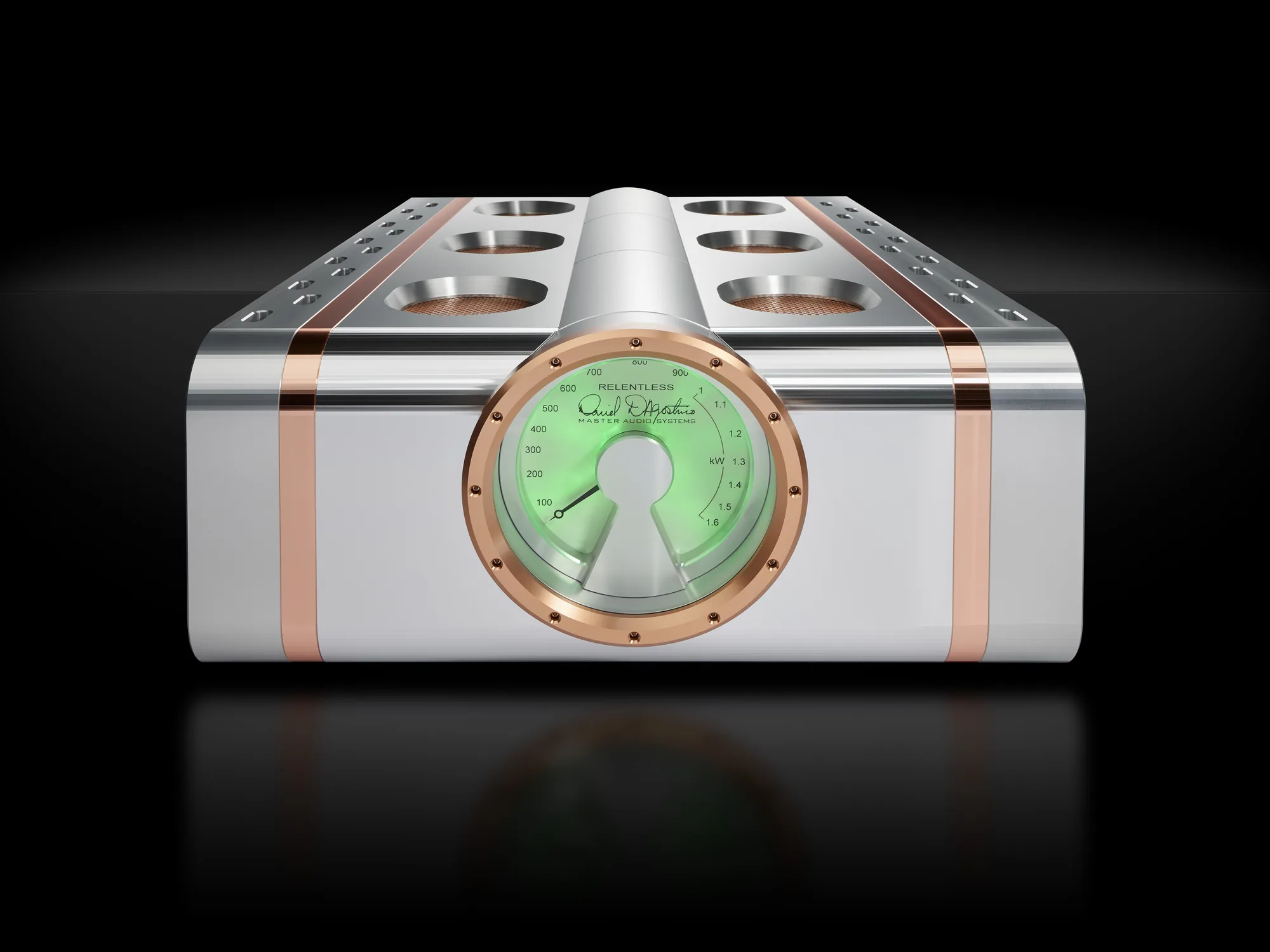
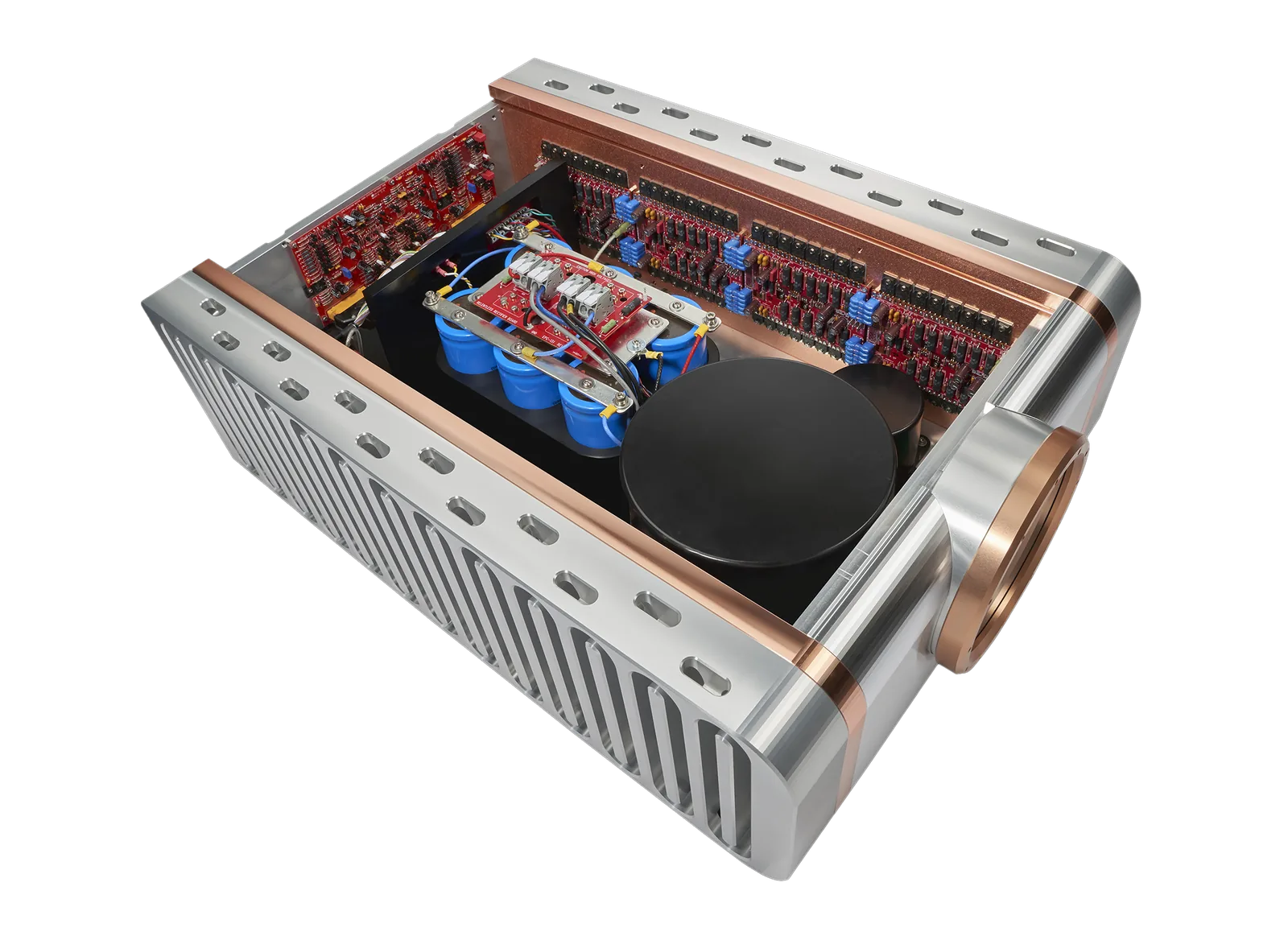
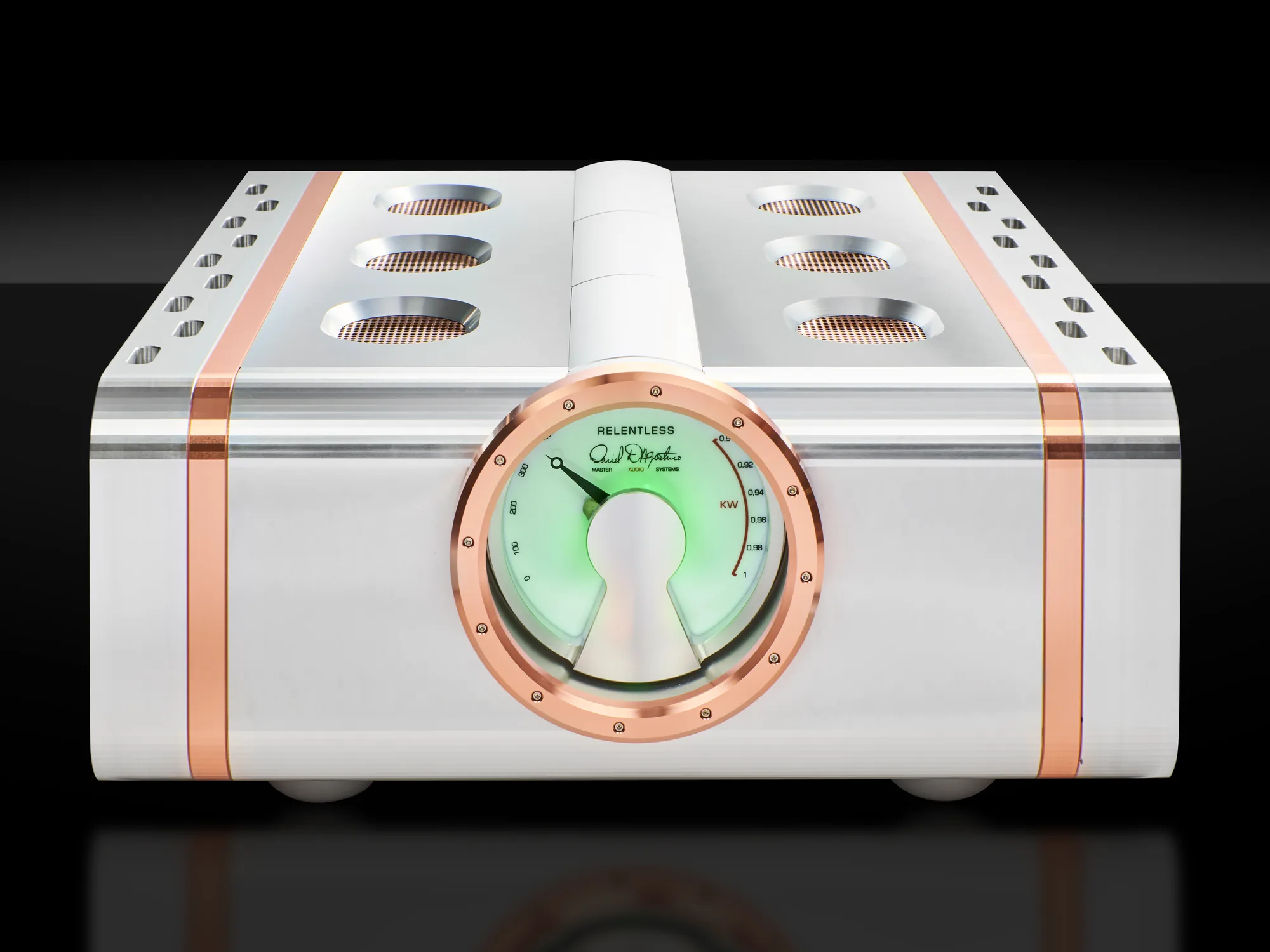
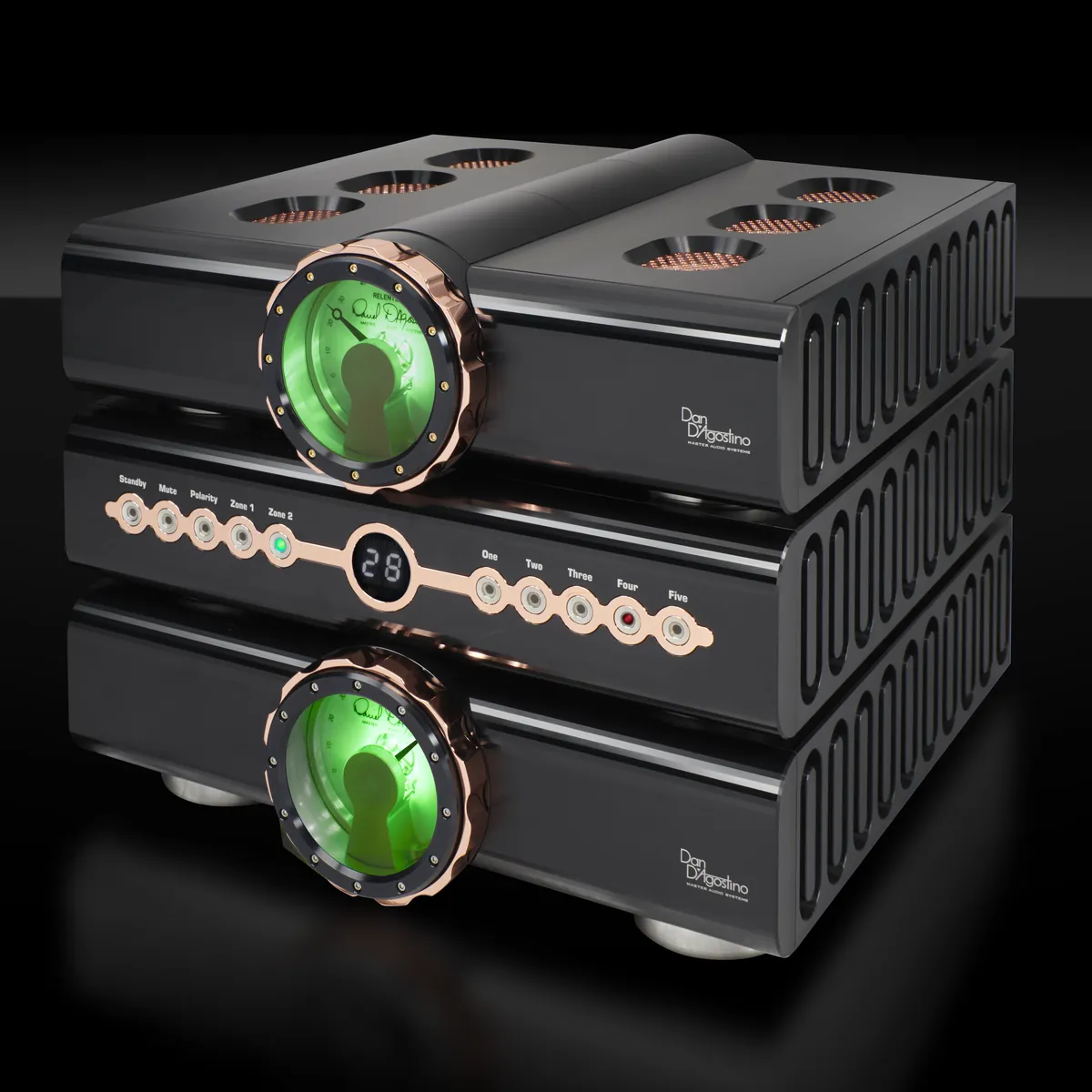
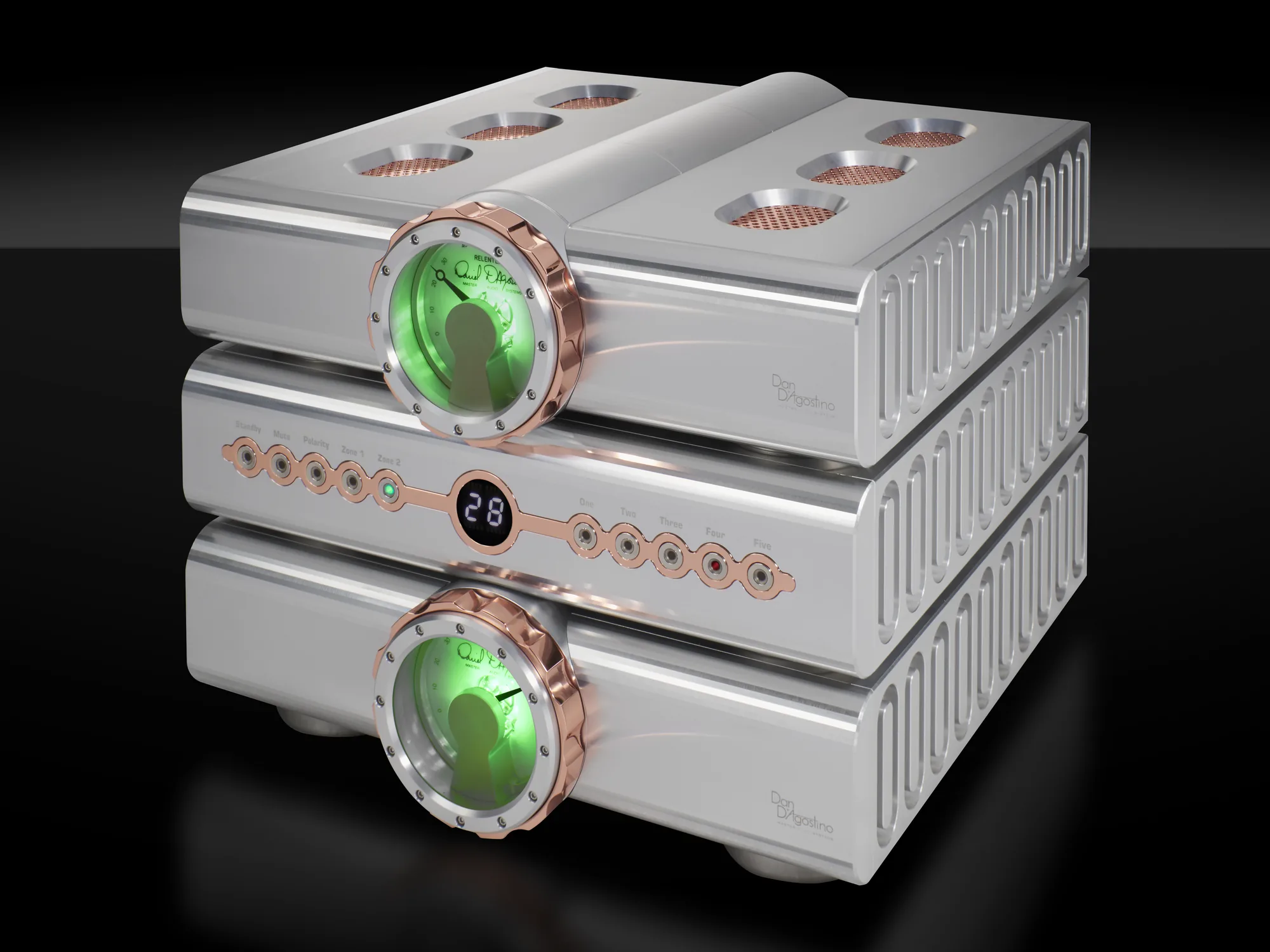
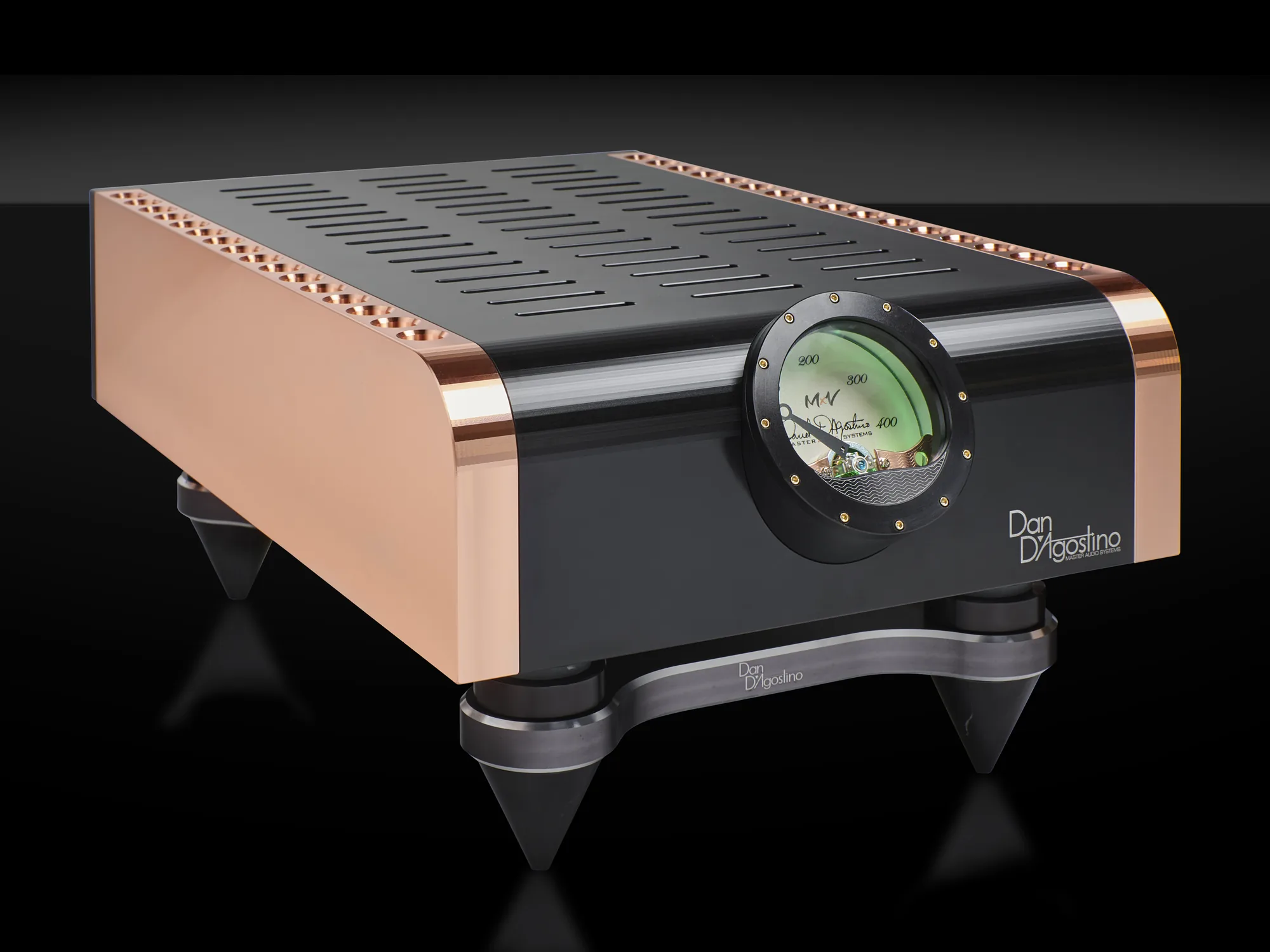
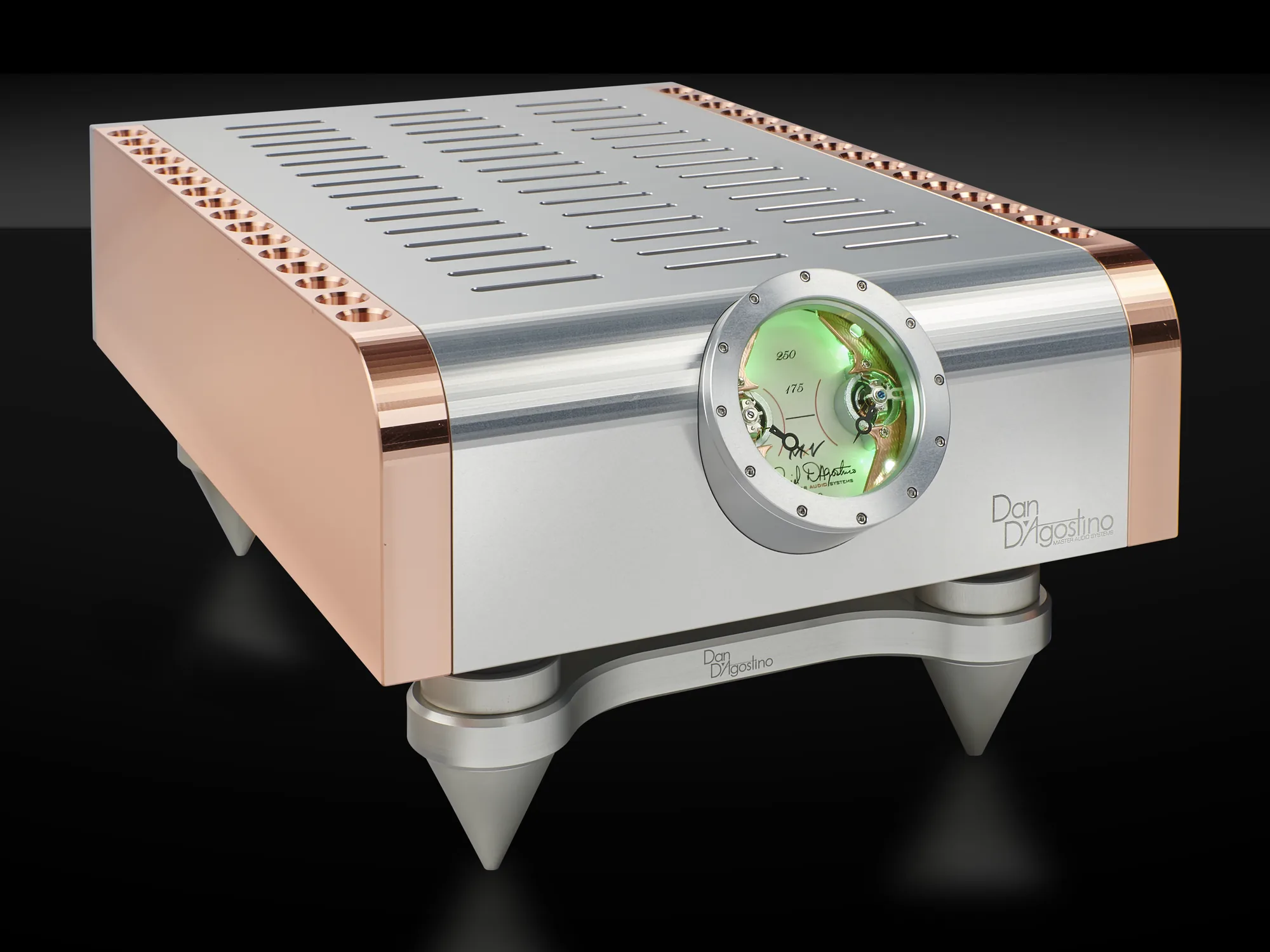
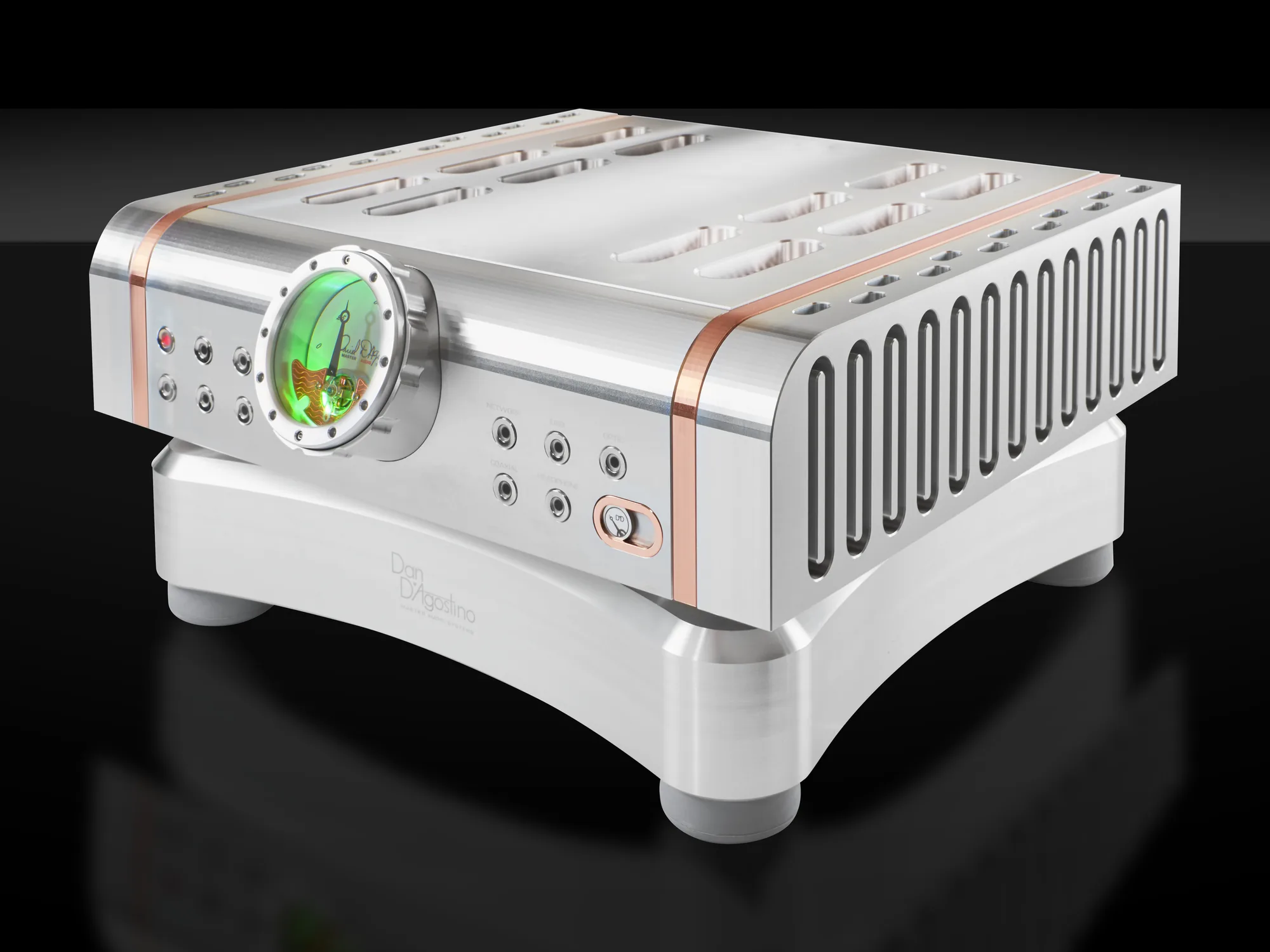
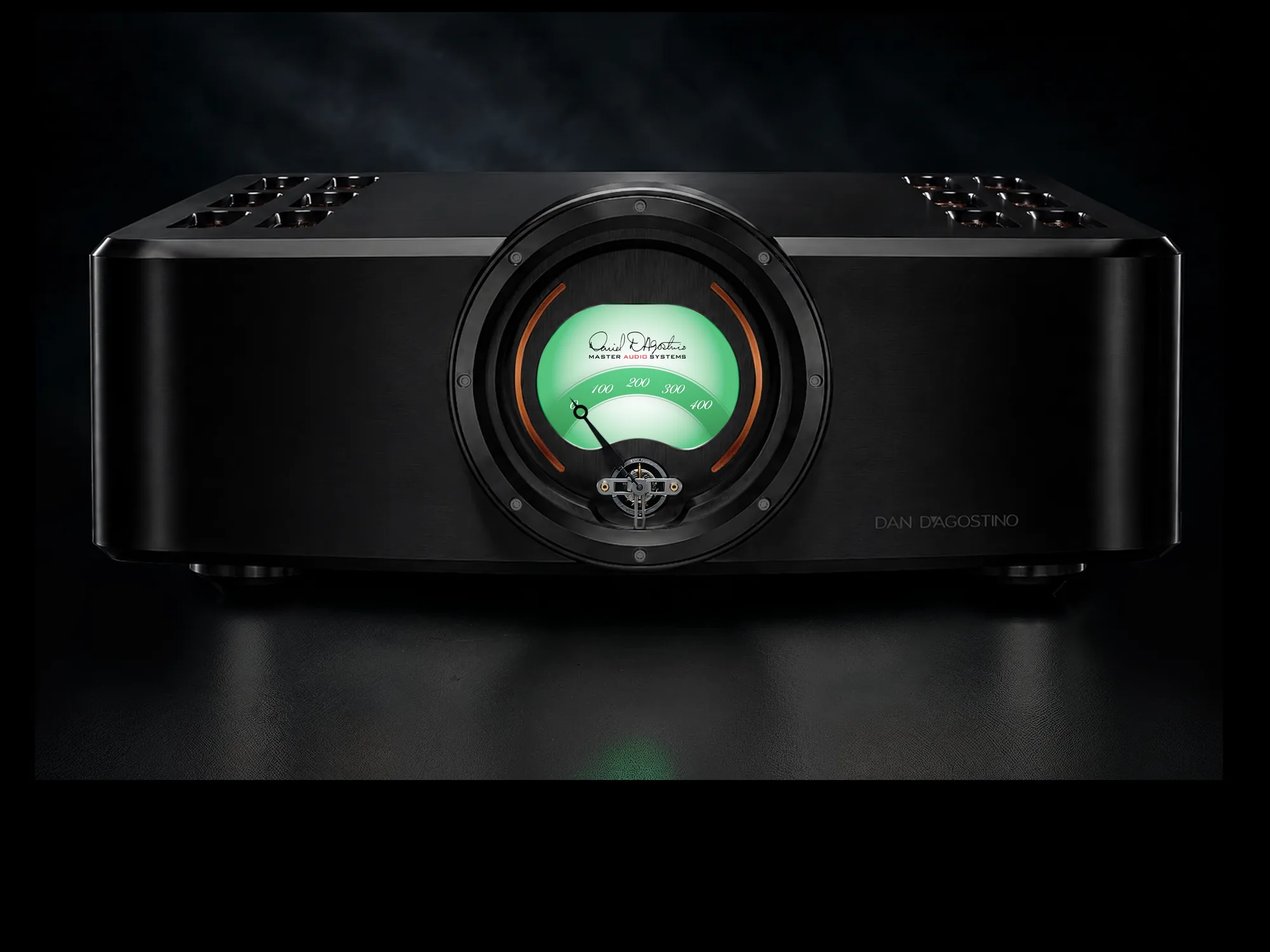
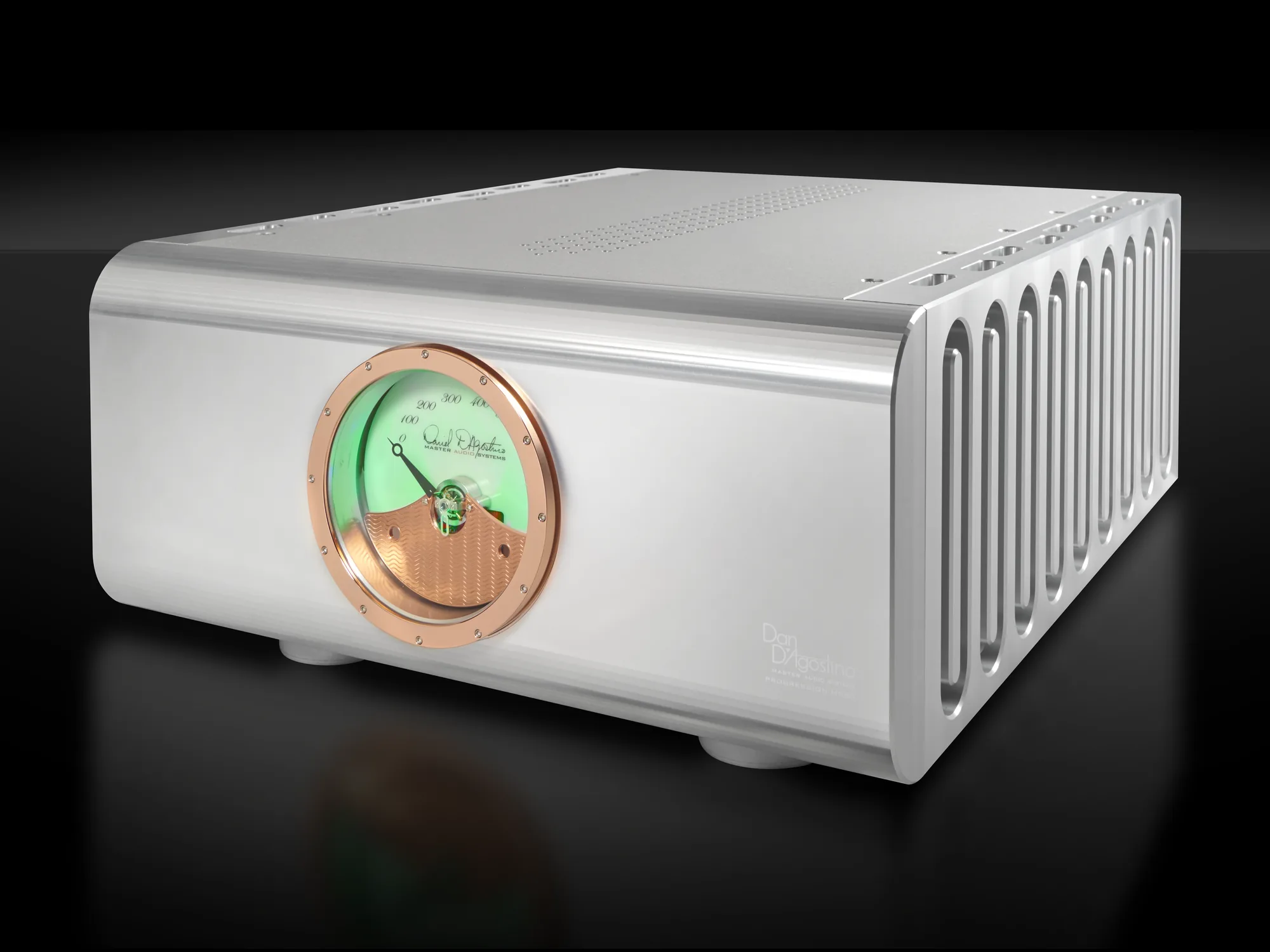
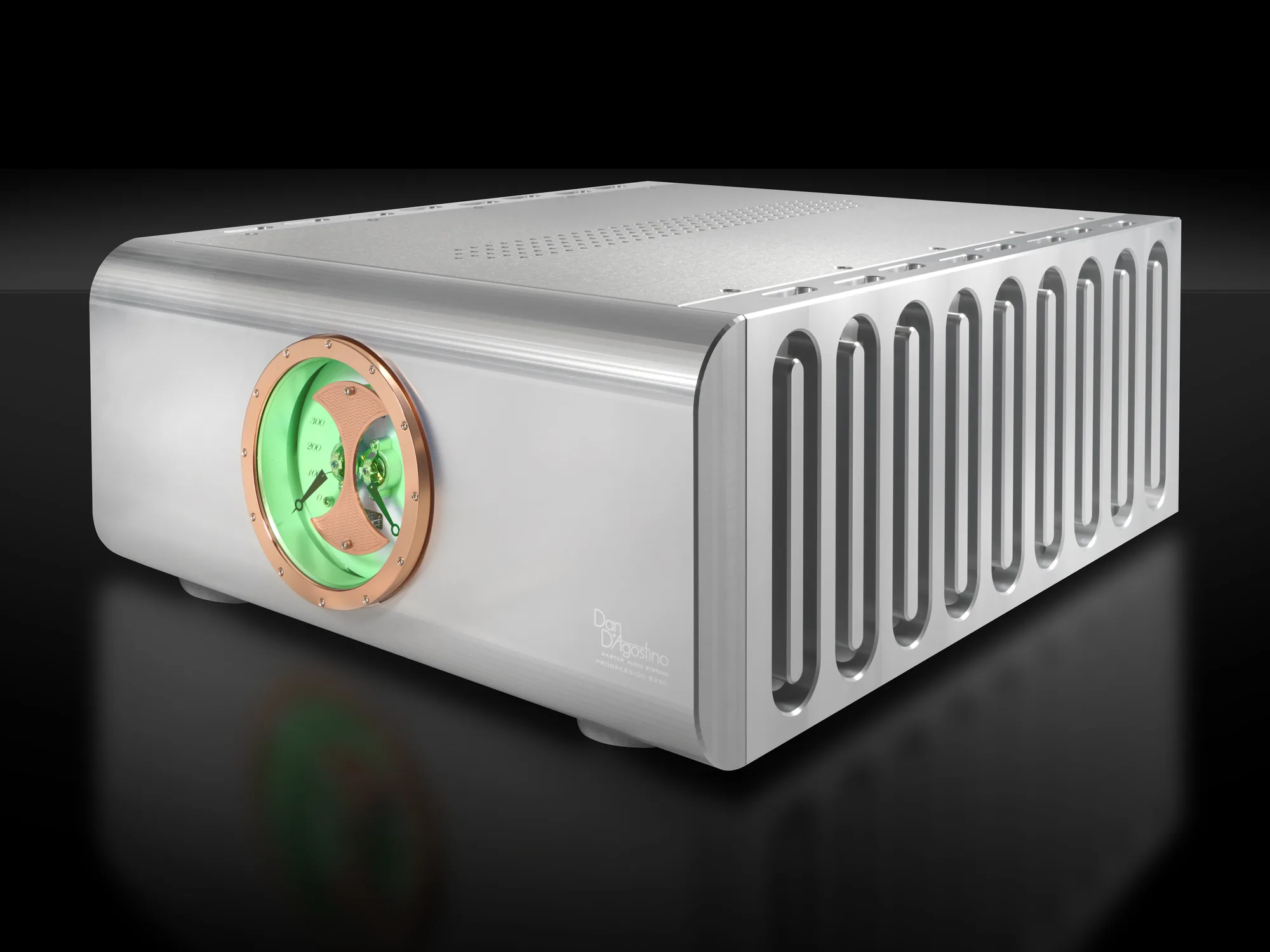
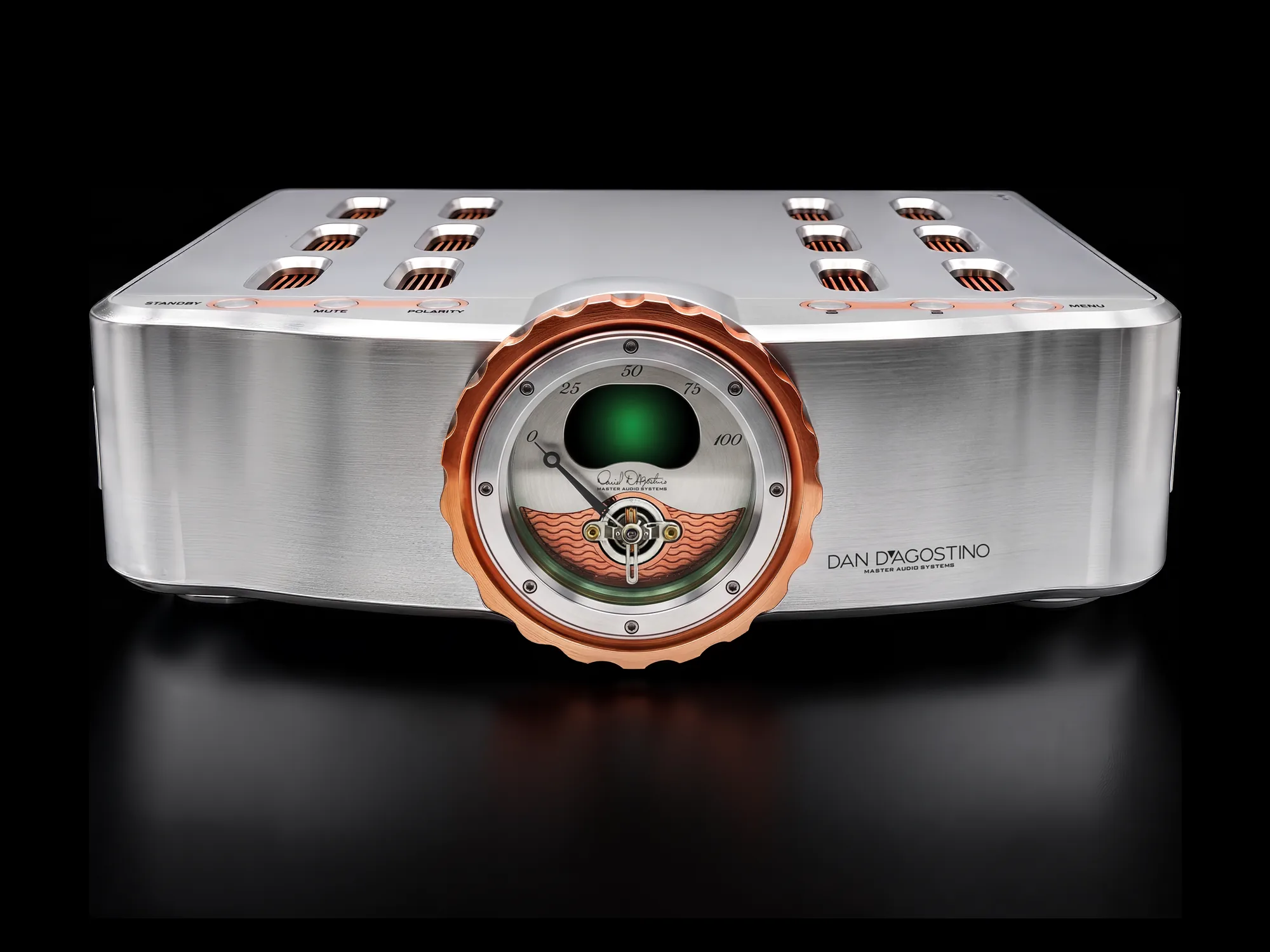
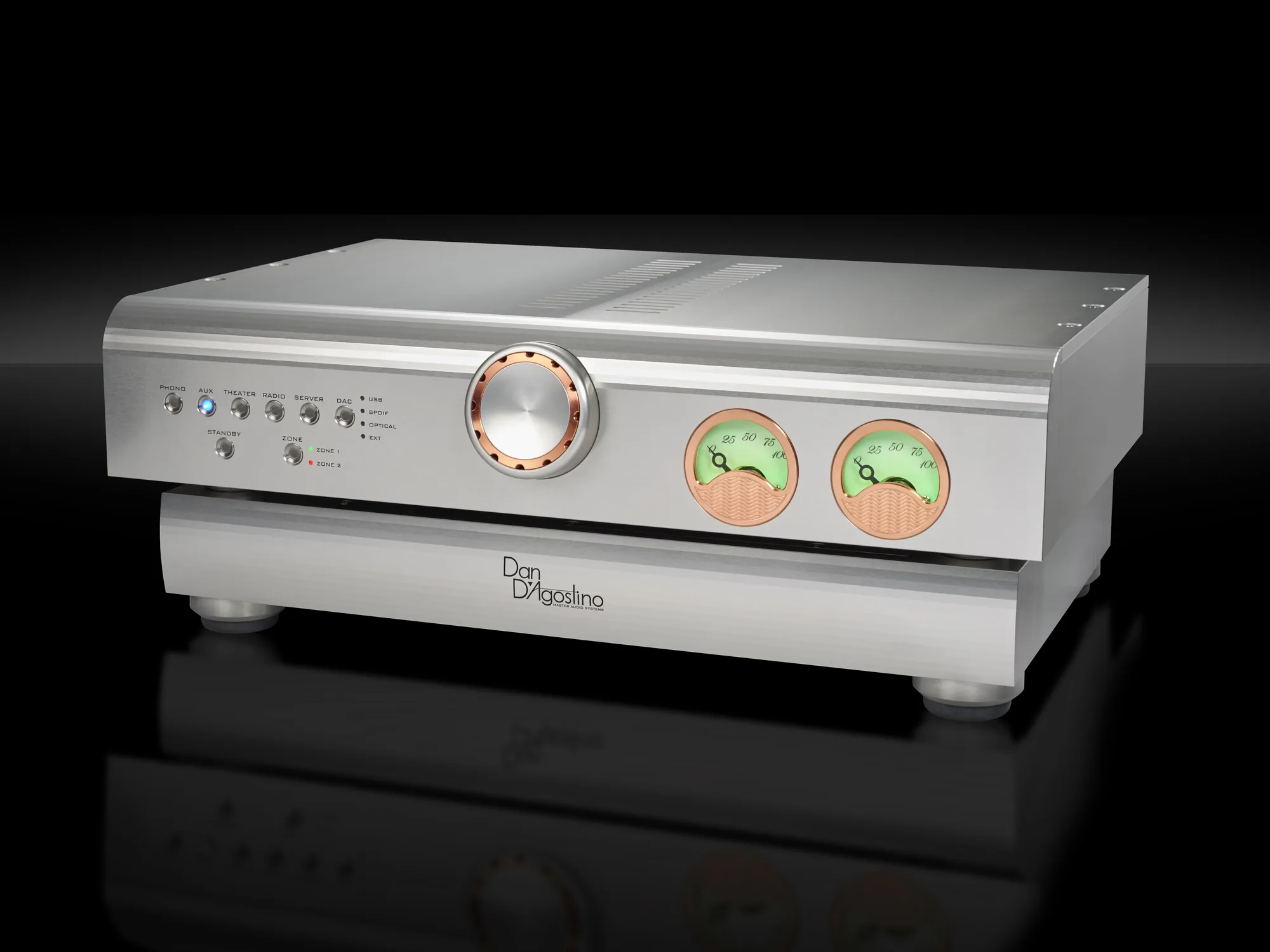
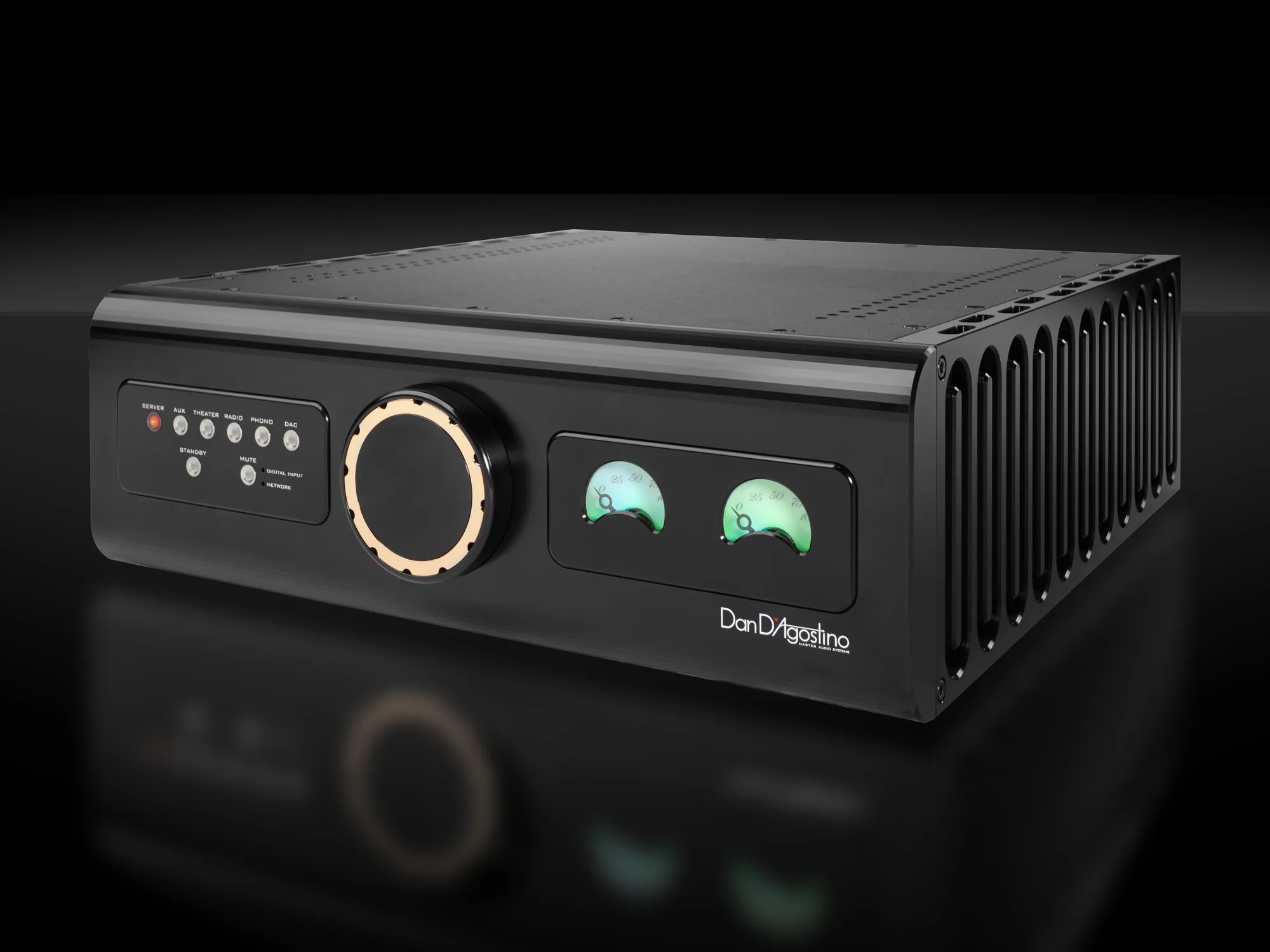
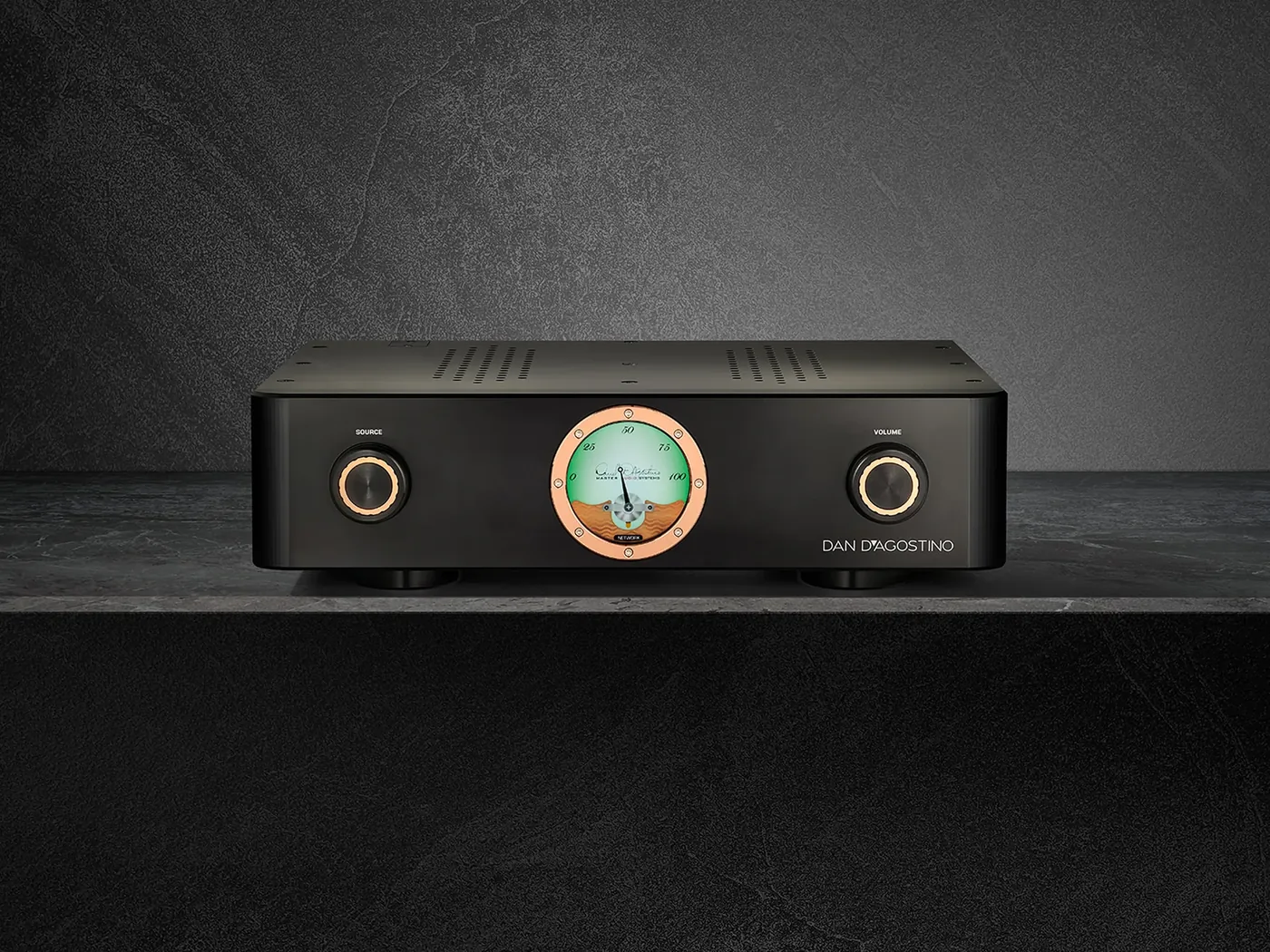
A D'Agostino amplifier is a mechanical object as much as an electrical one, and the current work makes that visible. Chassis are machined from solid aluminum billet rather than folded from sheet stock — mechanically rigid enough to resist the amplifier's own transformer vibration, and finished to a standard closer to Swiss watchmaking than to consumer electronics. The illuminated power meters take their design cues directly from Breguet and Tourbillon watch faces, and the analogue meter wand has become the company's visual signature.
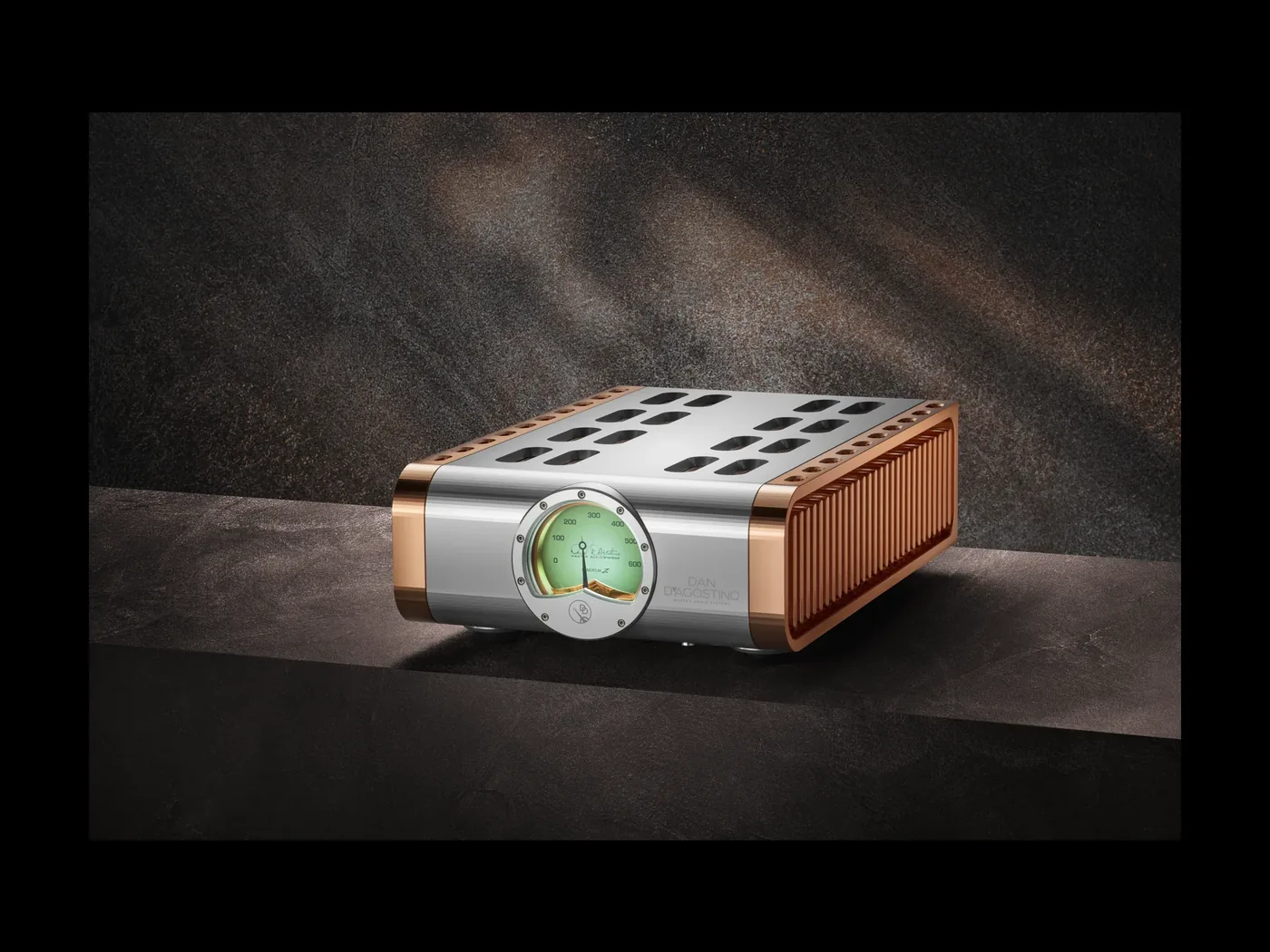
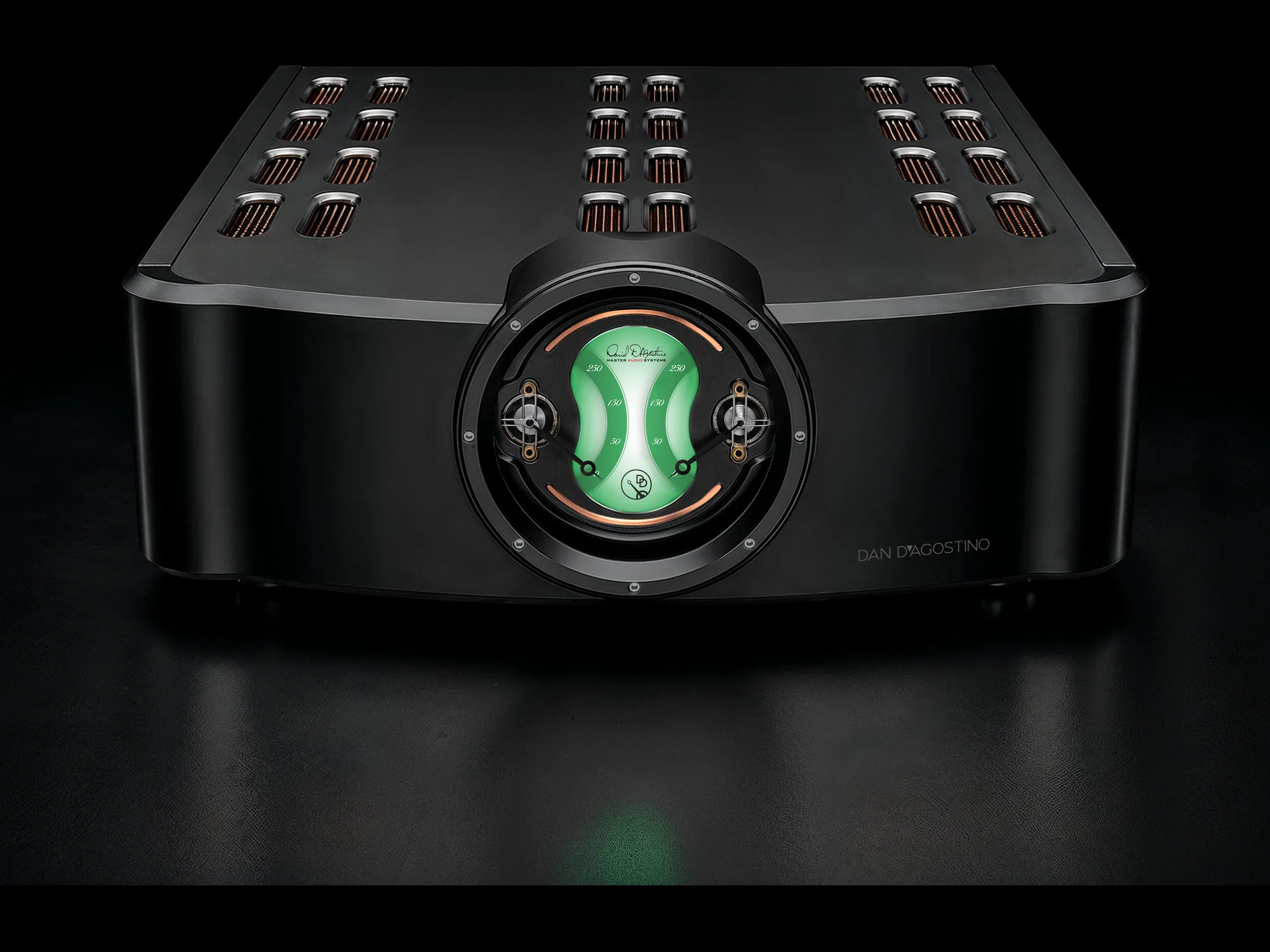
The copper heat sinks are the other signature, and the reason for them is straightforward. Copper conducts heat substantially better than aluminum. That means output devices run cooler at the same power output, or handle more power at the same operating temperature — either way, the transistors sit closer to the center of their linear operating region, where distortion is lowest and where music actually asks the amplifier to work. Most manufacturers use aluminum because it is cheaper and easier to machine; D'Agostino uses copper because the technical argument for it is unambiguous.
The Dan D'Agostino line at LMC
The catalog covers three tiers plus a compact integrated. At the top sits the Relentless Series, updated in June 2026 to Z specification with new preamplification and monoblock amplifiers — the Relentless Z Preamplifier, Relentless 800Z Monoblock rated 1,200 watts into eight ohms, and the Relentless Epic 1600Z Monoblock rated 2,200 watts into eight ohms. Existing Relentless owners can upgrade their units to current Z specification rather than replace them.
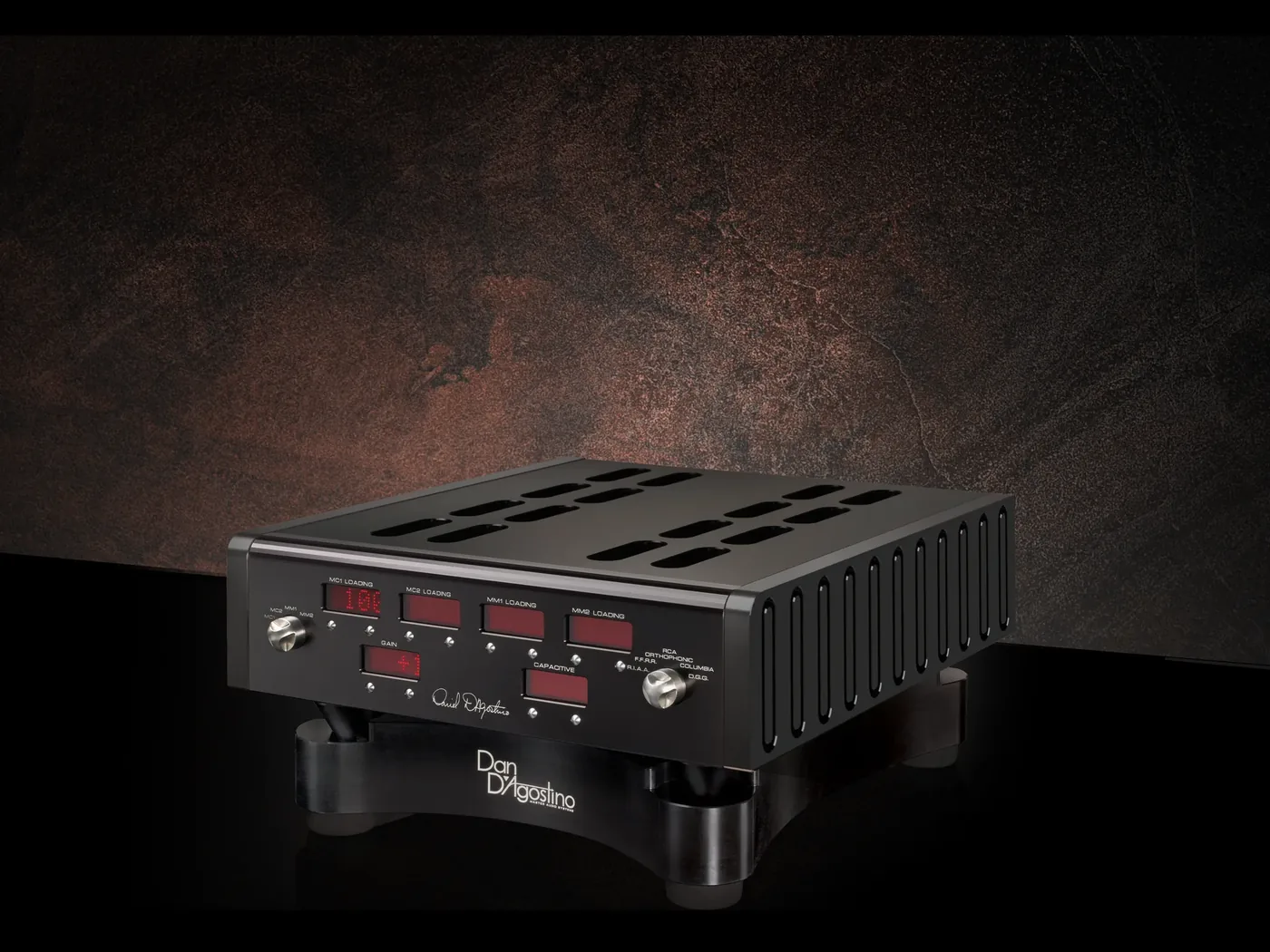
The Momentum series covers the middle of the range with the Momentum Z Monoblock (introduced January 2026 for the company's fifteenth anniversary), the Momentum M400 monoblock, the Momentum S250 stereo power amplifier, the Momentum MxV integrated amplifier and the Momentum Phonostage. The Momentum C2 preamplifier — the 2019 successor to the Momentum HD — brings JFET input-stage topology and an optional Digital Streaming Module for network audio.
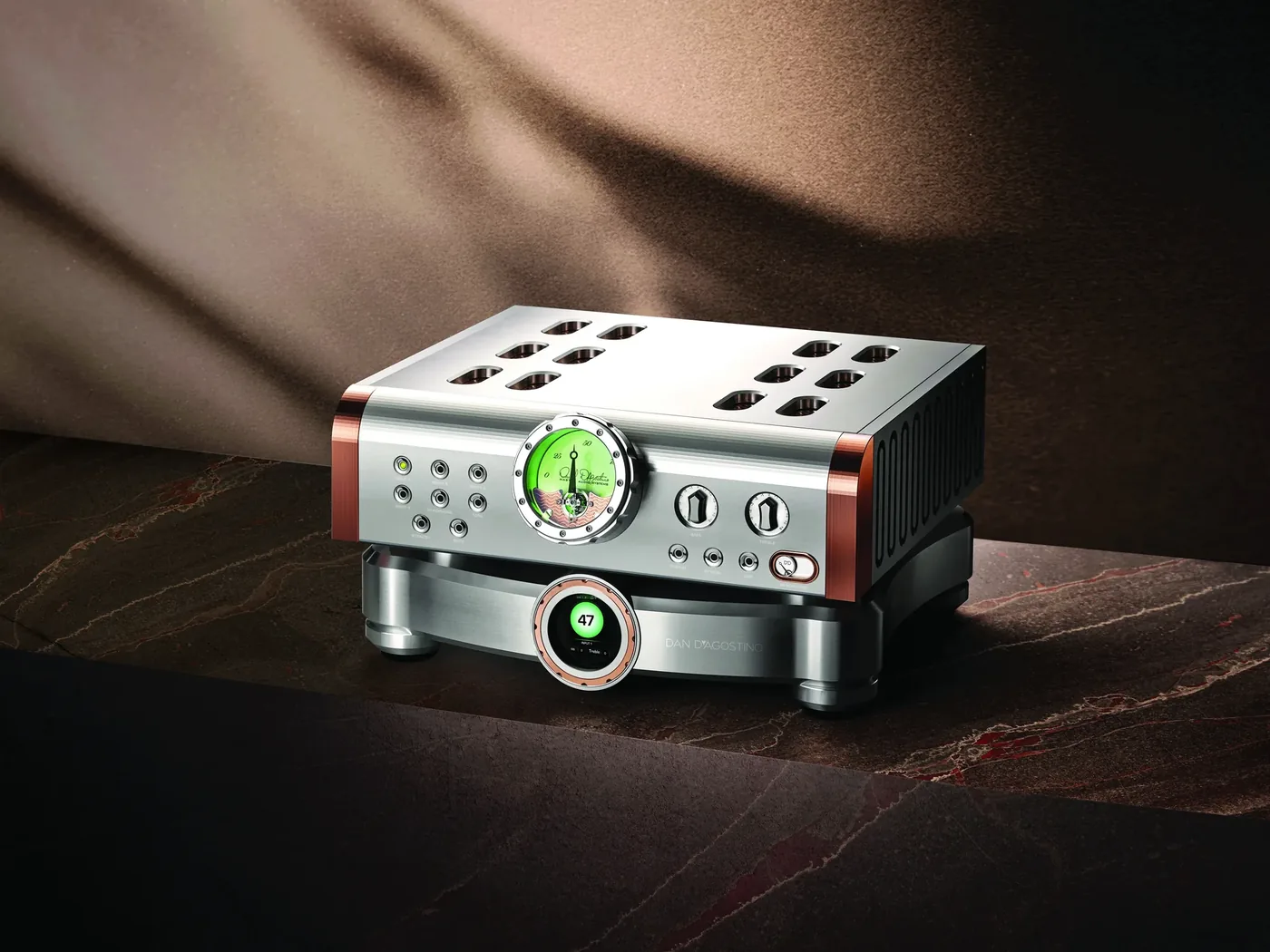
The Progression Neo Series, also introduced at High End Vienna in June 2026, migrates flagship JFET input-stage technology from the Relentless and Momentum Z platforms into a more approachable price tier. The Neo Preamplifier is the first D'Agostino preamp with HDMI eARC and CEC — a genuinely modern integration point for systems that live alongside a television. The Neo Monoblock delivers 1,600 watts into two ohms; the Neo Stereo delivers 1,000 watts per channel into two ohms. The Pendulum Integrated Amplifier covers single-chassis systems for smaller rooms.
The Momentum Z
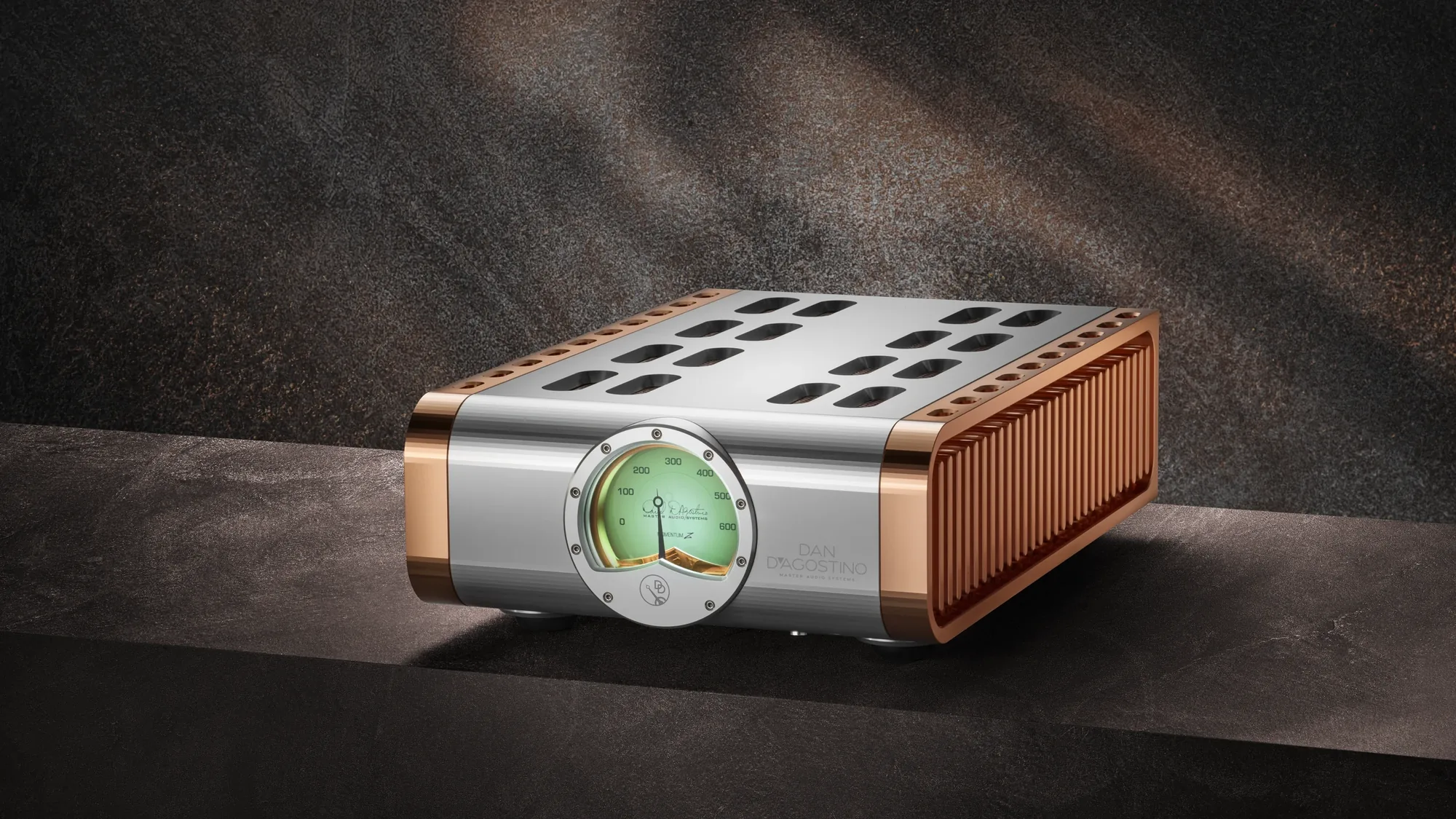
The Momentum Z Monoblock is on demonstration at the Scottsdale showroom. That a manufacturer makes the trip to deliver in person says something: it reflects trust in the room, the setup discipline, and the way the product will be represented to buyers — and it runs both directions, so clients get service on D'Agostino product from a dealer whose reference room Dan has spent hours in.
The Momentum Z itself is worth understanding on its own terms. Each 5-axis machined copper heat sink is formed from a single 42-pound copper billet. The Dual Domain Meter Display combines a 3.5-inch LCD with the analogue meter wand D'Agostino has used since the first Momentum Monoblock. The Kinetic Drive Regulator is a new power-supply architecture designed to keep the amplifier immune to AC mains irregularities. The JFET input stage is the first in a D'Agostino amplifier — the same topology now migrating downward into the Progression Neo range. Dual 1,200 VA linear toroidal transformers feed the output stage, and an RJ45 Ethernet connection surfaces real-time operating data through any web browser on the local network.
In the Scottsdale reference room
That reference system is a genuine measuring stick. The scottsdale.org profile of LMC's twenty-fifth anniversary put its assembled cost at roughly $1.6 million — a useful reference point for what the top of the D'Agostino range is capable of when it is not the limiting factor in the room. Walk in during business hours to hear the Momentum Z or the reference-tier Relentless setup on demonstration; book ahead if the audition needs a specific pairing — a Momentum M400 pair against a Momentum Z, for instance, on your own recordings — so the room can be warmed up and the comparison set up properly.
The design lineage
The engineering premise underneath every current D'Agostino traces directly to Krell — massive chassis, high-bias output stages, generous power supplies, fully balanced circuit topologies. What has changed is execution: copper heat sinks were not available at production scale when Krell started, the machining budget for solid-billet chassis was not either, and the semiconductor technology that lets a modern Momentum operate cleaner and cooler than a comparably powerful KSA-series amplifier is a generation more mature. The other change is scope. Krell built to a broad ladder from mid-tier integrated amplifiers upward. Master Audio Systems builds only at the reference tier, and that constraint lets each product carry engineering attention a broader lineup could not sustain. For any listener moving up from Krell — many longtime American high-end audio buyers are — the family character is immediately recognizable, and the transition is one of the least disorienting an amplifier upgrade can be.
What to listen for
Solid-state amplification at this level asks specific questions of the listener, and useful audition is not measured in seconds. Two tests are worth running. Quiet passages reveal how the amplifier's noise floor sits against the recording's silence — the D'Agostino noise floor is very low, and ambient information other amplifiers hide is often audible against a well-made recording. Complex passages reveal whether the amplifier maintains separation between instruments as the dynamic range opens up — dense orchestral fortissimo, big-band brass sections, anything that pushes other amplifiers into congestion. That behaviour is where copper heat sinking and high-bias output stages actually pay off, and it is what the money is buying.
For a first D'Agostino audition, start on Momentum. It carries the house sound in its most balanced form at a price point that leaves room for the rest of the system. The Progression Neo range is the more accessible route to much of the same voicing. The Relentless is what you buy when the loudspeaker and the room will genuinely reveal what the extra chassis mass, biasing headroom and power-supply reserve actually do. In every case, bring your own recordings — that is the audition that answers the question.
Frequently asked questions
What makes Dan D'Agostino amplifiers different from other high-end amplifiers?
A D'Agostino amplifier is a mechanical object as much as an electrical one. Chassis are machined from solid aluminum billet rather than folded from sheet stock — mechanically rigid enough to resist the amplifier's own transformer vibration, and finished to a standard closer to Swiss watchmaking than to consumer electronics. Copper heat sinks are the other signature: copper conducts heat substantially better than aluminum, so output devices run cooler at the same power output (or handle more power at the same operating temperature) and sit closer to the center of their linear operating region where distortion is lowest. Dan D'Agostino spent nearly three decades at Krell before founding Master Audio Systems in 2011, and the current work is the culmination of that career — the same design lineage refined for another fifteen years and freed from the constraints of the earlier company. LMC has been a D'Agostino dealer since 2019 and the Relentless preamplifier and monoblocks drive the Wilson WAMM Master Chronosonic in the Scottsdale reference room.
What is the Relentless Series, and can I hear it at LMC?
The Relentless Series is D'Agostino's flagship tier and was updated in June 2026 to Z specification with the new Relentless Z Preamplifier, Relentless 800Z Monoblock (1,200 watts into eight ohms), and Relentless Epic 1600Z Monoblock (2,200 watts into eight ohms). LMC's Scottsdale reference room runs the Relentless preamplifier and Relentless monoblocks driving the Wilson WAMM Master Chronosonic, fed by the full dCS Varèse digital chain — the assembled system approaches $1.6 million and is one of very few reference-tier Relentless setups on active demonstration in the United States. Existing Relentless owners can upgrade their units to current Z specification rather than replace them, which is one of the reasons a D'Agostino product tends to stay in a system for a decade or more. Walk in during business hours to hear the reference-tier Relentless setup, or book ahead if the audition needs a specific pairing warmed up against your own recordings.
Which D'Agostino line is right for my system — Momentum, Progression Neo, or Relentless?
The three tiers exist to match the loudspeaker, room and system context you're building around. Momentum is the core reference range and where most serious D'Agostino systems start — the Momentum Z monoblock (2026 fifteenth-anniversary design), Momentum M400, Momentum S250 stereo, Momentum MxV integrated, Momentum C2 preamplifier and Momentum Phonostage cover the middle of the catalog with the full D'Agostino design language. Progression Neo, launched at High End Vienna in June 2026, migrates flagship JFET input-stage technology into a more approachable price tier — the Neo Preamplifier is also the first D'Agostino preamp with HDMI eARC and CEC, a genuinely modern integration point for systems that live alongside a television. Relentless is what you buy when the loudspeaker and the room will genuinely reveal what the extra chassis mass, biasing headroom and power-supply reserve actually do. Share your loudspeakers and room dimensions with the LMC team and we'll shortlist the right tier before you commit.
What is the Momentum Z, and how does it differ from the Momentum M400?
The Momentum Z Monoblock was introduced in January 2026 for the company's fifteenth anniversary and represents the current state of Momentum-tier engineering. Each 5-axis machined copper heat sink is formed from a single 42-pound copper billet. The Dual Domain Meter Display combines a 3.5-inch LCD with the analogue meter wand D'Agostino has used since the first Momentum Monoblock. The Kinetic Drive Regulator is a new power-supply architecture designed to keep the amplifier immune to AC mains irregularities, and the JFET input stage is the first in a D'Agostino amplifier — the same topology now migrating downward into the Progression Neo range. Dual 1,200 VA linear toroidal transformers feed the output stage, and an RJ45 Ethernet connection surfaces real-time operating data through any web browser on the local network. The Momentum Z is on demonstration at the Scottsdale showroom and was hand-delivered by Dan D'Agostino himself — the pattern rather than the exception with LMC.
What is the Progression Neo Series?
Progression Neo, introduced at High End Vienna in June 2026, migrates the JFET input-stage technology developed for the Relentless and Momentum Z platforms into a more approachable price tier. The Neo Preamplifier is the first D'Agostino preamp with HDMI eARC and CEC — a genuinely modern integration point for systems that live alongside a television, which most reference-tier preamplifiers ignore entirely. The Neo Monoblock delivers 1,600 watts into two ohms, and the Neo Stereo delivers 1,000 watts per channel into two ohms. The Pendulum Integrated Amplifier covers single-chassis systems for smaller rooms in the same series. For a listener moving up into D'Agostino for the first time, Progression Neo is a legitimate route to much of the flagship voicing at a materially different investment level.
Can I upgrade my existing D'Agostino Relentless to Z specification?
Yes. Existing Relentless owners can upgrade their units to current Z specification rather than replace them — one of the reasons a D'Agostino product tends to stay in a system for a decade or more. This is consistent with how D'Agostino approaches the range in general: the JFET input stage that debuted in the Momentum Z (January 2026) is already migrating downward into the Progression Neo, and the Relentless Z update (June 2026) brings the current thinking into the flagship tier. For upgrade specifics on your existing Relentless, reach the LMC team — the process, timeline and current pricing depend on the specific unit and its configuration.
The Lineup
Explore the Range
Experience The Brand