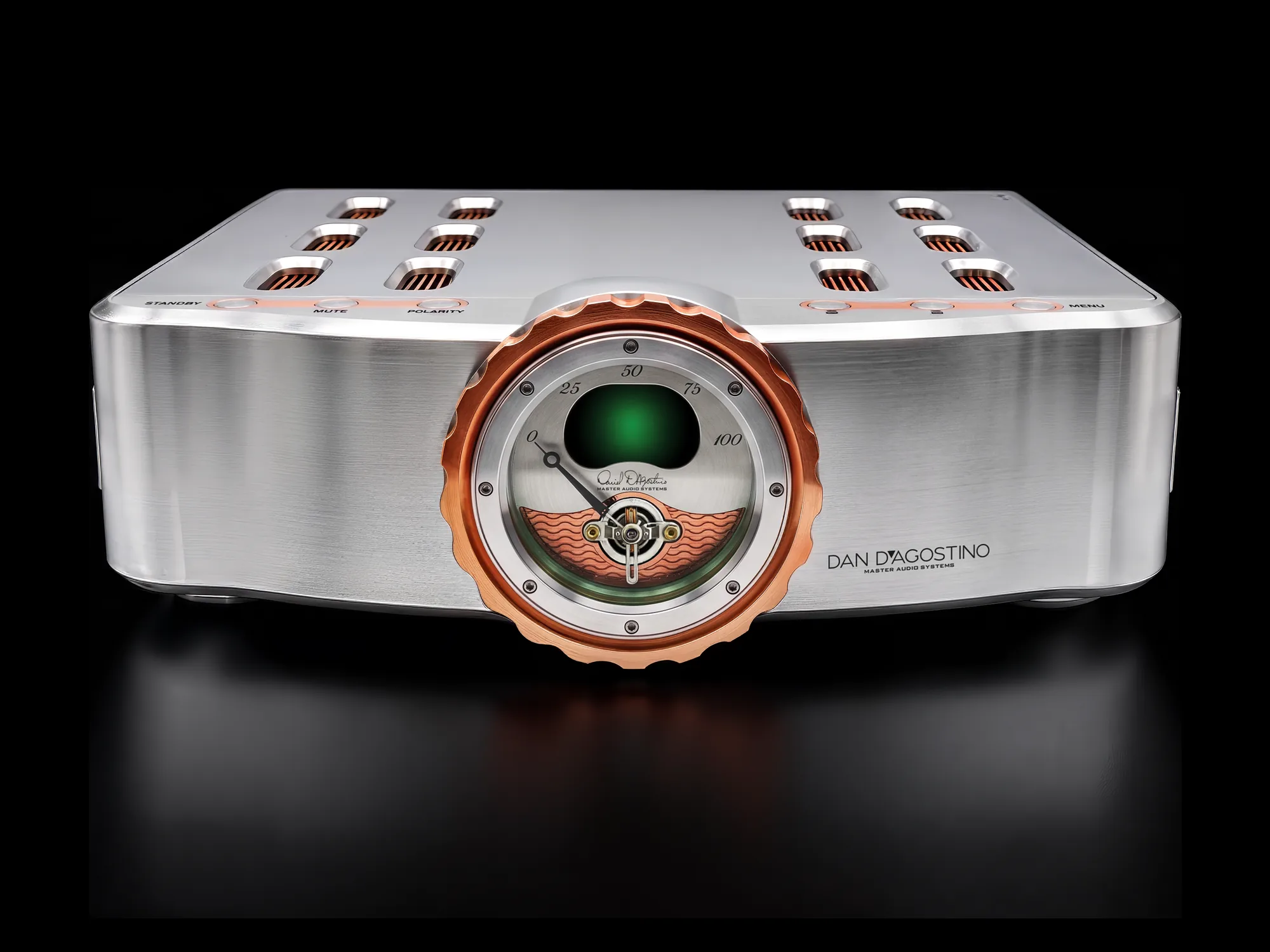
Dan D’Agostino Progression Neo Preamplifier
Available to Order · On permanent demonstration in Scottsdale from late November 2026
25000
Contact UsDan D’Agostino Progression Neo Preamplifier — $25,000. On permanent demonstration at LMC Scottsdale from late November 2026. Relentless JFET input stage, 66% higher rail voltage, HDMI eARC built in.
Product Details
Description
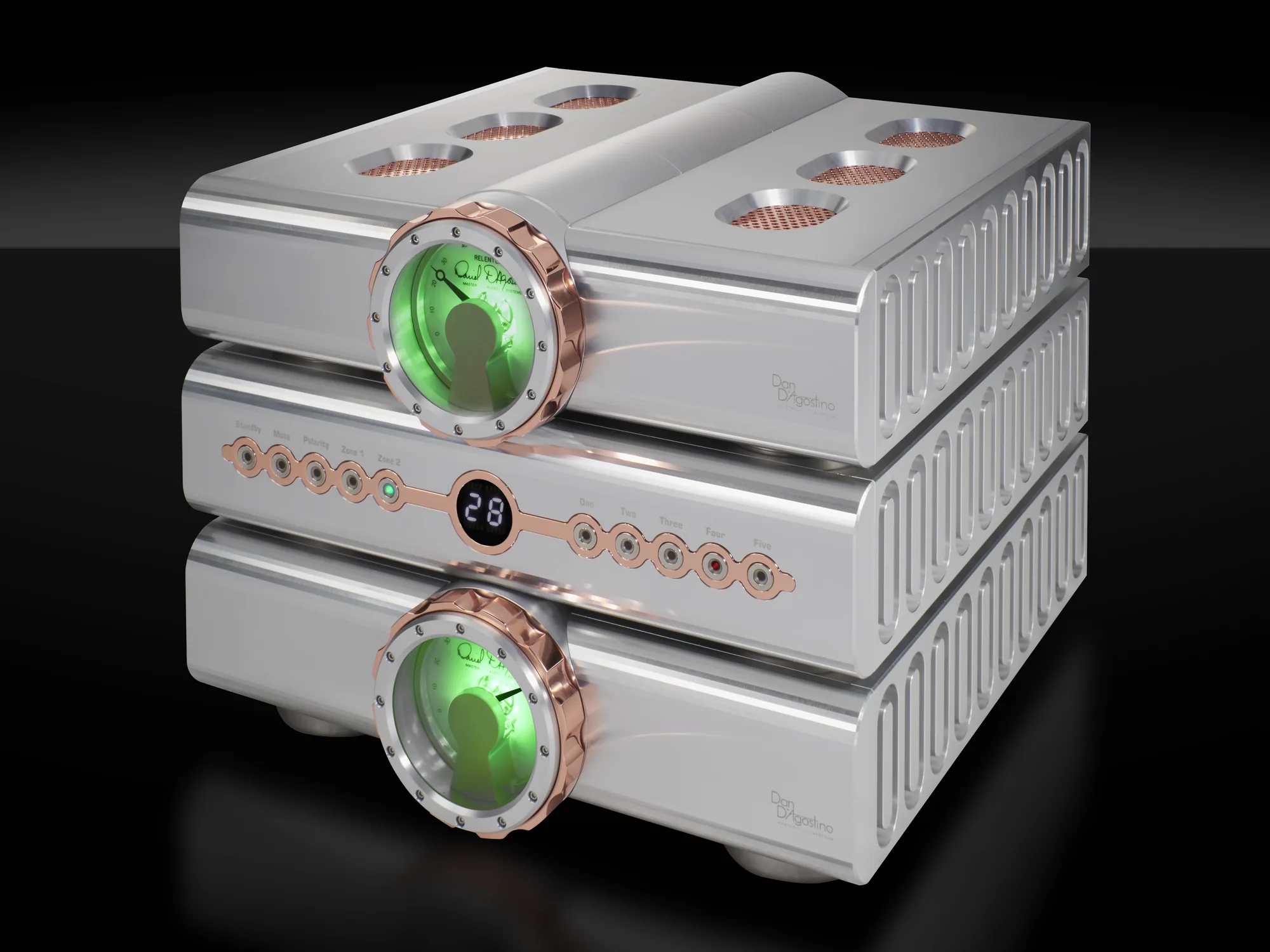
The Progression Neo Preamplifier is the control center of the Progression Neo series and the most advanced preamplifier the Progression line has had. Introduced at High End Vienna in June 2026 as the successor to the Progression Preamplifier, it brings the JFET input-stage topology of the flagship Relentless Preamplifier into the Progression range, with a redesigned power supply, a bi-directional remote and iOS app control, and — a first for any D’Agostino preamplifier — a built-in HDMI input with eARC and CEC. Dan D’Agostino introduced the Neo series to LMC clients in person at our Neo & Z evening in Scottsdale on October 8, 2026; the Neo preamplifier, stereo and monoblock amplifiers go on permanent demonstration at LMC Scottsdale from late November 2026.
Input stage and signal path. The input stage adopts the JFET topology first used in the Relentless Preamplifier. A JFET front end handles the incoming signal with very low noise and without loading the source — the qualities that matter most at the first gain stage, where everything that follows amplifies whatever is lost or added. From there the signal path is fully discrete, fully complementary and balanced from input to output, with no global negative feedback, in line with every D’Agostino preamplifier before it. Four balanced XLR inputs and two single-ended RCA inputs accept a full set of sources; two independent balanced XLR outputs can be used singly or together for bi-amplification or subwoofers.
Power supply. An oversized, custom analog transformer — potted for isolation and positioned to keep its field away from the audio circuitry — runs the preamplifier at a rail voltage 66 percent higher than the previous Progression Preamplifier. Higher rails mean more headroom before any stage approaches its limits, which is the source of the Neo’s wider dynamic range and lower noise floor.
HDMI, home theater and streaming. The Neo is the first D’Agostino preamplifier with HDMI eARC and CEC as standard: a television’s audio returns over a single cable and the television’s remote can select the input and adjust volume, so a reference two-channel system can also be the living room’s sound system without a processor in the path. A home-theater passthrough is also standard, so the preamplifier can sit inside a surround system and hand the front channels to a processor at unity gain. The optional, field-upgradeable Digital Streaming Module adds optical, RJ45 Ethernet and Wi-Fi inputs with native streaming and a fully differential DAC, making the preamplifier the hub for digital as well as analog sources.
Control. A bi-directional remote with its own LCD mirrors the front panel from anywhere in the room; a dedicated iOS app does the same over Bluetooth; RS-232 and a 12 V trigger integrate it with a control system, and Ethernet-based diagnostics let us verify the unit remotely. The Neo Preamplifier is the designed partner for the Neo Stereo and Neo Monaural amplifiers.
Available to order in silver or black. Walk in during business hours or book ahead in Scottsdale, and bring the sources — and the television — you actually use.
What We Heard at LMC
We heard the complete Progression Neo chain — preamplifier, stereo amplifier and monoblocks — on Wilson Audio Alexia V in our Scottsdale showroom on October 8, 2026, with Dan D’Agostino and his engineers in the room, and we could switch directly to the Momentum Z on the same loudspeakers. Those notes are what follows; the Neo series returns to our Scottsdale floor on permanent demonstration from late November 2026.
The first thing the Neo Preamplifier does is disappear. The noise floor is startlingly low — the JFET input stage the Relentless Preamplifier introduced is doing exactly what it is supposed to do at the one point in the chain where every later stage amplifies whatever noise gets in. Quiet passages have black behind them, and the higher rail voltage shows up as composure: big dynamic swings arrive without any sense of the preamplifier being asked to work.
Against the previous Progression Preamplifier, which was excellent by any measure, the Neo is plainly more musical — more texture in the midrange, more air around instruments, and a sense of ease that the earlier design only hinted at. Set against the Momentum Z chain on the same Alexia V, the flagship is objectively the better electronics, but the Neo holds its own in spades; if you had not heard the A/B, you would not know what you were missing. Whatever is happening at D’Agostino’s Cave Creek factory, the refinements that began with the Momentum Z and the Relentless line have clearly reached Progression.
LMC Scottsdale listening team · Neo and Z evening with Dan D’Agostino, October 8, 2026
Questions about the Progression Neo Preamplifier
What is new in the Progression Neo Preamplifier?
Three things. The input stage moves to the JFET topology introduced in the flagship Relentless Preamplifier. The power supply is built around an oversized, potted custom analog transformer running the circuit at 66 percent higher rail voltage than the previous Progression Preamplifier, for wider dynamic headroom and a lower noise floor. And it is the first D’Agostino preamplifier with HDMI eARC and CEC built in, so a television can join a two-channel system without a separate processor.
Is HDMI eARC standard or part of the streaming module?
Standard. HDMI eARC with CEC and the home-theater passthrough are built into every Neo Preamplifier. The optional Digital Streaming Module adds the network and optical inputs and the DAC.
Does the Neo Preamplifier have a built-in DAC or streamer?
Optionally. The Digital Streaming Module adds optical, RJ45 Ethernet and Wi-Fi inputs with native Tidal, Qobuz and Spotify Connect streaming through a fully differential DAC. Without the module it is a pure analog line stage with HDMI eARC.
How is the Neo Preamplifier controlled?
From the front panel, from a bi-directional remote with its own LCD, or from a dedicated iOS app over Bluetooth. RS-232 and a 12 V trigger are provided for control systems, and Ethernet-based diagnostics let a dealer confirm the unit’s health remotely.
Where can I hear the Progression Neo Preamplifier in Arizona?
At LMC Scottsdale, where the full Neo series is on permanent demonstration from late November 2026. Dan D’Agostino presented the series at LMC on October 8, 2026 — read the Neo & Z recap — after its debut at High End Vienna 2026.
Featured Specs
Configuration
Progression Neo reference stereo preamplifier — successor to the Progression Preamplifier
Input Stage
JFET topology from the Relentless Preamplifier; fully discrete, fully complementary, balanced; no global negative feedback
Power Supply
Oversized, potted custom analog transformer; operating rail voltage 66% higher than the previous Progression Preamplifier
HDMI
HDMI eARC with CEC built in — a first for a D’Agostino preamplifier; home-theater passthrough standard
Analog I/O
4 balanced XLR and 2 RCA inputs; 2 independent balanced XLR outputs
Control
Bi-directional LCD remote; iOS app via Bluetooth; RS-232; 12 V trigger; Ethernet diagnostics
Optional
Field-upgradeable Digital Streaming Module
General Specs
Configuration
Balanced line-stage preamplifier with HDMI eARC
Input Stage
JFET topology, first introduced in the Relentless Preamplifier
Signal Path
Fully discrete, fully complementary, balanced; no global negative feedback
Power Supply
Oversized custom analog transformer, potted for isolation; rail voltage 66% higher than the previous Progression Preamplifier
Analog Inputs
4 balanced XLR; 2 unbalanced RCA
Analog Outputs
2 independent balanced XLR — bi-amplification or subwoofers
HDMI
1 HDMI input with eARC and CEC (standard)
Home Theater
Home-theater passthrough (standard)
Optional Digital Streaming Module
Optical, RJ45 10/100/1000 Ethernet and Wi-Fi inputs; Tidal, Qobuz, MQA, Tidal Connect, Qobuz Connect, Spotify Connect; fully differential DAC, PCM to 32-bit/192 kHz, DSD to DSD256
Control
Front panel; bi-directional remote with integrated LCD; iOS app via Bluetooth; RS-232; 12 V trigger
Diagnostics
Ethernet-based
Display
Dual Domain Hybrid display with analog meters
Finish
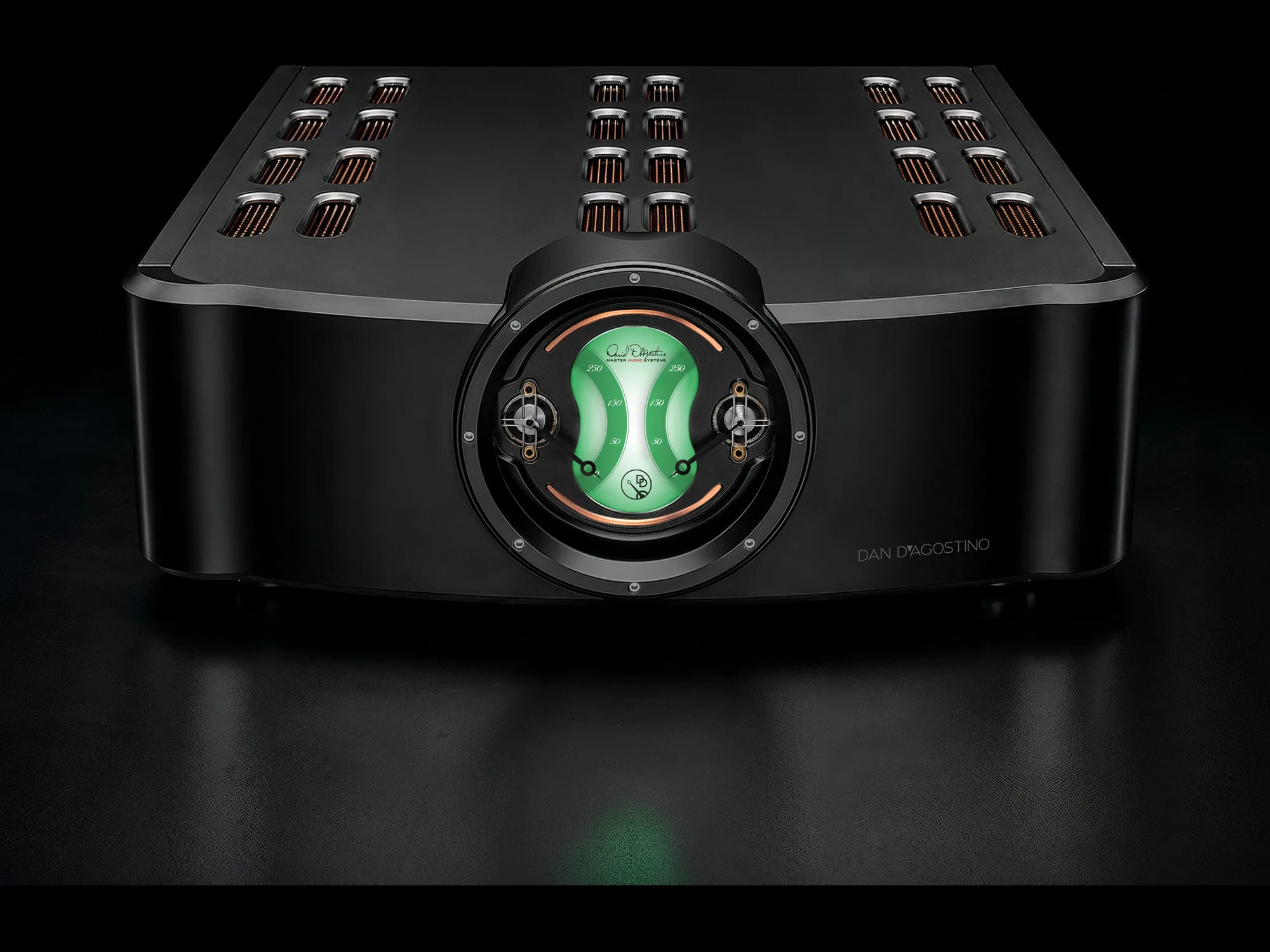
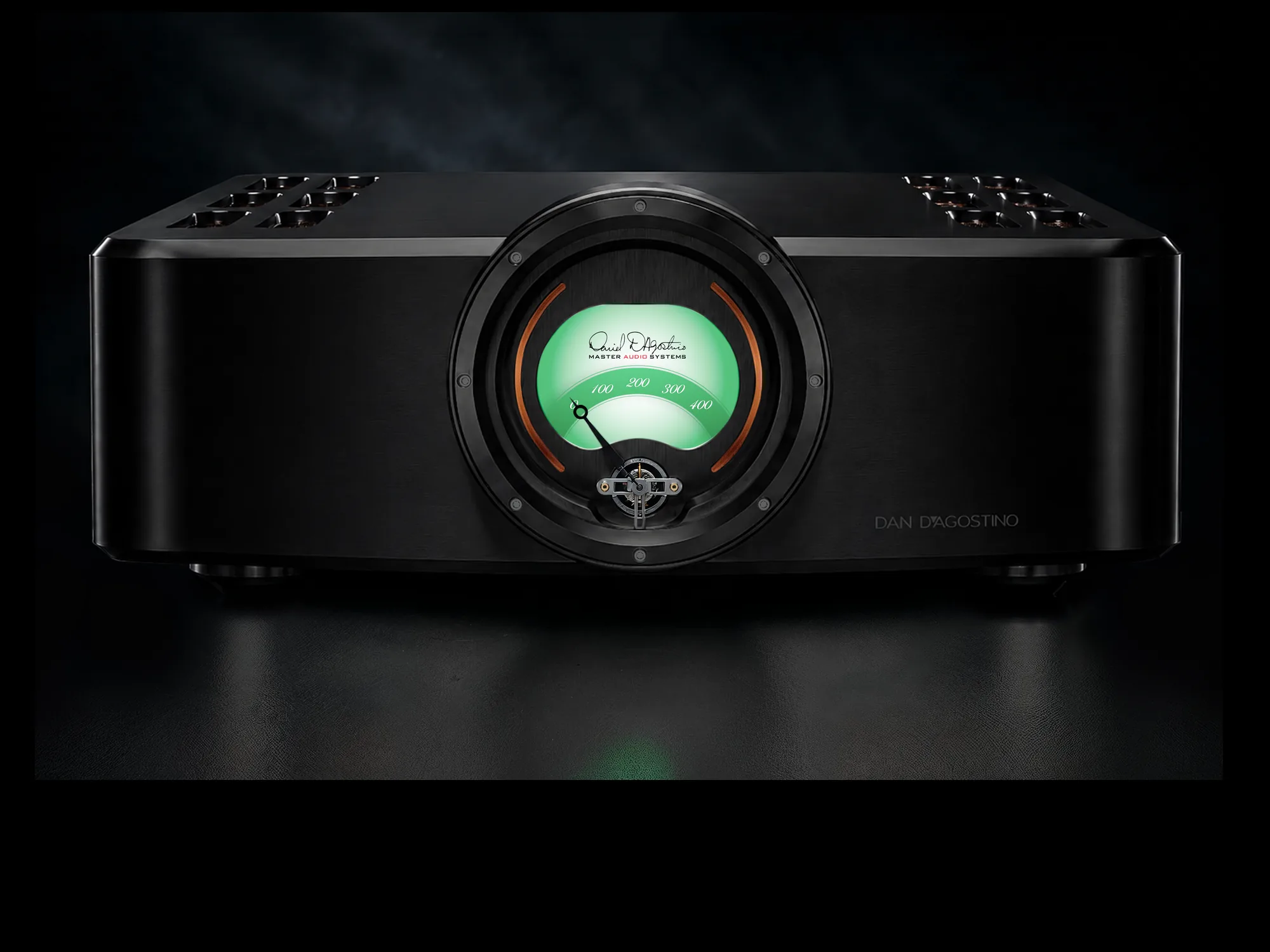
Silver or Black
Origin
Hand-built in Cave Creek, Arizona
Electrical Specifications
Full factory specification sheet to follow from Dan D’Agostino Master Audio Systems
Finishes
More from this brand
Come Hear It
Visit the Showroom
See and hear this in one of our reference rooms. Walk in or book ahead, in Scottsdale or Tempe.