Dan D’Agostino Progression Neo Monaural Amplifier
Available to Order · On permanent demonstration in Scottsdale from late November 2026
40000
Contact UsDan D’Agostino Progression Neo Monaural Amplifier — $40,000 per pair. On permanent demonstration at LMC Scottsdale from late November 2026. 400 W into 8 ohms, 1,600 W into 2, Momentum Z JFET input stage.
Product Details
Description
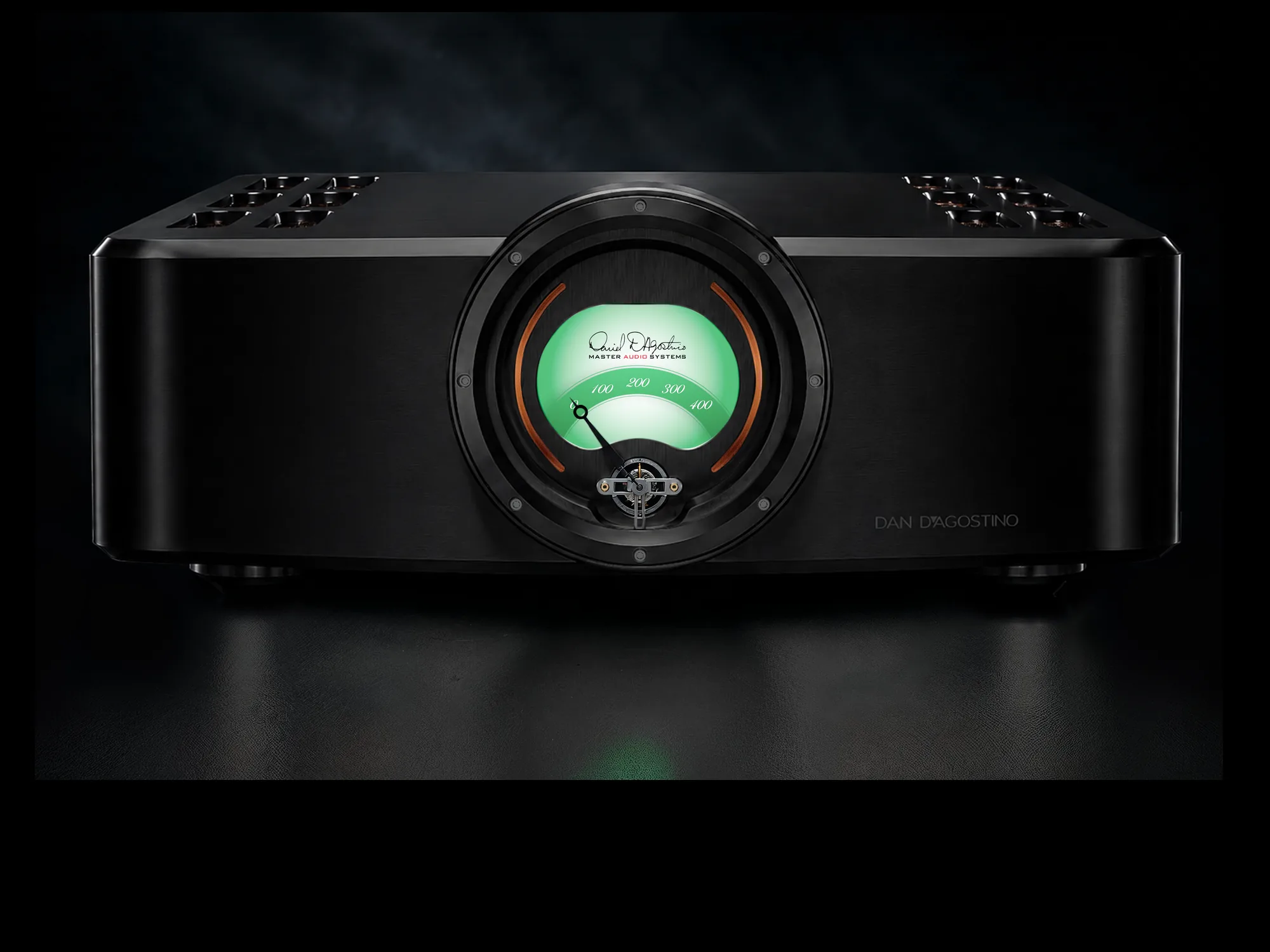
The Progression Neo Monaural is the next-generation rebuild of the Progression monoblock and the successor to the Progression M550 — the point where the technologies D’Agostino developed for the Momentum Z and the Relentless Z line reach the Progression range. Introduced at High End Vienna in June 2026, it is rated at 400 watts into 8 ohms, 800 into 4 and 1,600 into 2, from an 1,800 VA custom toroidal transformer and 96,000 microfarads of capacitance per chassis. Dan D’Agostino introduced the Neo series to LMC clients in person at our Neo & Z evening in Scottsdale on October 8, 2026, where we heard the monoblocks on Wilson Alexia V; the Neo series goes on permanent demonstration at LMC Scottsdale from late November 2026.
JFET input stage. The defining change is a completely redesigned input stage. Where the M550 used a bipolar front end, the Neo adopts a JFET input architecture built on the concepts developed for the Momentum Z Monoblock: independently regulated, fully complementary and precision-balanced from the first gain stage onward. The JFET presents the preamplifier with a very high input impedance, so the source is never loaded, and its inherently low noise lowers the floor at the one point in the chain where noise is amplified by everything that follows. The goal, in D’Agostino’s words, is lower noise and distortion at the earliest stage of amplification — and the result is an amplifier that is quieter, more resolving and more dynamically expressive than the M550 it replaces, without departing from the discrete, balanced, direct-coupled signal path every D’Agostino amplifier shares.
Power supply and output. Each Neo Monaural chassis carries a custom 1,800 VA toroidal transformer and 96,000 microfarads of storage capacitance, a supply sized so that the amplifier doubles its output from 8 ohms to 4 and again to 2, delivering 1,600 watts into the loads that make most amplifiers falter. The 2-ohm rating is the practical measure of the design: a loudspeaker whose impedance falls through the bass or lower midrange receives current in proportion, and the amplifier’s behavior does not change as it does so. The output stage is fully complementary and direct-coupled, built to deliver rated power continuously.
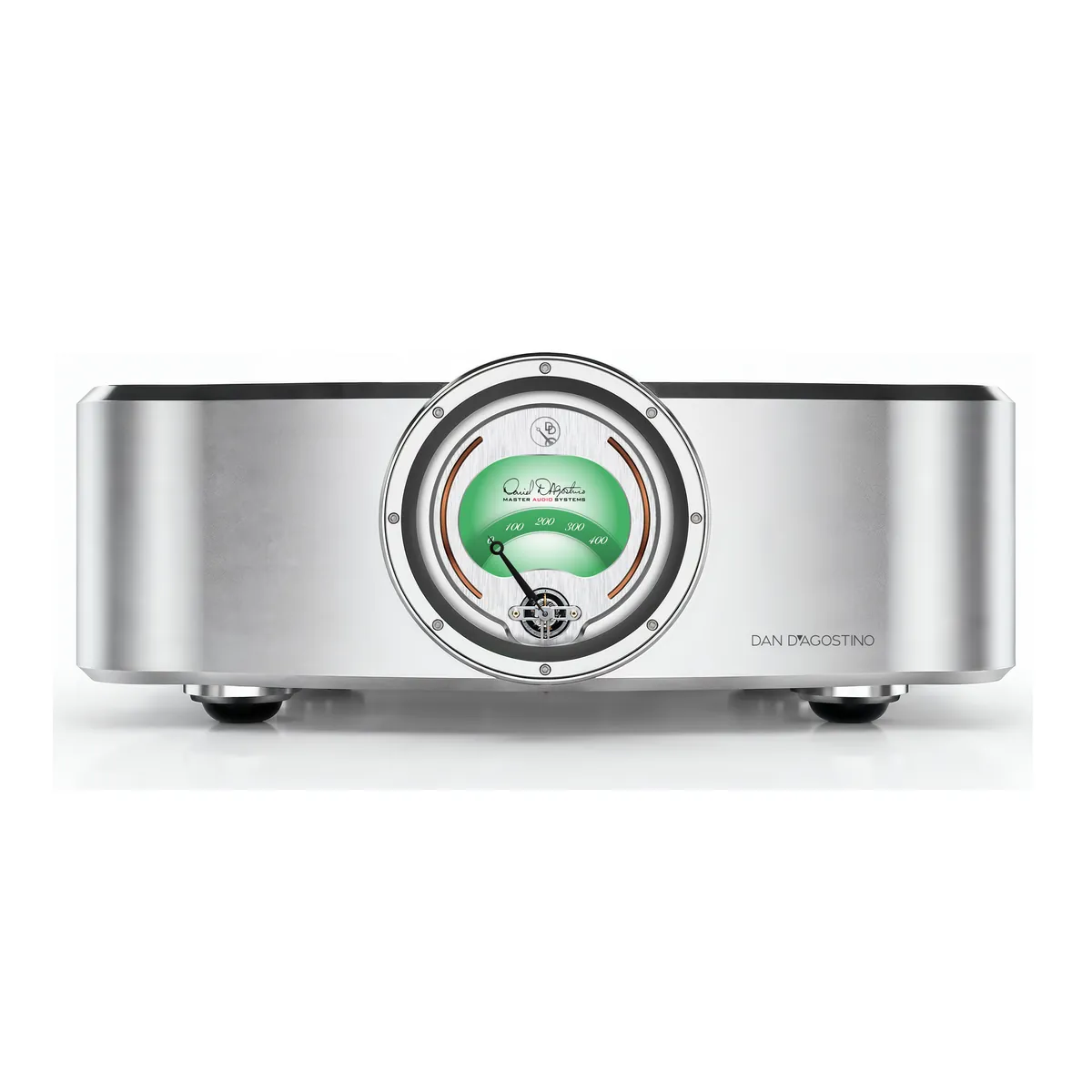
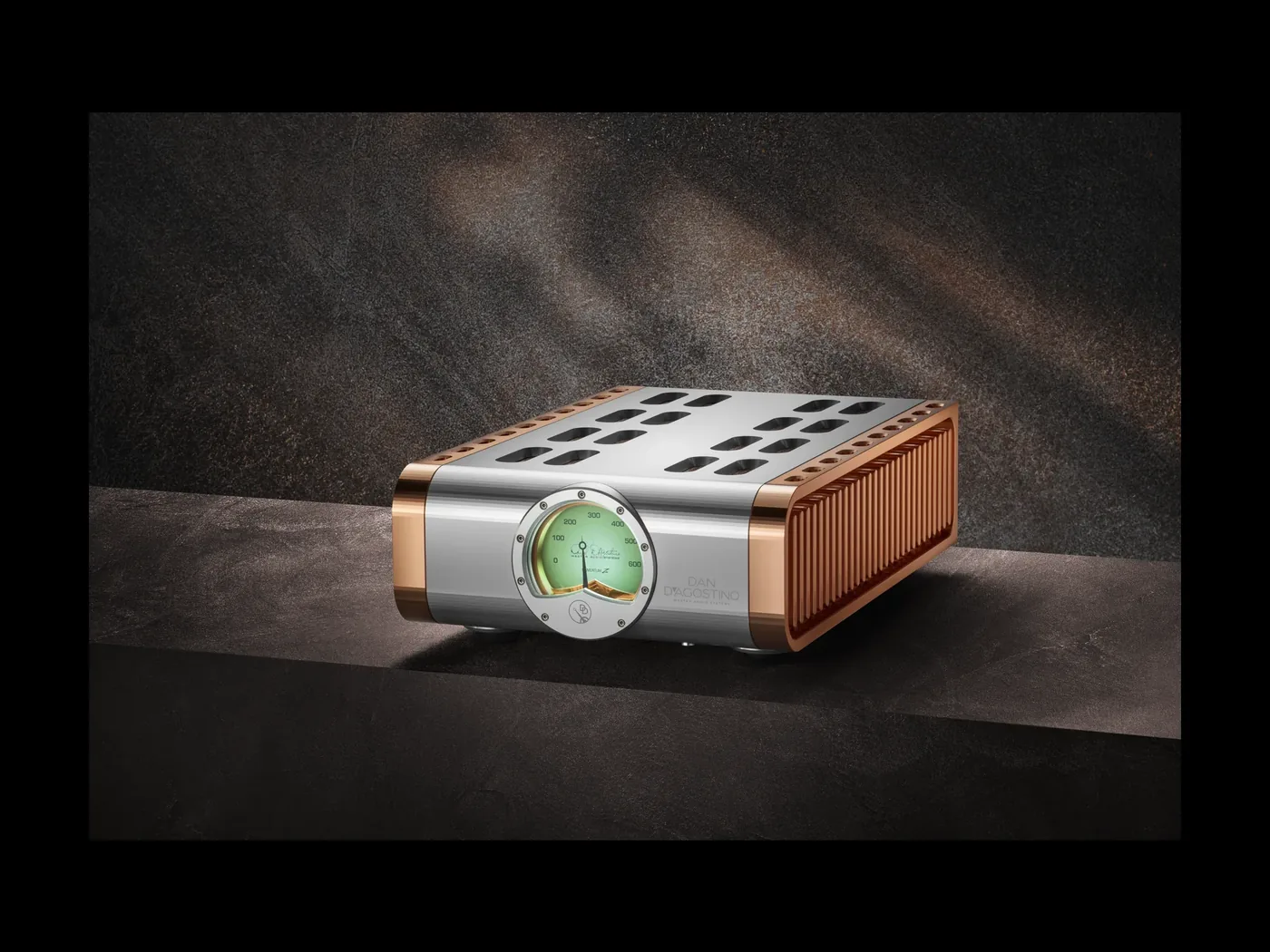
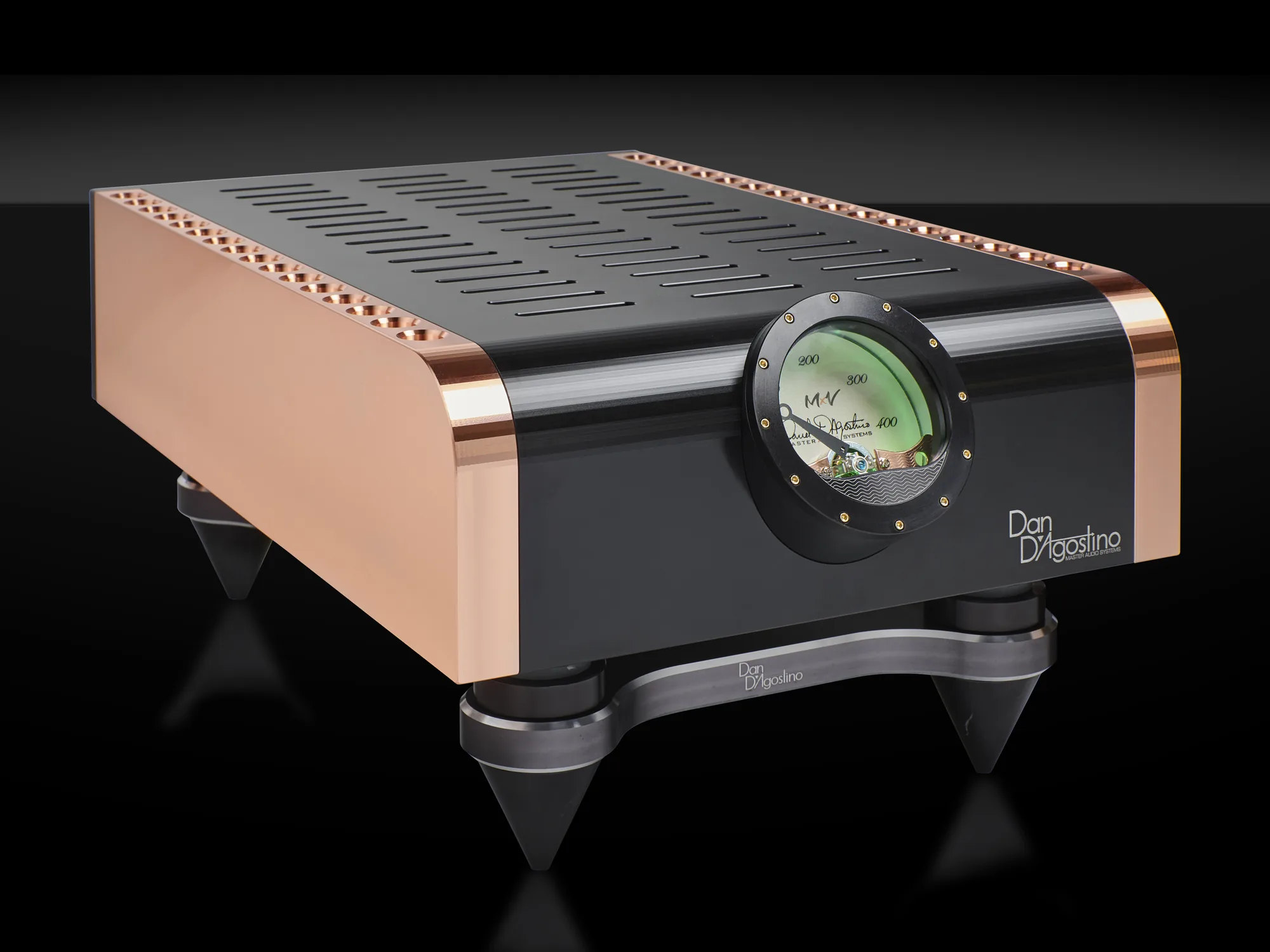
Display and monitoring. The fascia keeps the illuminated analog power meter and integrates a high-resolution LCD into it — the Dual Domain Display — for power metering and diagnostic messages in one instrument. An RJ45 Ethernet connection gives browser-based access to rail voltages, temperature, bias and DC offset from anywhere on the home network, and lets the factory examine the amplifier remotely.
The Neo Monaural is for a Progression system whose loudspeakers or room want more than the Neo Stereo’s 250 watts per channel, or whose owner wants separate supplies and placement beside each speaker. Its designed partner is the Neo Preamplifier; the Momentum C2 also drives it. Each chassis needs its own mains outlet and room for its heatsinks.
Sold as a pair, silver or black. Tell us the loudspeaker it will drive and we will build the audition around it — walk in during business hours or book ahead in Scottsdale.
What We Heard at LMC
We heard the complete Progression Neo chain — preamplifier, stereo amplifier and monoblocks — on Wilson Audio Alexia V in our Scottsdale showroom on October 8, 2026, with Dan D’Agostino and his engineers in the room, and we could switch directly to the Momentum Z on the same loudspeakers. Those notes are what follows; the Neo series returns to our Scottsdale floor on permanent demonstration from late November 2026.
Two things stood out immediately. First, how quiet the amplifiers are — the Momentum Z-derived JFET input stage lowers the floor at the first gain stage, and on Alexia V that reads as detail you simply had not been hearing. Second, grip. The Neo amplifiers are rated for slightly less power than the previous generation, yet current delivery seems to have gone the other way: music erupts from the Alexia V with an authority that the wattage figure does not predict. An iron fist in a velvet glove is the cliché, and here it is accurate.
Against the previous Progression amplifiers, which were fantastic by any measure, these are by far better sounding and more musical. Switched directly to the Momentum Z on the same loudspeakers, the Z is objectively the better amplifier — but the Neo holds its own in spades, and without the A/B you would not know what you were missing. Whatever goes on at D’Agostino’s Cave Creek factory, the trickle-down from the Momentum Z and the Relentless line is showing up in these amplifiers.
On the Neo Monoblocks specifically: the extra headroom and the separate supplies show at scale — large orchestral climaxes and the lowest bass on Alexia V stayed completely composed. If the loudspeaker or the room is demanding, this is the configuration.
LMC Scottsdale listening team · Neo and Z evening with Dan D’Agostino, October 8, 2026
Questions about the Progression Neo Monaural Amplifier
How much power does the Progression Neo Monaural deliver?
400 watts into 8 ohms, 800 into 4 and 1,600 into 2, doubling at each halving of impedance. That doubling is the signature of a supply that does not sag under load: an 1,800 VA custom toroidal transformer and 96,000 µF of storage capacitance per chassis.
What did the Neo Monaural inherit from the Momentum Z?
Its input stage. The Neo uses a redesigned JFET input architecture based on the concepts developed for the Momentum Z Monoblock — independently regulated, fully complementary and precision-balanced — along with the Momentum Z’s network diagnostics and Dual Domain Display. The Momentum Z adds the Kinetic Drive Regulator power supply and a solid copper heatsink; we can demonstrate both on the same loudspeakers in Scottsdale.
What changed from the Progression M550?
The input stage moves from bipolar to the Momentum Z-derived JFET design, the chassis is new and more compact, and the power meter gains the integrated LCD and Ethernet dashboard. The rated power is lower — 400 watts into 8 ohms against the M550’s 550 — but the Neo doubles all the way to 1,600 watts into 2 ohms, and in our listening it is the quieter, more controlled and more musical amplifier.
Can I monitor the amplifier from a browser?
Yes. The RJ45 Ethernet connection serves a browser-based dashboard reporting rail voltages, temperature, bias and DC offset in real time, and lets D’Agostino’s factory in Cave Creek examine the amplifier remotely.
Where can I hear the Progression Neo Monaural in Arizona?
At LMC Scottsdale, where the full Neo series is on permanent demonstration from late November 2026. Dan D’Agostino presented the series at LMC on October 8, 2026 — read the Neo & Z recap — after its debut at High End Vienna 2026.
Featured Specs
Configuration
Progression Neo monaural amplifier — successor to the Progression M550; one chassis per channel, sold as a pair
Output Power
400 W into 8 Ω / 800 W into 4 Ω / 1,600 W into 2 Ω
Input Stage
JFET, independently regulated, fully complementary — derived from the Momentum Z
Topology
Fully balanced, complementary, discrete, direct-coupled
Power Supply
1,800 VA custom toroidal transformer with 96,000 µF capacitance
Display
Dual Domain Display — analog power meter with integrated high-resolution LCD
Network
RJ45 Ethernet; browser dashboard for voltages, temperature, bias and DC offset
General Specs
Output Power
400 W into 8 Ω / 800 W into 4 Ω / 1,600 W into 2 Ω
Inputs
1 balanced XLR
Speaker Outputs
1 pair of binding posts
Frequency Response
1 Hz – 80 kHz, −1 dB; 20 Hz – 20 kHz, ±0.1 dB (preliminary launch specification)
Distortion
0.03% at 1 kHz, full rated output (preliminary launch specification)
Gain
+9.0 dB
Input Impedance
1 MΩ
Input Stage
JFET, independently regulated, fully complementary (Momentum Z-derived)
Topology
Fully balanced, complementary, discrete circuitry
Power Supply
1,800 VA custom toroidal transformer; 96,000 µF storage capacitance
Display
Dual Domain Display: analog power meter with integrated high-resolution LCD
Network
RJ45 Ethernet; browser-based dashboard for voltages, temperature, bias and DC offset
Output
High-efficiency heatsinks; custom binding posts
Dimensions (W × H × D)
17.25 × 6.9 × 20.8 in (43.8 × 17.5 × 52.8 cm)
Weight
115 lb (52.2 kg)
Finish
Silver or Black
Origin
Hand-built in Cave Creek, Arizona
Sold as
Pair
Finishes
More from this brand
Come Hear It
Visit the Showroom
See and hear this in one of our reference rooms. Walk in or book ahead, in Scottsdale or Tempe.