Scottsdale · Cinema
The Grand Cinema Suite
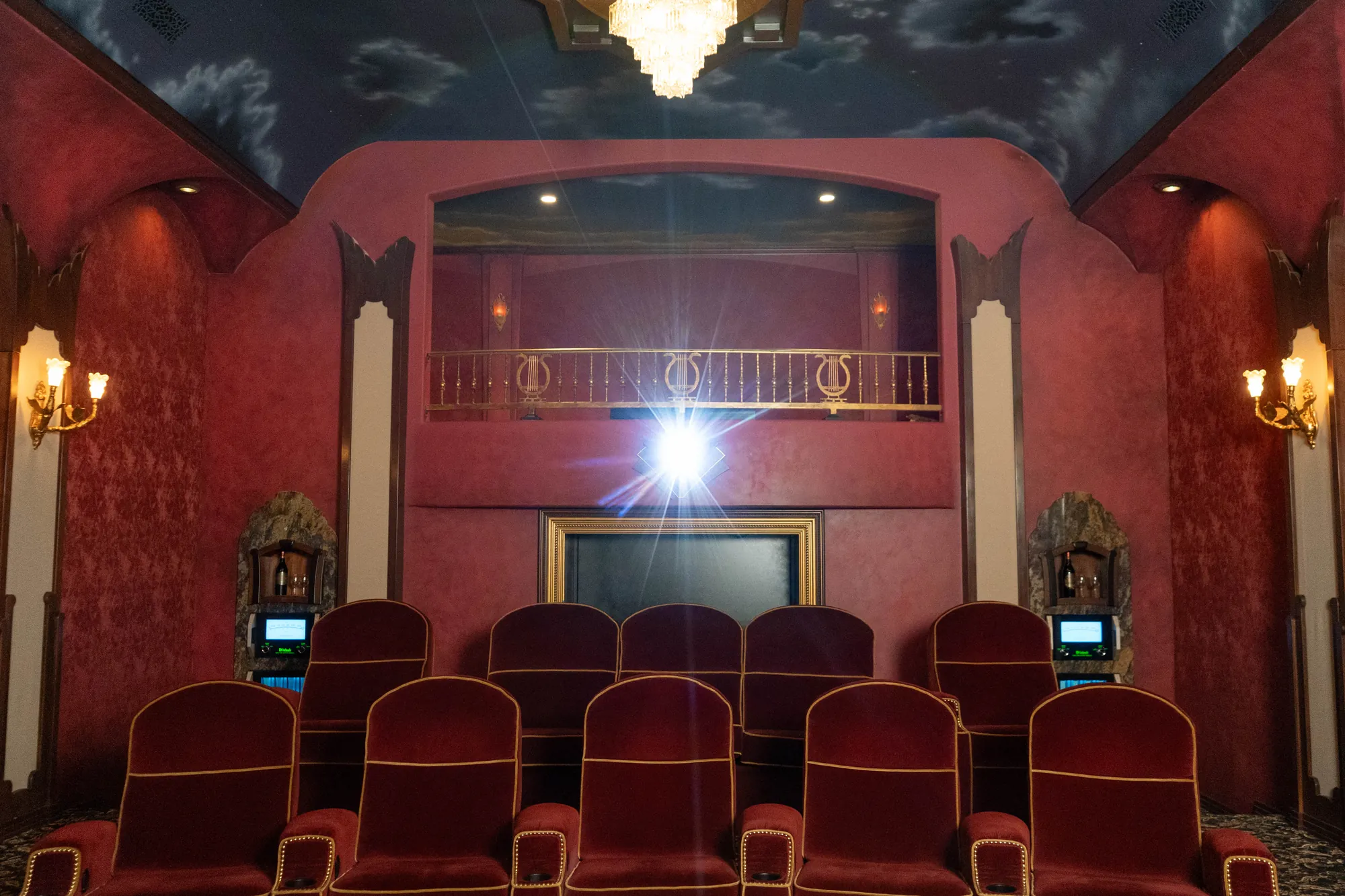
A reference cinema built from two-channel amplification — McIntosh XRT2.1K line arrays on MC2.1KW and MC1.25KW monoblocks, Sonus faber Arena CI-FI surrounds and heights, REL Carbon Special subwoofer line arrays, Trinnov Altitude32 processing and Barco Freya projection.
Most home theatres are assembled from home theatre components. This one is built from reference two-channel amplification and reference loudspeakers, and the difference shows up in the first minute of anything with a score behind it.
A room resolved before the equipment arrived
The acoustic treatment here was designed into the room rather than added afterwards. That is the step most installations skip, and it is the one that decides whether the rest of the budget was worth spending — a loudspeaker can only be as good as what the room does to its output in the milliseconds after it leaves the driver. Everything below was specified against a space that had already been dealt with.
The front stage
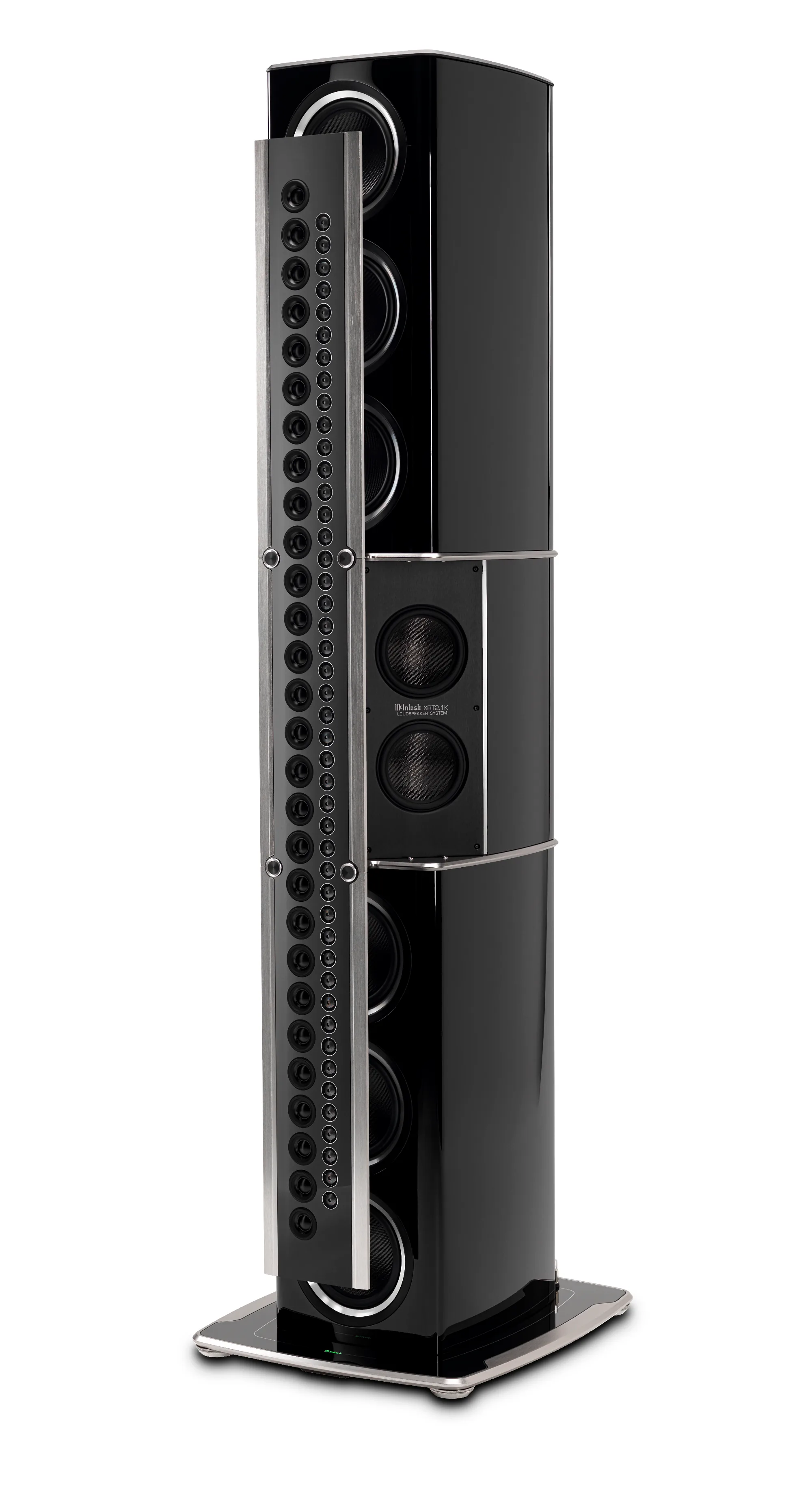
The front channels are McIntosh XRT2.1K line arrays — the flagship loudspeaker in the McIntosh range in any context, not a cinema variant of one. Each stands seven feet tall and carries 81 drivers: six 8-inch woofers and two 6.5-inch low-frequency midranges in the reinforced bass cabinet, then 28 two-inch upper midranges and 45 three-quarter-inch tweeters arrayed vertically above them. The upper-frequency drivers use aluminium-magnesium diaphragms on neodymium magnets, developed for this loudspeaker alone. Sensitivity is 90 dB and the power rating is 2,000 watts.
Line array topology is what commercial cinemas use, and the reason is seating. A vertical column of identical drivers controls vertical dispersion and projects evenly down the length of a room, instead of being loud in the front row and thin at the back. The horizontal pattern stays wide. In a theatre with more than one row that is not a refinement — it is the difference between one correct seat and a room full of them.
Amplification
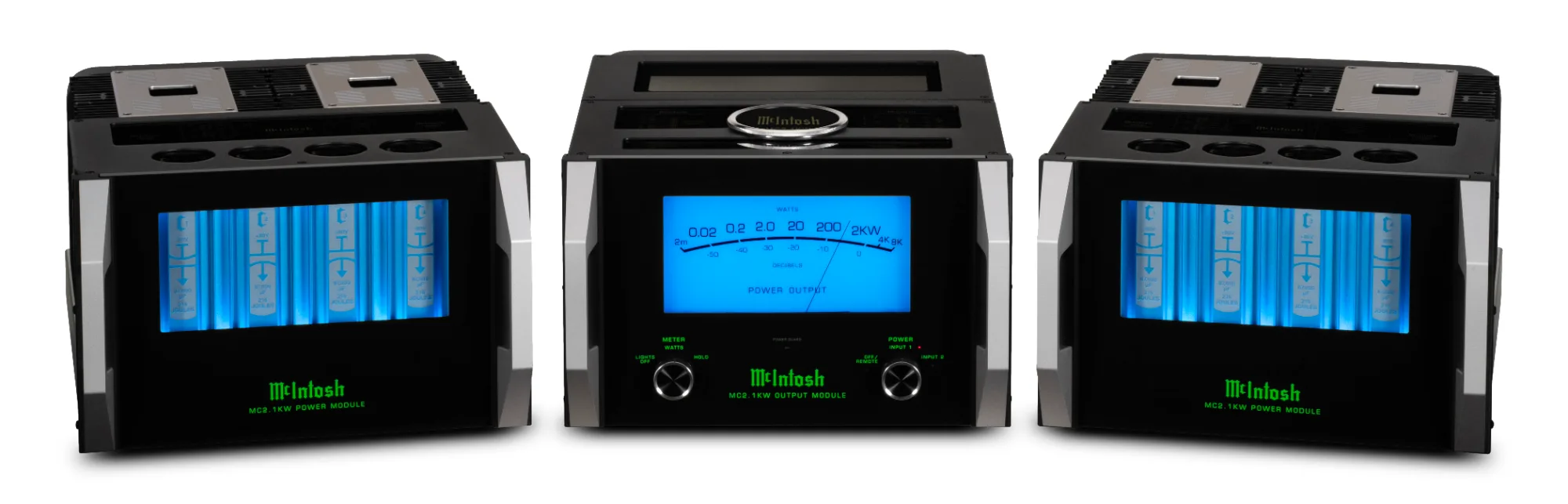
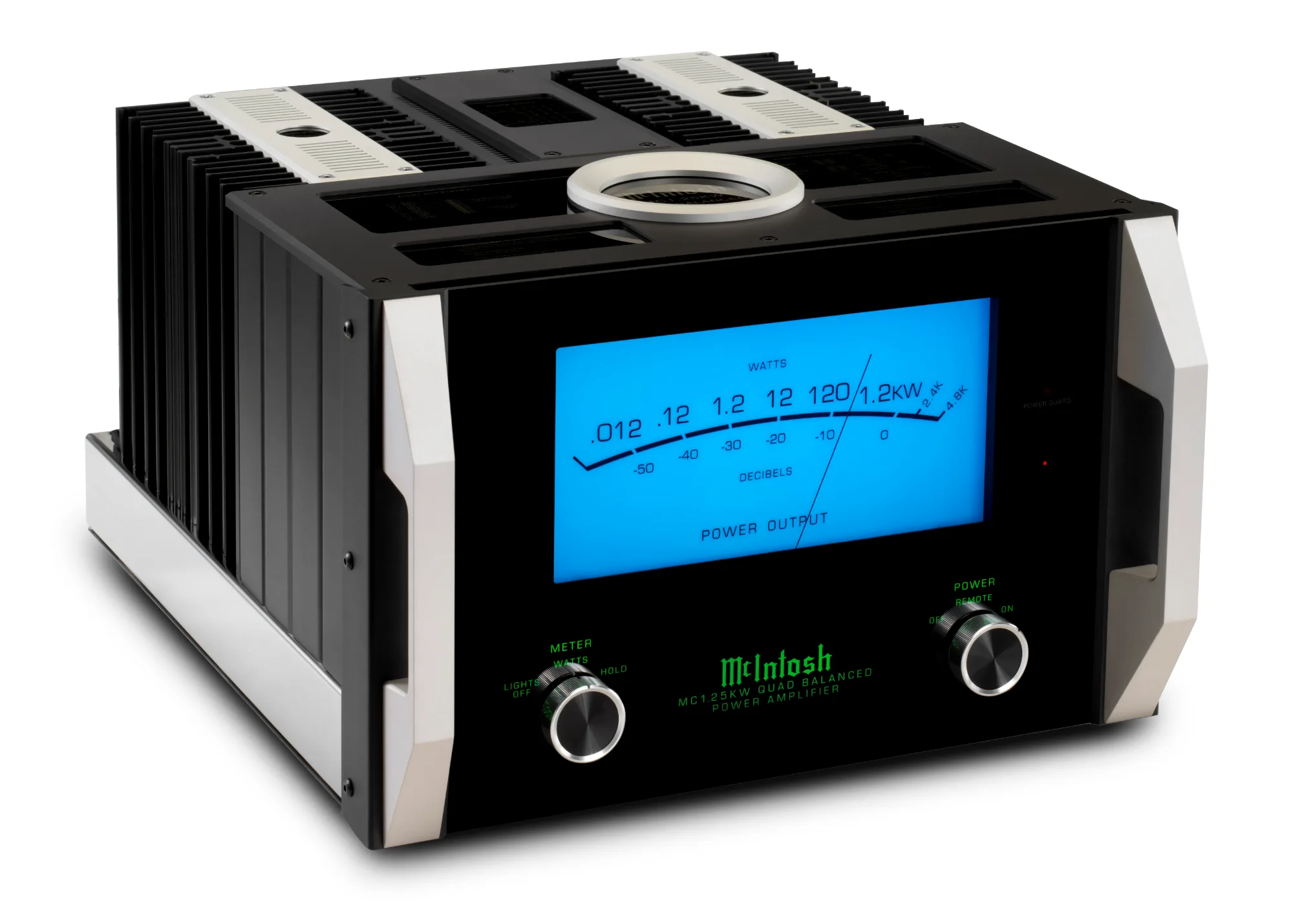
Driving them: McIntosh MC2.1KW monoblocks at 2,000 watts a channel, built as a tri-chassis design in which two identical power modules feed a single output module. A pair of MC1.25KW monoblocks at 1,250 watts sits alongside them.
Both run the McIntosh Autoformer, which is the reason amplification of this class can sit in a multi-channel array at all. The Autoformer delivers full rated power into 2, 4 or 8 ohms rather than letting output sag as impedance drops, so the amplifier behaves the same way at the bottom of a loudspeaker’s impedance curve as at the top. Without it, a system this size gets pushed toward cinema-specific amplification and the compromises that come with it.
Surrounds, heights and bass
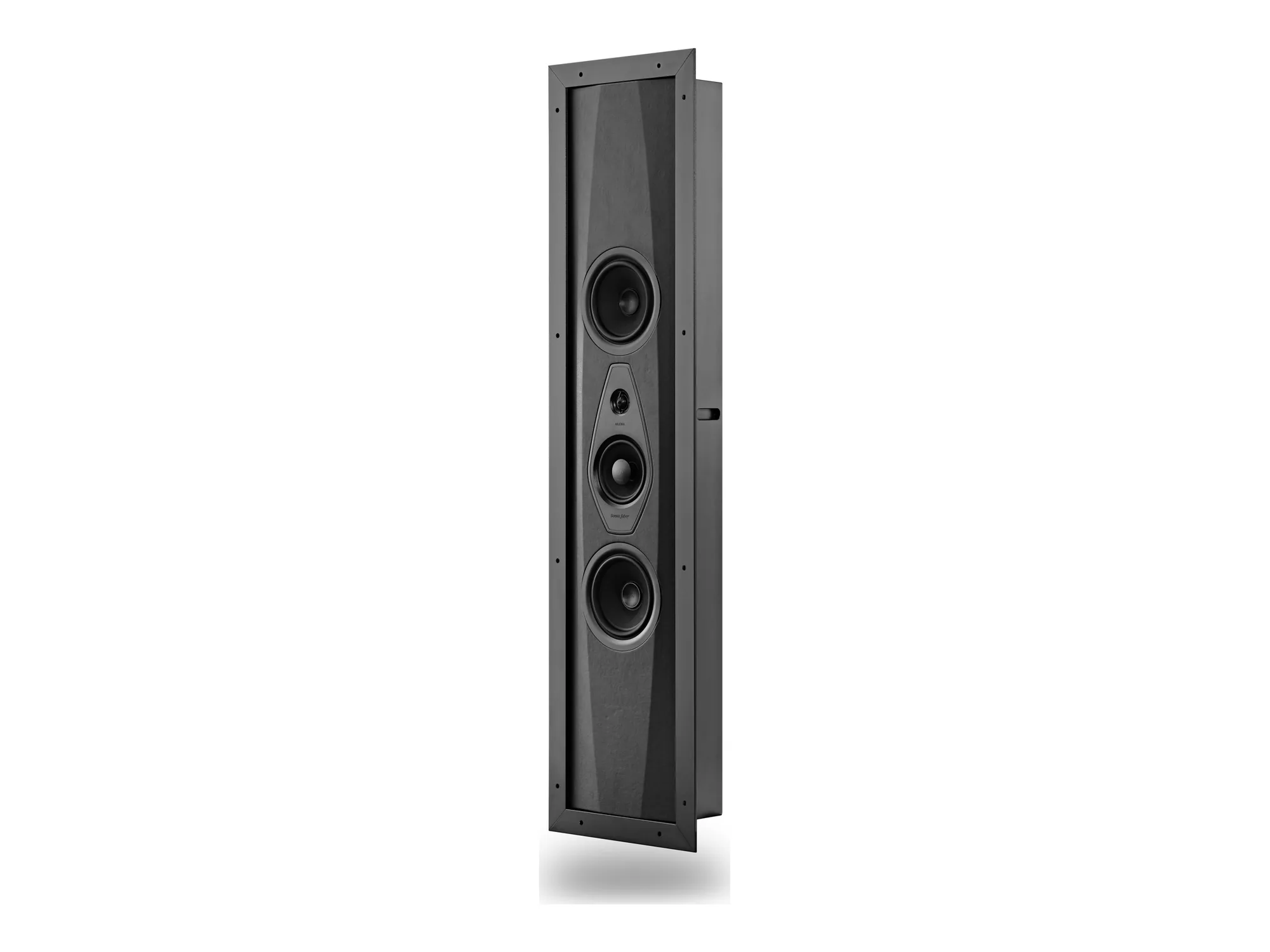
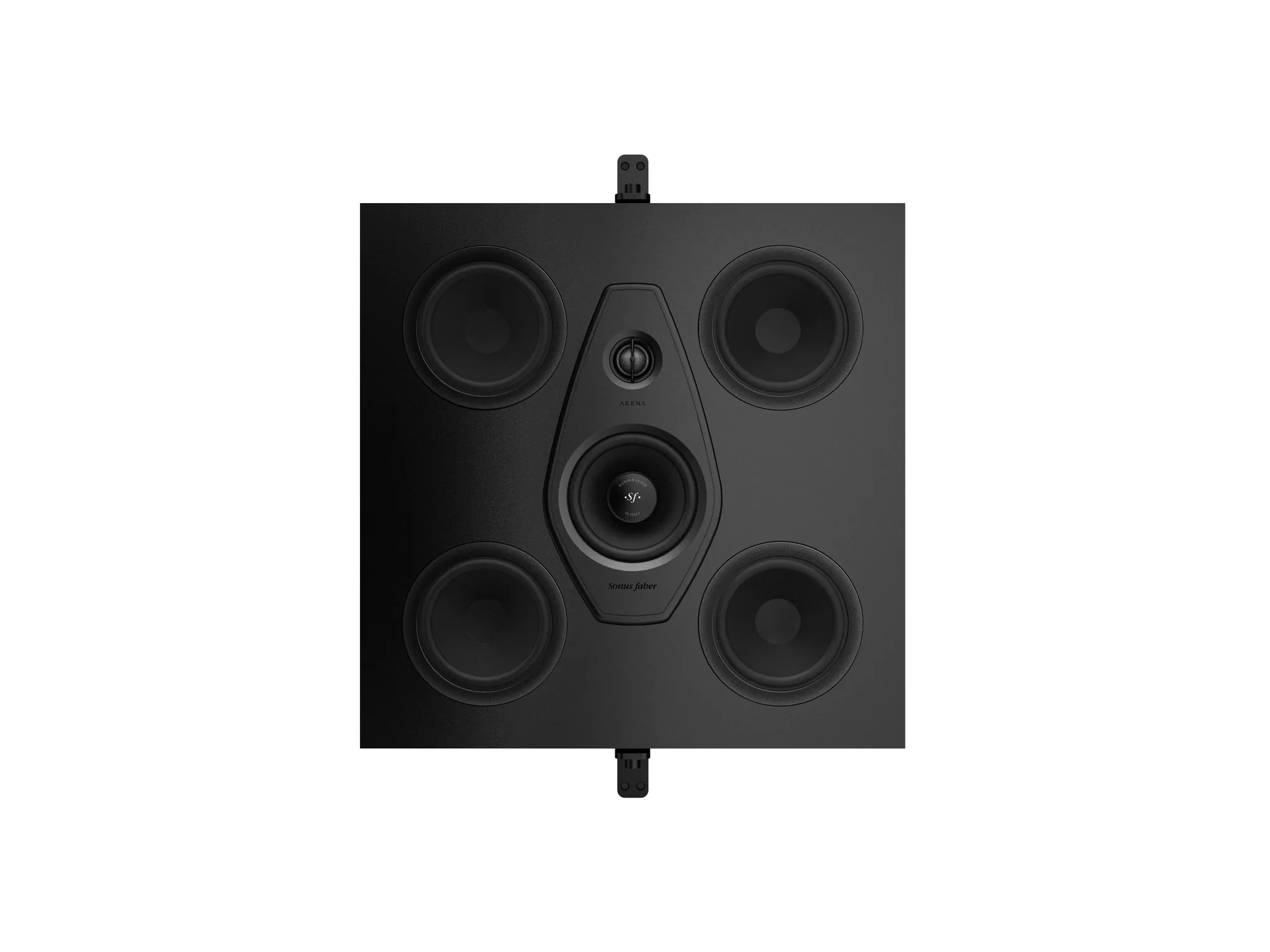
The rest of the array is Sonus faber’s Arena CI-FI collection, handcrafted in Vicenza like the floorstanders. Arena 20 in-walls carry the front stage — a 3.5-way, four-transducer system using the Voice of Sonus faber mid and high set that runs through the Homage and Reference collections, at 92 dB sensitivity and 117 dB maximum at a metre. Arena 10s handle the surrounds and the Atmos height channels: three-way, with four 6.5-inch woofers, a 6.25-inch midrange and a 19 mm tweeter apiece.
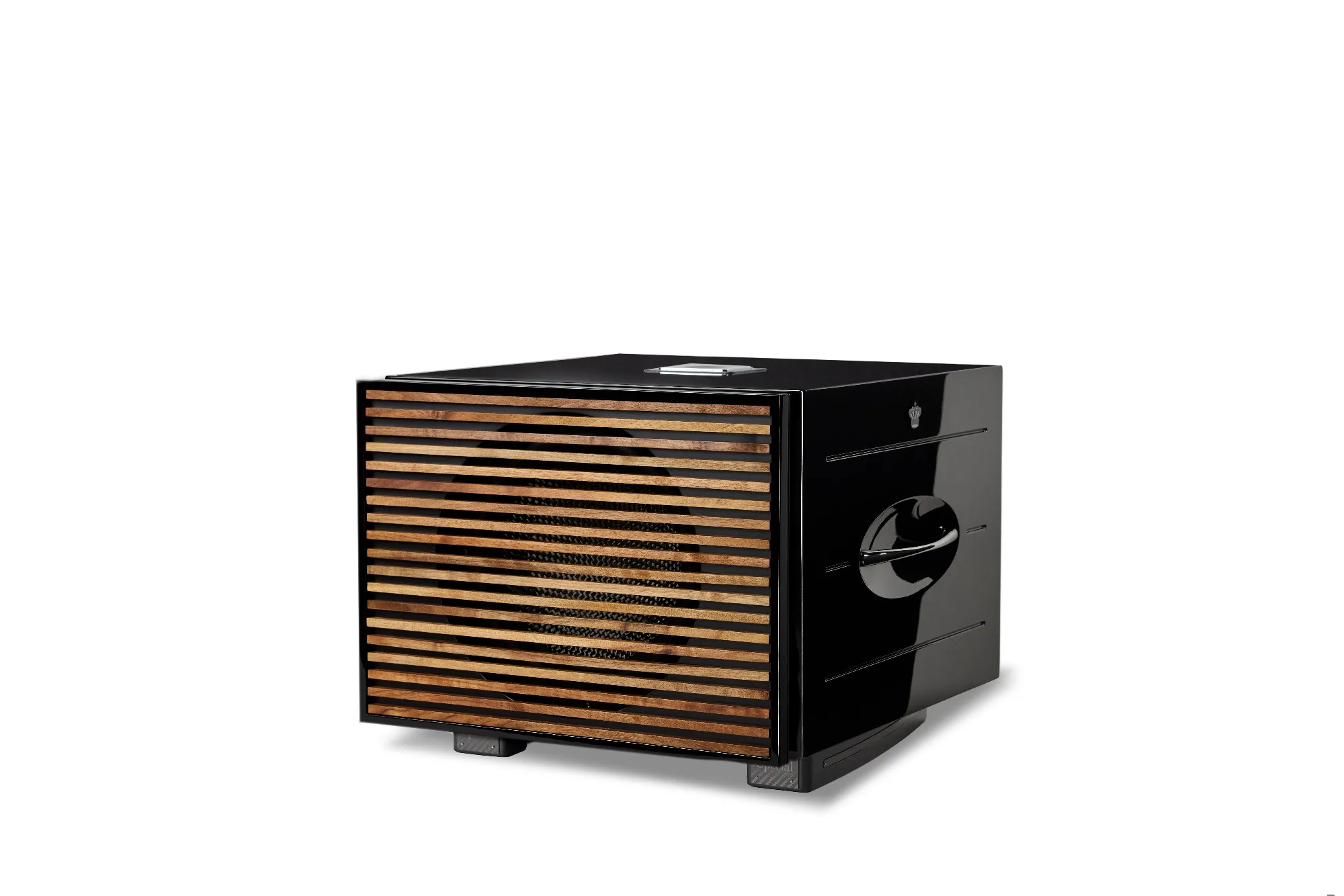
Height channels carry real content in a well-mixed film, and a ceiling loudspeaker that cannot keep up with the front three collapses the illusion at exactly the moment the format is trying to create it. The Arena set is voiced to match throughout, so a sound crossing the room does not change character on the way. Bass comes from REL Carbon Special Black Label subwoofers in line arrays, up to three per side, using the pure carbon fibre driver material REL otherwise reserves for its Reference series.
Processing and picture
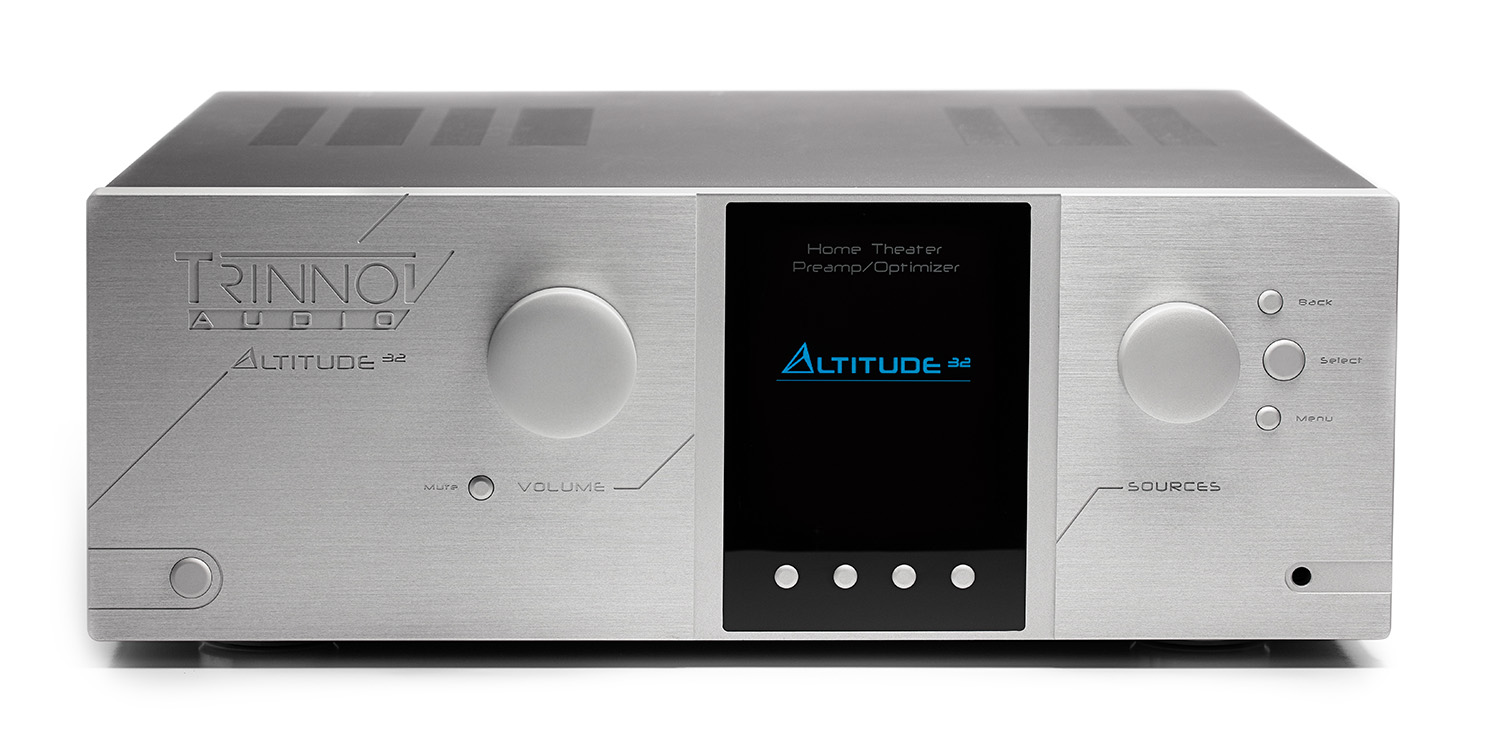
Processing is the Trinnov Altitude32. It runs a multi-core Intel processor under TrinnovOS rather than banks of fixed DSP chips, which is why it has rendered Dolby Atmos Home at its full 24.x.10 channel count since 2015 and remains the only processor that does, and why DTS:X Pro arrived here at the full 30.2 count. The Optimizer corrects loudspeaker and room response together rather than equalising a measured curve, and the patented Remapping — driven by a four-capsule 3D microphone — measures where each loudspeaker actually is and steers sound elements to where the mixer intended. In a real room, where the joists decided the height channel positions, that is the difference between an approximation and a correct rendering.
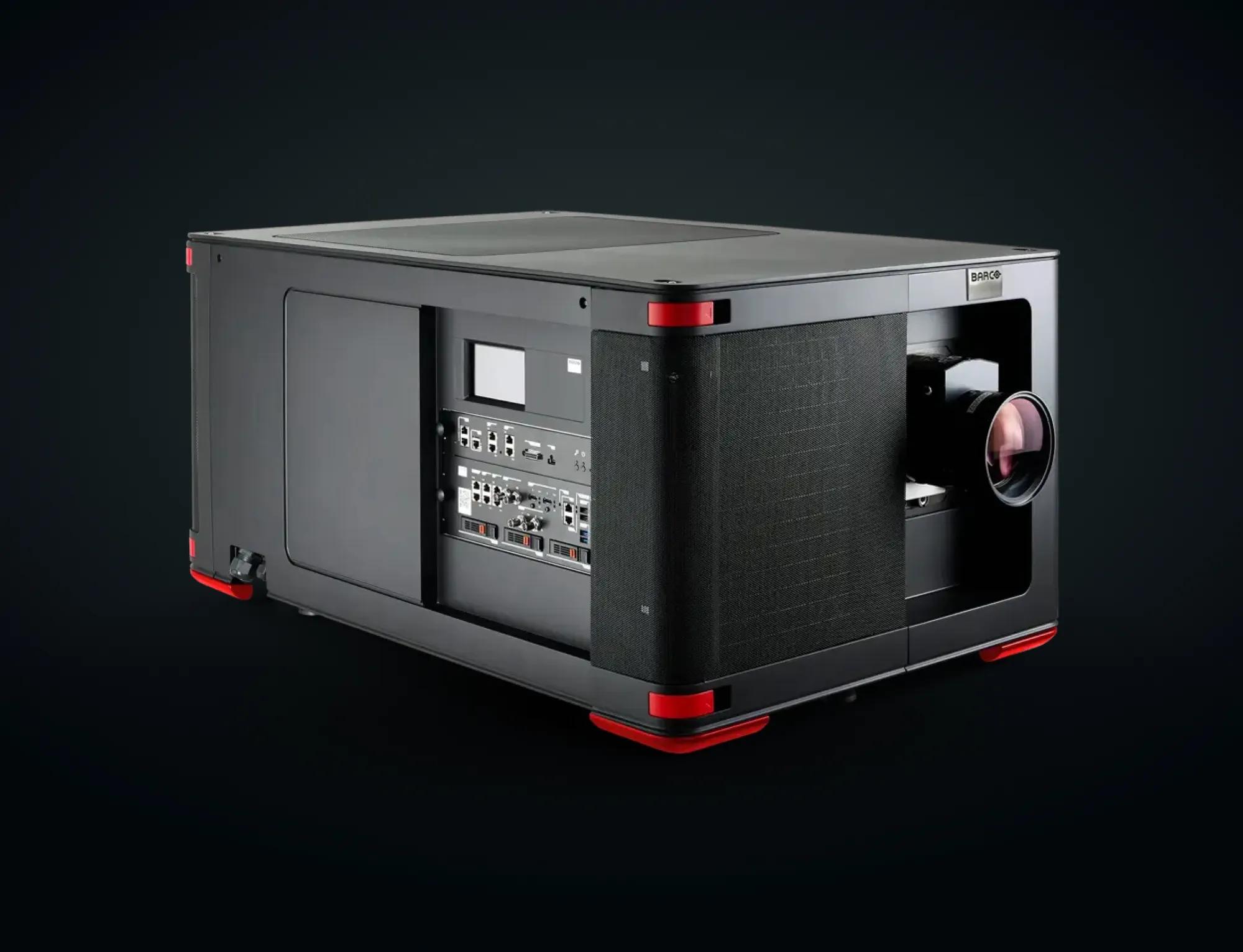
The image comes from a Barco Freya, built on the same Series 4 platform Barco supplies to commercial cinemas: native 4K three-chip DLP at 4,096 × 2,160, solid state RGB laser, Rec. 2020 colour, and DCI compliant with a Barco Alchemy ICMP-X media server, so Digital Cinema Packages play natively.
The system in this room
- McIntosh XRT2.1K line array loudspeakers — front left and right
- McIntosh MC2.1KW monoblock amplifiers — 2,000 W per channel
- McIntosh MC1.25KW monoblock amplifiers — 1,250 W per channel
- Sonus faber Arena 20 in-wall loudspeakers — front stage
- Sonus faber Arena 10 in-ceiling loudspeakers — surrounds and Atmos heights
- REL Carbon Special Black Label subwoofers — line array, up to three per side
- Trinnov Altitude32 immersive audio processor
- Barco Freya native 4K DLP projector
- Custom acoustic treatment designed into the room
Hearing it
This is the room for anyone specifying a dedicated cinema who wants to hear what reference two-channel amplification does with a film soundtrack, and for anyone weighing a line array front stage against a conventional point-source one. It also sets up the honest comparison against the Cinema Suite along the hall, which argues the opposite case — planar magnetics behind an acoustically transparent screen, built to disappear rather than to scale.
The Grand Cinema Suite is in the Scottsdale showroom. Walk in during business hours, or book ahead if you want the room prepared with your own material and the time to sit with it properly.
System
Custom acoustic treatment designed into the room
The Grand Cinema System
McIntosh XRT2.1K line arrays on MC2.1KW and MC1.25KW monoblocks, with Sonus faber Arena surrounds and heights, REL Carbon Special subwoofer line arrays, Trinnov Altitude32 and Barco Freya.
Custom acoustic treatment designed into the room
View this system →