Brand
Trinnov
Reference AV processing and loudspeaker/room correction — engineered and built in France since 2003.
Authorized Dealer — Scottsdale & Tempe, Arizona
Trade-in credit toward new purchases · Full installation and calibration · Walk in during business hours or book ahead
See what's on demonstration now ↓Trinnov Audio was founded in 2003 in France and has designed and manufactured its processors there ever since. The architectural choice that defines the company was made at the start and has not changed. Where every other AV processor runs arrays of fixed digital signal processing chips, Trinnov runs a multi-core Intel platform under its own operating system, TrinnovOS, with sixty-four-bit floating-point audio processing. New immersive formats, new decoders, new correction technologies arrive as free software updates rather than as a new box a client has to buy. That is the reason a Trinnov Altitude sold in 2015 still runs the current Dolby Atmos, DTS:X Pro and Auro-3D decoders — because the platform was designed to be updated.
The Optimizer came first. Introduced to professional audio in 2006, Trinnov’s loudspeaker and room correction is now running in roughly two thousand studios and ten thousand installations worldwide, and it remains the benchmark against which every other calibration system is measured. Remapping came alongside it — a patented technique that uses Trinnov’s four-capsule three-dimensional microphone to measure precisely where each loudspeaker actually sits in the room, then steers sound elements to their intended positions using adjacent loudspeakers when a real-world layout doesn’t match the format’s reference layout. WaveForming came later — Trinnov’s bass and room optimisation technology, now available across the Altitude platform and specified into the largest current bass-array installations.
The software-defined premise
The premise Trinnov brings to AV processing is that a processor is a computer, not a box of chips, and the sound quality a client hears from it in 2026 should be at least as good as the sound quality that same client heard from it in 2015 — better, in fact, because a decade of algorithmic improvement should have moved into the processor without the client having to replace it. Trinnov has held that commitment. Full Dolby Atmos home decoding shipped as a free software update to Altitude32 in 2015. DTS:X Pro shipped a year before anyone else could offer it, in 2019, as a free software update. The most recent redesigned user interface with the current implementations of Dolby Atmos, DTS:X Pro and Auro-3D — including Dolby Surround upmixing to wide channels — shipped as a free software update in early 2026 to every Altitude16 and Altitude32 in the field.
The Optimizer is the loudspeaker and room correction engine that first put Trinnov on the map. It measures the actual acoustic behaviour of each loudspeaker at the listening position, in the room, and applies phase-linear filters that correct the loudspeaker response, correct the room response, and time-align every driver to a common reference. Unlike calibration systems that fit a curve to a measurement, the Optimizer solves the underlying acoustic problem. That is the reason it has been the reference calibration system in professional studios for two decades.
Remapping is the second half of the story. Dolby Atmos specifies one loudspeaker layout, DTS:X another, Auro-3D a third — and real rooms permit none of them exactly. Trinnov’s four-capsule three-dimensional microphone measures each loudspeaker’s actual position — distance, azimuth and elevation. When a soundtrack decodes, the processor knows the position each sound element was mixed to and the actual position of every loudspeaker in the room, and steers sound elements to their intended positions using the loudspeakers that are actually present. It is the only real answer to the fact that a Dolby Atmos mix and a DTS:X mix cannot both be right on the same speaker layout without correction.
The Trinnov line at LMC
LMC carries the Trinnov range on the cinema processors page, and specifies Trinnov as the processing platform for every dedicated cinema it builds.
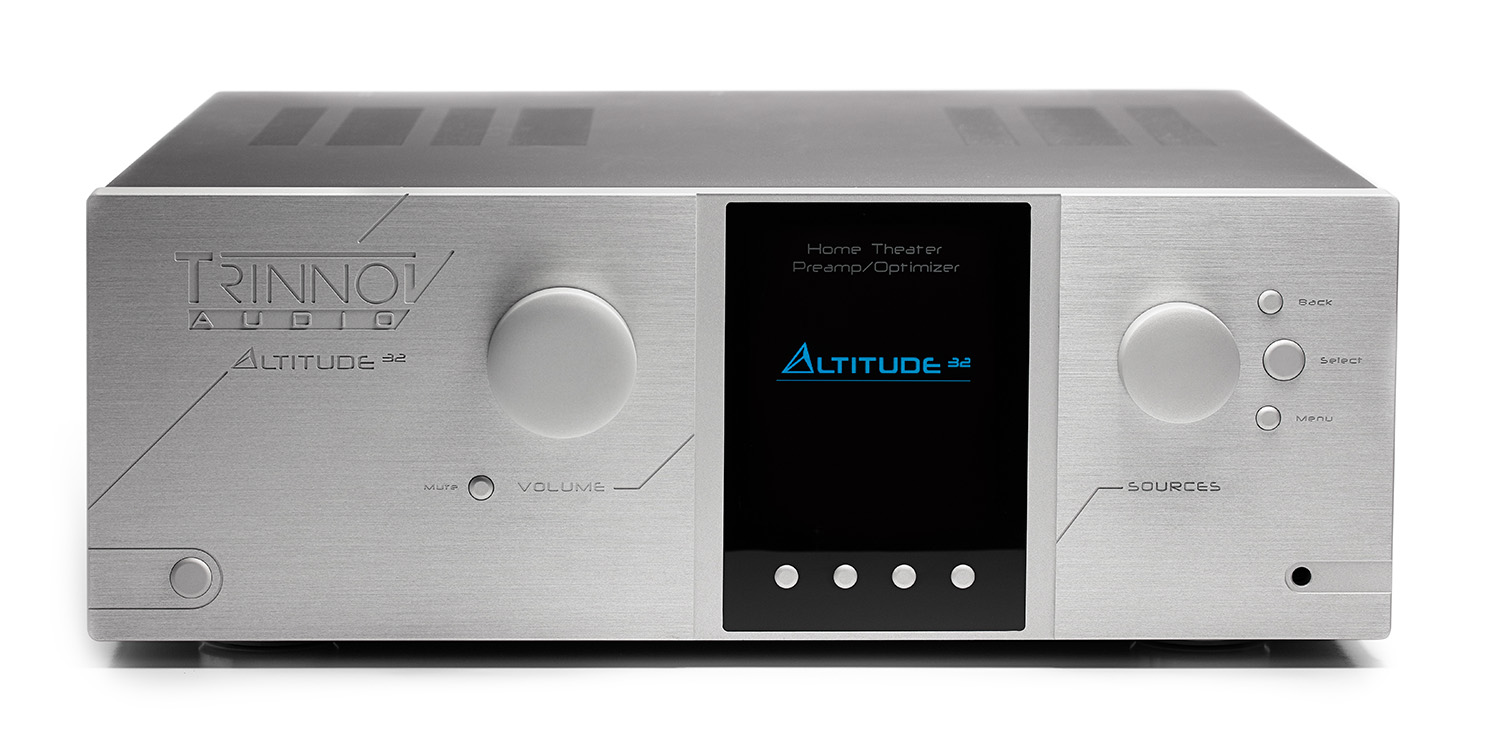
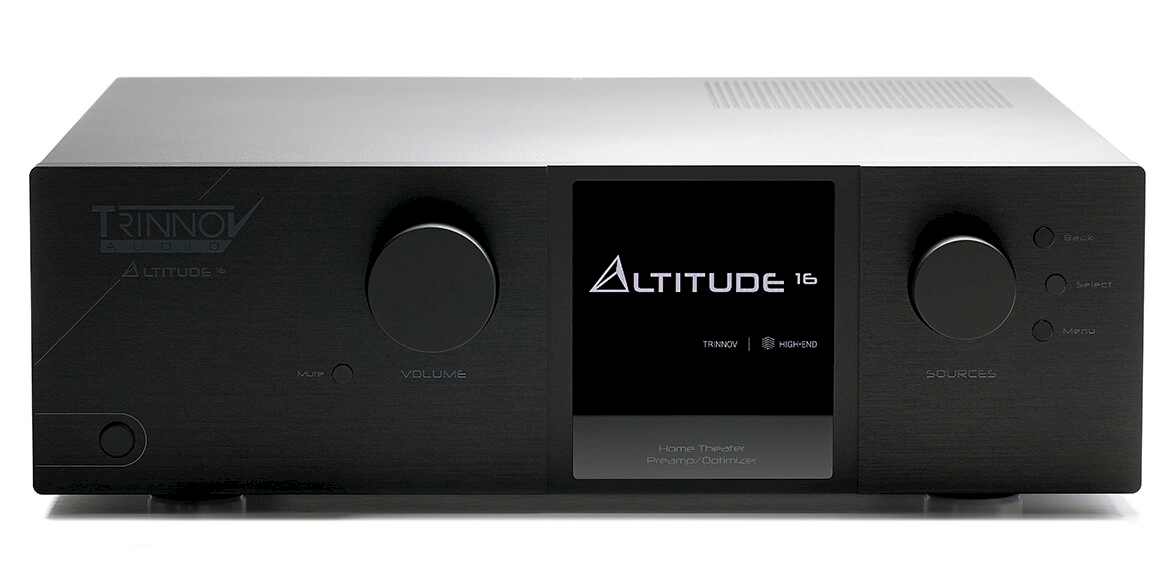
The Altitude range now comprises three models. Altitude32 is the reference — up to thirty-six optimised channels model-dependent, full Dolby Atmos home decoding at the highest channel counts on the market, DTS:X Pro to 30.2, Auro-3D, IMAX Enhanced, HDMI 2.1 with 8K60 and 4K120 support. Altitude16 delivers the same processing and sound quality as the Altitude32 in a platform optimised for installations that do not exceed twenty discrete channels — the sweet spot for a serious private cinema that does not need the Altitude32’s highest channel counts. AltitudeCI is Trinnov’s newer Custom Integration platform built with Audio over IP at its core, scaling from eight to thirty-two outputs, with native Dante and AES67 support, HDMI 2.1 with 8K60 and 4K120 video, and full Optimizer, WaveForming and Remapping.
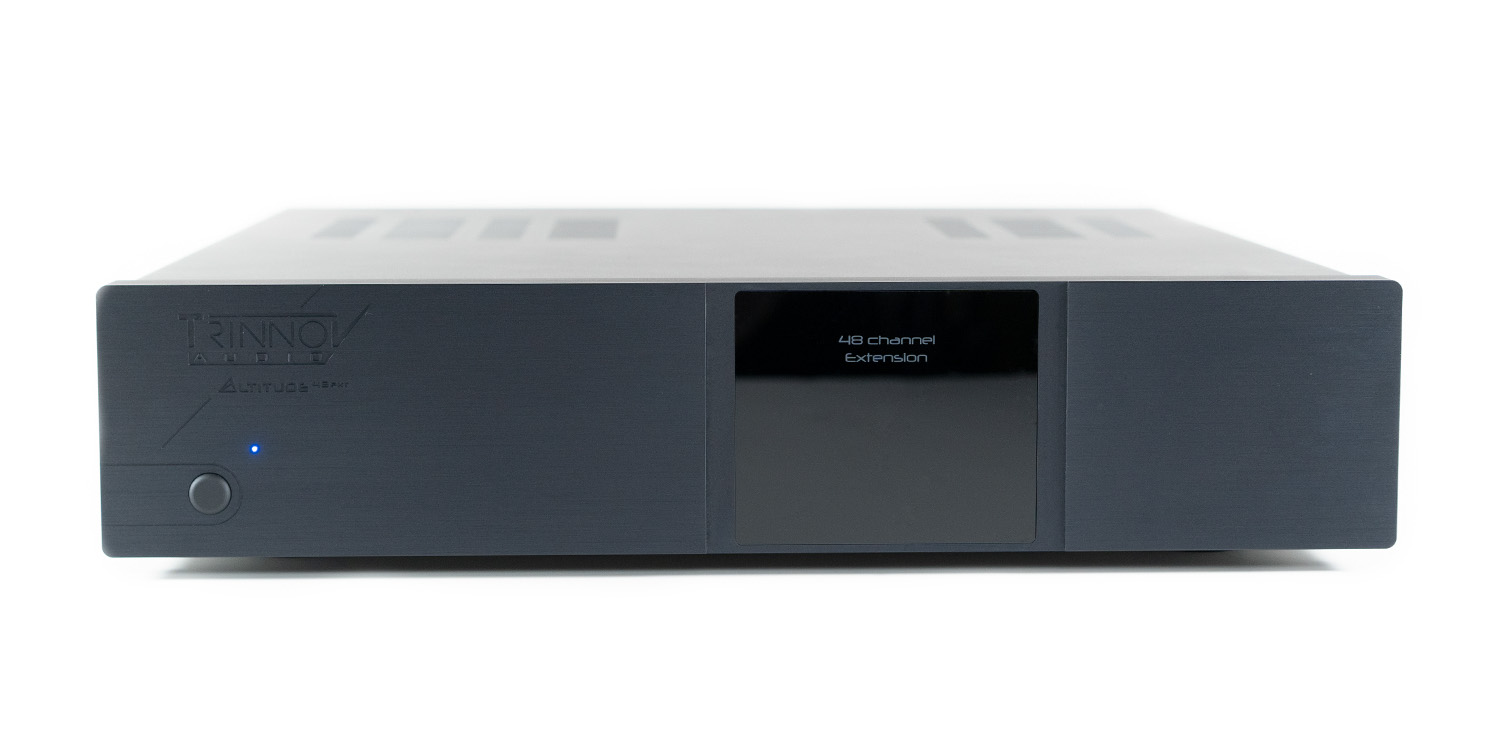
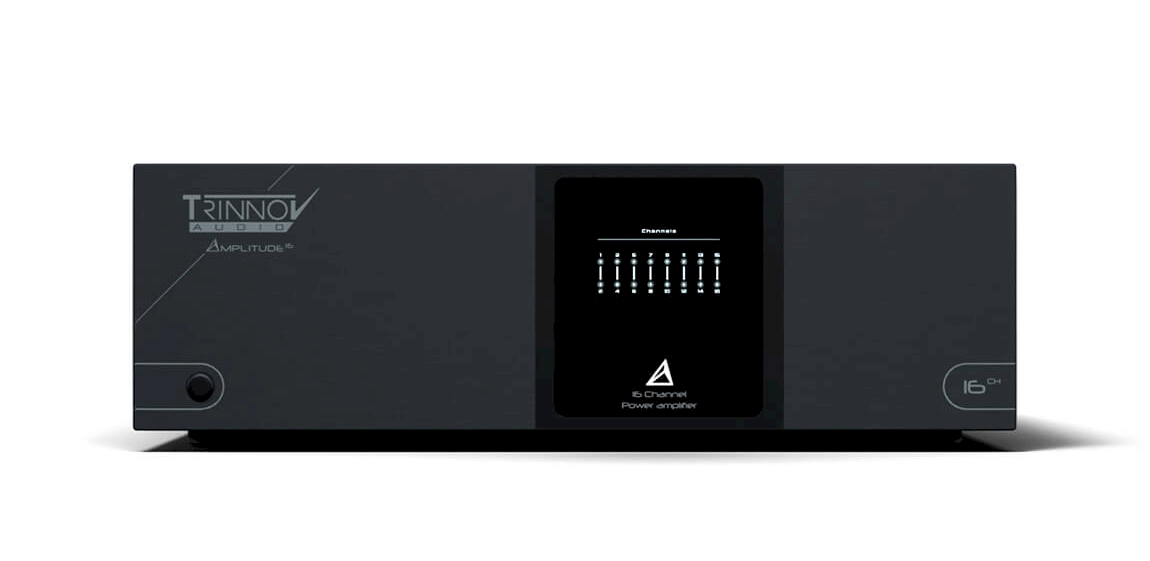
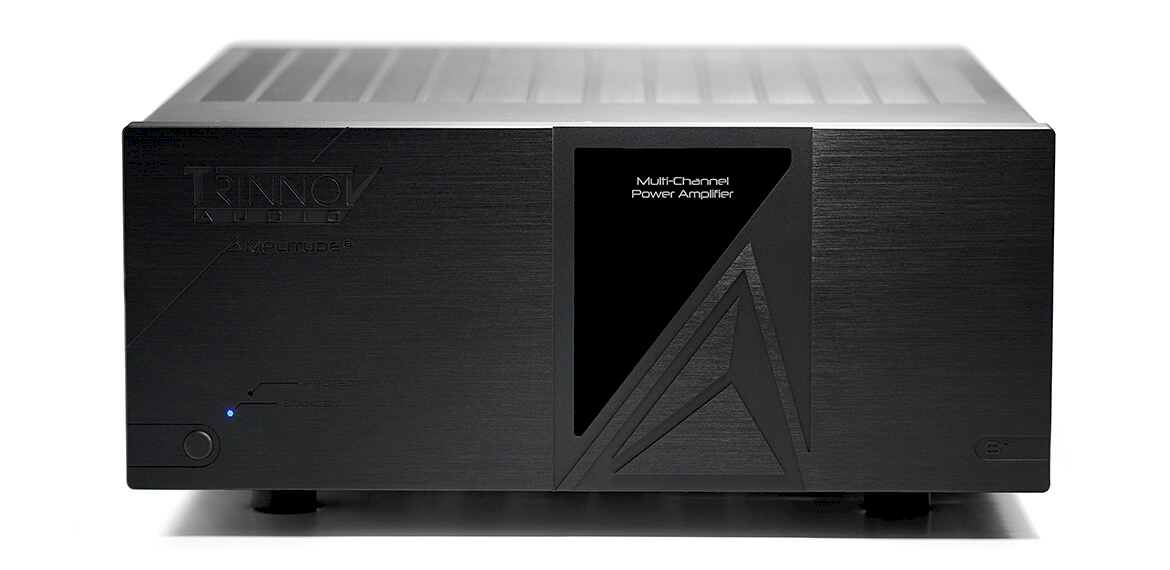
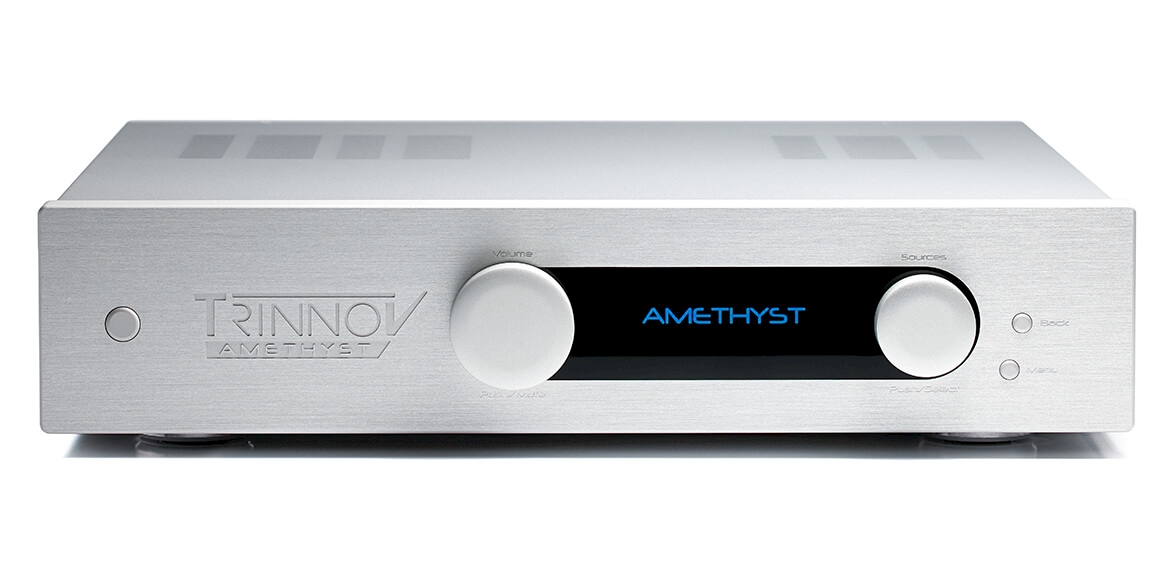
Beyond the Altitude range, Trinnov builds Amplitude power amplification designed to pair cleanly with Altitude output stages; Amethyst, a two-channel preamplifier that carries the Optimizer and the same TrinnovOS platform into a stereo audiophile chain; and Ovation, the commercial cinema variant used in professional post-production and DCI-grade exhibition environments.
Trinnov in the LMC cinema rooms
Trinnov is on demonstration in three rooms across the two showrooms, and each demonstrates a different scale of what the platform delivers.
The Cinema Suite in Scottsdale runs a Trinnov Altitude16 as the processor. The system carries Wisdom Audio thin-film planar loudspeakers behind an acoustically transparent Stewart Filmscreen, driven by Wisdom SA-3 amplification. The Altitude16 handles decoding to twenty discrete channels of Dolby Atmos Home, DTS:X Pro to twenty, Auro-3D to 13.1, and IMAX Enhanced, with the Optimizer correcting the room and Remapping steering sound elements to the exact loudspeaker positions its four-capsule microphone measured. Source is a Kaleidescape server; projection is Sony.
The Grand Cinema Suite runs a Trinnov Altitude32, which is the room where the processor’s highest channel counts are demonstrated. The system pairs McIntosh XRT2.1K line arrays with MC2.1KW and MC1.25KW monoblocks, Sonus faber Arena in-walls for surround and height channels, and REL Carbon Special Black Label subwoofer line arrays of up to three per side. The Altitude32 renders Dolby Atmos Home at the full 24.x.10 count and DTS:X Pro at 30.2. Projection is Barco Freya native 4K DLP with the Alchemy ICMP-X.
The Tempe Theater runs a second Trinnov Altitude32. The system carries Wilson Alexia V with the Mezzo CSC centre on McIntosh MC1.25KW monoblocks, Wisdom Audio thin-film planar in-walls and Focal in-walls for surrounds and heights, six Ascendo 2-19 subwoofers underneath, Kaleidescape source and Sony projection. The Altitude32 correction on the six-sub Ascendo array is what allows the low frequency in that room to arrive with the picture and leave with it — the calibration precision that lets a subwoofer chain of this size behave as one integrated instrument rather than as six separate loudspeakers each doing its own thing.
LMC as a Trinnov dealer since 2015
LMC has been a Trinnov dealer since 2015 — the year after the Altitude32 shipped as the first consumer-market processor with the full Dolby Atmos home implementation. The relationship covers three demonstration rooms with three different Trinnov platforms actively running, and the LMC install partner network is qualified to specify Trinnov Optimizer calibration and Remapping into any private cinema installation.
The specification discipline around a Trinnov processor is what most first-time buyers underestimate. The Optimizer is not a run-once, forget-forever system. It measures the room and the loudspeakers as they actually are at the moment the microphone is placed, and it is worth re-running when anything material changes — a loudspeaker swap, a room treatment change, a subwoofer added to an array. LMC treats every Trinnov installation as a system that will be re-calibrated across its life, not a system that is set up once at installation and left alone.
Where to start
For a first Trinnov audition, the room that most cleanly demonstrates what the Optimizer does is the one where the calibration correction is doing the most work. The Grand Cinema Suite in Scottsdale is the honest place for that conversation — a full Altitude32 correcting an XRT2.1K system with REL subwoofer arrays of up to three per side is the case that shows what the Remapping does when the format’s reference layout and the room’s actual layout are not the same.
For a demonstration of what WaveForming brings to a bass array, the Tempe Theater is the room. The six Ascendo 2-19 subwoofers underneath the Wilson Alexia V front stage are calibrated as an array by the Altitude32, and the bass integration in that room is the most immediate demonstration in the LMC portfolio of what happens when a subwoofer chain of that scale is corrected as one instrument rather than tuned six times individually. For an audition of the Altitude16 platform specifically, The Cinema Suite in Scottsdale is set up for that.
What to listen for
Two tests deliberately reveal what a Trinnov processor does that other processors don’t. First, sit off-centre — not at the sweet spot but two seats to the side. Every other processor’s room correction is set for one seat. Trinnov’s Optimizer measures at multiple positions and applies filters that hold the tonal balance across the full seating area. The test is straightforward: play the same scene from the sweet spot and from two seats over, and the tonal balance and the imaging should not collapse. On a system without Optimizer correction, they will.
Second, play a scene with Atmos objects moving through the height channels, and pay attention to where the sound object actually arrives — not just that it moves overhead, but that it arrives where the mixer placed it. Remapping is the technology that makes the height channels work in rooms where the loudspeaker layout doesn’t match the Atmos reference layout, which is almost every real room. When it works, sound-object motion tracks the picture; when it doesn’t, objects arrive at the nearest loudspeaker and the illusion collapses.
Walk in during business hours or book ahead if the audition needs one of the three Trinnov demonstration rooms configured specifically for extended calibration walk-through.
The Lineup
Explore the Range

Experience The Brand