Brand
REL Acoustics
Subwoofers designed for music first. Since 1990, handbuilt in Wales.
Authorized Dealer — Scottsdale & Tempe, Arizona
Trade-in credit toward new purchases · Full installation and calibration · Walk in during business hours or book ahead
See what's on demonstration now ↓REL Acoustics has been building subwoofers in Bridgend, Wales since 1990. Richard Edmund Lord — REL — founded the company on a specific technical proposition that has not changed in thirty-five years: bass should support music, not overwhelm it, and the way to do that is to tap directly into the amplifier’s speaker outputs rather than settle for a summed LFE signal. Every REL still uses that high-level connection today, and the result is subwoofers that disappear into the system rather than announce themselves.
John Hunter and Alex Brody acquired the company in 2005. Design leadership stayed in the United Kingdom, but North American operations moved to Berkeley, California, and the design team there works on both electronics refinement and cabinetry. More than three decades on, REL still handbuilds every cabinet in Wales, still tunes every network for the music-first philosophy, and still refuses to ship subwoofers with smartphone apps or automated room correction — the argument being that the REL Reference Remote’s tactile controls, calibrated by a trained ear, land the integration better than the algorithms do.
The high-level connection premise
Almost every subwoofer on the market ships with a single-ended low-frequency input. It expects a summed signal from a receiver’s LFE output — the mono bass channel a home theatre processor derives after decoding the source. That is fine for cinema, where the bass is a separate mix element. It is wrong for music, where the bass is inseparable from the rest of the recording.
REL’s answer is the high-level connection. Instead of taking a summed LFE feed, a REL subwoofer wires directly into the amplifier’s speaker output terminals — the same terminals feeding the main loudspeakers — through a high-impedance input. The REL sees exactly the signal the main loudspeakers see, filtered through the amplifier’s own character, with the amplifier’s phase and timing preserved. The result is that the subwoofer stops behaving as a separate box producing bass and starts behaving as the bottom two octaves of the main loudspeakers, played through additional drivers.
The consequence is audible immediately. A REL set up correctly on high-level connection does not announce itself when the deep bass arrives — the main loudspeakers appear to have grown a bottom octave they did not have. The imaging holds, because the phase relationships were preserved through the amplifier. The tonal balance holds, because the crossover slope is gentle rather than sharp. Take the REL out of the system and the loudspeakers sound thin; add it and the loudspeakers sound complete. Nothing about it feels like a subwoofer, which is the whole design goal.
The REL line at LMC
LMC carries the current REL Acoustics range across every family REL builds, from the Tzero MKIII at the entry point to the No.32 flagship. Each model below links to its own page with full specifications; every one of them lives on the subwoofers page. The families divide by purpose rather than simply by price: Reference and Serie S for reference two-channel and large-scale cinema, Serie T/x for music systems below the reference tier, Serie HT for multichannel film, Classic for vintage and valve systems, and Planar where the cabinet has to disappear.
Reference Series — No.32 and No.31
The Reference Series is REL’s flagship tier: true carbon fibre drivers, NextGen 7 Class D amplification, dual parametric filters for micro-tuning at both ends of the bass range, and Line Array capability up to five units per side. This is the tier LMC specifies when the main loudspeakers are already reference-class.
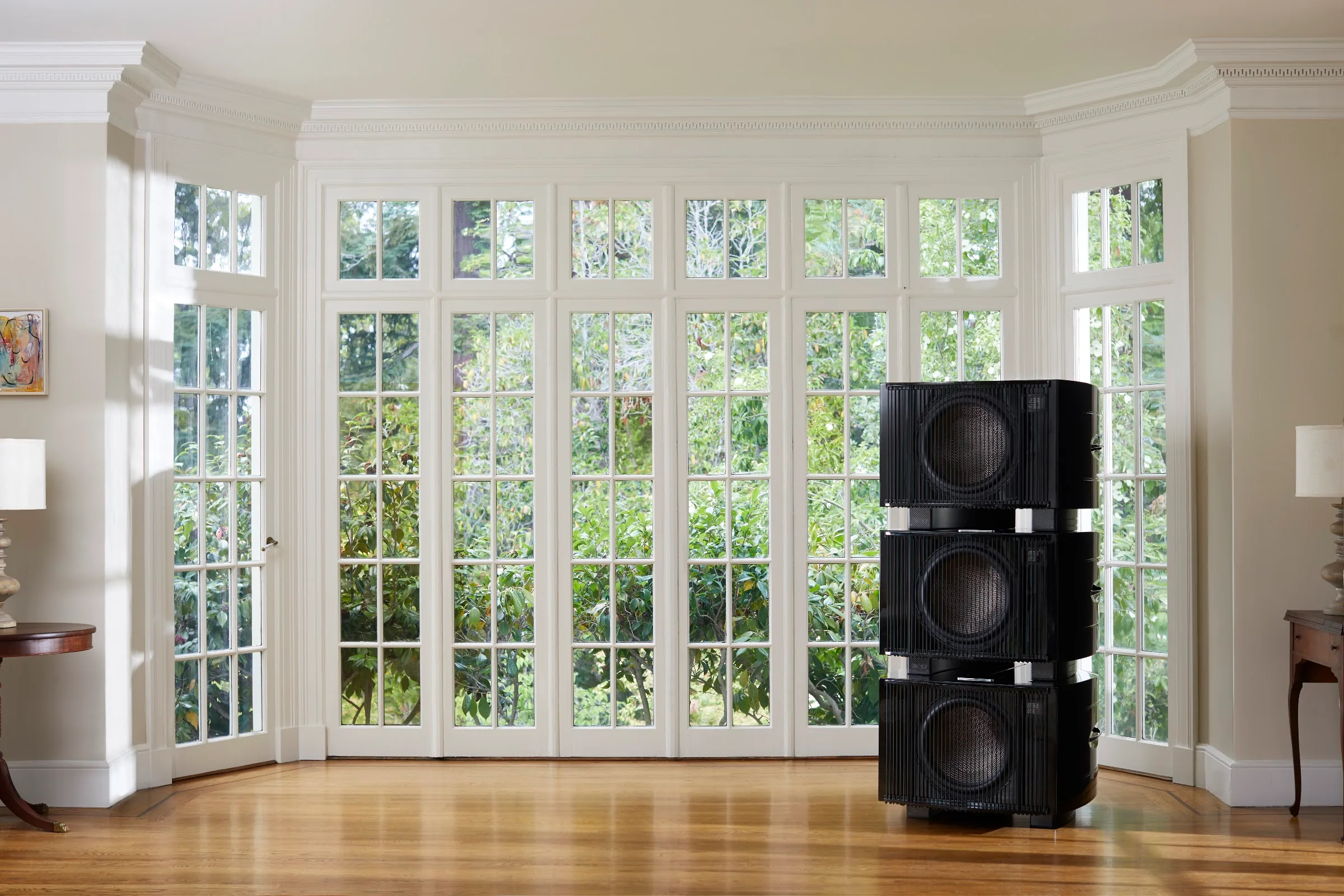
REL No.32
The top of REL’s entire catalogue. A 15-inch true carbon fibre driver with 4 inches of total stroke on a NextGen 7 Class D 1000W amplifier with thin-film capacitors, in the curvilinear reference cabinet REL established on the original Gibraltar. Low frequency extension is 15Hz at −6dB. Three No.32s per side, or five in exceptionally tall rooms, each retaining individual crossover and gain control. $10,000 each.
REL No.31
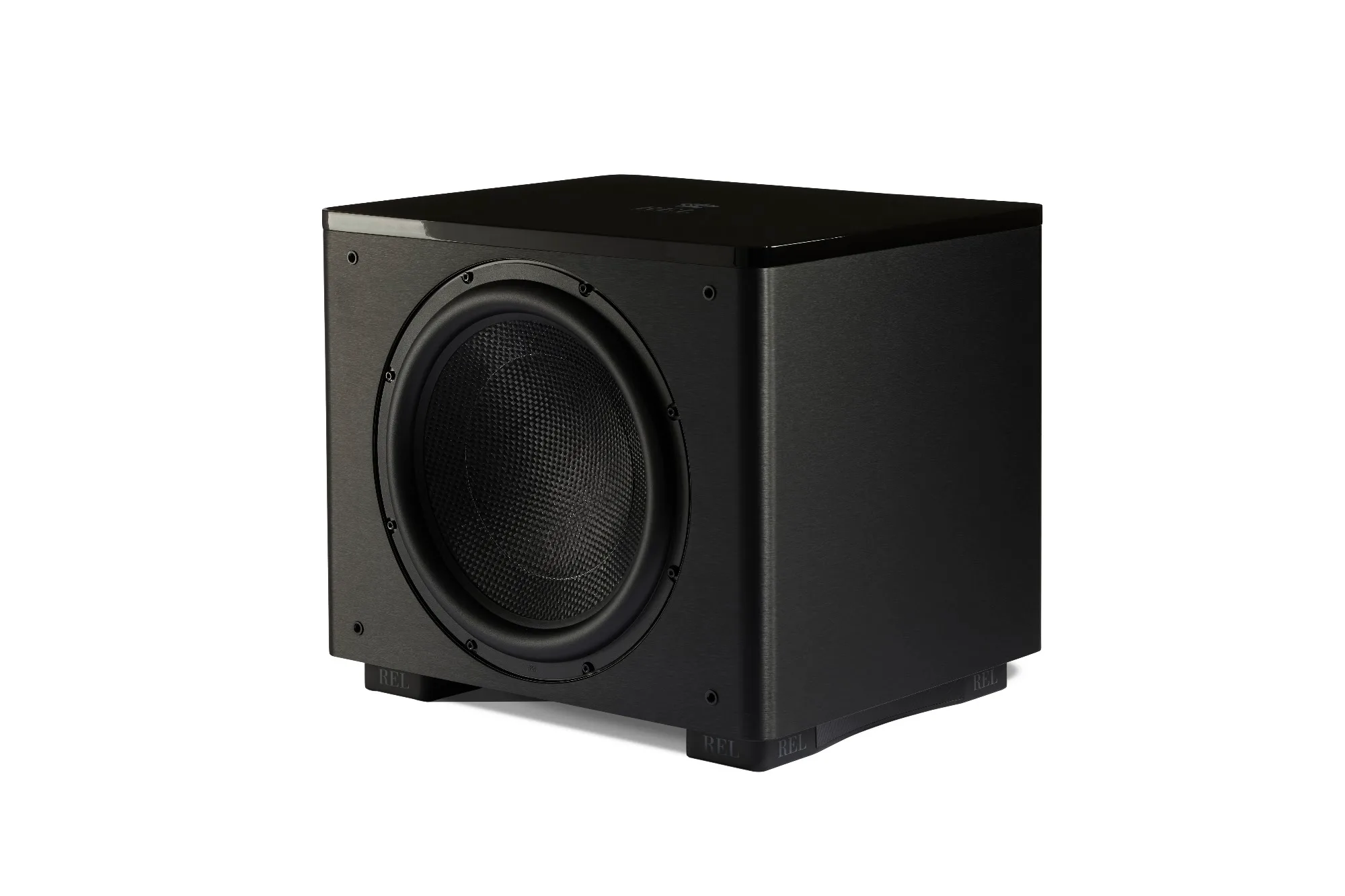
The same Reference engineering in a more compact cabinet — a 12-inch long-throw carbon fibre driver with inverted carbon fibre centre cap on a die-cast alloy chassis, with the NextGen 7 amplifier limited to 900W to match the driver’s optimal operating window. Extension is 17Hz at −6dB, weight 114.5 lb against the No.32’s 200-plus. For reference systems in rooms that cannot take the No.32, or for pairs and arrays where several No.31s outperform a single No.32. $9,000 each.
Serie S — 212 Black Label, Carbon Special, S/850 and S/550
Serie S is the tier for high-end systems that stop short of Reference, and the 2025 refresh brought CarbonAlloy drivers, redesigned cabinets and Airship Direct wireless across the range. Three of the four models stack in Line Arrays up to three units per side.
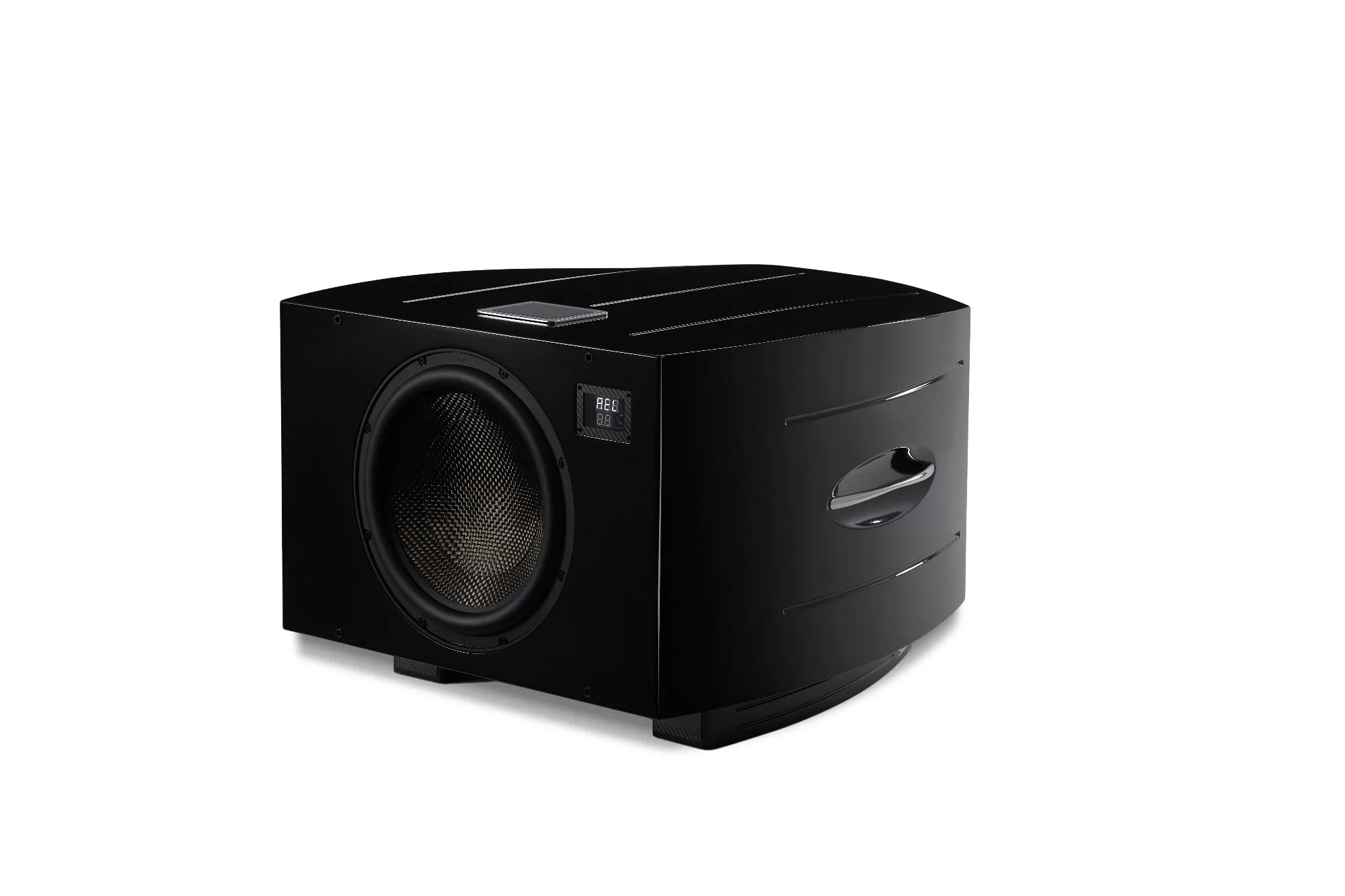
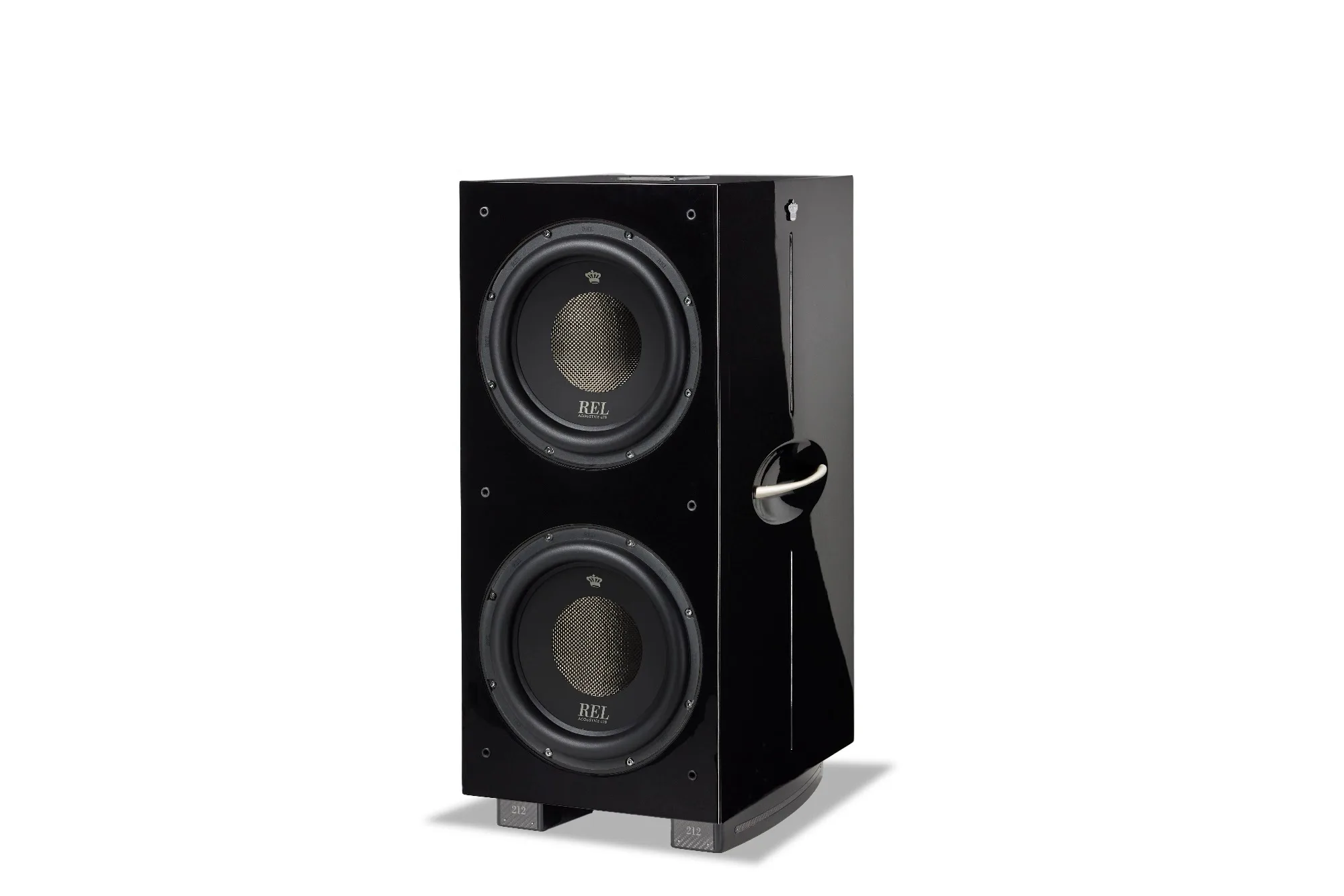
REL 212 Black Label
Two active 12-inch drivers and two passive 12-inch radiators firing in three planes from a single cabinet, on 1000W with fully analogue input filters. Redesigned suspension geometry and SuperProgressive passive radiators with 30 percent more linear travel than the 212/SX it replaces. Hand-rubbed piano black lacquer, eight coats. Not Line Array compatible — the twin-active architecture is engineered as a single-unit statement. $5,999 each.
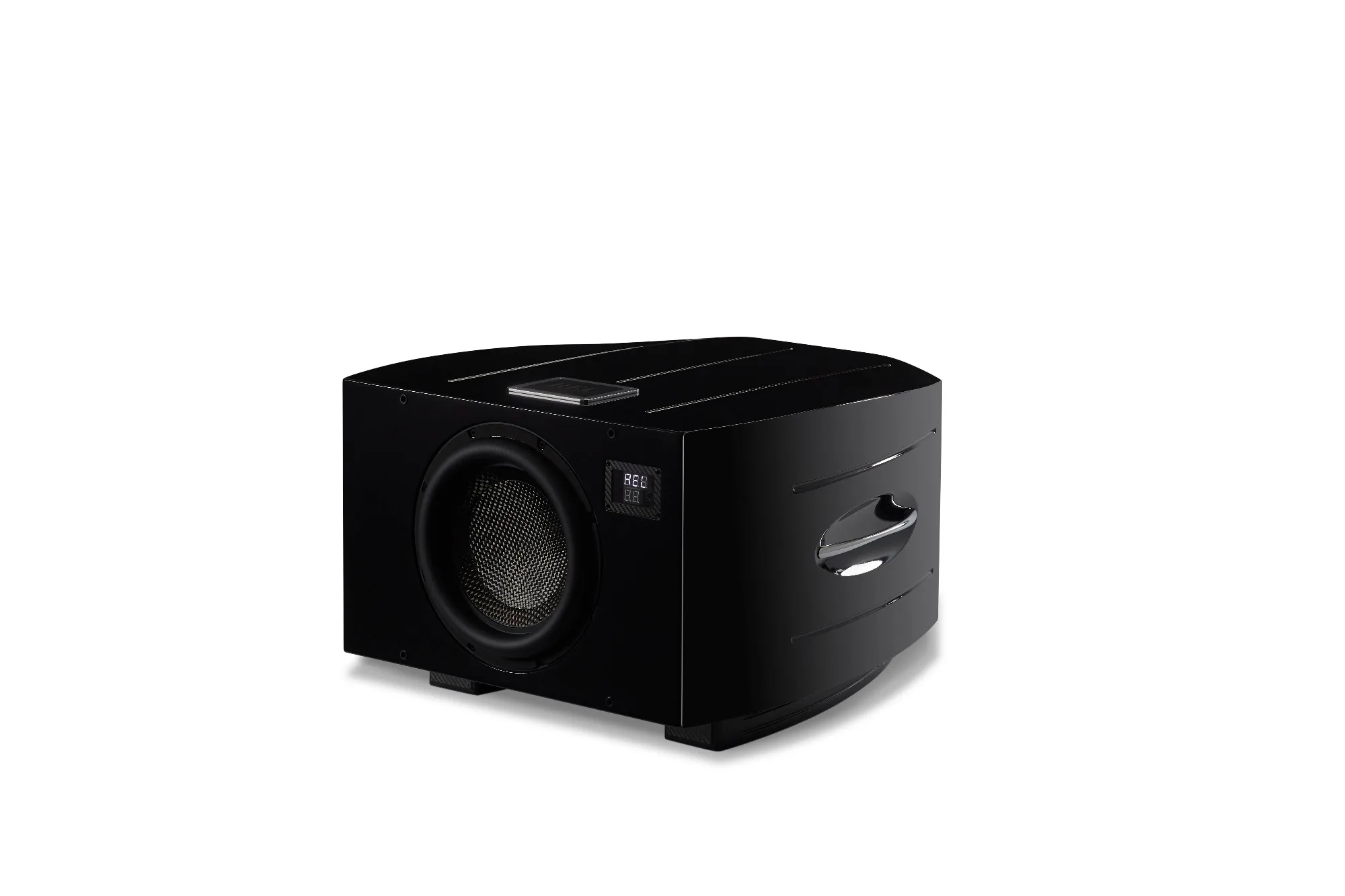
REL Carbon Special Black Label
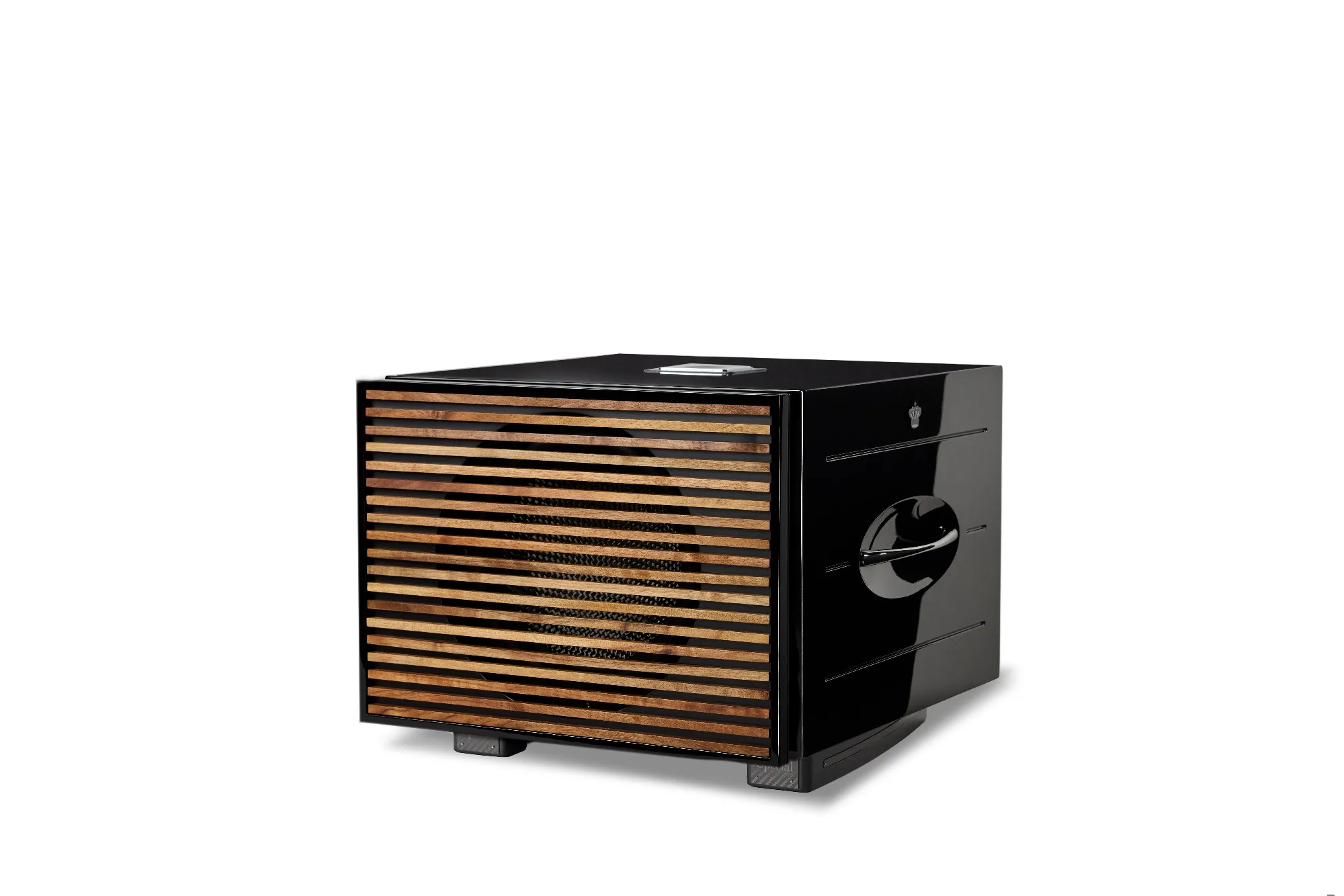
Pure carbon fibre driver material — the same fundamental construction as No.31 and No.32 — brought down into a mid-chassis Serie S cabinet. Faster transient response and greater tonal clarity than the CarbonAlloy models beneath it. Premium wood grille standard with the Black Label crown badge. Line Array capable to three per side. $4,999 each. On demonstration in Scottsdale.
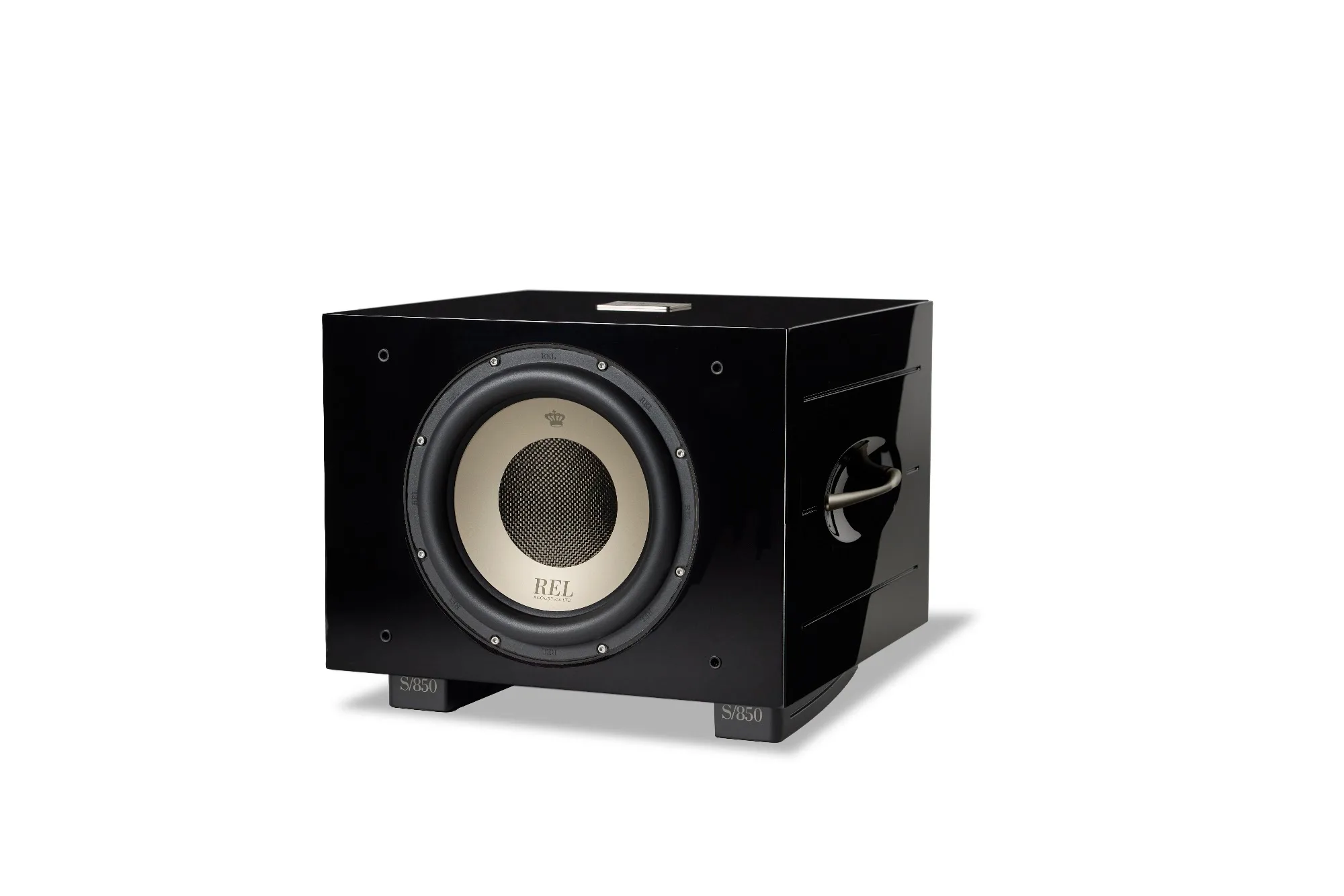
REL S/850
Replaced the outgoing S/812 in the Serie S refresh — redesigned CarbonAlloy driver, new cabinet architecture, and amplifier power up from 500W to 850W, drawn from the Reference Series development track. Fully analogue input filters. The workhorse choice for medium to large rooms. Line Array capable to three per side. $3,999 each.
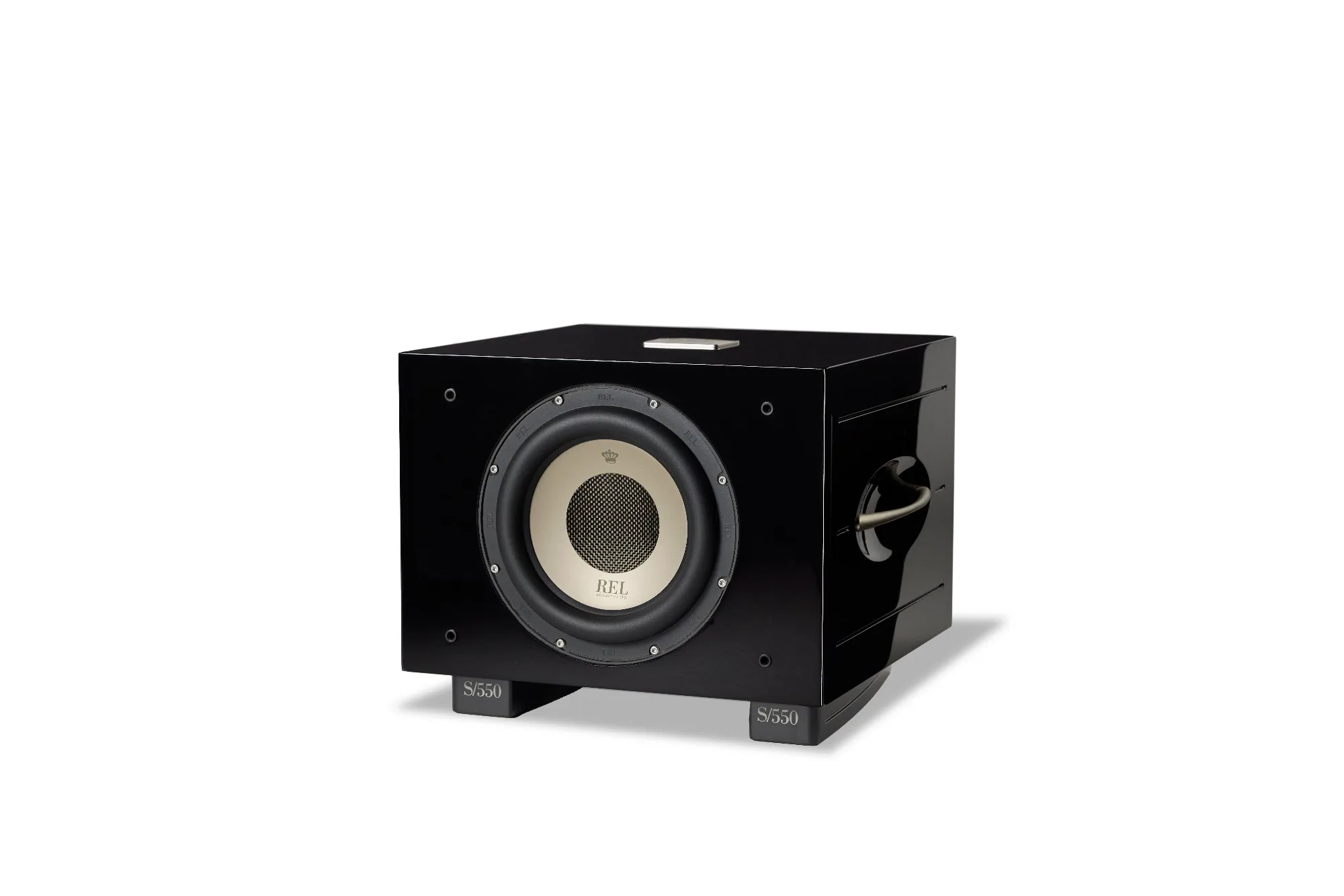
REL S/550
The entry to the current Serie S — a 10-inch CarbonAlloy driver against a 12-inch passive radiator on a 550W Pure Class D amplifier. Positioned for medium rooms and balanced systems, and Line Array capable to three per side, so three S/550s deliver Serie S scale without the S/850 investment. $3,299 each. On demonstration in Tempe.
Serie T/x — T/9x SE, T/9x, T/7x and T/5x
Serie T/x delivers the REL high-level connection and FibreAlloy driver technology in compact Class A/B cabinets. Class A/B analogue amplification runs throughout, which is the point of the range. None of the Serie T/x models are Line Array compatible; stereo pairs are the maximum configuration and, in most residential rooms, the better answer anyway.
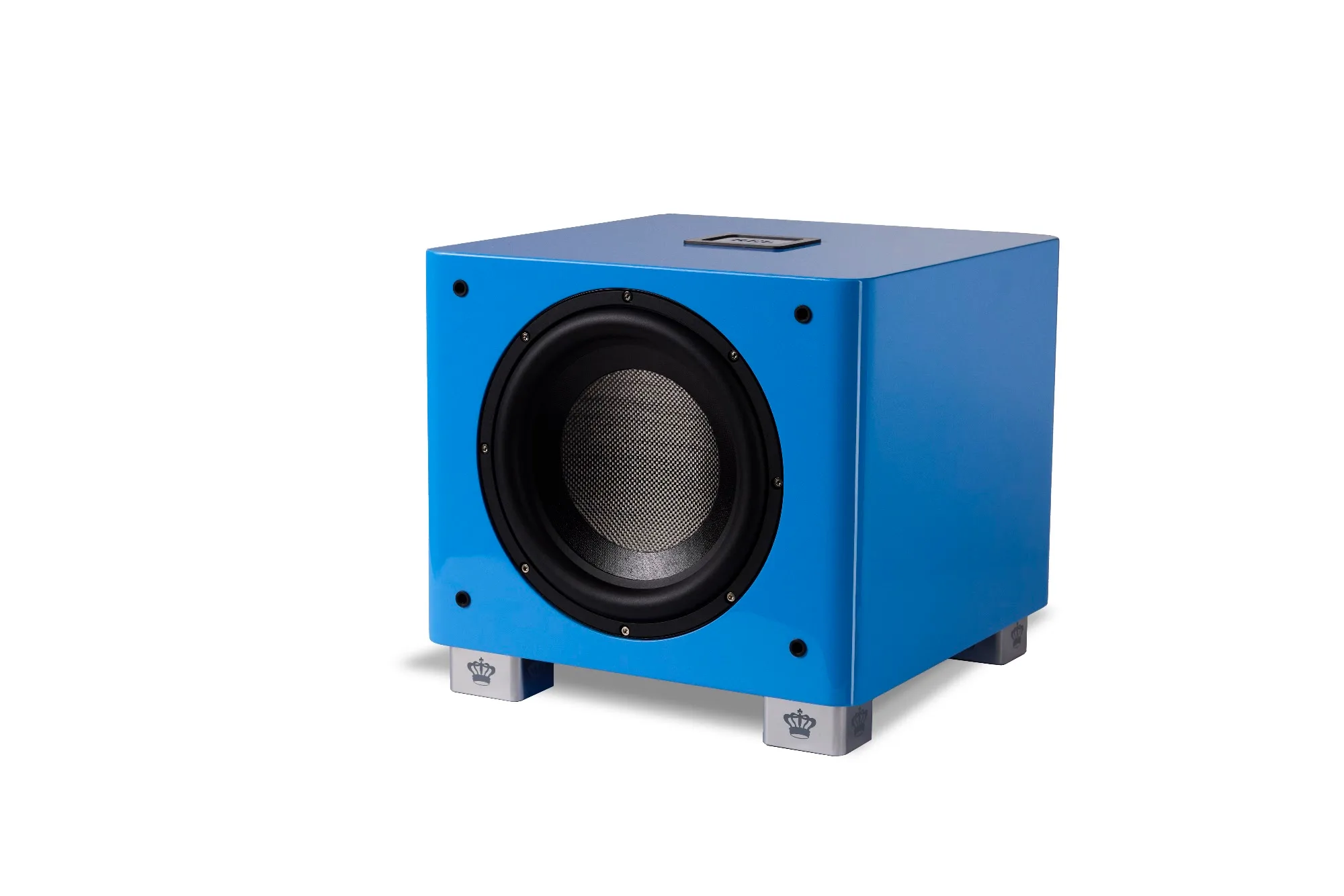
REL T/9x SE
T/9x engineering in five hand-painted Special Edition finishes — French Racing Blue, Green With Envy, Le Mon Yellow, Tangerine Dream and Italian Racing Red. Same 10-inch FibreAlloy active driver, 10-inch down-firing passive radiator and 300W Class A/B amplifier. For rooms where the subwoofer is part of the visual composition. $1,799 each.
REL T/9x
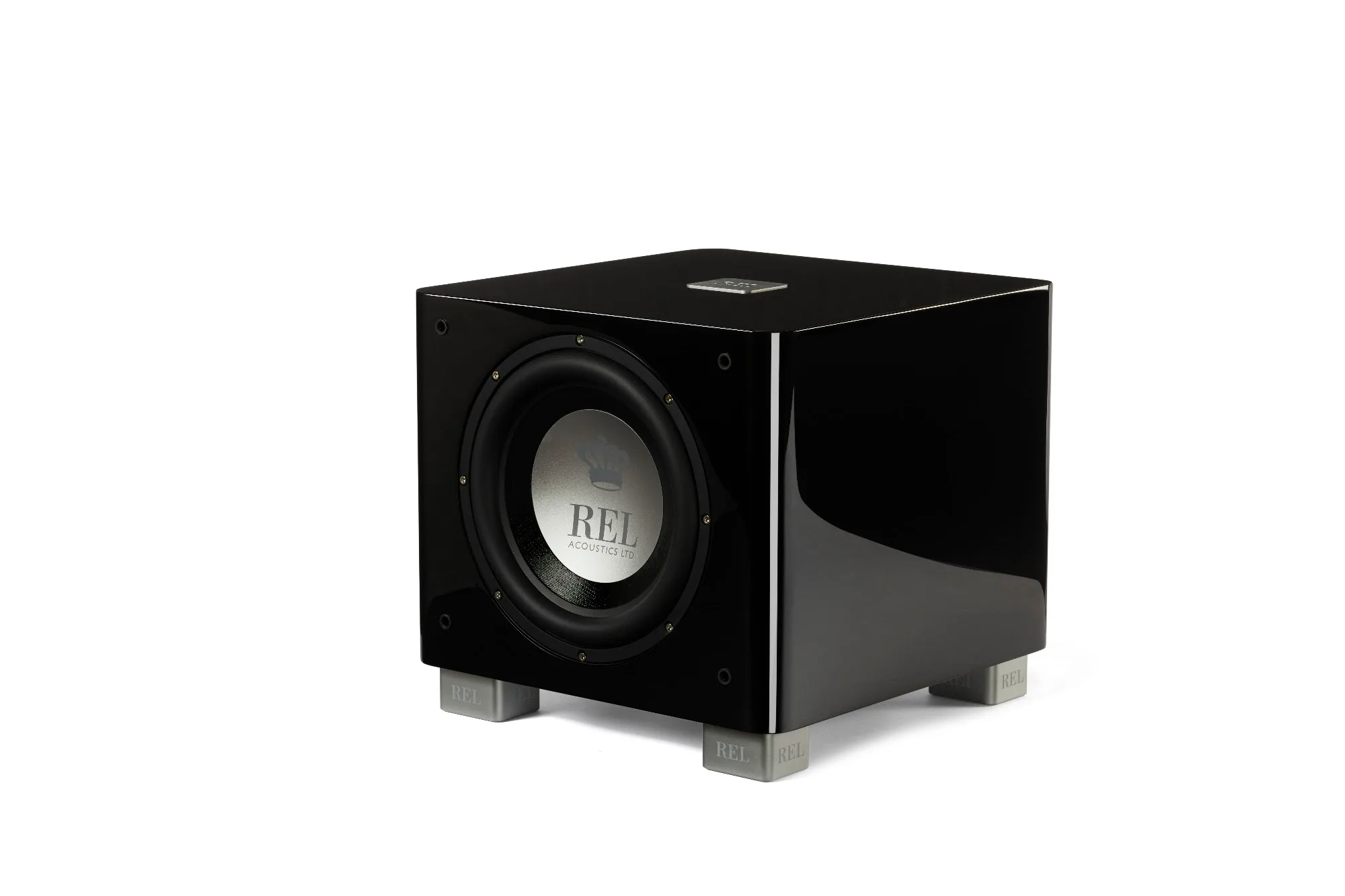
The top of Serie T/x in the standard palette of black, grey and white high-gloss. A 10-inch front-firing FibreAlloy active driver, 10-inch down-firing passive radiator, 300W Class A/B amplifier, with the Neutrik Speakon high-level input and a dedicated LFE input on independent gain for mixed-use systems. $1,699 each.
REL T/7x
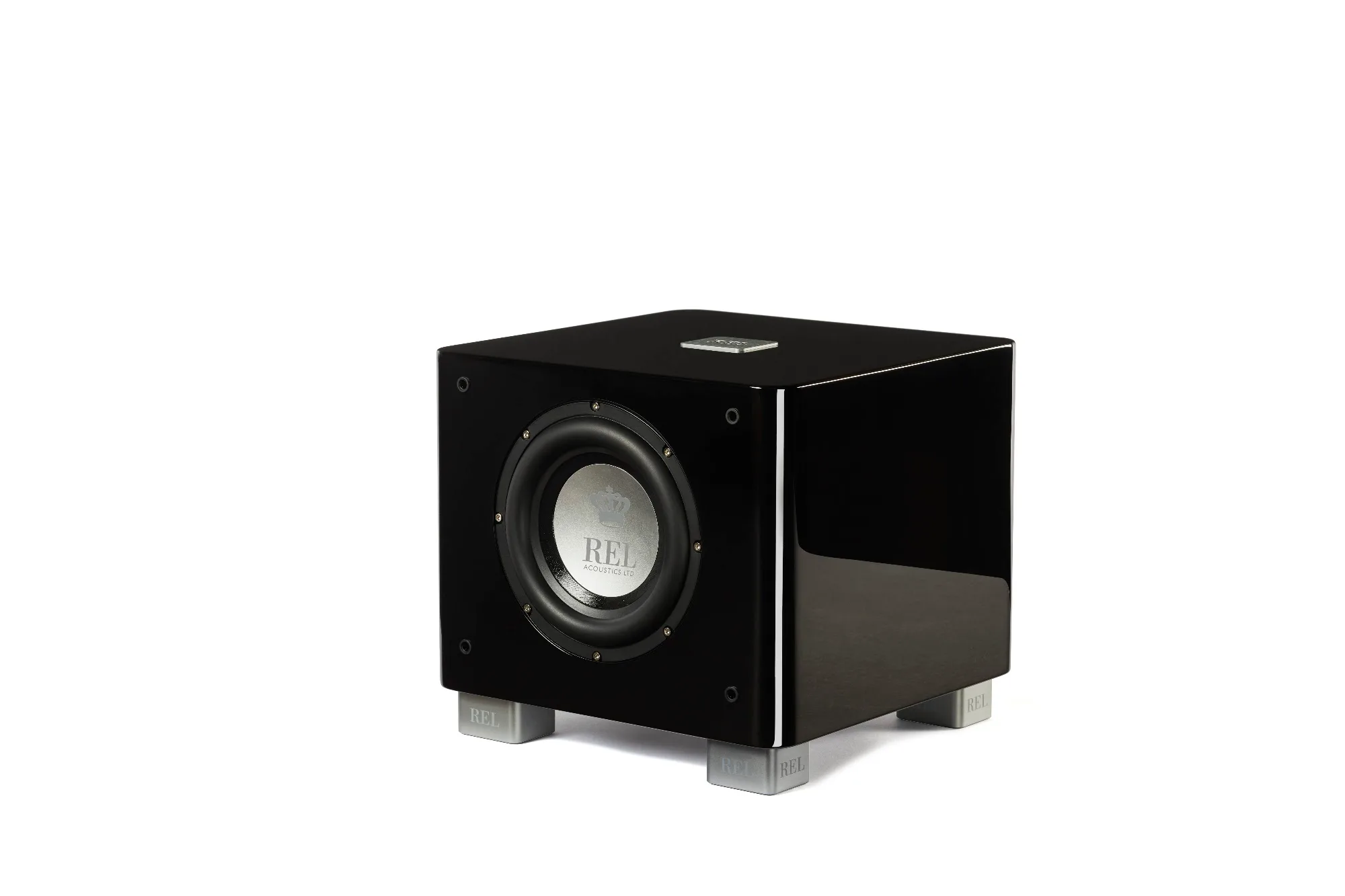
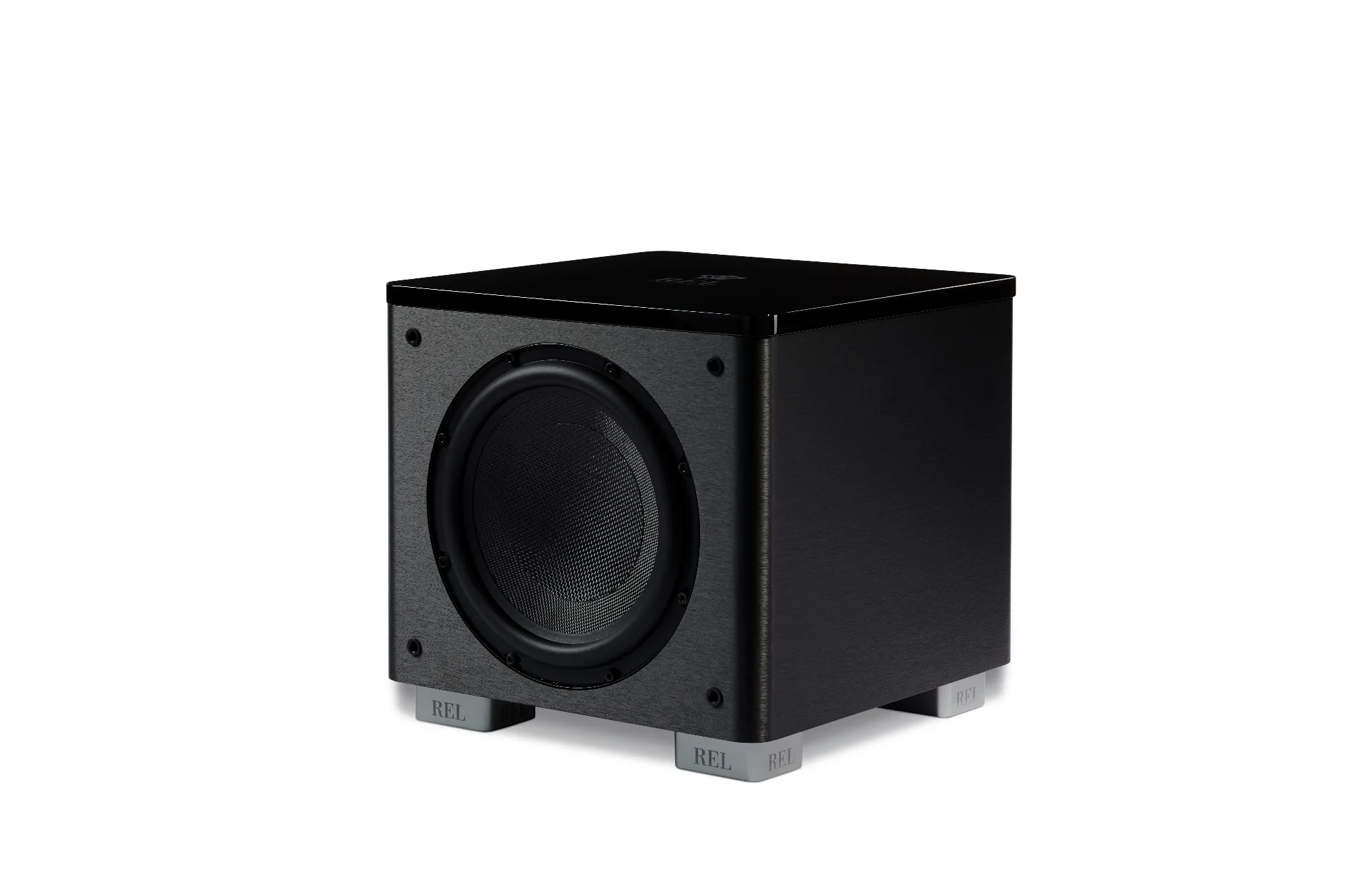
The middle of the range and regularly reviewed as the sweet spot for two-channel music — an 8-inch front-firing FibreAlloy active driver, 10-inch down-firing passive radiator, 200W Class A/B amplifier. Small enough to sit beside a listening chair, capable enough to disappear into stand-mount and floorstanding systems alike. A stereo pair delivers deeper extension and better room integration than a single T/9x in most residential rooms. $1,299 each.
REL T/5x
The compact entry to Serie T/x — an 8-inch sealed long-throw driver on a 125W Class A/B amplifier, refined from the T/7x. Sized for rooms of roughly 75 to 200 square feet. Stereo pairs are strongly recommended for anything larger. $799 each.
Serie HT — Predator, HT/1205 MKII and HT/1003 MKII
Serie HT exists because film and music ask different things of a subwoofer. REL’s main line is engineered around integration with loudspeakers in a stereo system through the high-level connection; Serie HT moves the emphasis to output and deep extension for multichannel soundtracks, and the connectivity changes with it — these are .1/LFE-driven designs rather than high-level ones.
REL HT/1510 Predator
The largest subwoofer REL builds for home theatre and the flagship of Serie HT — a 15-inch CarbonGlas driver in a sealed cabinet on a 1000W amplifier with PerfectFilter inputs, at just under 100 lb. Line Array capable for vertical stacking in a dedicated room. $2,199 each.
REL HT/1205 MKII
A front-firing 12-inch long-travel driver in a sealed cabinet on 500W continuous — the naming convention is the specification. The MKII generation brought technologies down from the Predator, with larger magnets and upgraded suspension raising output roughly 50 percent over the model it replaced while improving precision. The right size for most dedicated rooms that do not need the Predator’s scale. $999 each.
REL HT/1003 MKII
The entry to Serie HT — a 10-inch CarbonGlas driver on 300W Class D in a compact sealed cabinet, built for small to medium rooms. Not intended for vertical stacking; multiple units work as stereo pairs or as part of a multi-subwoofer theatre layout, which in a room with more than one row of seating is usually the better answer regardless. $699 each.
Classic Series — Classic 99 and Classic 98
The Classic pair are deliberately not part of the main line. They exist for systems built around vintage equipment or its modern equivalents — valve amplification, British mini-monitors, high-sensitivity single-driver and coaxial designs — where REL’s usual emphasis on speed and attack can sit at odds with the character of the system it is joining. Both carry high-level connectivity and genuine walnut veneer.
REL Classic 99
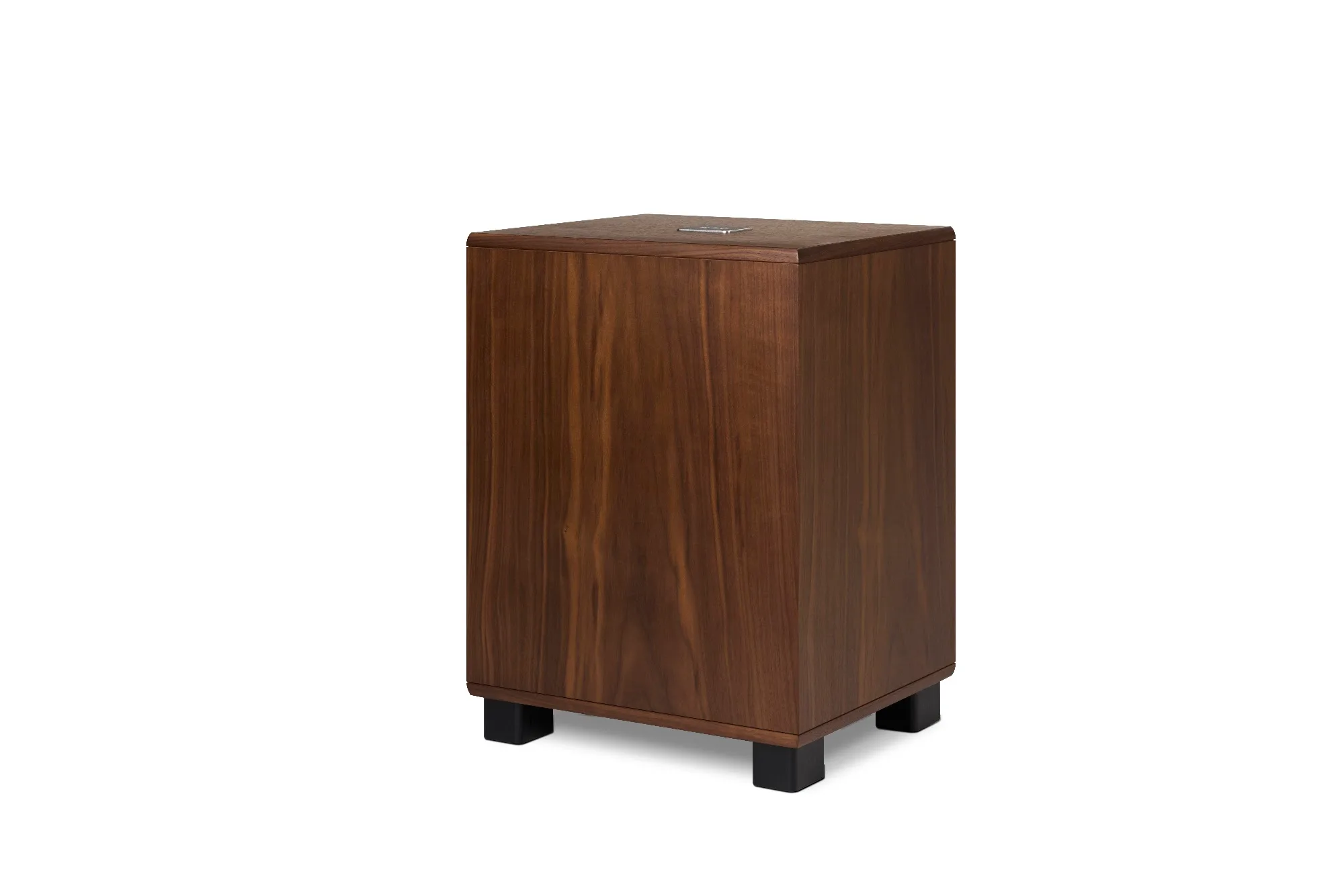
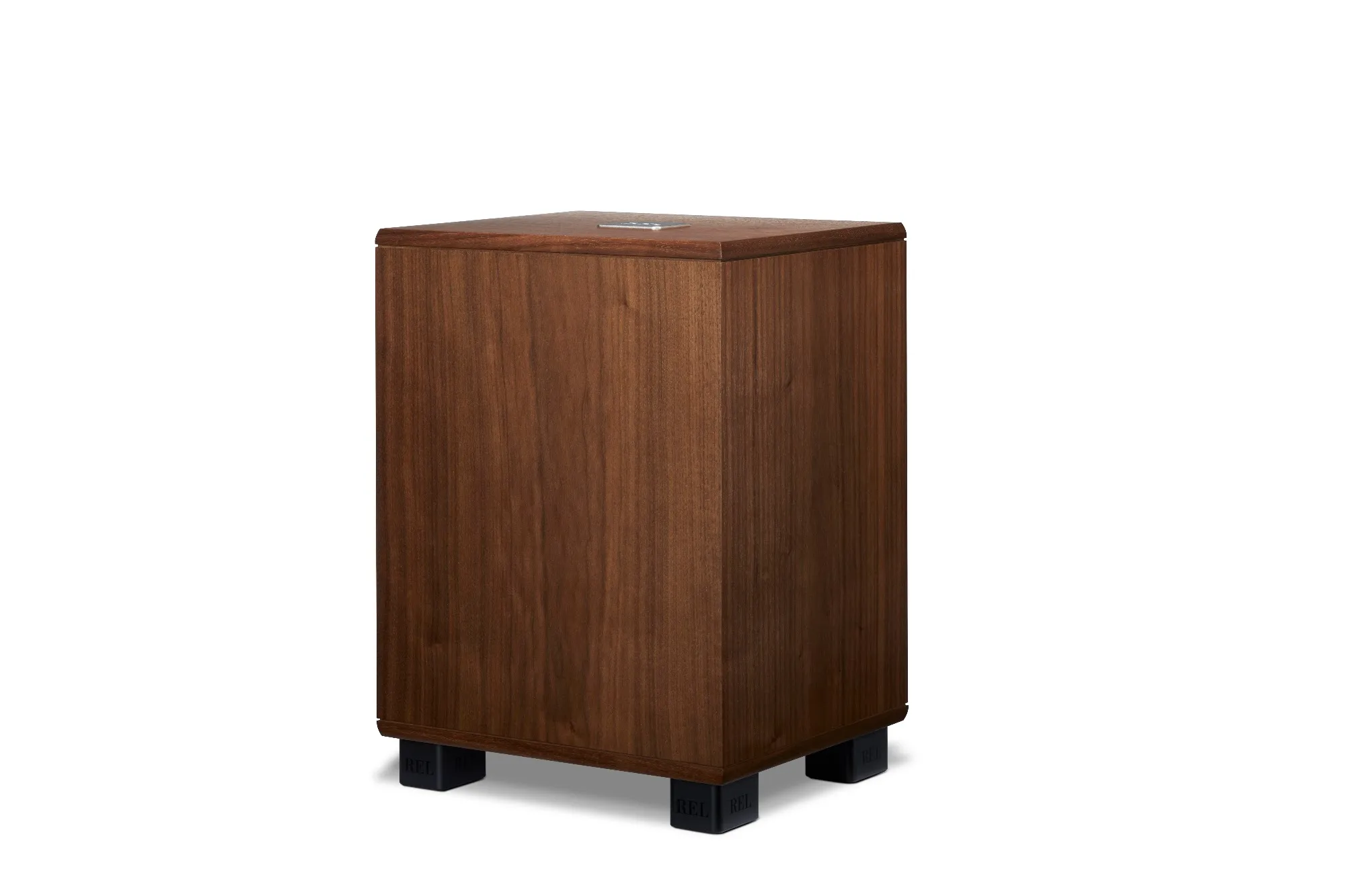
The larger of the two — a 12-inch down-firing paper-on-paper driver on a 450W Class D amplifier in genuine dark walnut veneer. Plays louder, reaches deeper, and resolves more than the Classic 98, adding air and nuance while keeping the same easy, room-filling character. For larger rooms and more capable systems. $2,099 each.
REL Classic 98
A revival of REL’s 10-inch down-firing designs of the late 1990s — a hot-pressed paper cone with an air-dried inner cap on a 300W high-current Class D amplifier, in natural walnut veneer with a radiused curve and reveal line. REL is candid that it plays with a slightly softer touch than the standard range, trading a degree of speed and deepest extension for warmth. That is a design decision, and it suits rooms of roughly 150 to 400 square feet. $1,499 each.
Planar Series — PL-2 and PL-1
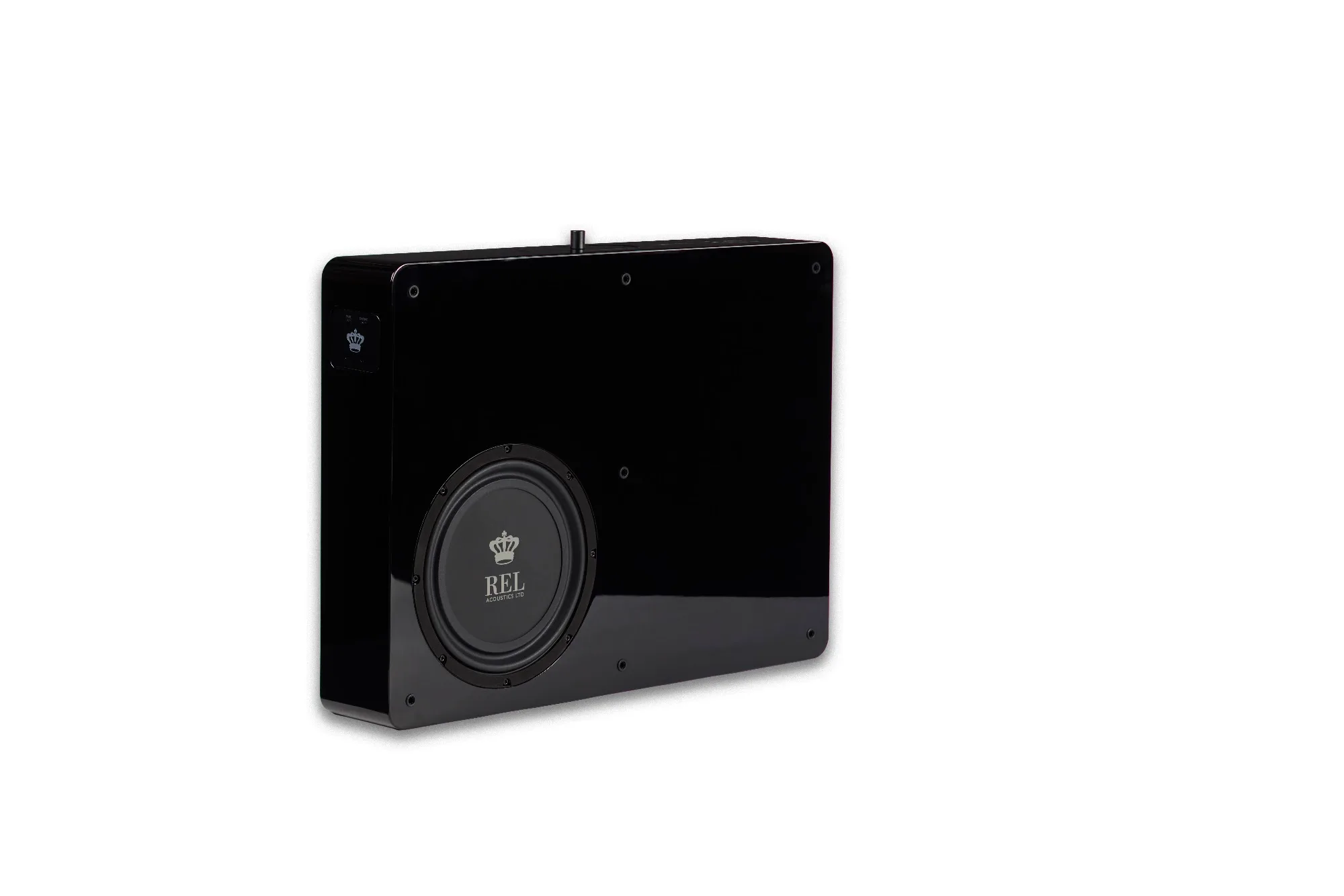
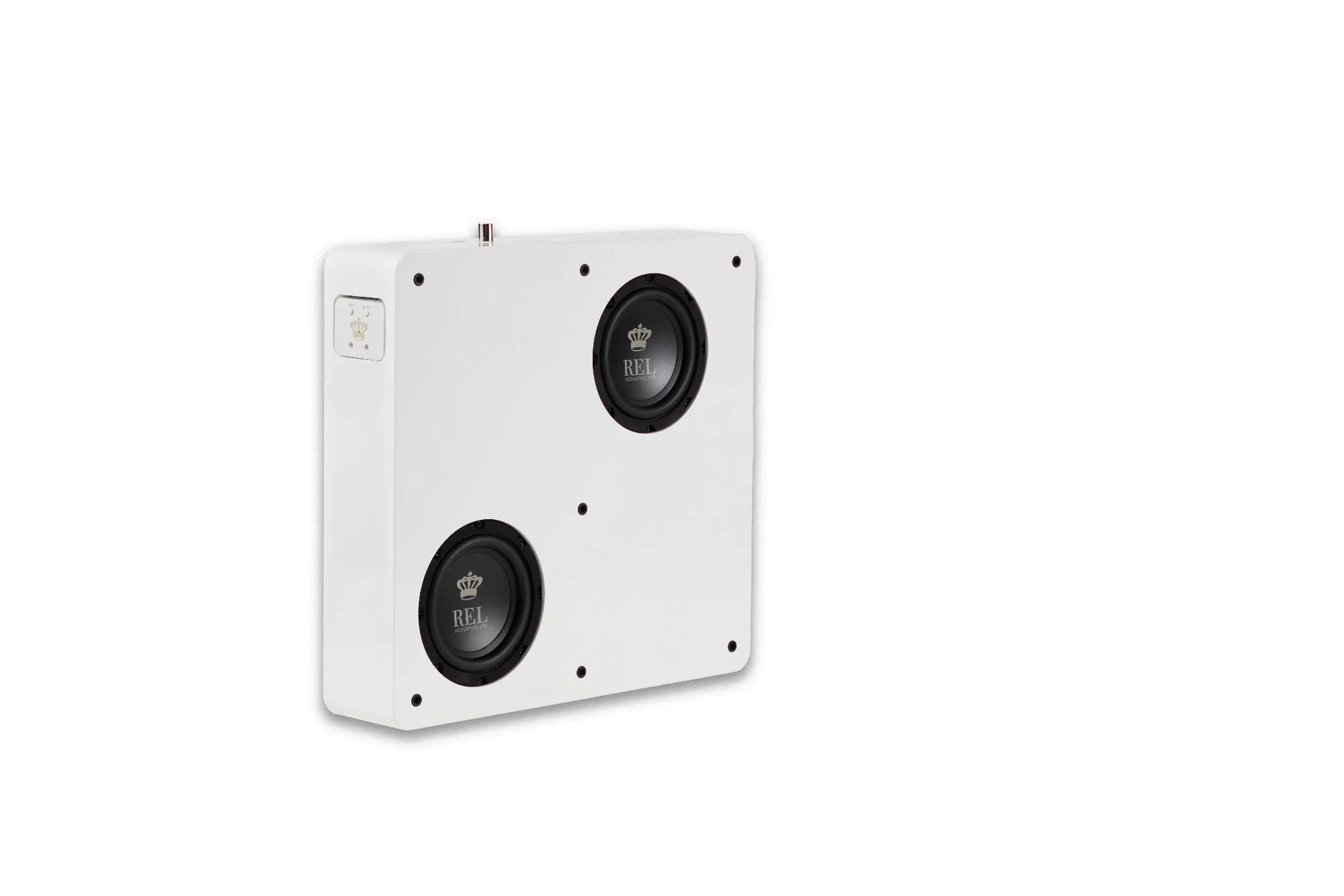
The Planar models answer the oldest objection to owning a subwoofer: that it means putting a cube on the floor. The cabinet is 5.7 inches deep. Both mount on a wall with supplied brackets, sit tight against one, or ride on REL’s optional Planar Cart, and both have Airship Direct wireless built in and pre-paired from the factory. Particularly useful in rooms built around in-wall or in-ceiling loudspeakers, where floor space and sightlines are already spoken for.
REL PL-2
The larger Planar — a front-firing 8-inch long-throw FlatPiston active driver against a rear-firing 10-inch FibreAlloy passive radiator on a 550W Class D amplifier, reaching 24Hz at −6dB in room. The design premise is boundary reinforcement: a driver radiating against a wall couples to it, and the wall disperses bass through the room rather than firing it across the floor. $3,299 each.
REL PL-1
The same 5.7-inch cabinet solving the output problem differently — two front-firing 6.5-inch long-throw FibreAlloy drivers rather than one larger one, against the same rear-firing 10-inch passive radiator on 300W Pure Class D. Extension is 31Hz at −6dB in room. At 41.6 lb it is genuinely wall-mountable, and the mounting system holds the precise standoff the passive radiator needs. $2,499 each.
Tzero MKIII — the compact REL
REL Tzero MKIII
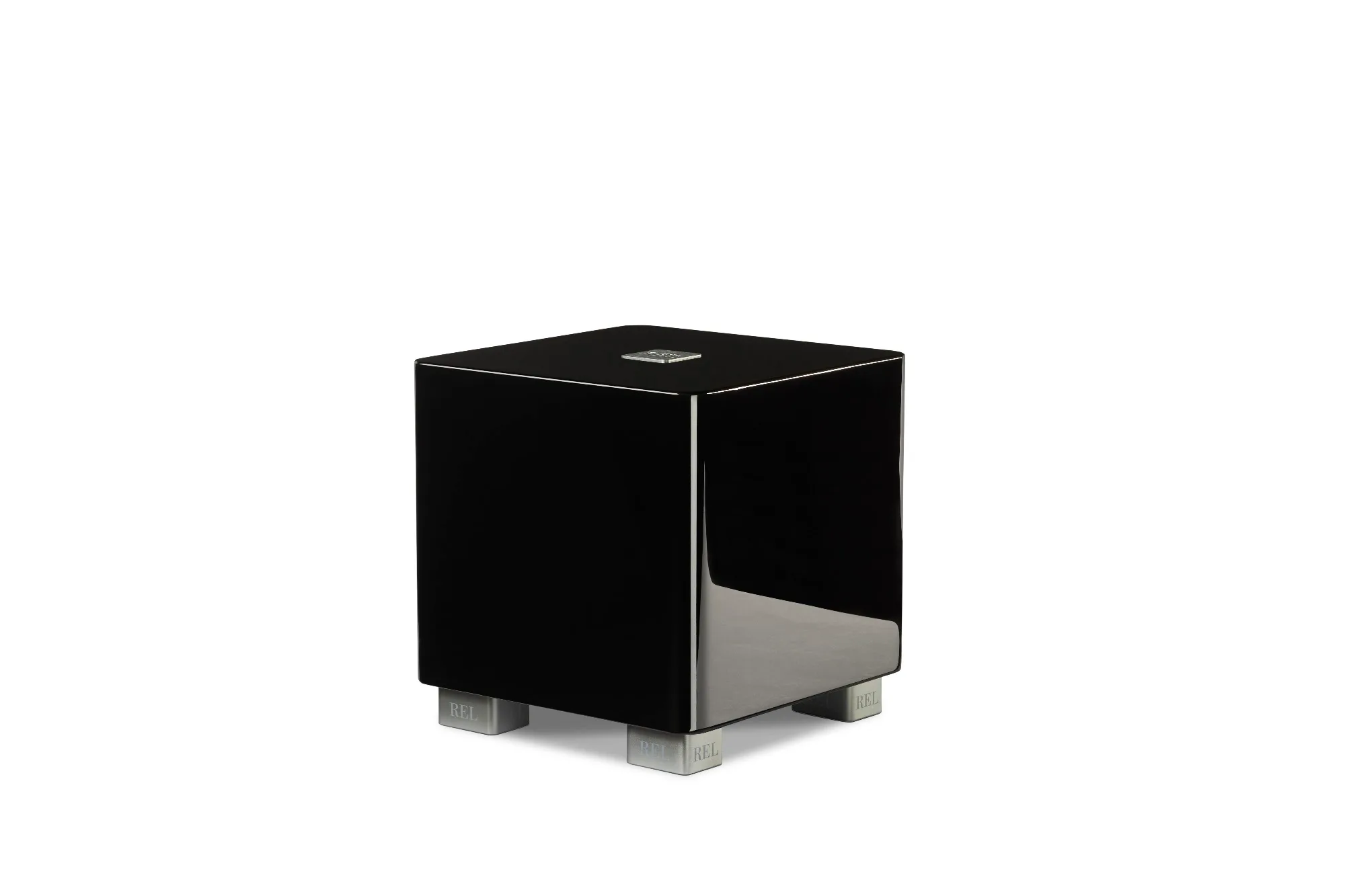
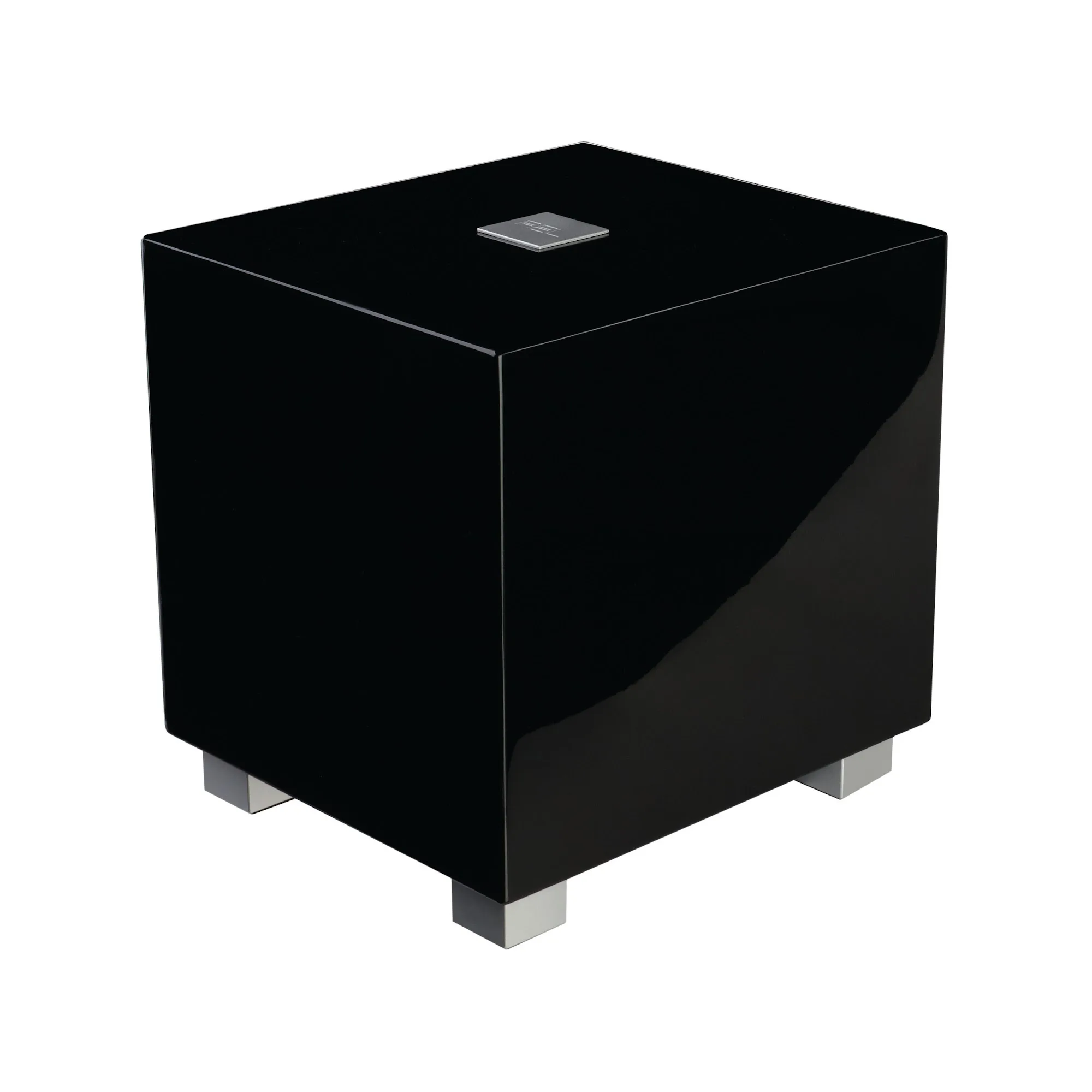
The smallest subwoofer REL makes — a sealed cabinet a little over nine inches tall with a down-firing 6.5-inch long-throw anodised aluminium driver on 100W of NextGen Class D, reaching 37Hz at −6dB in room. What makes it a REL rather than simply a small subwoofer is what it does not leave out: the full connectivity suite is here, including the high-level input, plus a separate .1/LFE input with its own level control. REL is direct about the limits — it will fill a small or medium room properly and will not pressurise a large one. For a study, an apartment, a second system, or distributed through a larger space in multiples. $599 each.
REL in the LMC listening rooms
REL is on demonstration in two rooms, and each demonstrates a different application of what REL does.
In Tempe Room 4, two REL S/550 subwoofers extend the bottom end of a Sonus faber Serafino system driven by Linn Klimax Solo 500 monoblocks. The high-level connection takes its signal directly from the amplifier’s speaker outputs, so the S/550 pair hears exactly what the Serafino hears. That is the detail that lets a REL disappear into a two-channel system rather than announce itself, and the Serafino-plus-S/550 pairing is the most immediate demonstration in the LMC portfolio of what the Serie S tier delivers in a real reference music system.
In the Grand Cinema Suite at LMC Scottsdale, REL Carbon Special Black Label subwoofers run in Line Arrays of up to three per side, integrated into the McIntosh XRT2.1K line array cinema system on MC2.1KW and MC1.25KW monoblocks, with Sonus faber Arena in-walls carrying surrounds and heights, and Trinnov Altitude32 handling decoding and correction. The Carbon Special driver is essentially a Reference-tier carbon-fibre cone in a Serie S enclosure, and the Line Array configuration is what allows a Serie S subwoofer to keep up with a full commercial-cinema-grade front stage. That is the more ambitious demonstration and the one that shows how far REL scales when the room asks for it.
LMC as a REL Acoustics dealer
The value LMC adds as a REL dealer is the setup itself, because a REL bought and dropped into a room is a subwoofer that has not yet done the work the company designed it to do. High-level connection asks the installer to identify the amplifier’s phase behaviour, match the crossover roll-off to the main loudspeaker’s low-frequency character, set the level so the REL is inaudible except when it is not, and land the phase alignment where the sum with the mains is coherent rather than lumpy. REL calls it tuning by ear rather than by app, and the reason they still ship a physical remote instead of a phone interface is that the tuning process rewards the trained ear more than the automated measurement.
The LMC install partner network runs that setup at delivery. For a Reference Line Array installation — three or five No.32s per side — the setup is a substantial exercise in its own right, and the reason the Reference Series exists at all is to serve the client who wants that scale. For a two-channel S/550 pair in a music system, the setup takes an hour and transforms the loudspeakers underneath it. Neither ends in the showroom. Both begin in it.
Where to start
For a first REL audition, the honest place to begin is Tempe Room 4. The Sonus faber Serafino system with the S/550 pair on high-level connection is the demonstration that most directly shows what REL is arguing for — the moment the REL is switched into the chain, the Serafino grows a bottom octave it does not otherwise have, and the change is immediately audible in the imaging and the tonal balance of everything the main loudspeakers are playing, not just in the low frequencies.
For a demonstration of what REL scales to at the top of its range, the Grand Cinema Suite Line Array of Carbon Special Black Labels is the room. That system is set up as reference cinema rather than music-first, but the principle is the same and the scale is significantly larger. For the entry Serie T/x conversation — the T/5x or T/7x into a well-integrated two-channel system — that discussion happens in the showroom directly against a selected pair of main loudspeakers, because the Serie T/x integrates so completely that the demonstration is essentially before-and-after with the same source material.
What to listen for
Two tests deliberately reveal what a properly integrated REL does that a conventional subwoofer does not. First, play a familiar recording with the REL switched out of the chain. Listen for two minutes. Switch the REL in. What you should hear is not that the bass got louder — you should hear that the imaging deepened, the vocal moved forward slightly, and the space around the instruments expanded. If the change is a louder bottom end and nothing else, the setup is not right. If the change is that the main loudspeakers sound more like themselves, the REL is doing its job.
Second, play a track with a walking upright bass — a jazz recording, a chamber piece with a double bass, anything where the bass instrument is intended to have pitch and articulation rather than just a note. On a REL set up correctly, each bass note has definition, attack, decay, and pitch. The listener can follow the bass line as a melodic instrument, not as a foundation for the rest of the mix. That is the musical bass REL has been building for thirty-five years, and it is the reason a REL sits alongside every reference two-channel system in the LMC listening rooms, not just in the home theatres.
Walk in during business hours or book ahead if the audition needs Tempe Room 4 or the Grand Cinema Suite configured specifically for a REL demonstration or a Line Array walk-through.
The Lineup
Explore the Range

Experience The Brand