Brand
Octave
German tube amplification, still handbuilt in Karlsbad.
Authorized Dealer — Scottsdale & Tempe, Arizona
Trade-in credit toward new purchases · Full installation and calibration · Walk in during business hours or book ahead
See what's on demonstration now ↓Octave Audio was founded in Karlsbad, Germany in 1968 by Karl Heinz Hofmann — not initially as an amplifier company, but as Hofmann, a transformer-winding factory serving the German electronics industry. The founding matters because more than half a century later, Octave still winds every one of its own output transformers in-house at the same Karlsbad facility, and the output transformer is the single component that determines more of a tube amplifier's character than the tubes themselves do. Andreas Hofmann, the founder's son, joined the family business and built his first amplifiers in 1975 — semiconductor and tube designs in parallel. Two years later he concluded that the tube was the more musical component and stopped building transistor amps altogether. In 1980 his amplifiers were rebadged under the OCTAVE brand for the first time, and in 2000 Andreas formally took over the company from his father and renamed it OCTAVE Audio.
Today Octave operates with roughly fifteen employees at the same Karlsbad facility on the edge of the Black Forest. Andreas Hofmann remains the sole designer of every current product, and every stage of the amplifier — output transformer, line transformer, power supply — is developed and manufactured in-house. Octave still supplies output transformers to a small number of OEM customers, which keeps the transformer craft in daily practice. The product focus has never wavered: preamplifiers, power amplifiers, integrated amplifiers, and phono stages. No digital sources, no DACs, no streamers. What Octave builds, it builds well, and it builds it in one place, by one small team, under one designer.
The output-transformer premise
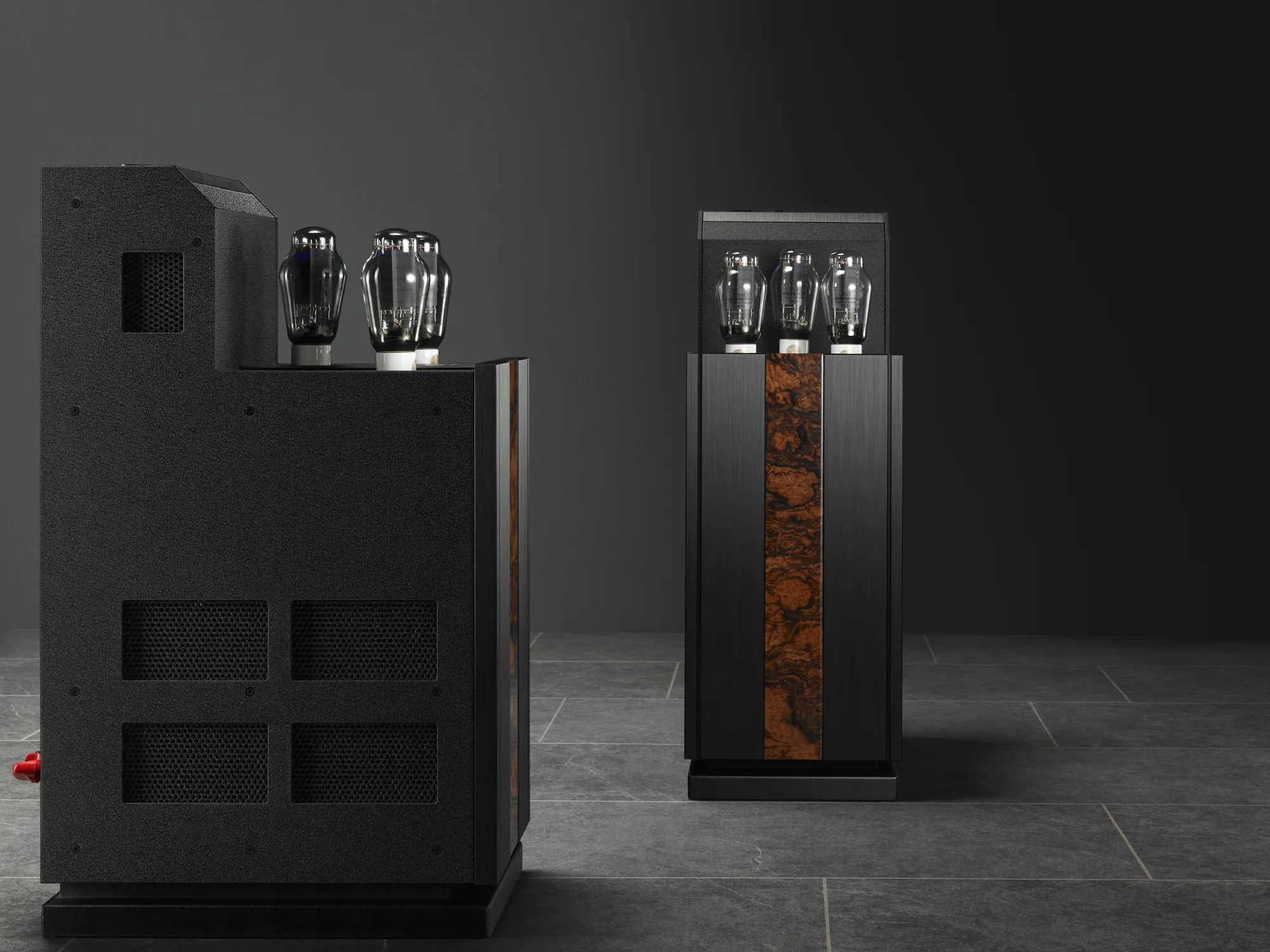
The claim that an output transformer determines more of a tube amplifier's character than the tubes do is not marketing on Octave's part — it is why the company exists as a transformer-winding operation first and an amplifier company second. Octave's proprietary output transformers are magnetic-field compensated, designed to remain linear down to 10 Hz (the V 16 Single Ended integrated makes this specification particularly explicit) and matched to the specific tube and circuit topology of each amplifier they sit in. Because Octave winds its own transformers, it can make circuit-level engineering choices — the push-pull pentode topology that has become an Octave signature, for instance — that would not be viable using off-the-shelf transformers from an external supplier. That vertical integration is the single biggest reason Octave products sound the way they do.
The Octave engineering signatures
Andreas Hofmann's engineering approach carries four recognisable signatures across the range. The push-pull pentode topology, developed over years to avoid the trade-offs of ultra-linear circuits without the compromises of single-ended designs — greater naturalness, better stability with complex loudspeaker loads, more authority than tube amplifiers traditionally deliver. Zero Feedback circuit design, most visibly in the Jubilee preamplifier — praised by the press on launch as the world's best-sounding preamplifier. Automatic biasing, which appeared first in the V 50 integrated and now covers the range. And soft-start protection, so switching an Octave amplifier on does not shorten tube life the way older tube amplifier power-up cycles did.
The Octave line at LMC
LMC carries the full current Octave range.
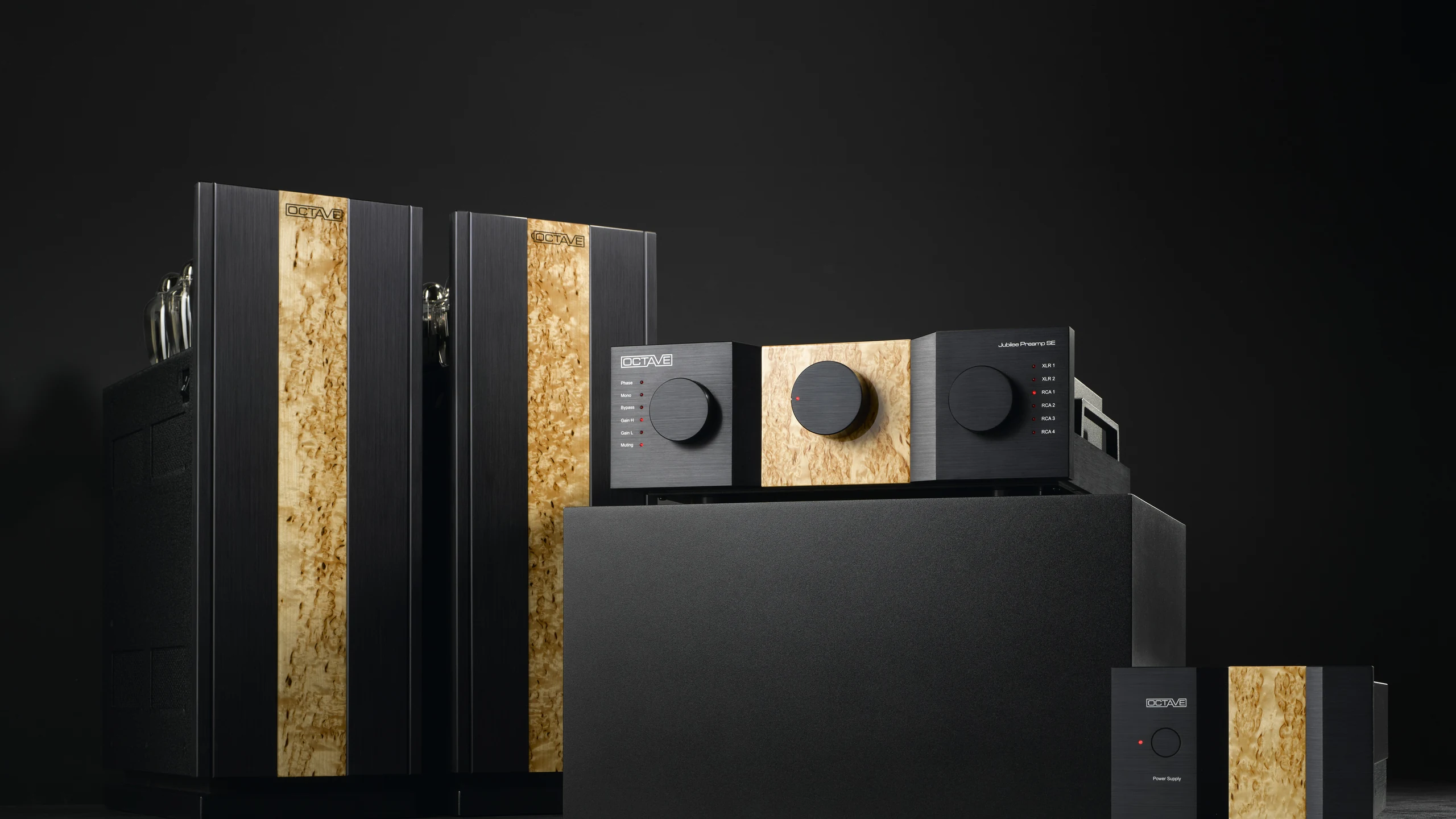
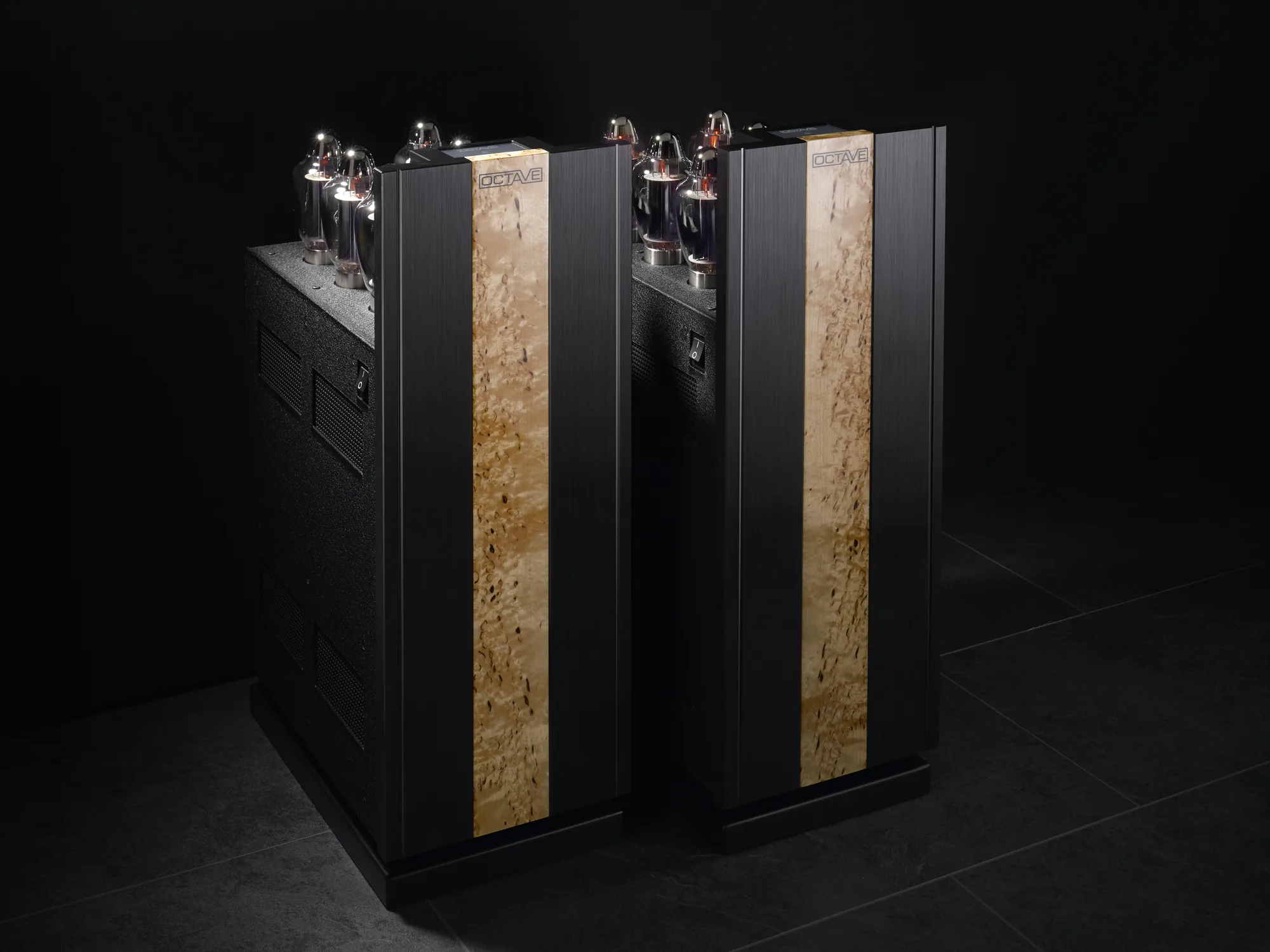
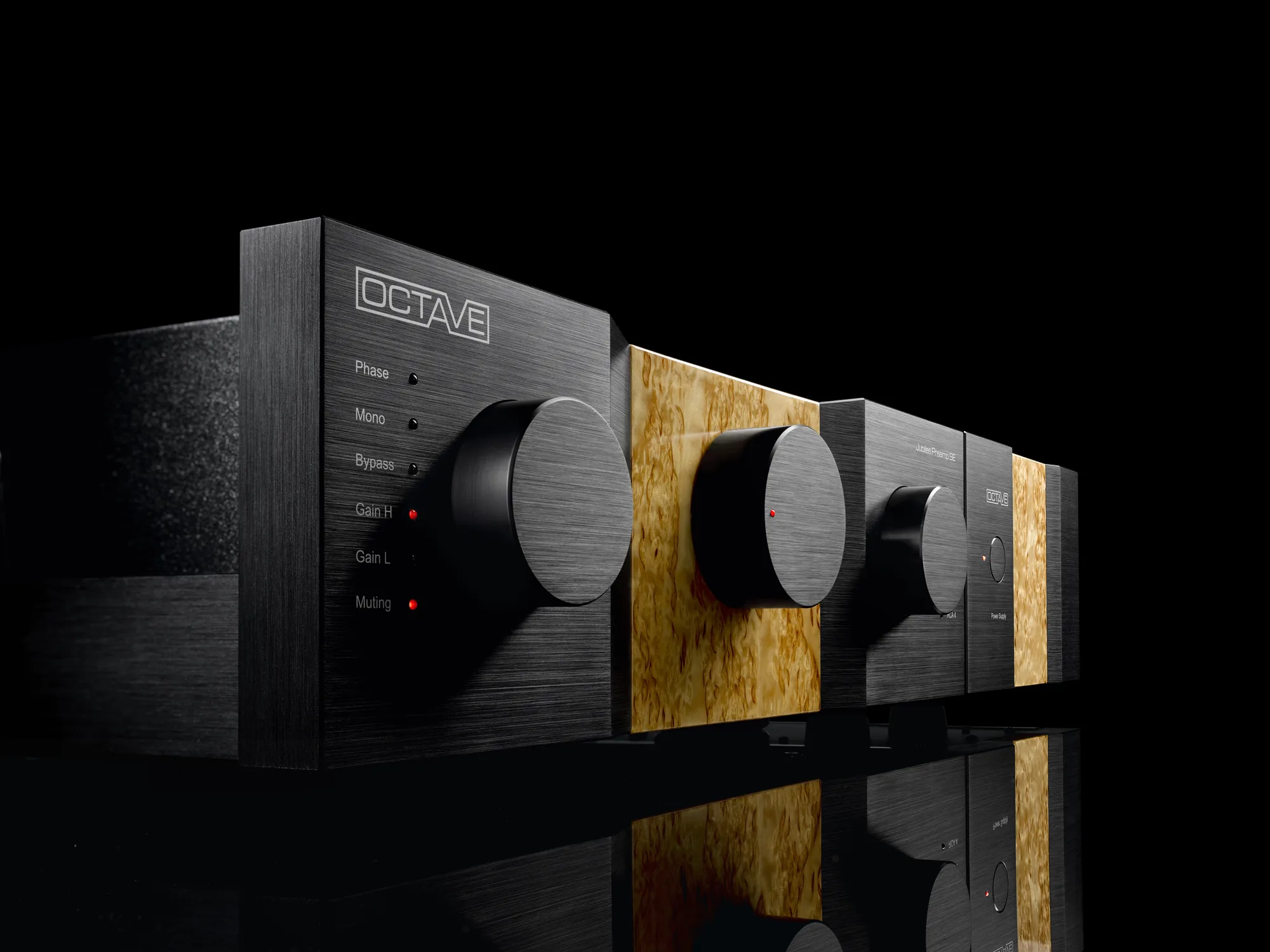
The Jubilee line is the reference — Andreas Hofmann's own statement of what a tube system can be when it is built without commercial constraint. The Jubilee Preamplifier (and current Jubilee Preamplifier SE) is the Zero Feedback design that established the range. The Jubilee Mono Ultimate and Jubilee 300B single-ended monoblock cover mono power amplification, and the newest addition — the Jubilee Class A Mono, which had its North American debut at the beginning of 2026 — is the current top of the range at approximately US$85,000 per pair.
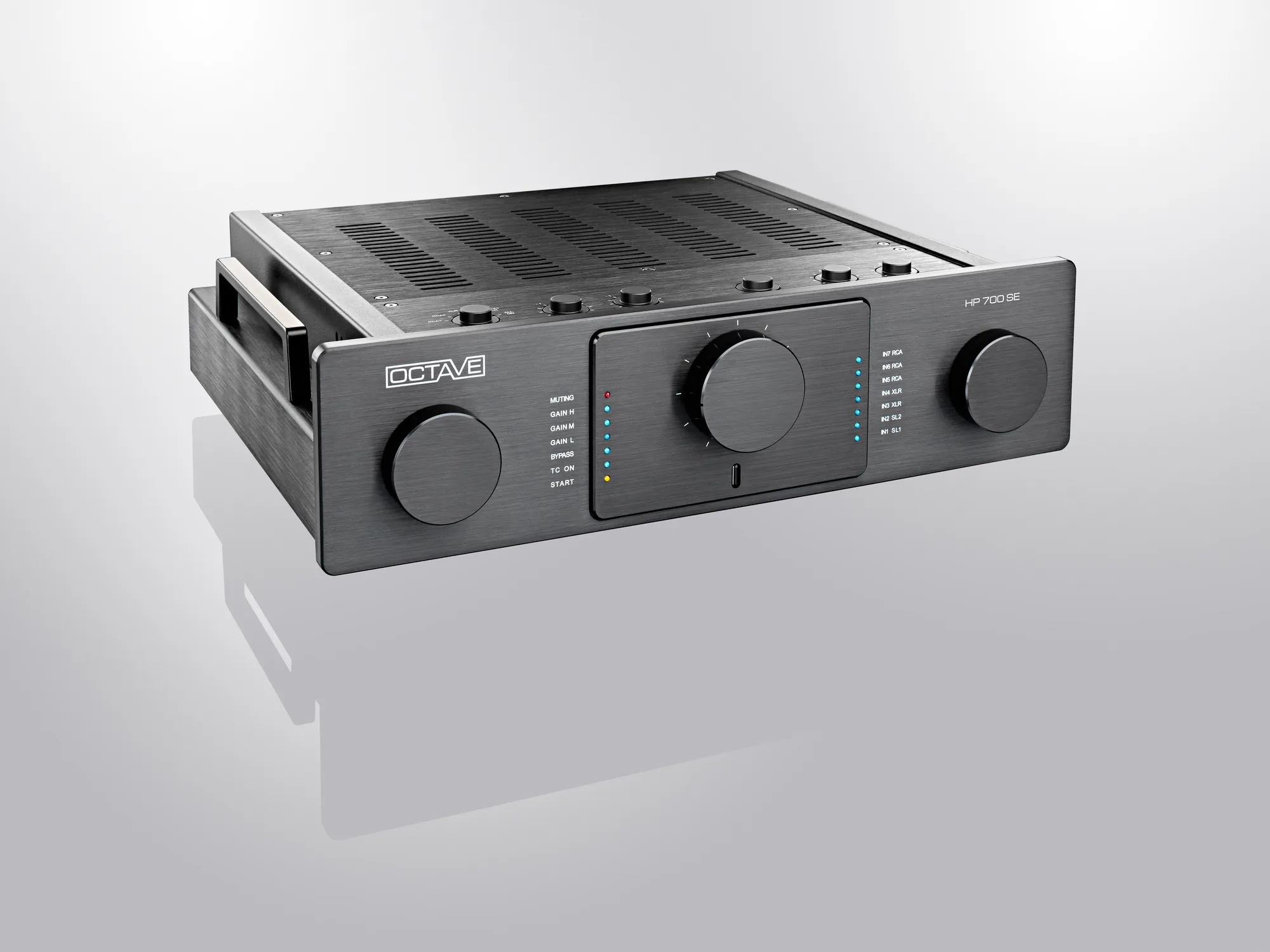
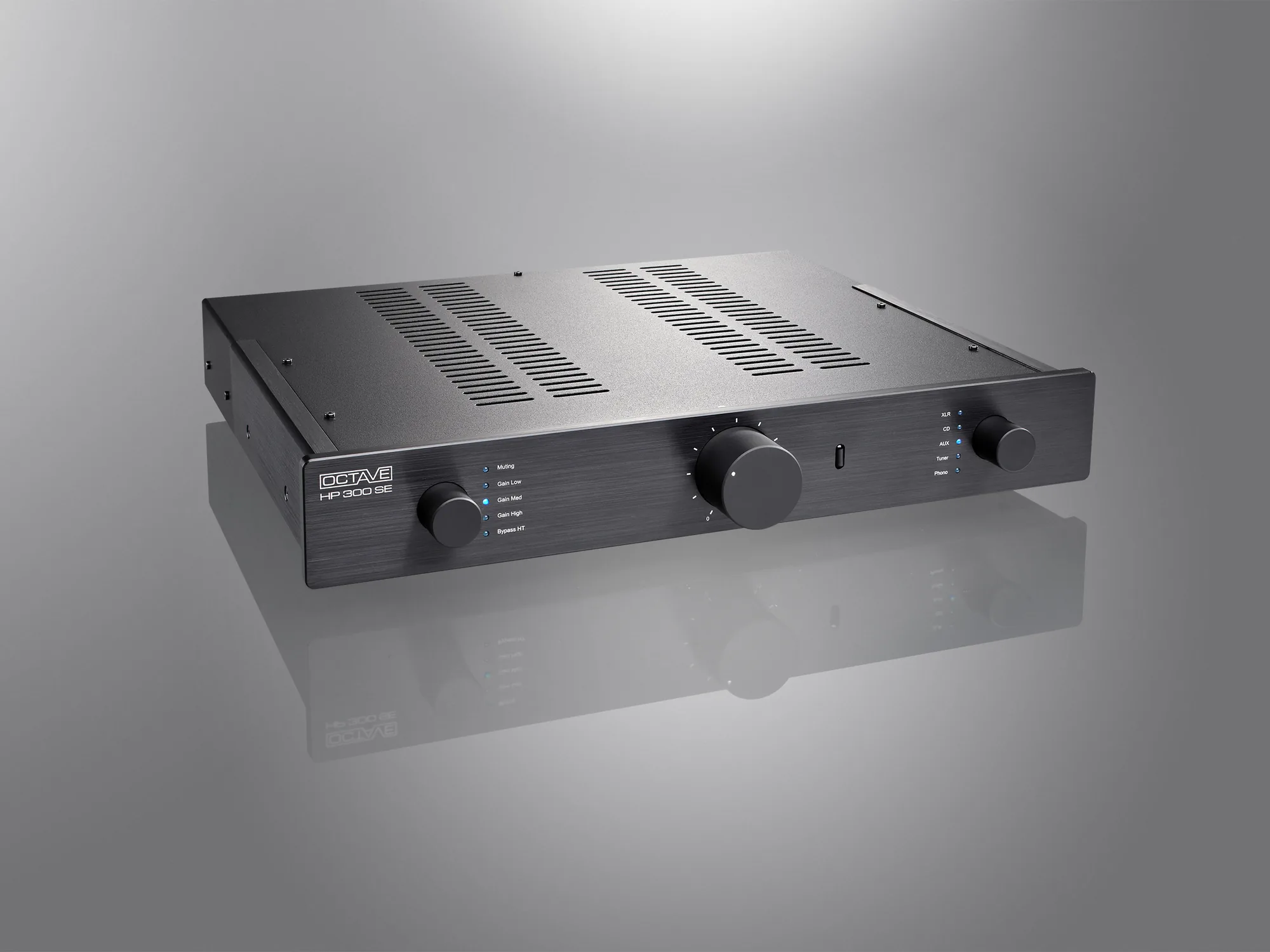
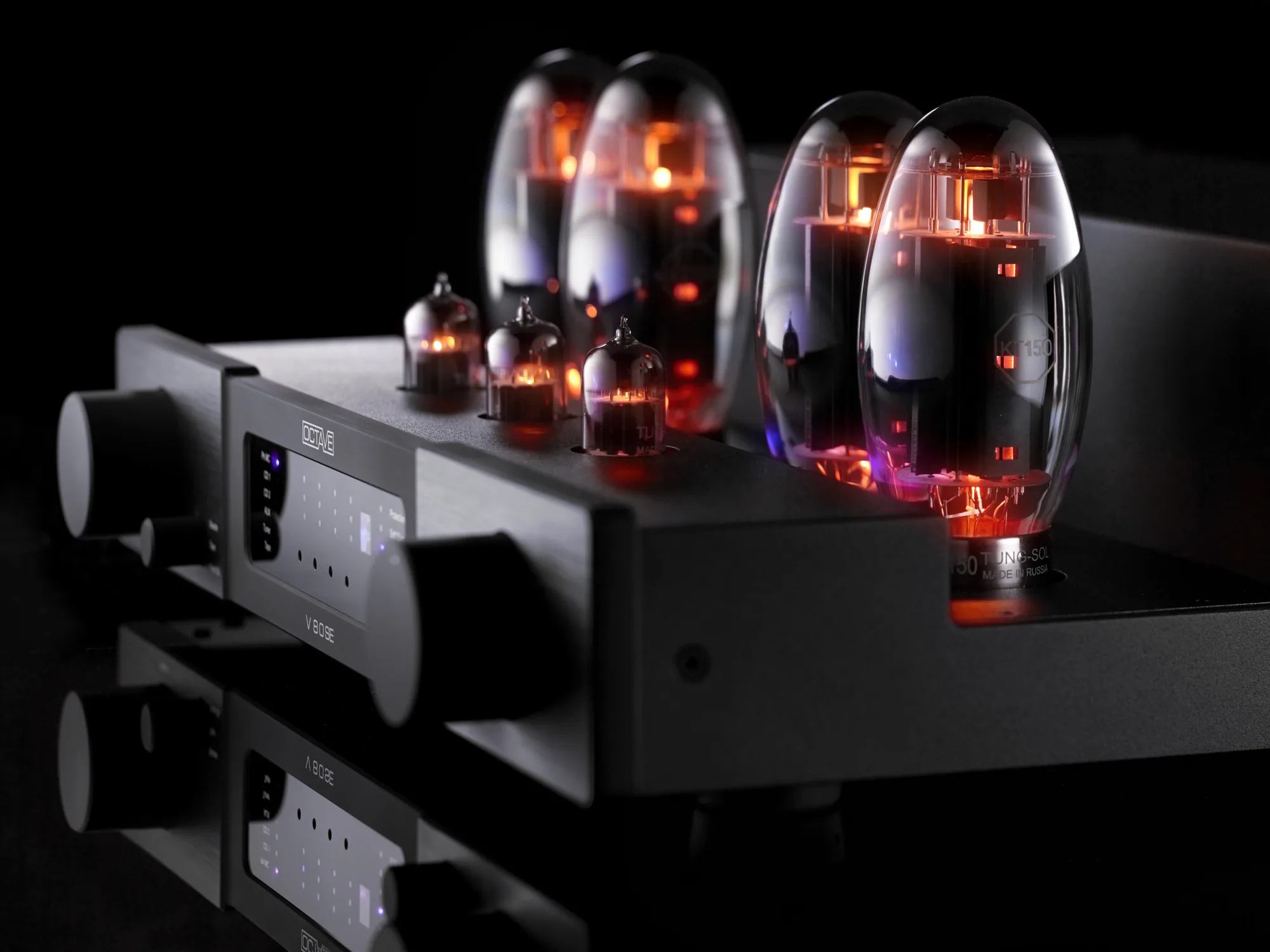
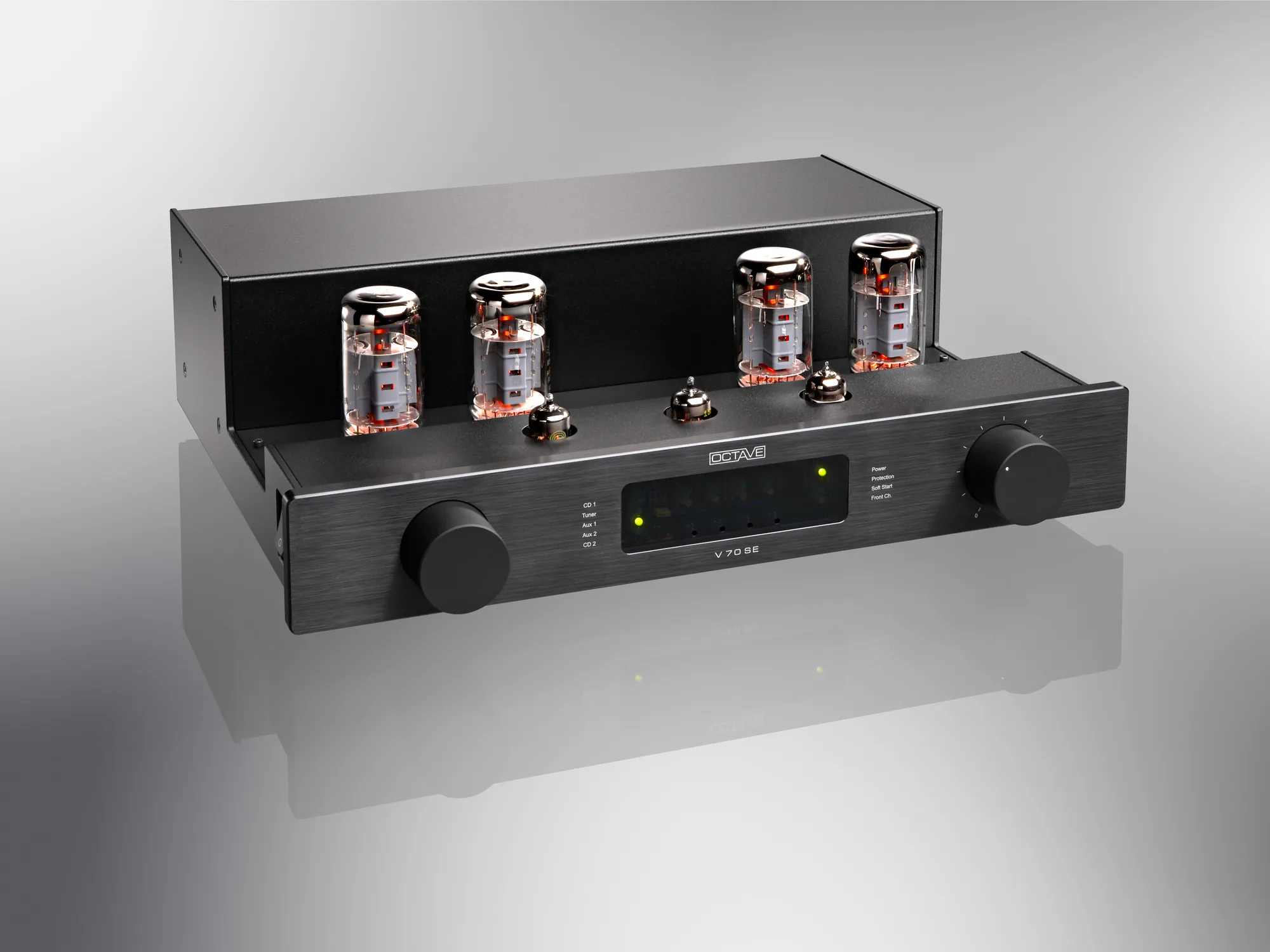
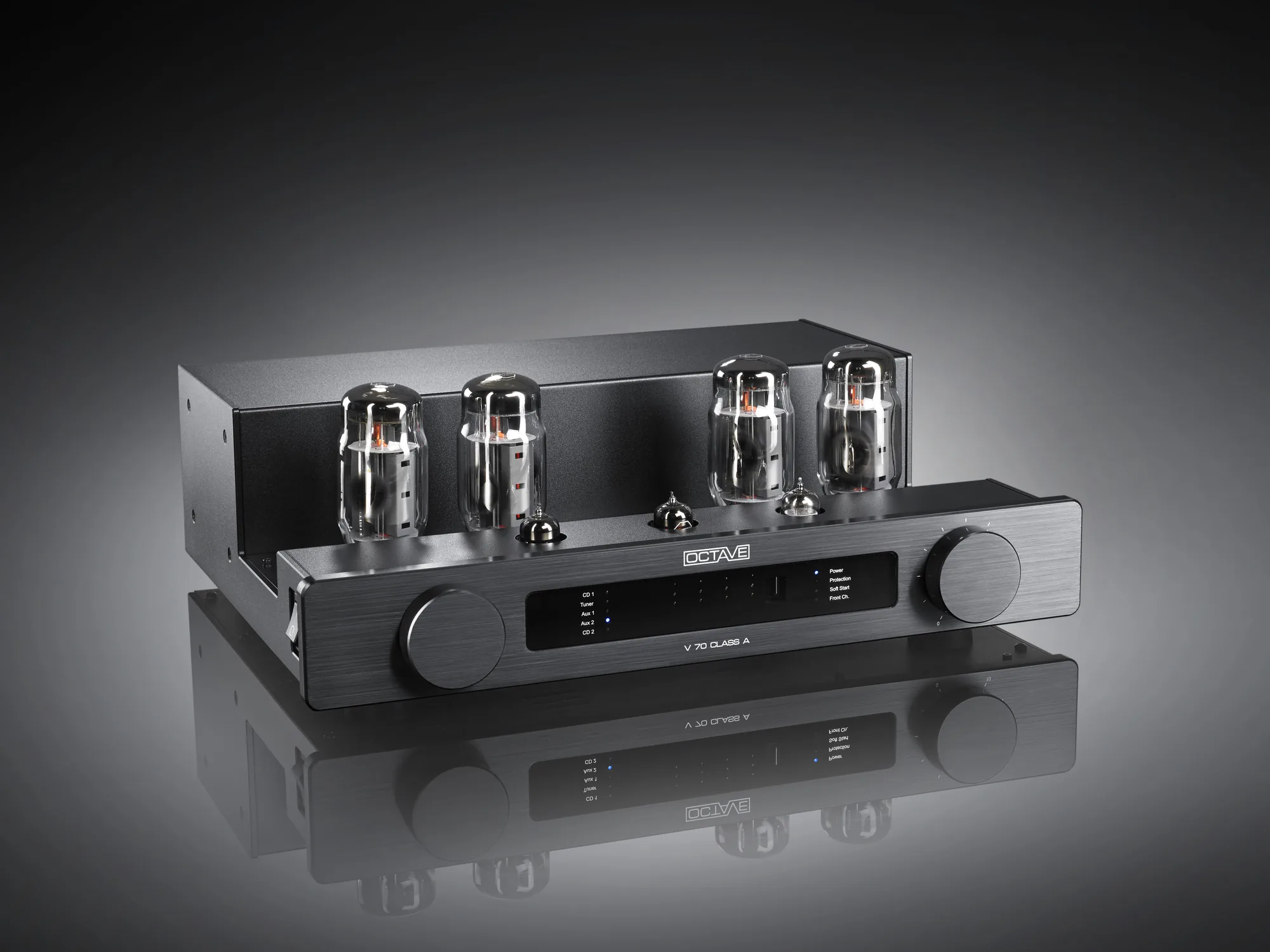
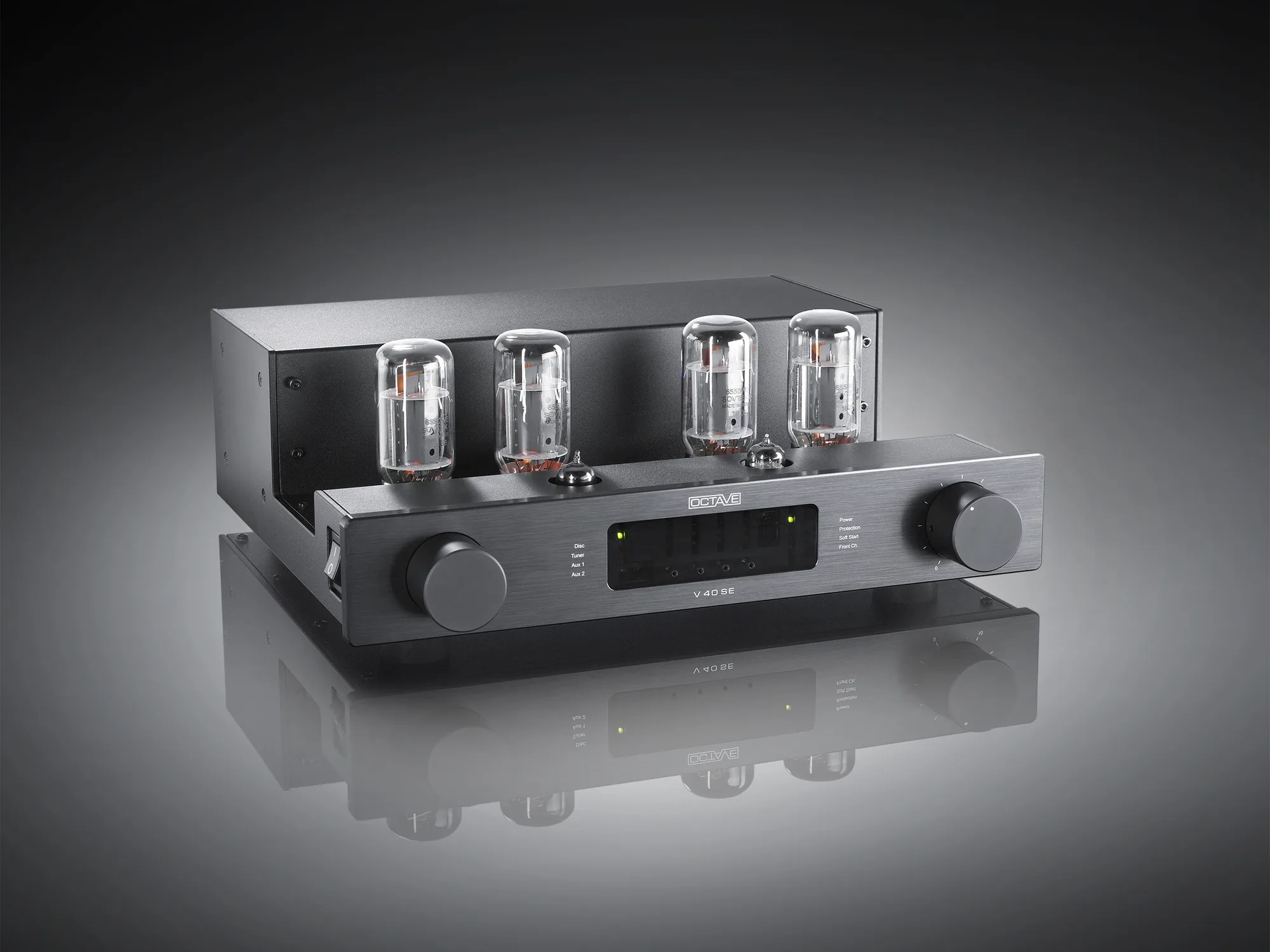
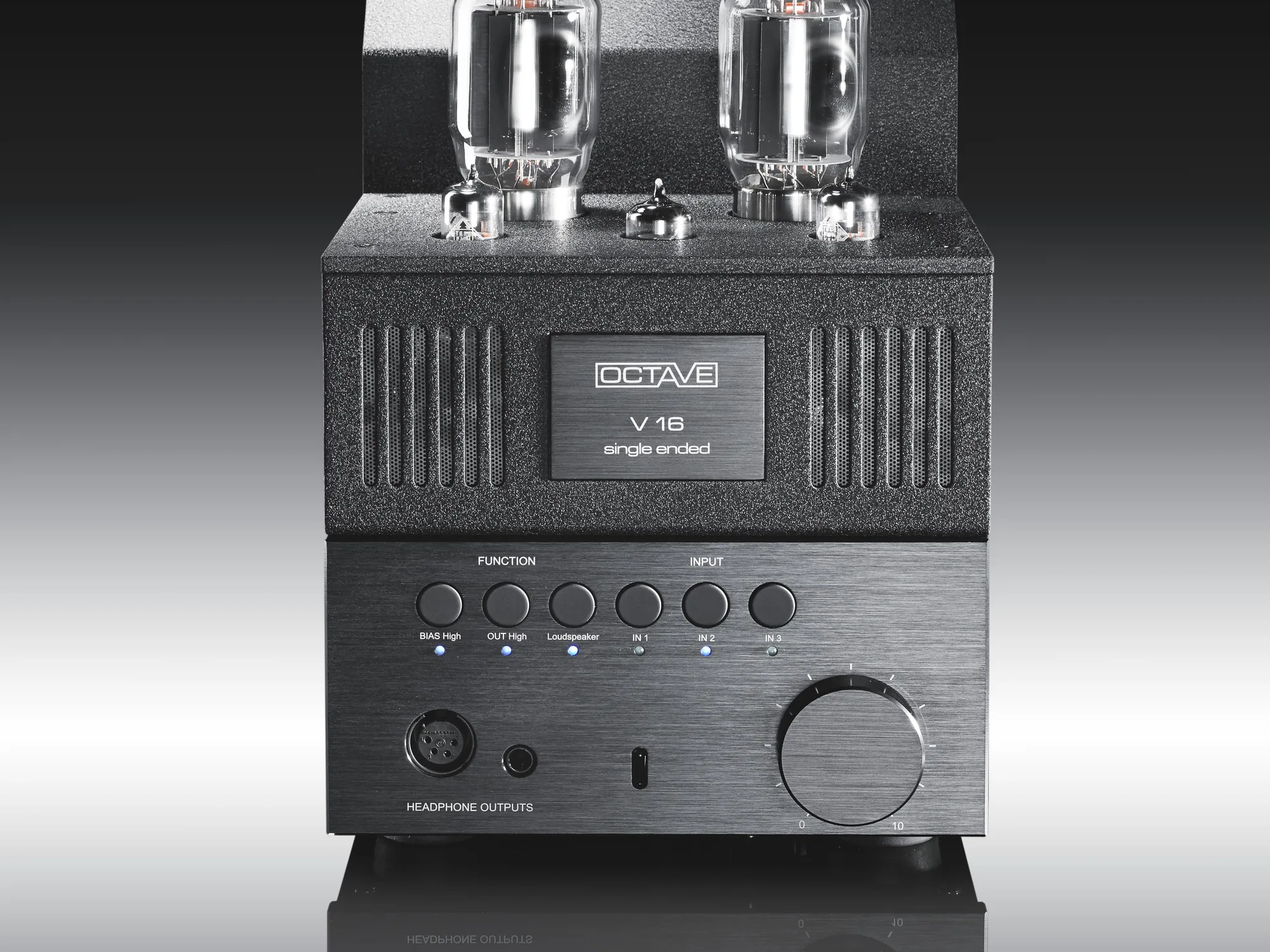
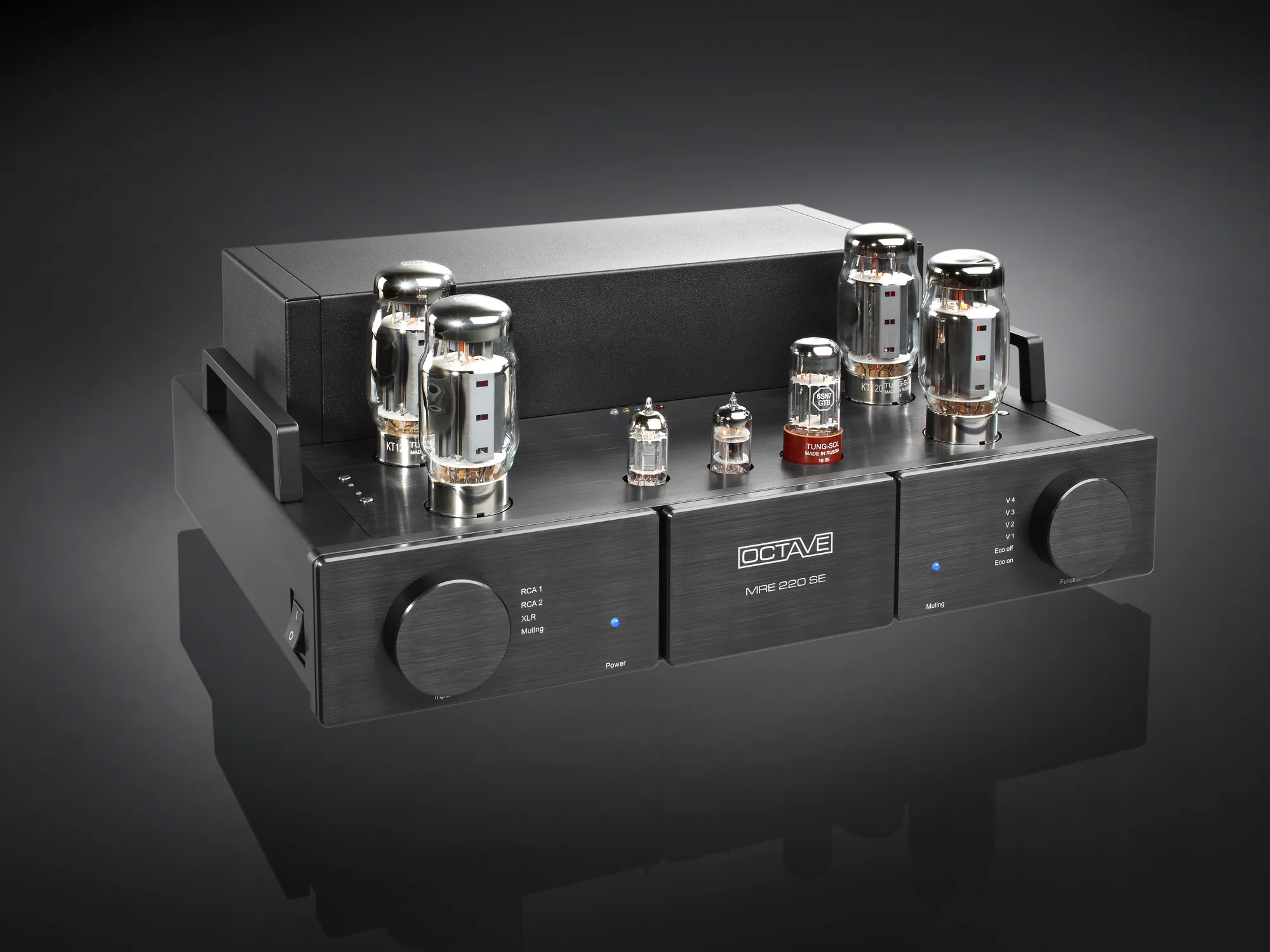
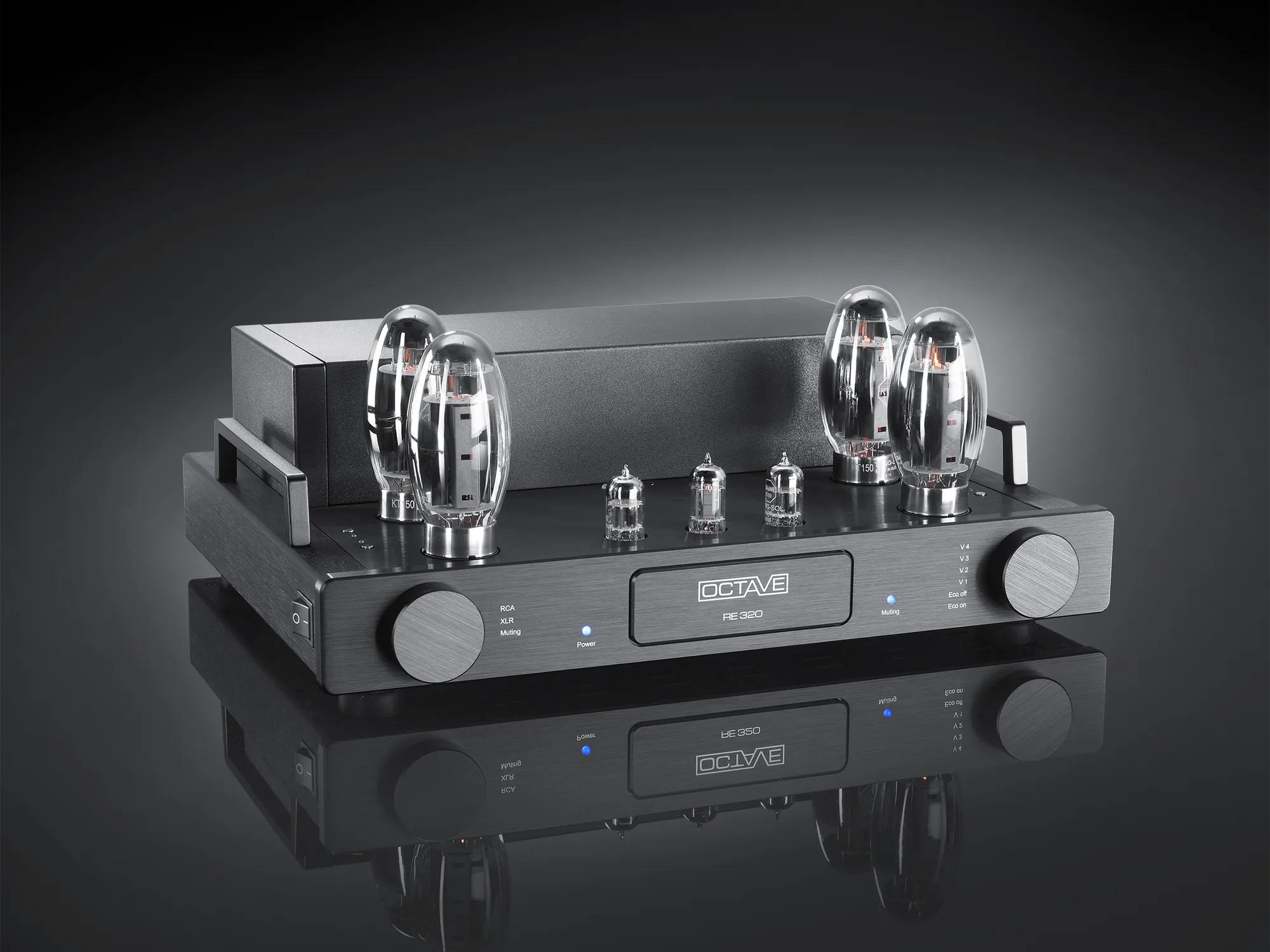
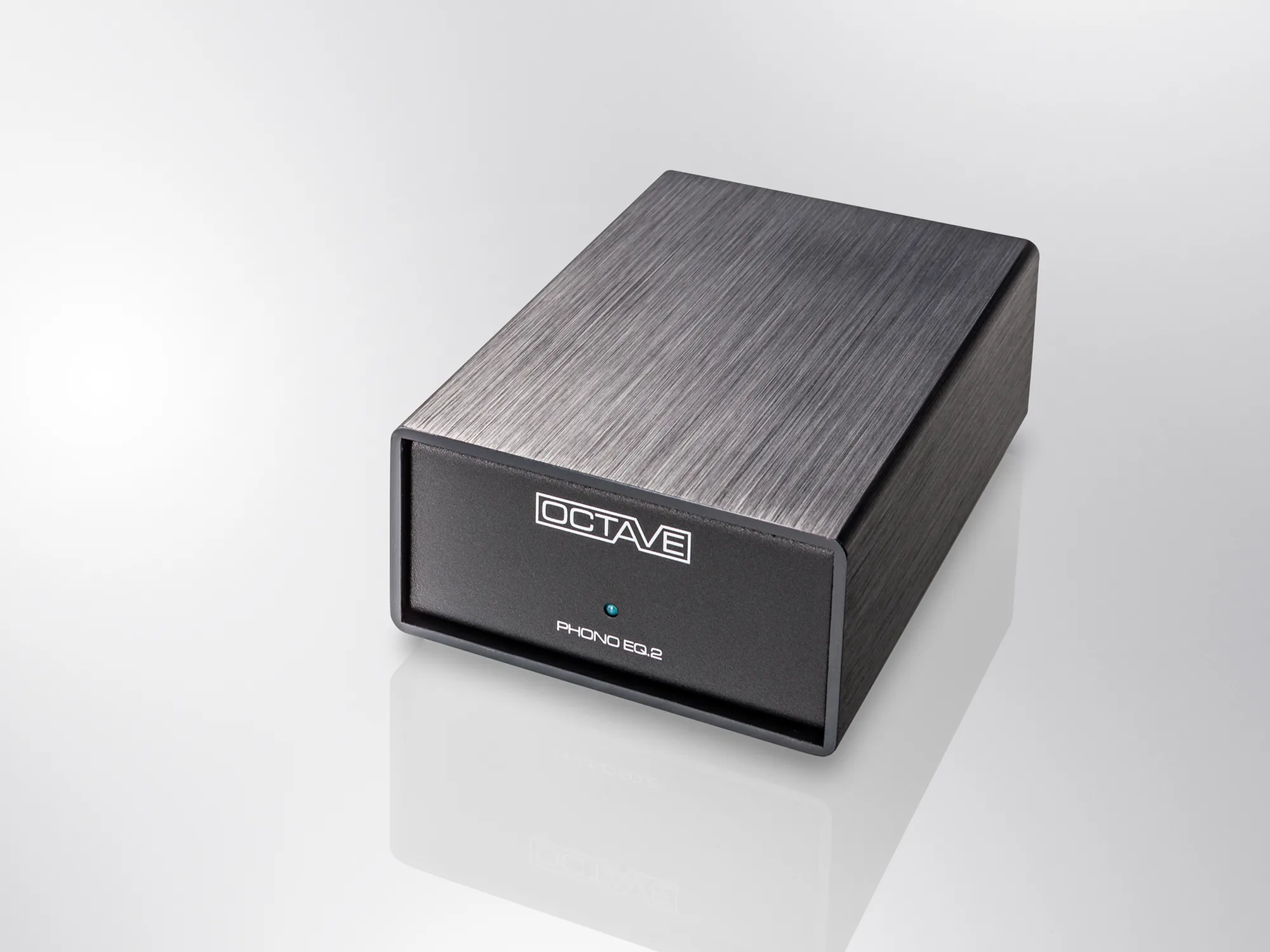
Below the Jubilee tier, the V-series integrated amplifiers cover the working reference-tier and mid-tier positions: V 80 SE and V 70 SE at the top, V 70 Class A (with Dynamic Bias Control) as a push-pull pentode Class A design, V 40 SE as a compact reference, and the V 16 Single Ended integrated as a single-ended triode with a headphone output. In separates, the HP 700 SE and HP 300 SE preamplifiers both feature transformer outputs and are optionally available with a built-in phono stage; the MRE 220 SE monoblocks and the RE 320 stereo power amplifier cover power amplification; and the Phono EQ.2 is Octave's modular phono stage, configurable for any cartridge from moving magnet through low-output moving coil.
Black Box and Super Black Box
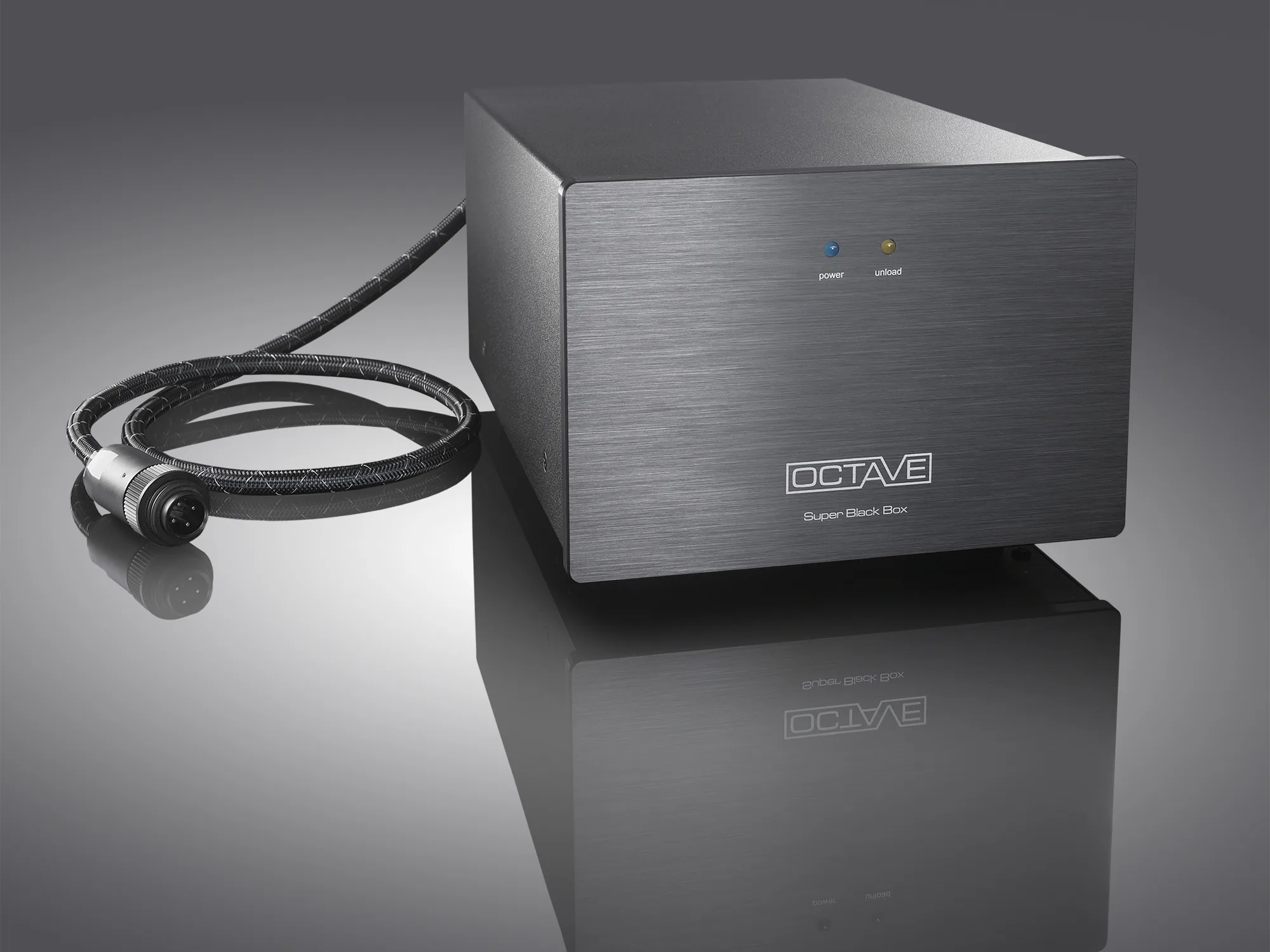
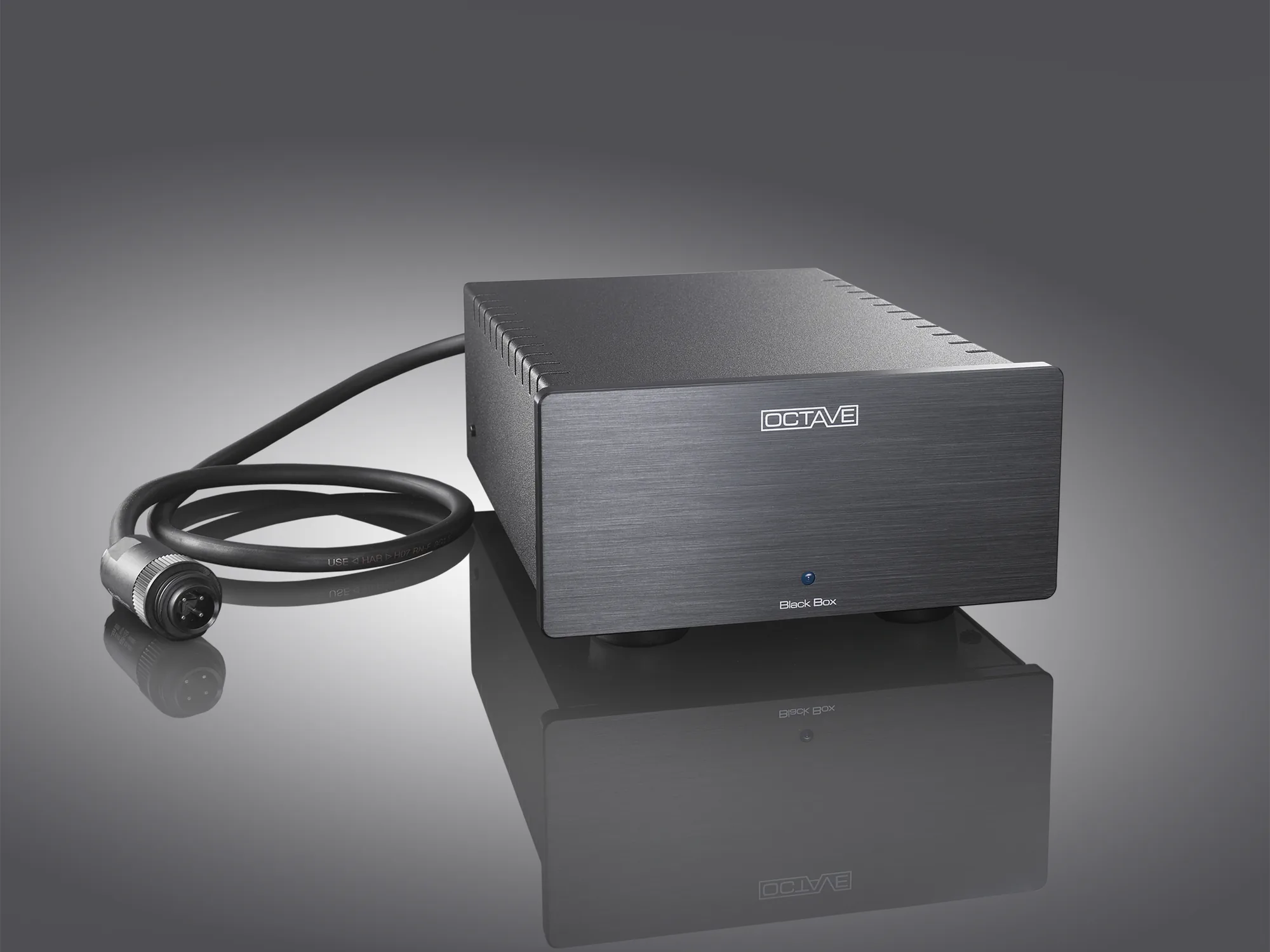
The most distinctive item in the Octave range does not sit inside any amplifier chassis. The Black Box and Super Black Box are external capacitance modules — dedicated passive power-supply reservoirs that plug into compatible Octave integrated and power amplifiers to enlarge the available reserve. Andreas Hofmann developed the concept as an upgrade path for existing owners: buy the amplifier, live with it for a year, and if the system reveals a need for more dynamic authority (particularly on complex multi-way loudspeakers with demanding impedance behaviour), add a Black Box or Super Black Box without replacing the amplifier itself. The effect on bass control and dynamic headroom is the kind that is obvious in an A/B comparison rather than subtle, which is why we demonstrate it switched in and out on demand.
The Octave Room at LMC
LMC has been an Octave dealer since 2026 and set up the Scottsdale Octave Room as a permanent Octave-anchored reference system. The room drives Wilson Audio Sasha V loudspeakers with a pair of Octave Jubilee Mono Ultimate monoblocks, an Octave Jubilee Preamplifier SE, an Octave Phono EQ.2 for analogue, and a Linn Selekt DSM Classic Hub for digital streaming. This is not an Octave system built from what happened to be on the floor. It is a matched Octave chain from the phono stage through the monoblocks, with a loudspeaker (Sasha V) chosen for the specific way it reveals what Andreas Hofmann's push-pull pentode circuits and in-house transformers actually do with musical material.
Where to start
For a first serious Octave audition, the V 16 Single Ended integrated is the honest entry point — a single-ended triode integrated with a headphone stage, the magnetic-field-compensated 10-Hz-linear output transformer, and enough of the Octave signature to establish whether the sound is what the listener actually wants before moving further up. For a working reference-tier integrated system, the V 70 SE, V 70 Class A, or V 80 SE cover the mid-tier convincingly; the choice among them is about the specific loudspeaker match and personal taste more than any absolute quality ordering. For a first move into separates, the HP 300 SE preamplifier paired with the MRE 220 SE monoblocks is the natural first Octave separates system. For the buyer for whom the Jubilee is the right answer, the Jubilee Preamplifier SE plus Jubilee Mono Ultimate is exactly what the Octave Room at LMC is set up to reveal.
Tube ownership without the ritual
One of the reasons Octave has quietly become the tube amplifier brand for buyers who want the sound without the fuss is that Octave's automatic biasing, soft-start protection and standardised tube complement mean tube replacement does not require a technician, a meter, or a service call. Pull the old tubes, install the new ones, power up. In practical terms, an Octave amplifier is closer to a solid-state ownership experience than any other tube amplifier at this level.
What to listen for
Two tests are worth running deliberately in an Octave audition. First, the Black Box comparison: the same amplifier, same recording, same loudspeaker load, with the Black Box or Super Black Box switched in and then out. The difference in dynamic authority on the low end and the way the amplifier holds together during complex passages is where the external capacitance reservoir earns its place in the range. Second, the Jubilee against a top solid-state reference: the Jubilee Mono Ultimate in the Octave Room, and the closest solid-state equivalent available in the same session, on the same loudspeakers, at the same volume. Andreas Hofmann's transformer-heavy design renders tone colour and dynamic microcontrast in a specific way — not automatically better than the best solid-state amplifiers on the same material, but different, and worth hearing side by side to know whether that difference is what your system is missing.
Walk in during business hours to hear the Octave Room in Scottsdale. Book ahead if the audition needs a specific Octave configuration warmed up against your own recordings — tube amplifiers reach full performance after an hour or two of warm-up, and Octave's are no different.
Frequently asked questions
What makes Octave different from other tube amplifiers?
Octave is fundamentally a transformer company as much as a tube amplifier company — the founding operation in 1968 was Karl Heinz Hofmann's Karlsbad transformer-winding factory, and more than half a century later Octave still winds every one of its own output transformers in-house at the same facility. The output transformer determines more of a tube amplifier's character than the tubes themselves do, and because Octave winds its own, Andreas Hofmann (the founder's son and sole designer since 2000) can make circuit-level engineering choices that would not be viable using off-the-shelf transformers from an external supplier. The Octave signatures follow from that: push-pull pentode topology developed to avoid the trade-offs of ultra-linear circuits without the compromises of single-ended designs, Zero Feedback circuit design most visibly in the Jubilee preamplifier, automatic biasing across the range, and soft-start protection so switching an Octave amplifier on does not shorten tube life. LMC has been an Octave dealer since 2026.
What is the Jubilee line, and can I hear it at LMC?
The Jubilee line is Andreas Hofmann's own statement of what a tube system can be when it is built without commercial constraint — the top of the Octave range. The Jubilee Preamplifier (and current Jubilee Preamplifier SE) is the Zero Feedback design that established the range and was praised by the press on launch as the world's best-sounding preamplifier. The Jubilee Mono Ultimate and Jubilee 300B single-ended monoblock cover mono power amplification, and the newest addition — the Jubilee Class A Mono, which had its North American debut at the beginning of 2026 — is the current top of the range at approximately US$85,000 per pair. LMC's Scottsdale Octave Room is set up as a permanent Octave-anchored reference system: Wilson Audio Sasha V loudspeakers driven by Jubilee Mono Ultimate monoblocks, Jubilee Preamplifier SE, Octave Phono EQ.2 for analogue, and a Linn Selekt DSM Classic Hub for digital streaming. Walk in during business hours to hear it, or book ahead if the audition needs the system warmed up against your own recordings.
Are Octave tube amplifiers difficult to maintain?
No — that is one of the reasons Octave has quietly become the tube amplifier brand for buyers who want the sound without the fuss. Octave's automatic biasing (which appeared first in the V 50 integrated and now covers the range), soft-start protection, and standardised tube complement mean tube replacement does not require a technician, a meter, or a service call. Pull the old tubes, install the new ones, power up. Soft-start ensures the power-up cycle does not shorten tube life the way older tube amplifier designs did. In practical terms, an Octave amplifier is closer to a solid-state ownership experience than any other tube amplifier at this level — you get the tone colour and dynamic microcontrast of a well-designed tube circuit without the ritual most tube amplification traditionally requires.
What are the Black Box and Super Black Box, and do they really make a difference?
The Black Box and Super Black Box are external capacitance modules — dedicated passive power-supply reservoirs that plug into compatible Octave integrated and power amplifiers to enlarge the available reserve. Andreas Hofmann developed the concept as an upgrade path for existing owners: buy the amplifier, live with it for a year, and if the system reveals a need for more dynamic authority (particularly on complex multi-way loudspeakers with demanding impedance behaviour), add a Black Box or Super Black Box without replacing the amplifier itself. The effect on bass control and dynamic headroom is the kind that is obvious in an A/B comparison rather than subtle. LMC demonstrates the Black Box switched in and out on demand in the Octave Room — the fastest way to hear what an external capacitance reservoir actually does to a tube amplifier's low-end grip and its behaviour during complex musical passages.
Which Octave amplifier is right for my system?
The right entry point depends on the loudspeakers you're already driving and how far up the range the system is already scaled. For a first serious Octave audition, the V 16 Single Ended integrated is the honest entry point — a single-ended triode integrated with a headphone stage, the magnetic-field-compensated 10-Hz-linear output transformer, and enough of the Octave signature to establish whether the sound is what you actually want. For a working reference-tier integrated system, the V 70 SE, V 70 Class A, or V 80 SE cover the mid-tier convincingly; the choice among them is about the specific loudspeaker match and personal taste more than any absolute quality ordering. For a first move into separates, the HP 300 SE preamplifier paired with the MRE 220 SE monoblocks is the natural first Octave separates system. For the buyer for whom the Jubilee is the right answer, the Jubilee Preamplifier SE plus Jubilee Mono Ultimate is exactly what the Octave Room at LMC is set up to reveal. Share the loudspeakers you're driving and we'll shortlist the right amplifier before you commit.
Can I hear Octave against solid-state on the same speakers?
Yes, and that is one of the two comparisons worth running deliberately in an Octave audition. The Jubilee Mono Ultimate in the Scottsdale Octave Room can be compared directly against the closest solid-state reference available in the same session, on the same Wilson Sasha V loudspeakers, at the same volume. Andreas Hofmann's transformer-heavy design renders tone colour and dynamic microcontrast in a specific way — not automatically better than the best solid-state amplifiers on the same material, but different, and worth hearing side by side to know whether that difference is what your system is missing. Book ahead so the room can be warmed up (tube amplifiers reach full performance after an hour or two of warm-up) and the comparison configured against your own recordings before you arrive.
The Lineup
Explore the Range
Experience The Brand