Brand
Magnepan
Full-range planar magnetic loudspeakers — handbuilt in White Bear Lake, Minnesota, since 1969.
Authorized Dealer — Scottsdale & Tempe, Arizona
Trade-in credit toward new purchases · Full installation and calibration · Walk in during business hours or book ahead
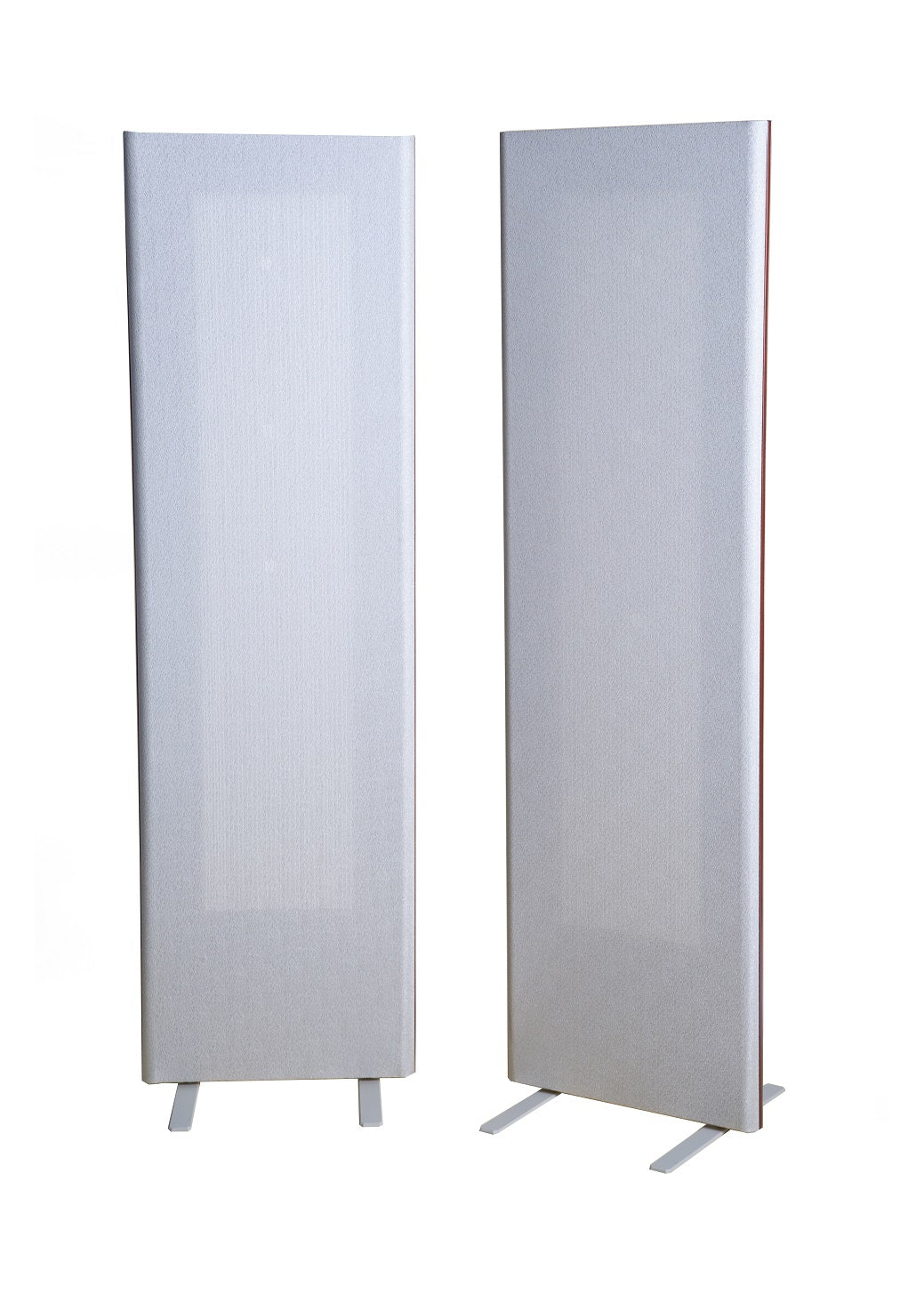
See what's on demonstration now ↓Magnepan has built loudspeakers in White Bear Lake, Minnesota since 1969, and the operating principle has not changed in that time. A sheet of Mylar film, thinner than a human hair, carries bonded aluminium conductors and sits inside a magnetic field. The entire surface moves as one. There is no cone, no voice coil, no cabinet — and therefore none of the stored energy, box coloration or diffraction that every enclosed loudspeaker spends its engineering budget trying to suppress.
Fifty-seven years of continuous production on a single idea is unusual in this industry, and it has produced a company with an unusual relationship to its own history. The Tympani series gave way to the 20.7 and 30.7. The MG designations were dropped — the MG-I became the 1.7i, the MG-III the 3.7i — and the original wire-on-Mylar construction gave way to aluminium foil bonded to Mylar, the quasi-ribbon technology the current range is built on. Everything is still made to order in Minnesota.
The dipole planar premise
What the construction buys is a particular kind of realism, and it comes from two properties working together.
The first is mass. A conventional driver has a cone, a voice coil and a former, all of which have to be accelerated and then stopped. A Magnepan diaphragm is a film with foil bonded to it, driven across its whole area rather than pushed from a point. There is very little to accelerate and very little momentum to arrest, which is why the leading edge of a note arrives without overshoot and the decay stops when the recording stops.
The second is radiation pattern. A Magnepan is a dipole line source — it radiates equally from both faces, out of phase, and the null at the sides means far less energy is thrown at the nearest side walls than a box loudspeaker produces. The rear wave arrives at the listener delayed and diffused rather than as an early reflection. That is the source of the spatial quality Magnepan owners describe and the reason the loudspeakers need distance behind them. A Maggie pushed against a wall is a Maggie with its defining characteristic removed.
All Magnepans are four-ohm designs at around 86 dB sensitivity, with a phase angle close to zero across the audio band. That combination is easy to drive in the sense that the amplifier is never fighting a reactive load, and demanding in the sense that it wants real current. The useful test of a candidate amplifier is whether it roughly doubles its rated power from eight ohms into four. If it does not, the power supply will run out before the loudspeaker does.
The Magnepan line at LMC
The range is a single architecture scaled, which makes choosing between models unusually rational: the larger the panel, the more air it moves for a given excursion, and the more headroom it has before the diaphragm is working hard.
The LRS+ is the entry point — a simple two-way quasi-ribbon panel, and the model that has done more than any other to introduce people to the technology. The .7 is the same architecture scaled up, with the extra panel area buying headroom and low-frequency extension. Above them, the 1.7i and 2.7i continue the quasi-ribbon approach at increasing size.
The 3.7i is the first model in the floor-standing line to carry Magnepan's true ribbon tweeter alongside quasi-ribbon bass and midrange drivers, and it is where the range changes character rather than merely scale — the true ribbon extends response to around 40 kHz where the quasi-ribbon designs reach 18 to 25 kHz. The 20.7 uses a push-pull arrangement with magnets on both sides of the bass and midrange panels. The 30.7, the flagship, is a four-panel system per channel using totally separate sheets of Mylar for each driver, so each can be optimised for its own frequency range rather than compromised into a shared diaphragm.
Most models are additionally offered in X-Series form, which replaces the crossover components and stiffens the frame rather than altering the driver. The range sits with LMC's loudspeakers, and the amplification question is answered on the power amplifiers page.
Magnepan in the Tempe showroom
Magnepan is set up for demonstration at the Tempe showroom, and Tempe is the right building for it. The rooms there are proportioned for two-channel listening rather than built as cinemas, which matters more for this loudspeaker than for almost anything else LMC carries — a dipole needs air behind it and a listening position far enough forward that the delayed rear wave arrives as ambience rather than as a second arrival.
It also sits in a building with an unusually wide range of amplification available in the same rooms: McIntosh across tube and solid state, Linn Klimax, Burmester, Octave. Because the loudspeaker's demands on an amplifier are specific and well understood, hearing a Magnepan on two or three genuinely different amplifiers in a single session is a more useful exercise here than a specification comparison on paper.
LMC as a Magnepan dealer since 2015
LMC has carried Magnepan since 2015, and the reason the brand sits alongside Wilson, Sonus faber and MBL rather than in a separate category is that it rewards the same discipline. Placement, amplification and room interaction decide what a Magnepan does far more than they decide what a box loudspeaker does. Get those right and the loudspeaker performs well above what its price suggests. Get them wrong and it sounds thin and vague, which is precisely the reputation the design has among people who have only heard it badly installed.
That is a setup conversation rather than a product conversation, and it is the same conversation LMC has about a reference system. Panels ask for room and placement, and repay both.
Where to start
Start with the largest model the room can genuinely accommodate rather than the one the budget suggests first. Panel area is the variable that matters most in this range, and a smaller Magnepan in a large room asks the diaphragm to work harder than a larger one would at the same level.
Bring the amplification question into the first conversation rather than the second. A Magnepan on an amplifier that cannot deliver current into four ohms is not a fair hearing of the loudspeaker, and it is the single most common reason people conclude the technology is not for them.
If the room cannot give a dipole two or three feet of clearance behind the panels, say so early. That constraint is not fatal but it changes which model makes sense, and it is better addressed before an audition than after a delivery.
What to listen for
First, listen to a solo voice or a single acoustic instrument, and pay attention to scale. A Magnepan reproduces a singer at roughly life size because the radiating surface is roughly life size. Voices should sit at their proper height and width rather than emerging from a point between two boxes. Once heard, the compression of scale that a small cone loudspeaker imposes becomes obvious.
Second, listen to massed strings. This is the material that most reliably separates a planar from a cone design. Strings on a box loudspeaker tend toward edge and glare at the top of the range; on a Magnepan they have texture — the sound of bow on string rather than the sound of a tweeter working. If the recording is good, the individual instruments in a section should remain individually locatable rather than merging into a single mass.
Third, listen to decay. Because the diaphragm is nearly massless, the end of a note is unusually clean. Take a piano recording with pedal, or a plucked double bass, and follow the note down. On most loudspeakers the cabinet contributes its own small tail; on a Magnepan the note simply stops. That absence is difficult to notice on first hearing and difficult to give up afterwards.
Walk in during business hours or book ahead if the audition needs the Tempe demonstration configured against a specific amplifier, or against your own material.
The Lineup
Explore the Range
Experience The Brand