Brand
HRS
Vibration control done seriously. Handbuilt in Buffalo, New York.
Authorized Dealer — Scottsdale & Tempe, Arizona
Trade-in credit toward new purchases · Full installation and calibration · Walk in during business hours or book ahead
See what's on demonstration now ↓Harmonic Resolution Systems was founded in the late 1990s in Buffalo, New York by Michael Latvis, whose engineering background is aerospace and defence isolation systems — the discipline that stops sensitive instrumentation from responding to structural vibration on aircraft, spacecraft, and missile guidance platforms. Latvis brought that discipline into high-fidelity playback on a single premise: vibration is the enemy of resolution, and the way to defeat it is against measured performance targets, not against subjective marketing claims. Every HRS product since has been designed against measured targets first, subjective listening evaluation second, and marketing story never.
Every HRS product is manufactured in the United States by hand from billet-machined aircraft aluminium and proprietary composite materials. HRS holds multiple US patents (10,045,615 on the VXR reference stand, 11,751,682 on the EXR family), and the listening test protocol — running from prototype through production sampling — includes destructive testing of finished units to verify manufacturing consistency. The result is a product line that quietly earns Product of the Year awards from The Absolute Sound and other reviewers without ever needing to talk about anything but vibration.
The vibration control premise
Vibration in an audio system arrives from three directions and does three different things. Structural vibration travels through the floor, up the rack, and into the component chassis — energy from footfalls, from subwoofers moving air, from the transformers in the amplifiers themselves. Airborne vibration modulates the chassis walls directly through the acoustic field the loudspeakers produce. Internal vibration comes from moving parts inside the component itself — transformer laminations, capacitor cases, disc-transport mechanisms. Each of these energy paths does something audible: it modulates the signal at the point where the electronics are trying to resolve the smallest voltage differences, and it degrades the resolution the component was designed to deliver.
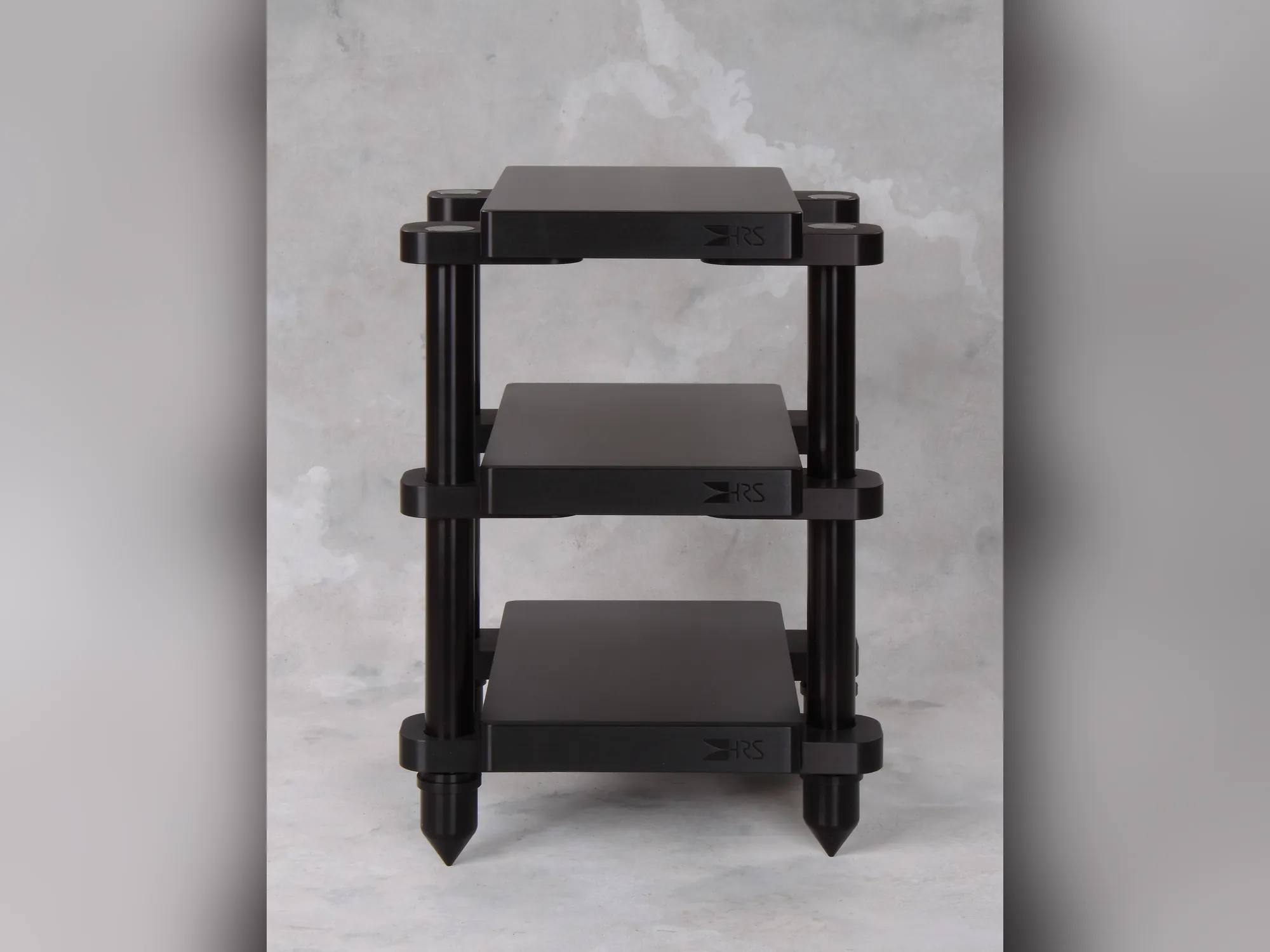
HRS’s answer is not a single product. It is three complementary product lines, each targeting a specific energy path. Audio Stands — the racks — address structural vibration through the floor and the rack itself. Isolation Bases sit between component and shelf to interrupt structural energy at the component boundary. Chassis Noise Reduction products control airborne and internal vibration at the chassis surface. Each line works standalone and works better in combination, and every Isolation Base loads directly into every HRS stand without modification, so the upgrade path is additive and the initial investment is preserved through every future system change.
Under all of it is a measurement discipline unusual in the audio industry. HRS designs against measured performance targets — vibration reduction figures at specific frequencies, in specific damping regimes, on specific components — with subjective listening evaluation as a secondary check. Production units are sampled and destructively tested to verify that the finished product measures the way the prototype measured. That discipline is the reason the same VXR stand tests the same at delivery as the one that shipped a decade ago.
The HRS line at LMC
LMC carries the HRS Audio Stands and Isolation Bases on the racks and isolation page — the two lines relevant to serious two-channel and reference cinema systems.
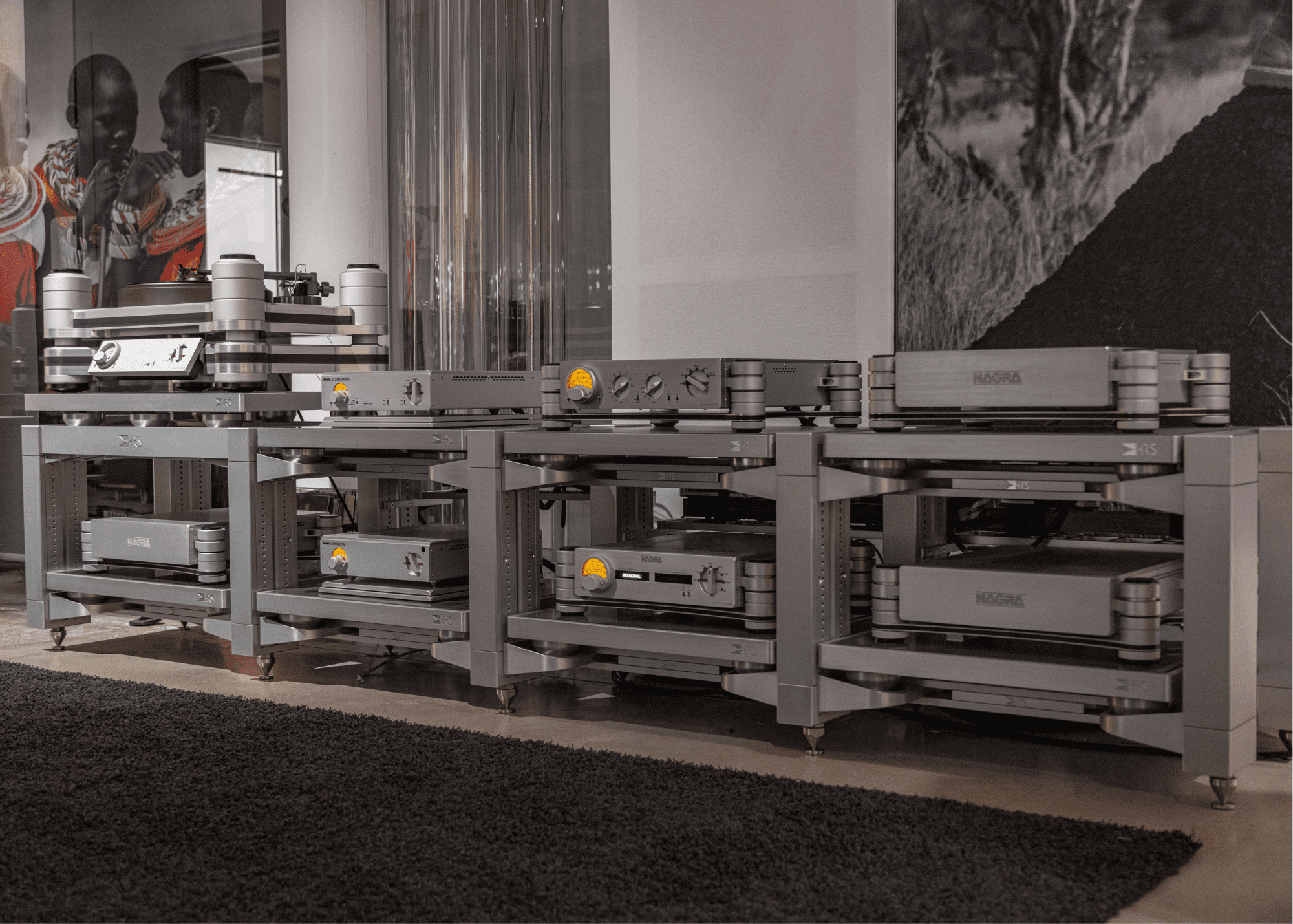
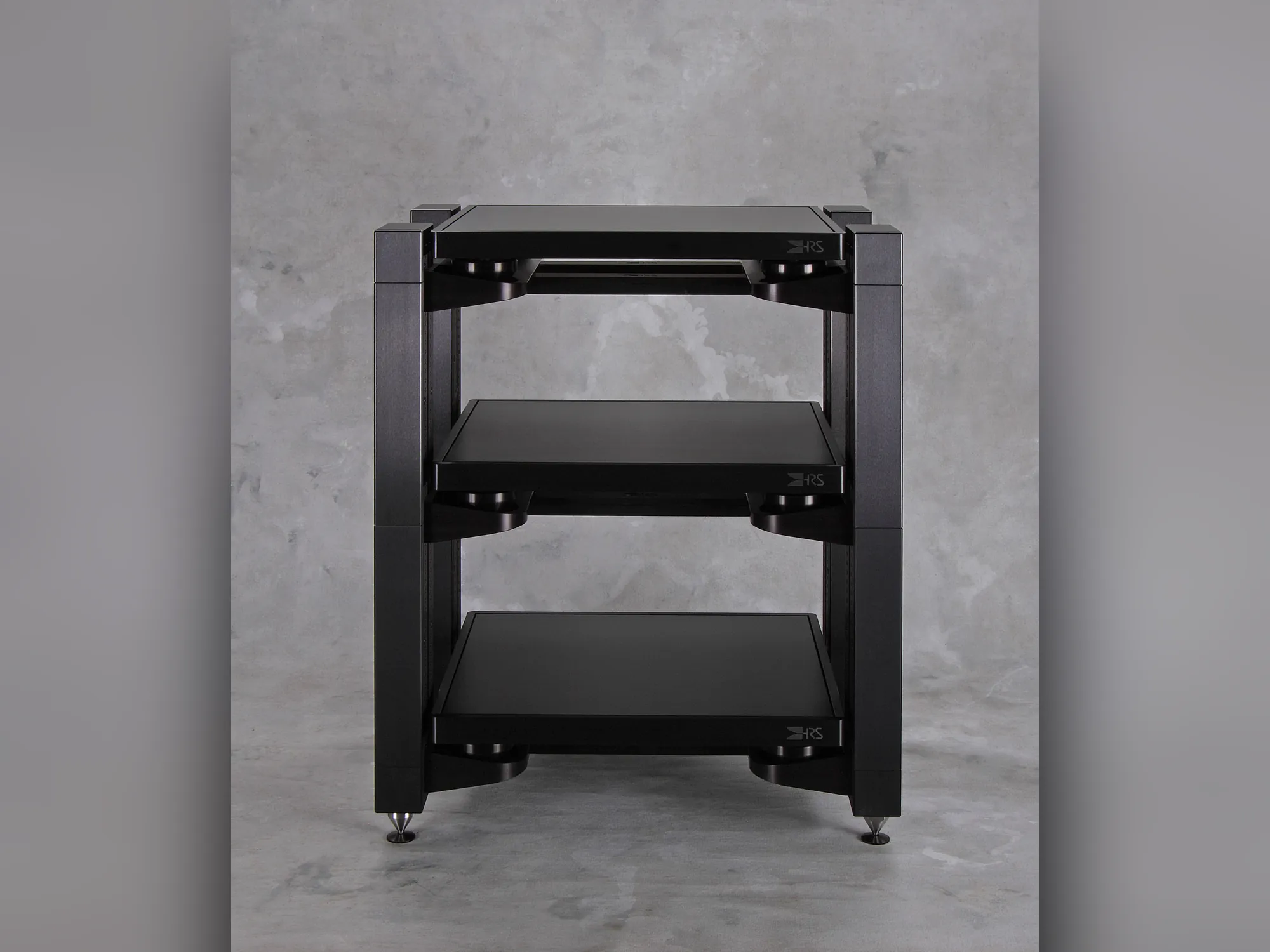
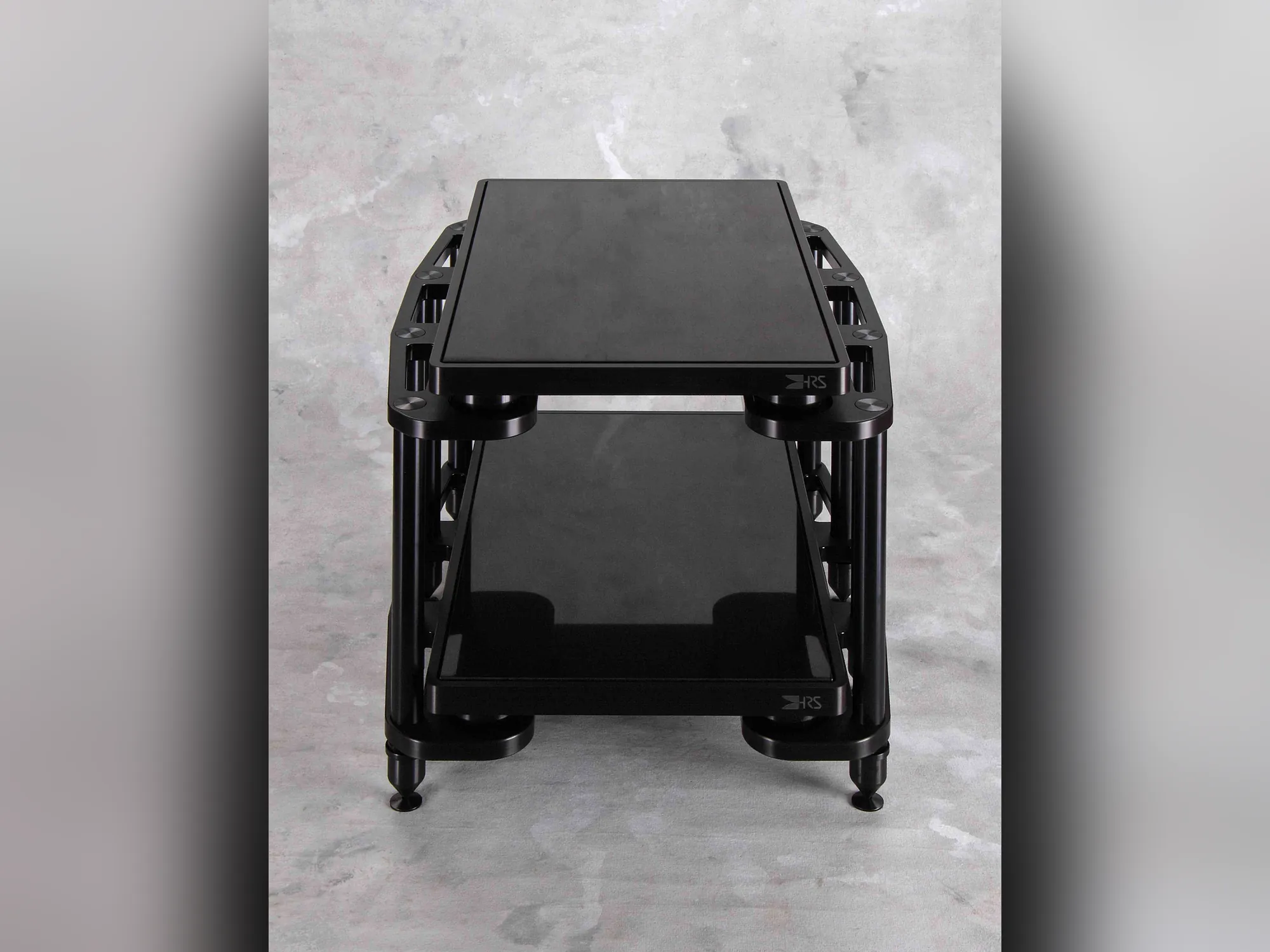
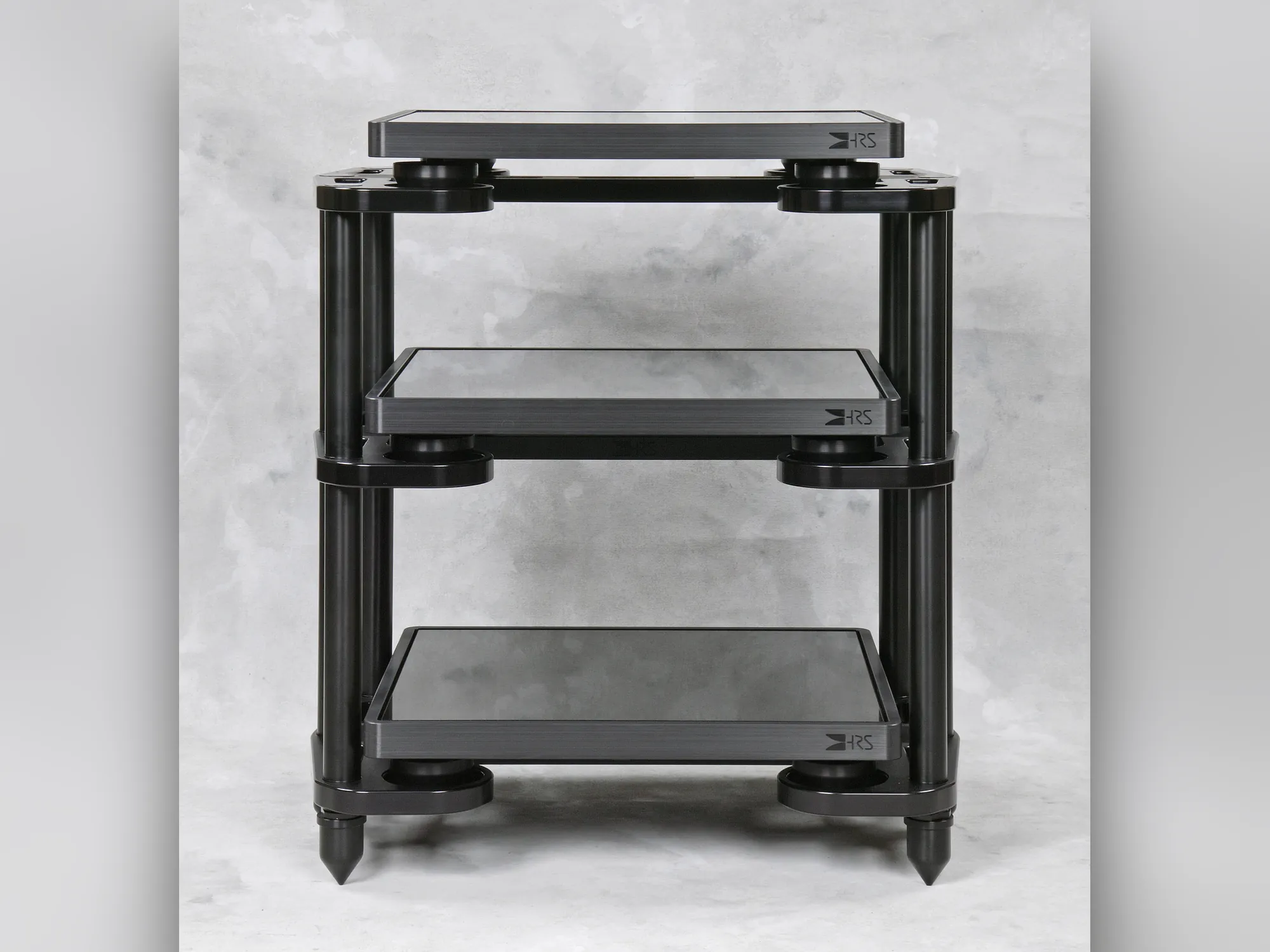
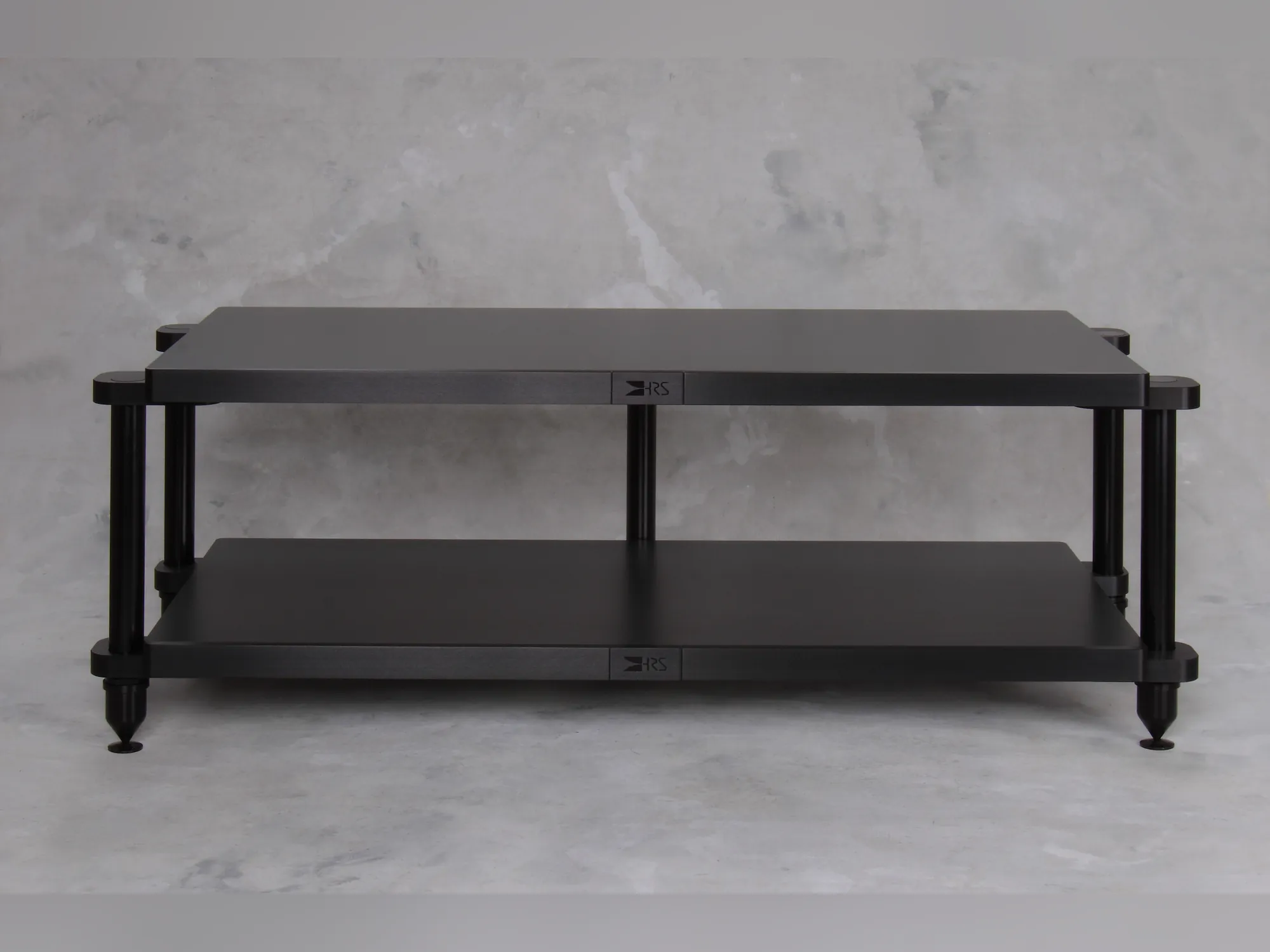
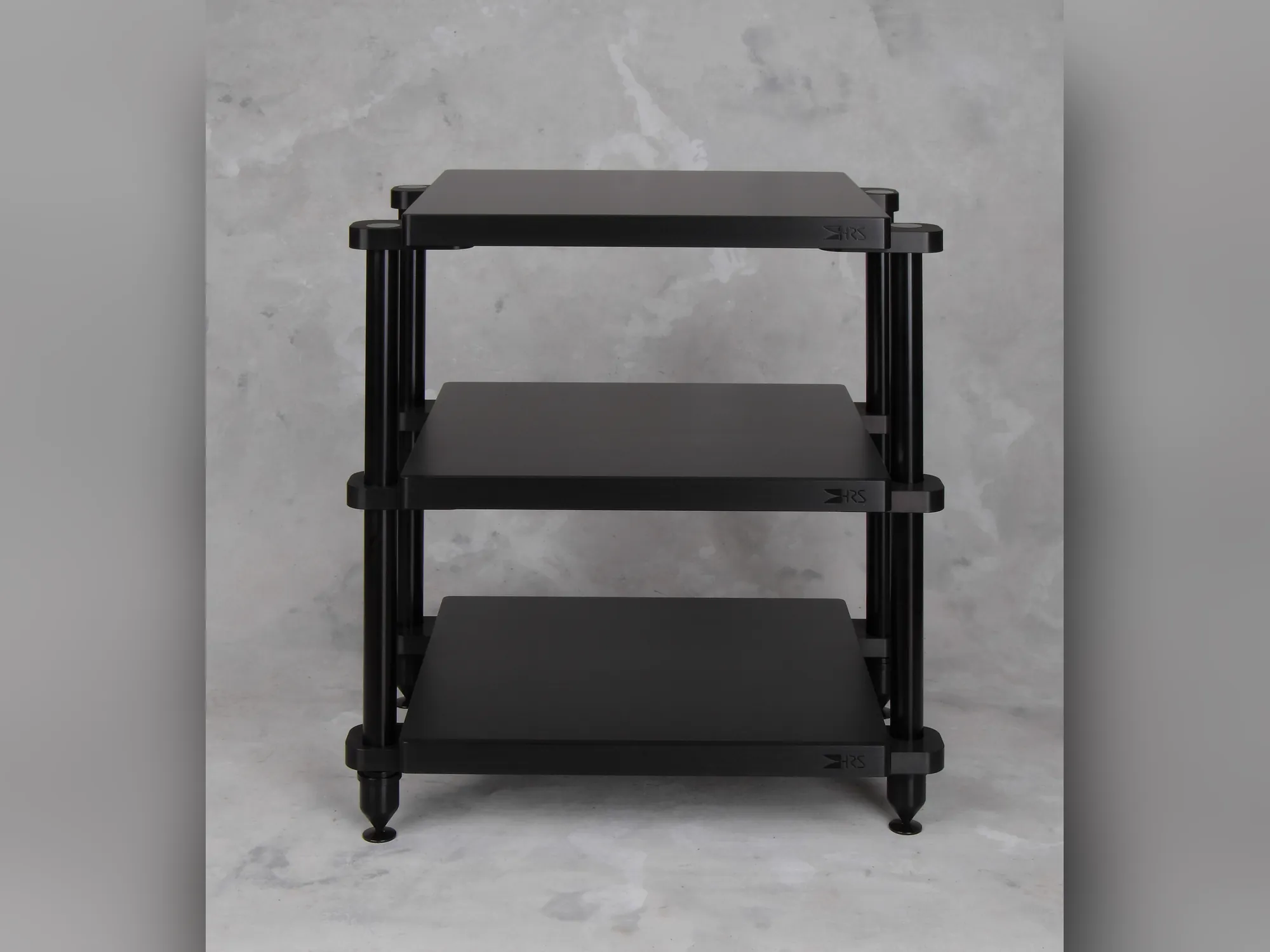
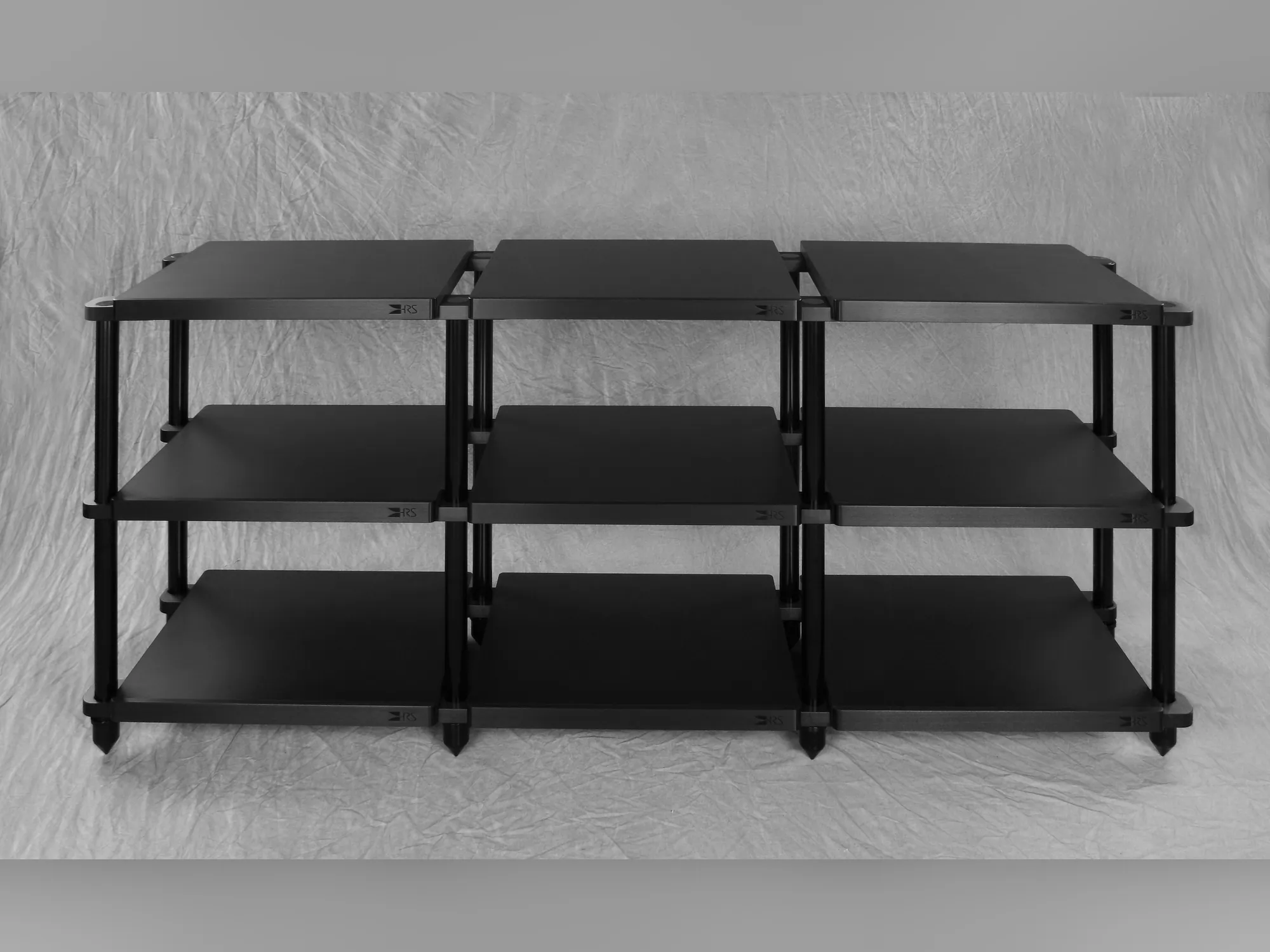
The Audio Stands run from VXR at the top to EXR and EXRH at the entry. VXR is the reference — a boundlessly rigid billet-machined heat-treated aluminium chassis with a ten-part cross brace, US Patent 10,045,615, available in widths from 15 to 23 inches and depths from 17 to 38 inches. SXR Signature adds Solid Brace Inserts to the SXR platform, tripling the cross braces and adding four friction and two compression dampers per location. SXRC is a custom SXR configuration for oversized amplifiers such as the D’Agostino Relentless monoblocks, with vertical multi-amp stacking, in widths from 15 to 23 inches and depths from 21 to 31 inches. SXR is the six-strut Product of the Year design in billet aircraft aluminium with damping elements. EXRD is a 42-inch continuous-shelf design, US Patent 11,751,682, with a five-leg asymmetrical support geometry rated to 250 pounds per shelf. EXR is the cost-effective foundation with the plinth supporting components directly (Isolation Bases optional), convertible to SXR or SXRC or Signature as the system grows. EXRH is the headphone and small-format 9.5-by-15-inch plinth.
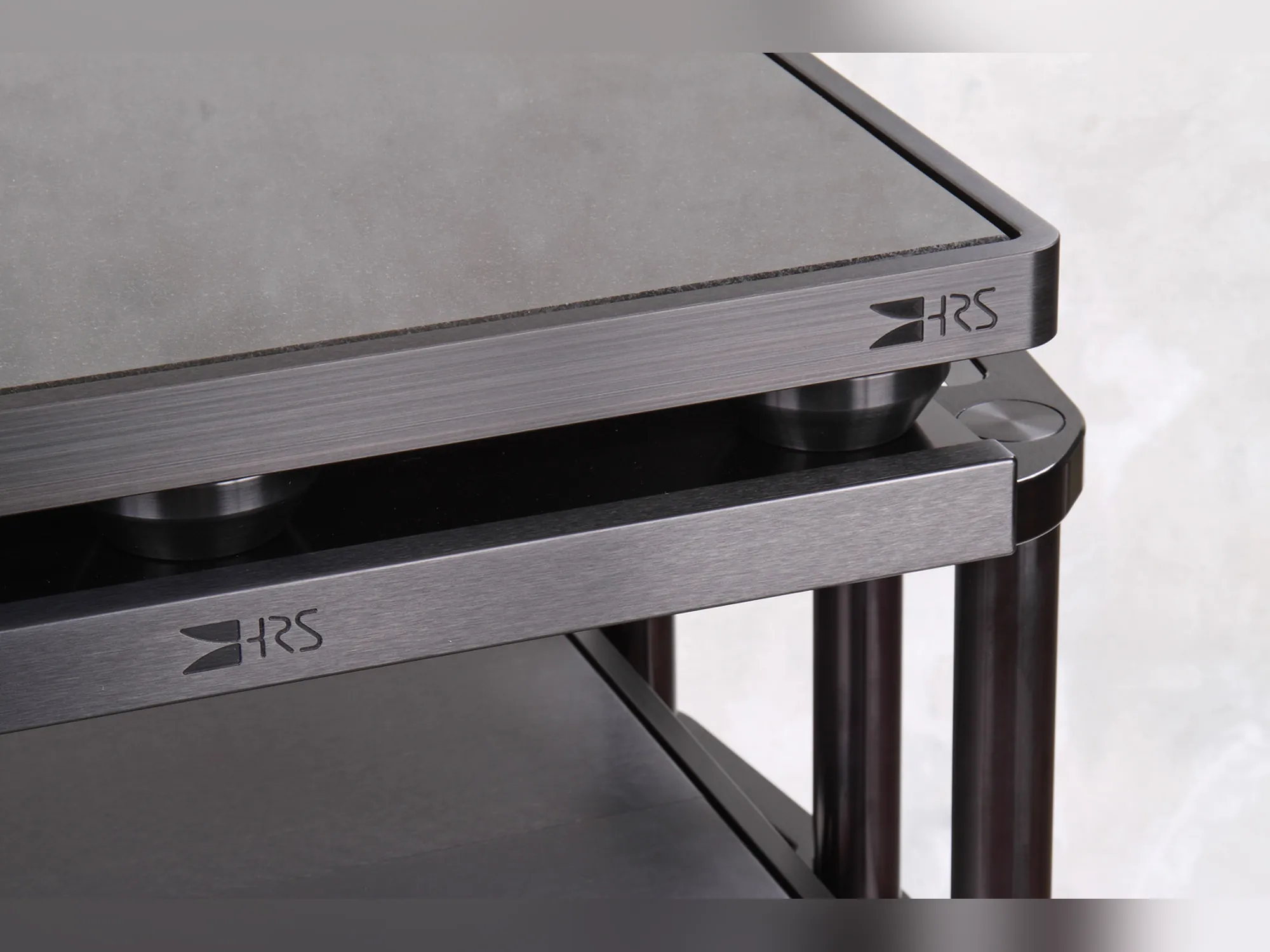
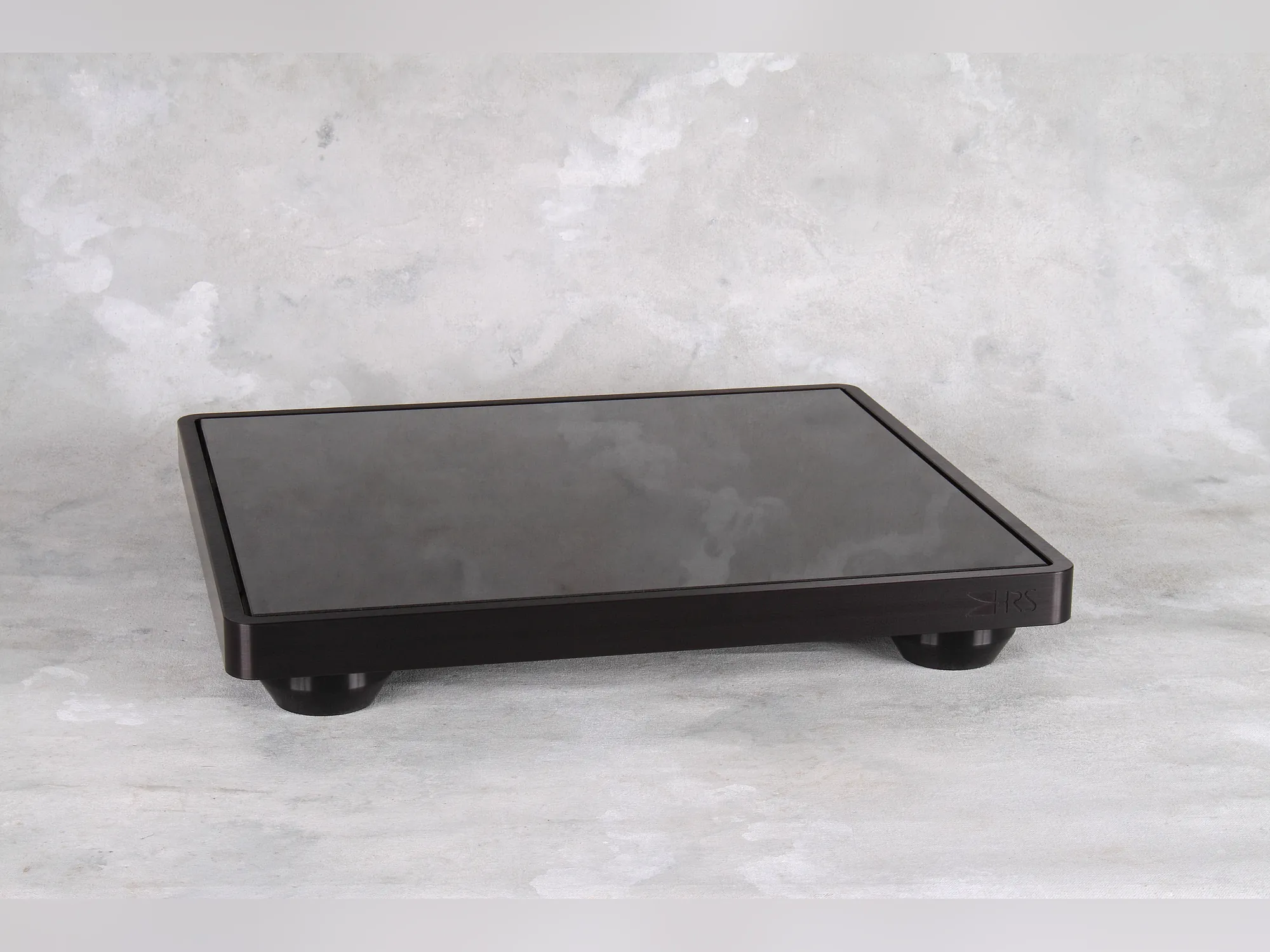
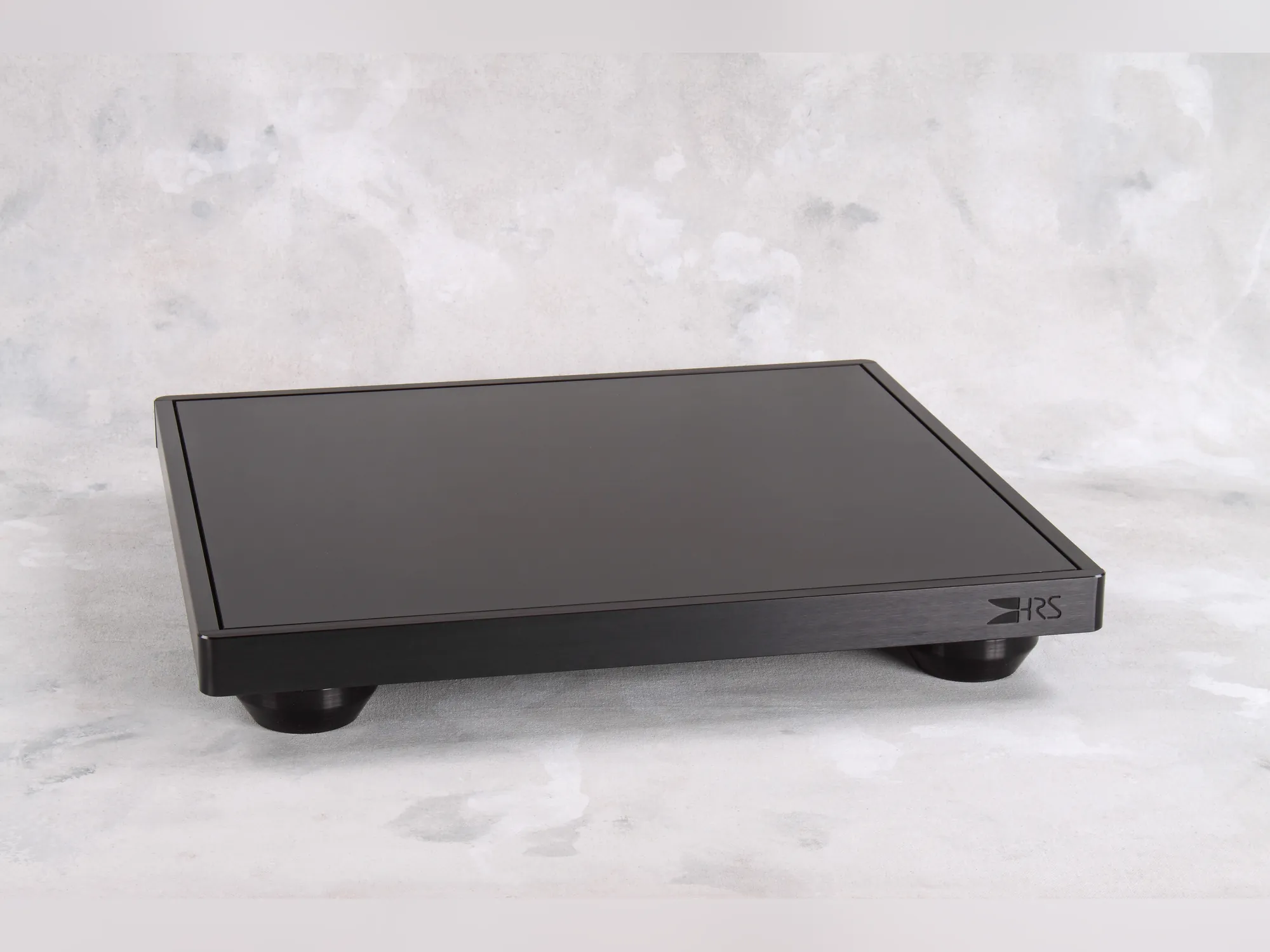
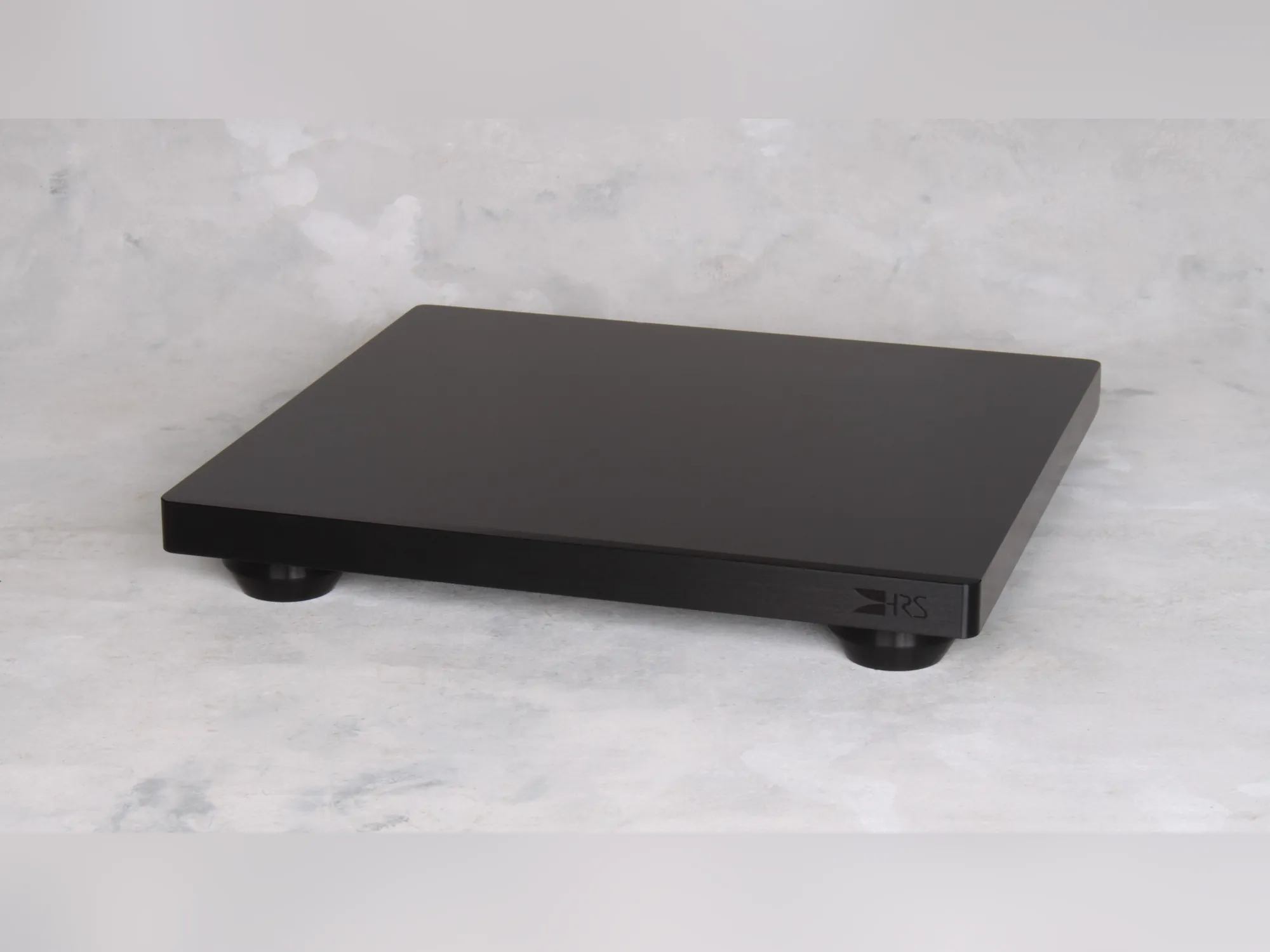
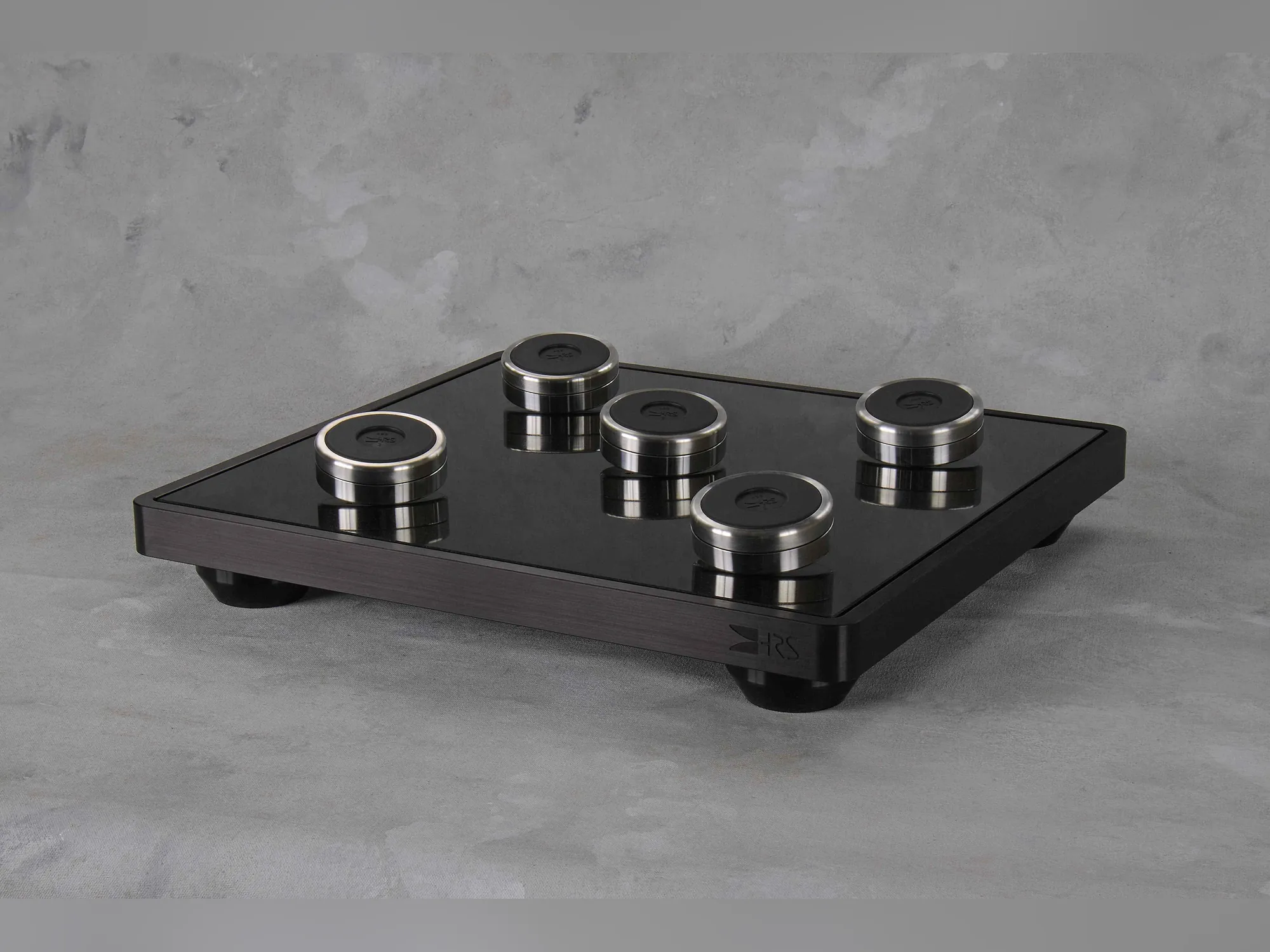
The Isolation Bases run from M3X2 at the reference to E1X at the entry. M3X2 is the reference-tier base — over seventy parts, six materials, billet aircraft aluminium housing, polished black granite contact plate, four proprietary HRS materials, in six sizes from M3X2-1419 through M3X2-2123. S3 is near-reference with seven materials, a vacuum-pressed laminated plinth with fabric-reinforced resin, non-magnetic stainless steel, decoupled mass core, weighing 51 pounds at the 1921 size. R3X uses five materials and shares roughly sixty per cent of the S3 plinth construction with a CNC-machined non-resonant core carrying internal decoupled high-mass damping, delivering twenty-eight per cent higher mass density than the R1 predecessor. E1X is the four-material cost-effective foundation with constrained-layer damping, billet aluminium front trim, and resin-fabric composite plates, available in six standard sizes plus custom widths from 9.5 to 25 inches.
All four Isolation Bases share three footer options — SF Broadband, LF Low Frequency, and G7 Bi-Directional — plus the G-Link accessory for G7 use on non-HRS surfaces. All four integrate directly into every HRS Audio Stand without modification.
HRS under every LMC reference system
HRS racks sit under every reference system LMC operates, in both showrooms. That is the demonstration — not a dedicated HRS listening room but the fact that when a client sits down in the WAMM Room or the Suprema Room or the Reference Room or the McIntosh Room in Scottsdale, or in any of the Tempe reference systems, the components they are listening to are supported on HRS. It is what happens when a dealer takes vibration control as seriously as everything else in the reference signal chain — the racks disappear from the conversation because they are not adding anything to argue about.
That reality tells you something about what HRS delivers. A component sitting on the wrong rack is not resolving what it was designed to resolve. The dCS Vivaldi APEX stack in the Suprema Room, the Burmester Reference Line electronics in the Wilson Autobiography system, the Dan D’Agostino Momentum monoblocks in the Tempe Reference Room — each of those chains represents a substantial investment in the resolving power of the electronics, and none of them would resolve what they resolve on a rack that let structural vibration through. HRS is the infrastructure that lets everything else in the room deliver what the client paid for.
LMC as an HRS dealer since 2015
LMC has been an authorised HRS dealer since 2015, and the ten years since have been consistent with the specification discipline HRS designed its own product line around. The specification conversation for a new HRS installation starts with the components going into it, the physical dimensions of the space, the weight of each component and its centre of mass, and the anticipated upgrade path over the next several system generations.
That last item is what most first-time buyers underestimate. Because every HRS Isolation Base loads directly into every HRS stand, and every SXR converts to Signature by adding Solid Brace Inserts, and every EXR can be upgraded to SXR-class rigidity in place, the initial investment in an HRS stand is preserved when the client’s system evolves. The rack that goes under the current amplifier is the same rack that goes under the next generation of it, and the base that isolates the current DAC is the base that will isolate the next one. That protects the cost of vibration control in a way that most audio purchases do not.
Where to start
The clearest HRS audition is not sitting in front of an HRS stand. It is sitting in front of any of the LMC reference systems — WAMM Room, Suprema Room, Reference Room, McIntosh Room in Scottsdale, or any of the Tempe reference music rooms — and asking about the racks. What HRS does becomes visible when a client understands that every one of those systems is running on HRS and the racks were chosen because they were the ones that delivered the resolving power the rest of the chain was designed for.
For an evaluation of the Isolation Base concept specifically, the specification conversation happens on site. HRS bases install under existing components in a client’s own system, and the demonstration that they change what the component sounds like is best done with the client’s own DAC or amplifier, in the client’s own room, with the client’s own reference recordings. That is the honest test — not an A-B in a showroom, but a before-and-after in the room where the components actually live.
What to listen for
Two tests deliberately reveal what HRS does that a lesser support system does not. First, listen to a familiar recording on a component you know well, then place an HRS Isolation Base under that component and listen to the same recording. What should change is not that the sound got better in the vague sense that most audio marketing language uses — what should change is that low-level detail becomes more clearly resolved, complex passages remain untangled where they used to congest, and the noise floor drops in a way that lets recorded space become audible around the instruments. The vibration control is doing exactly what the electronics were designed to do without it — resolving what the signal actually contains.
Second, listen to a recording with sustained low frequency — an orchestral piece with organ pedal notes, a pipe organ recording, a jazz recording with an upright bass in a live acoustic space. On a system where structural vibration is reaching the electronics, sustained bass energy modulates everything above it in ways the listener may not consciously identify but hears as a general congestion when the bottom end is working hard. On a system on HRS supports, that congestion disappears. The bass keeps its authority and everything else stays clear at the same time.
Walk in during business hours or book ahead if the audition needs a specific reference system in Scottsdale or Tempe configured for extended listening with the racks explicitly part of the conversation.
The Lineup
Explore the Range
Experience The Brand