Scottsdale
The Octave Room
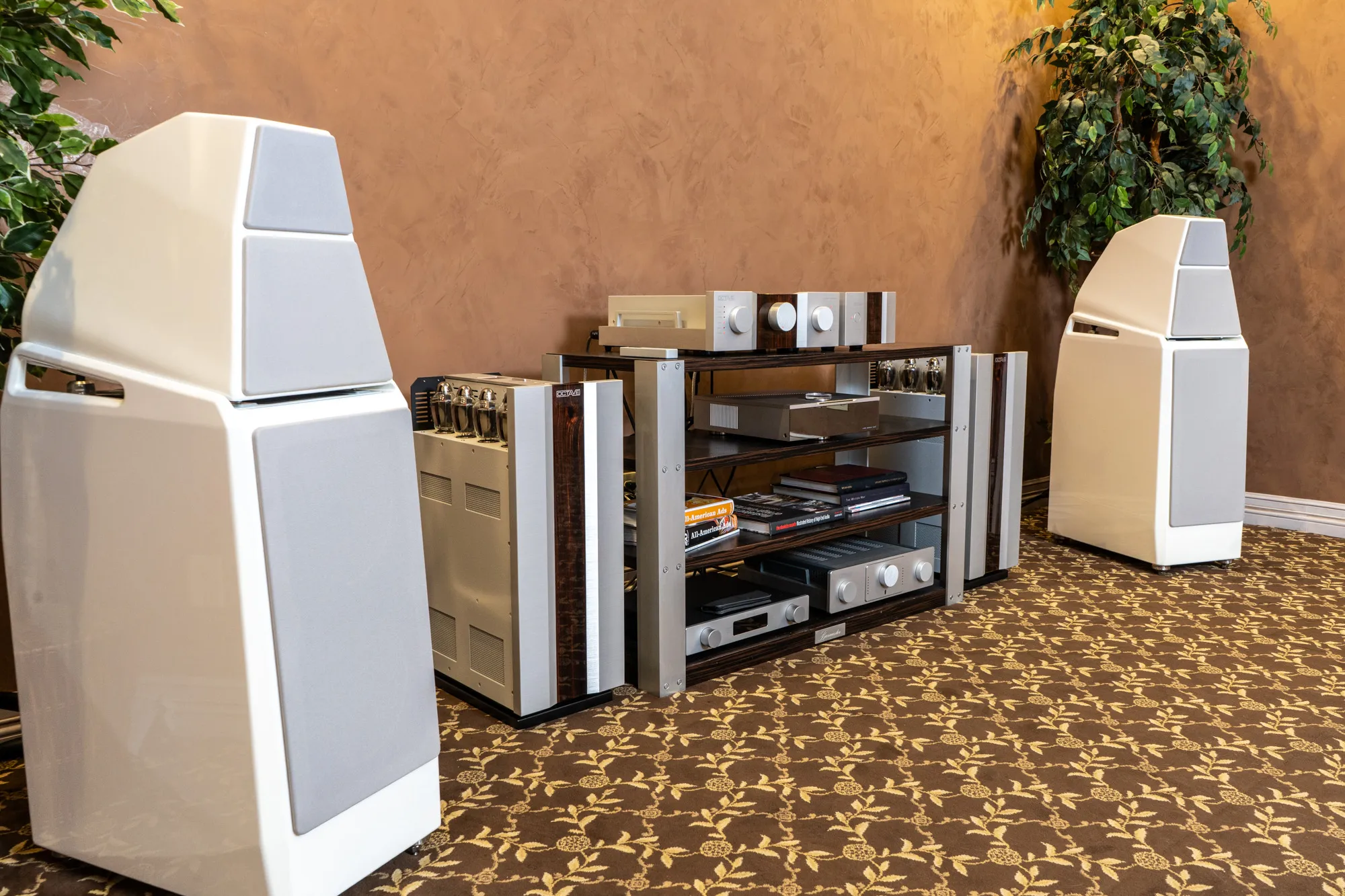
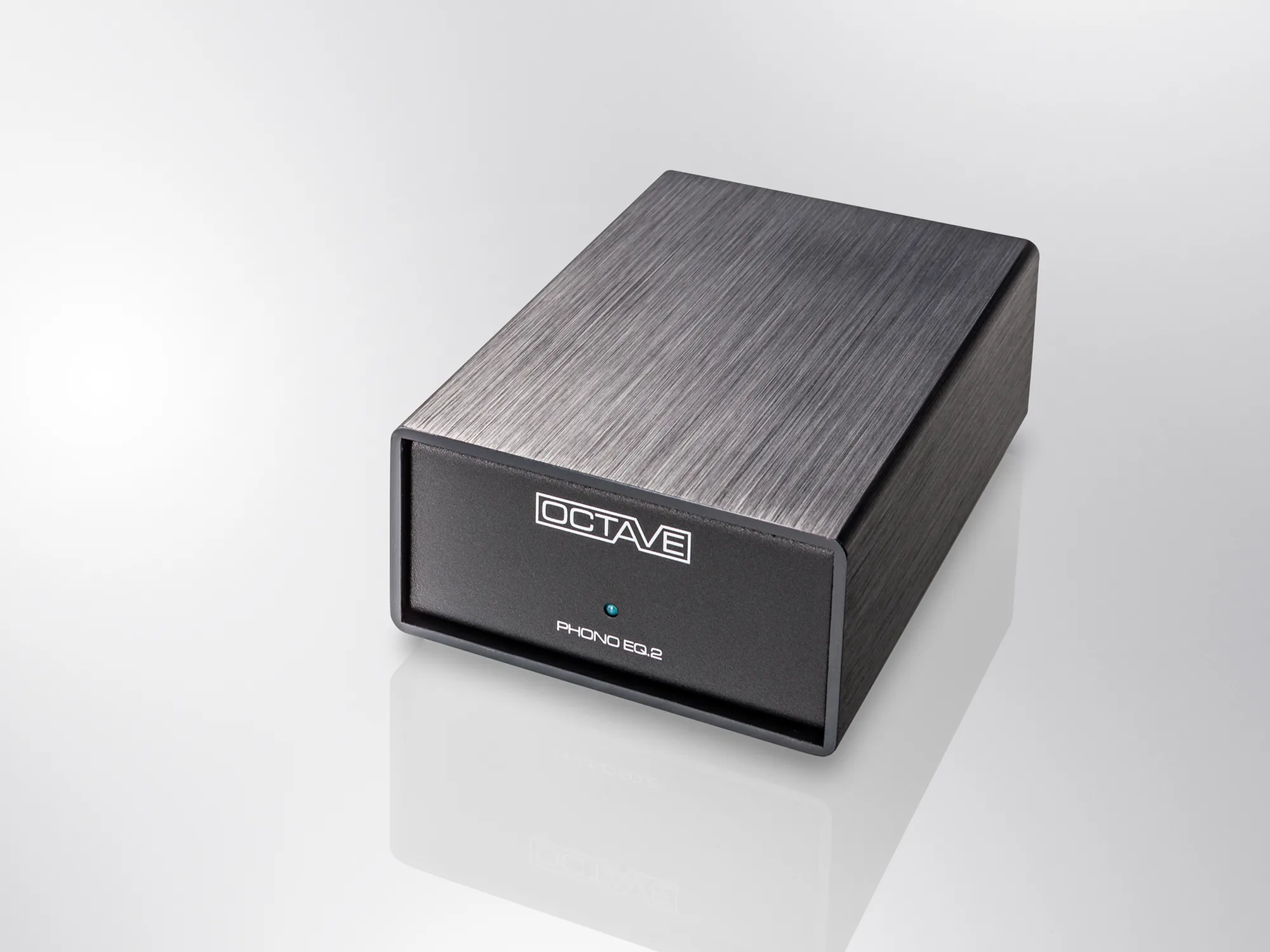
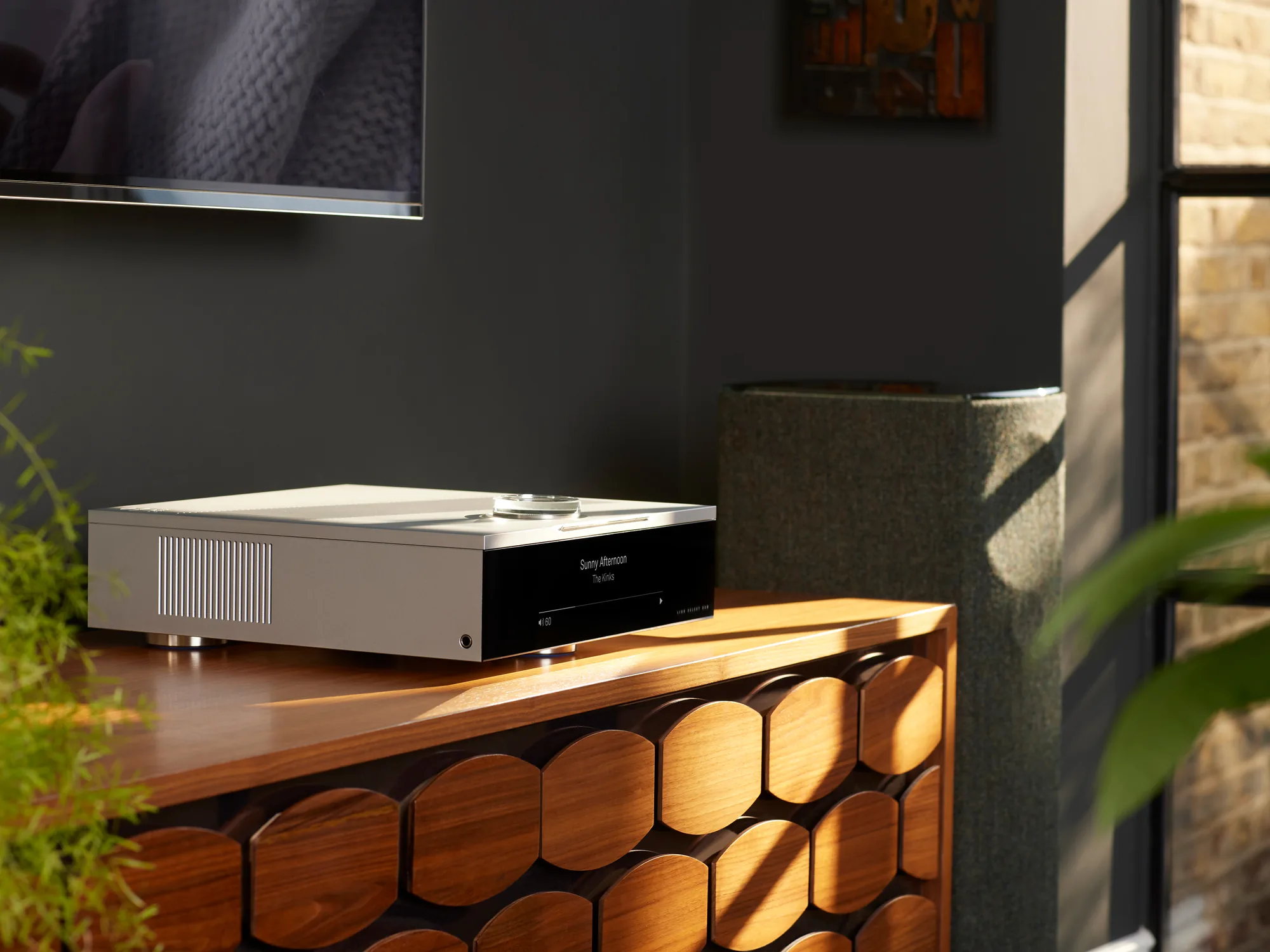
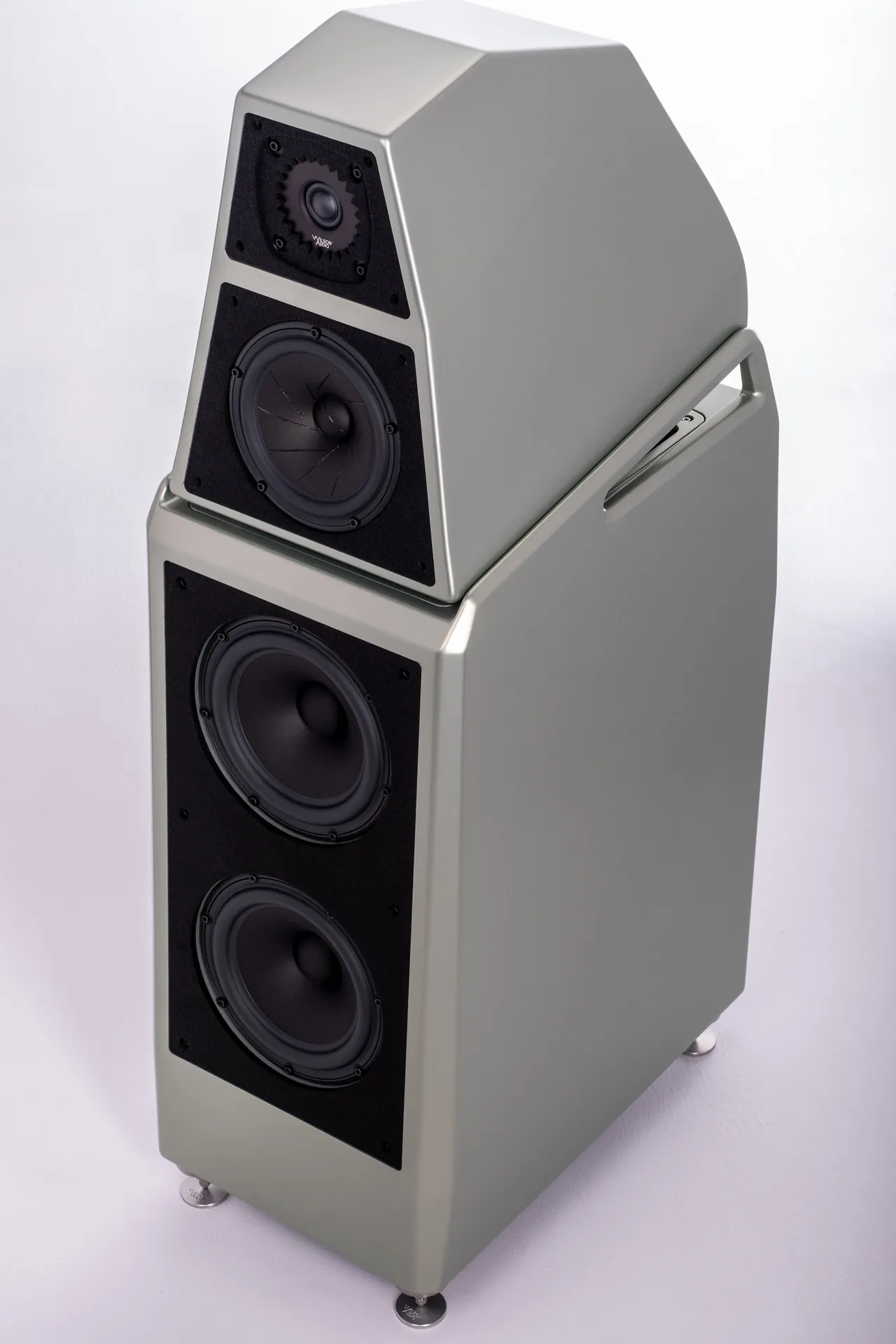
Octave tube electronics end to end — the Jubilee Preamp SE and HP 700 SE feeding a pair of Jubilee Mono Ultimate monoblocks. Wilson's Sasha V carries the room; a Linn Selekt DSM Edition Hub handles streaming and Octave's Phono EQ.2 handles vinyl.
Octave’s reputation rests on transformers. Andreas Hofmann, the company’s founder, describes the output transformer in the Jubilee Mono Ultimate as a super transformer — more than double the usual speaker winding, wound with a multi-wire technique that counters the skin effect degrading the top end of conventional designs. This room was built to demonstrate what that engineering buys.
Why the transformer decides everything
In a tube amplifier the output transformer is where control over a loudspeaker is won or lost. Tubes work at high voltage and low current; loudspeakers want the opposite. Everything the amplifier produces has to pass through that transformer to become something a driver can use, so its quality sets the ceiling for the entire design no matter how good the valves ahead of it are.
It is also the component most often economised on, because it is heavy, expensive and invisible. Octave’s decision to overbuild it is the whole argument of the company, and it is why their amplifiers behave in ways people do not expect from tubes.
The Jubilee Mono Ultimate
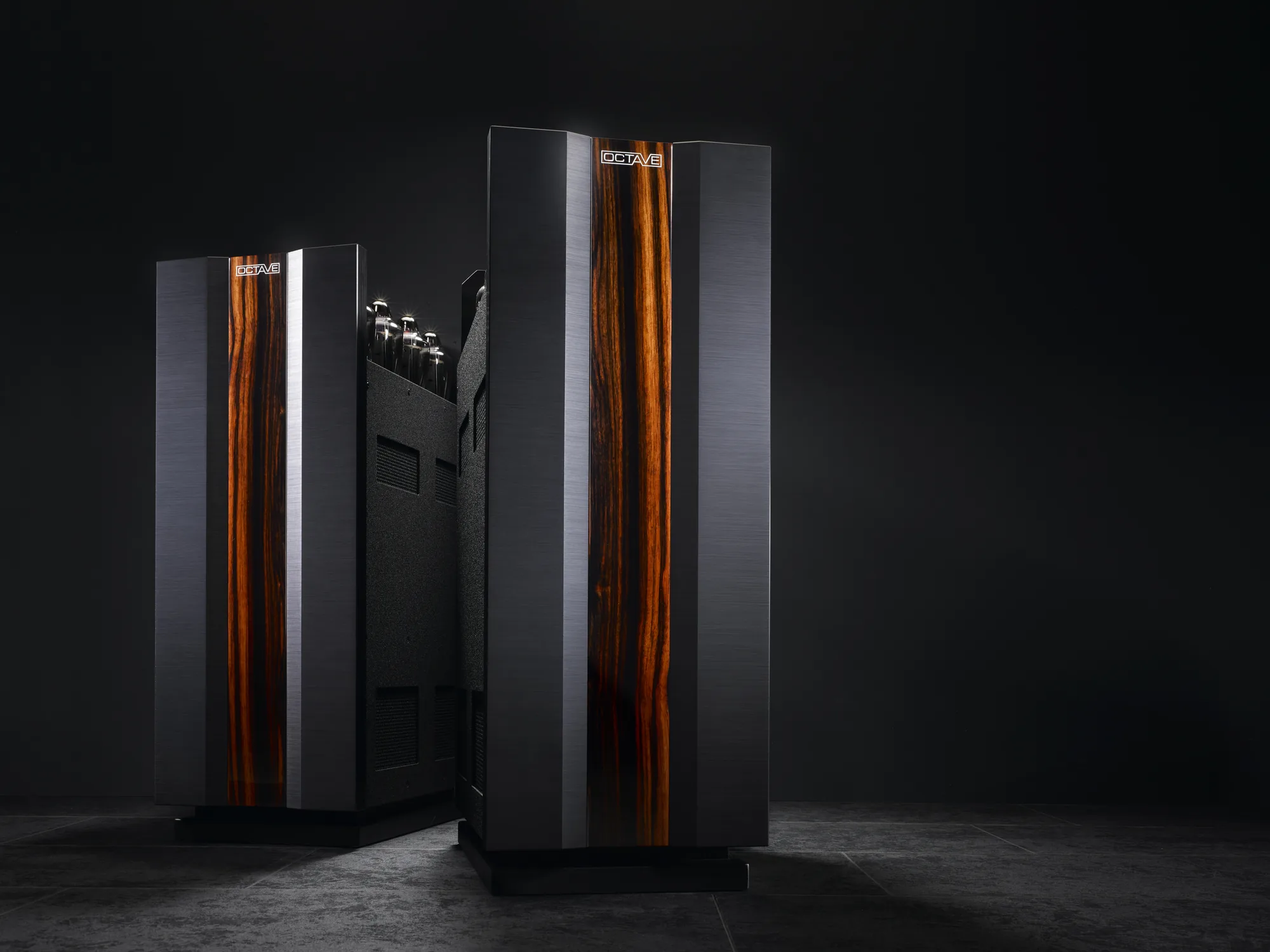
The Jubilee Mono Ultimate makes that argument in its clearest form. Eight KT 170 tubes per side deliver 440 watts into four ohms from a push-pull design — power normally associated with large solid-state amplifiers rather than anything with valves in it.
The KT 170 is a relatively recent tube, and it is the reason this amplifier can produce the power it does without running an unreasonable number of bottles per side. Eight of them in push-pull is a large output stage by tube standards, but it is the transformer behind them that turns that output into usable control over a difficult load rather than simply a high wattage figure on a specification sheet.
That figure matters here for a specific reason. The Wilson Sasha V carrying this room drops to 2.19 ohms at 90 Hz, and a load like that exposes any amplifier without real current behind it. Plenty of tube amplifiers sound convincing until they meet an impedance dip in the bass, at which point the grip loosens and the bottom end softens. This pairing was chosen precisely because it puts that weakness where it can be heard, or not.
Octave’s position is unusual in that respect. Most tube manufacturers ask you to choose a loudspeaker that suits the amplifier. This room inverts that: the loudspeaker was chosen because it is hard to drive, and the amplifier is expected to cope.
The hierarchy standing in the room
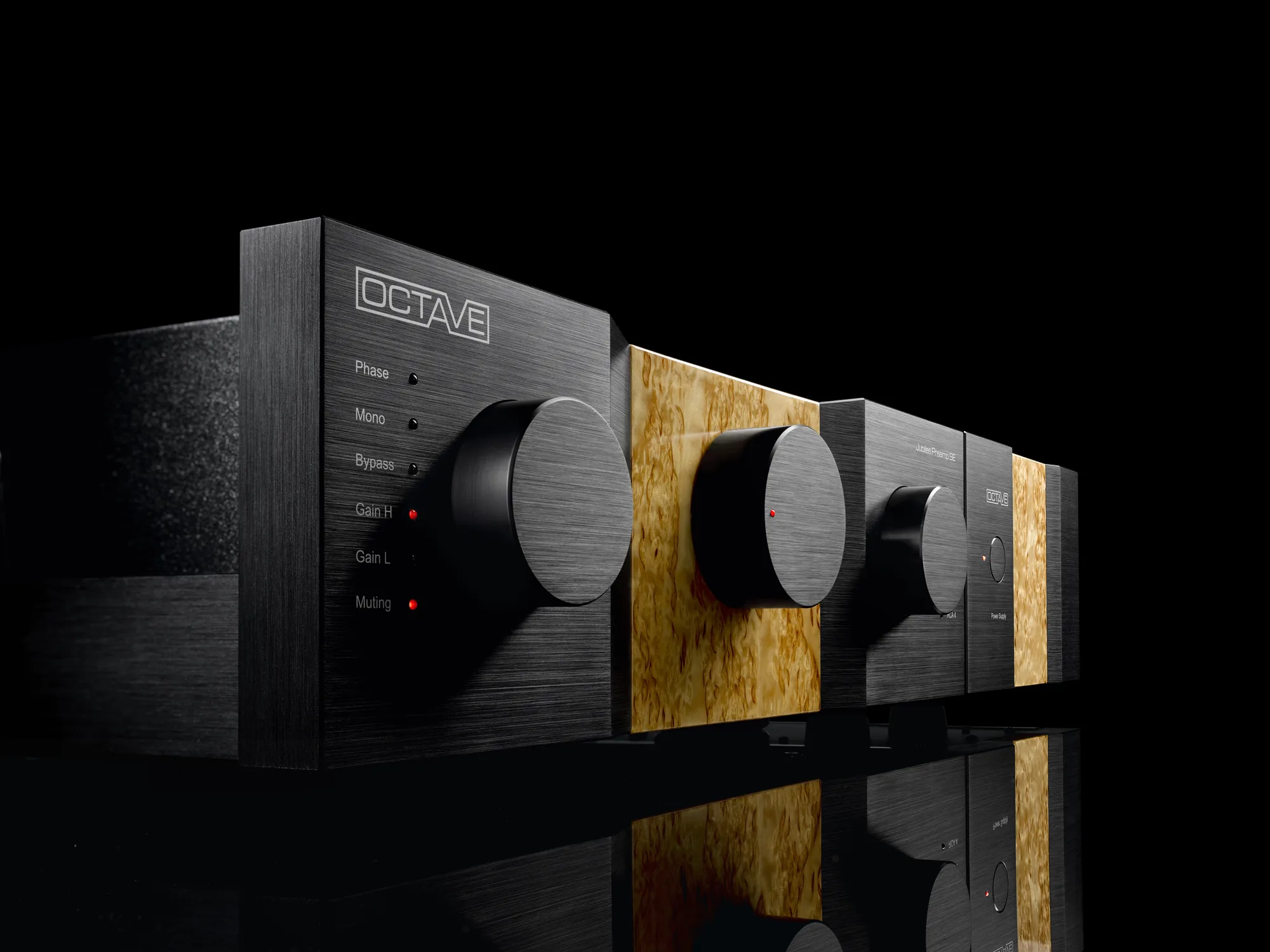
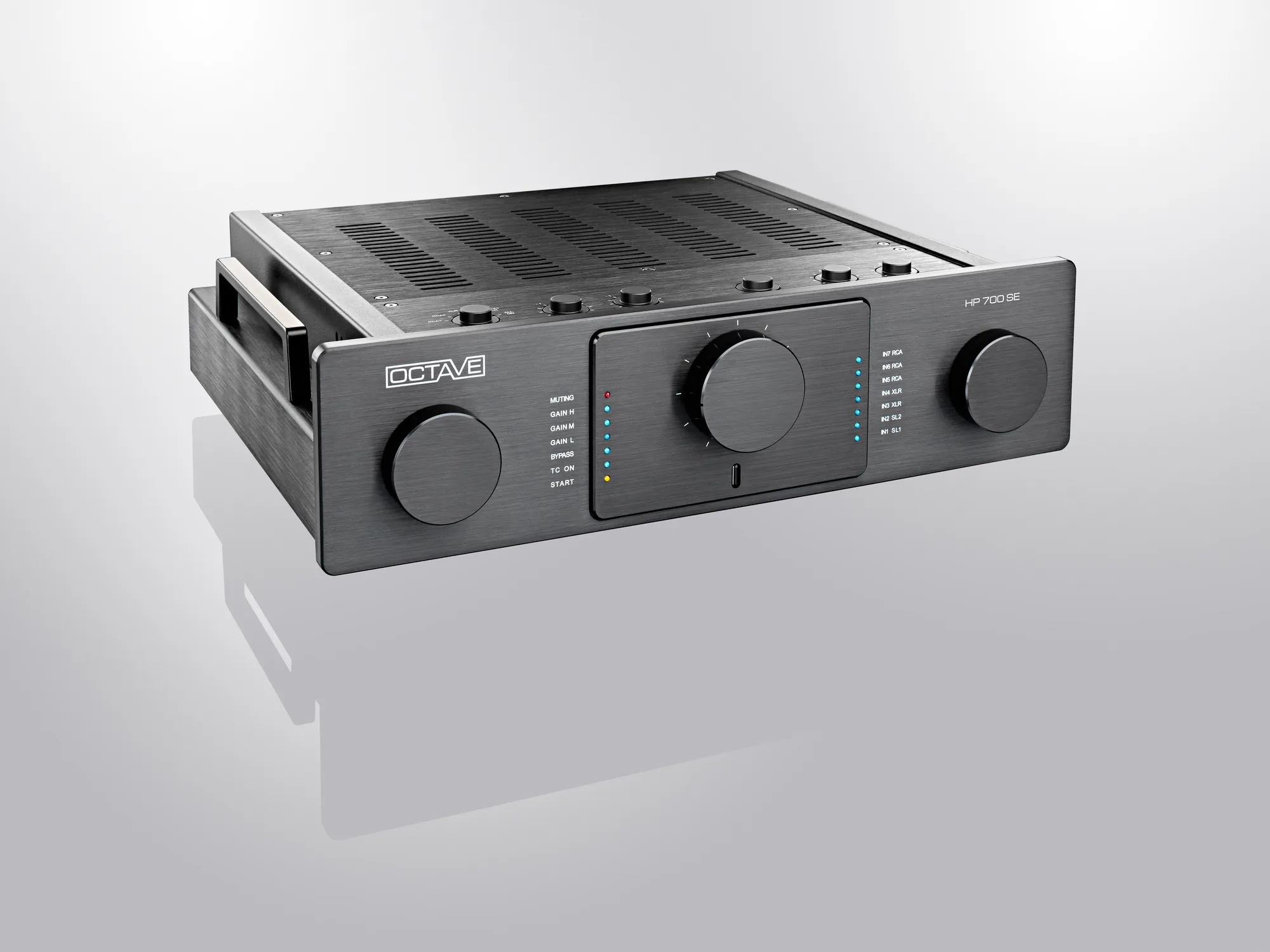
What makes this room worth an afternoon is that the Octave ladder is present and connected. Two reference preamplifiers — the Jubilee Preamp SE and the modular HP 700 SE — driving the same loudspeakers in the same space.
That arrangement answers the question people actually have, which is not whether Octave is good but how much of it they need. Moving from the HP 700 SE to the Jubilee Preamp SE is a large step in price, and the only honest way to know whether it is a large step in sound is to make it twice in an afternoon on one pair of loudspeakers. You can hear where the money goes rather than take our word for it.
Sources
Streaming runs through Linn’s Selekt DSM Edition Hub. Vinyl runs through Octave’s own Phono EQ.2, which keeps the analogue path inside the same house as the amplification — the same logic applied in the Reference Room, on a different scale.
The system in this room
- Wilson Audio Sasha V loudspeakers
- Octave Jubilee Mono Ultimate monoblock amplifiers — eight KT 170 per side, 440 W into 4 ohms
- Octave Jubilee Preamp SE
- Octave HP 700 SE modular preamplifier
- Octave Phono EQ.2 phono stage
- Linn Selekt DSM Edition Hub network music player
Hearing it
This is the room for anyone who has been told that tubes cannot control a demanding loudspeaker, and for anyone deciding how far up a manufacturer’s range they need to go. It is also the most direct counter-argument in the building to the solid-state systems in the Reference Room — same brand of question, opposite answer.
The Octave Room is in the Scottsdale showroom. Walk in during business hours, or book ahead if you want more than one of these configurations set up and the time to move between them.
System
The Octave System
A pair of Jubilee Mono Ultimate monoblocks driving Wilson’s Sasha V, with Octave tube preamplification, Linn streaming and Octave phono.
View this system →